Slattdalsberget Travel Guide
Free Guide: A wind‑swept granite ridge split by Slåttdalsskrevan — raw geology and sweeping High Coast panoramas above Docksta.


A brief summary of Slattdalsberget
A wind‑swept granite ridge split by Slåttdalsskrevan — raw geology and sweeping High Coast panoramas above Docksta.
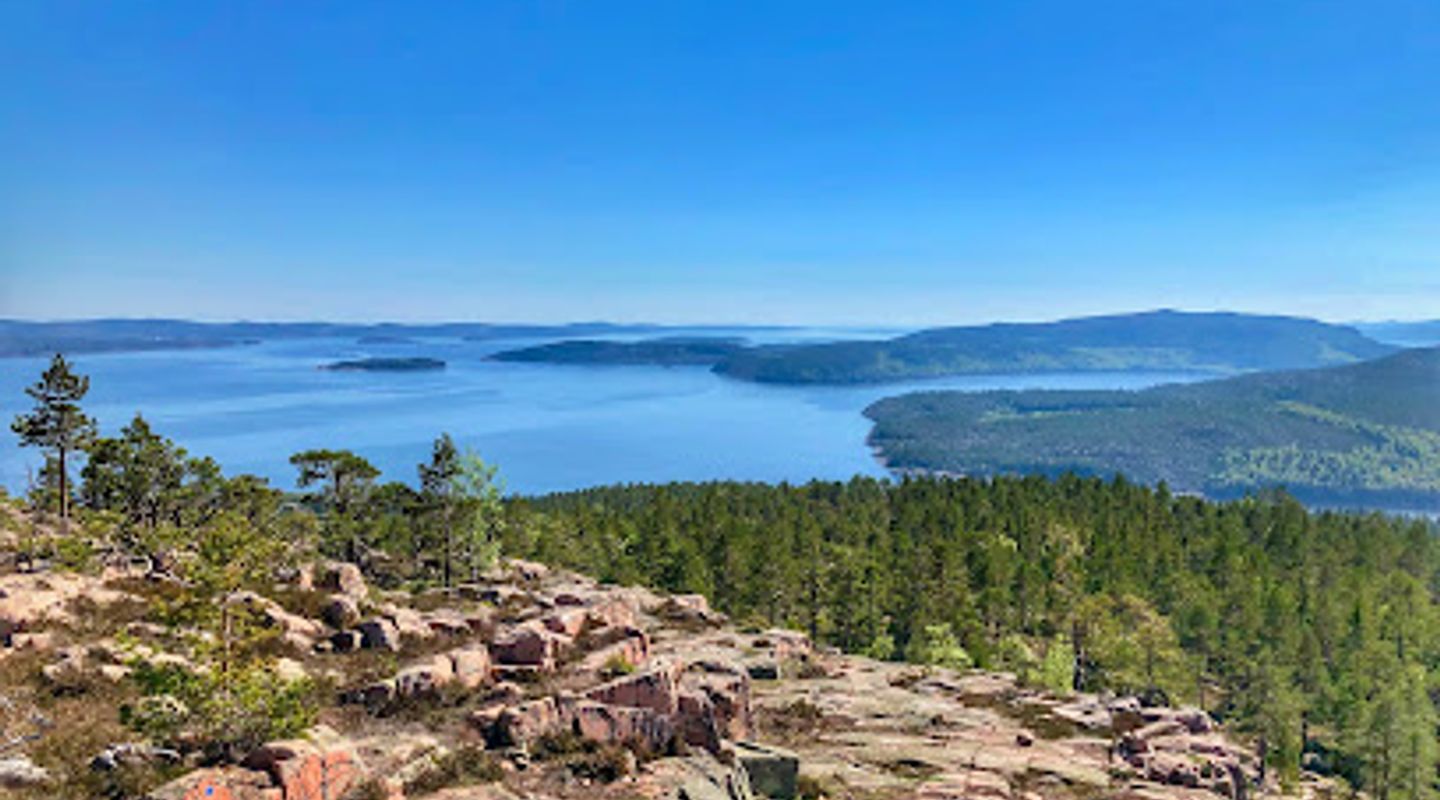
A dramatic granite ridge in Skuleskogen National Park above Docksta, Slåttdalsberget is best known for the long, sheer crevice Slåttdalsskrevan and sweeping High Coast panoramas. Trails climb through dense boreal forest, across rocky slabs and boardwalks to an open summit terrace where wind-polished red granite meets expansive sea-and-archipelago views. Expect steep, uneven terrain and memorable geological features rather than facilities.
On-site amenities
 Seating areas
 Information boards
 Trash bins
- Address
- 873 96 Docksta
Getting there
By car (from Docksta area)
Local bus plus walk
Hike from park entrances (on foot)
Discover more about Slattdalsberget
Anatomy of a split mountain
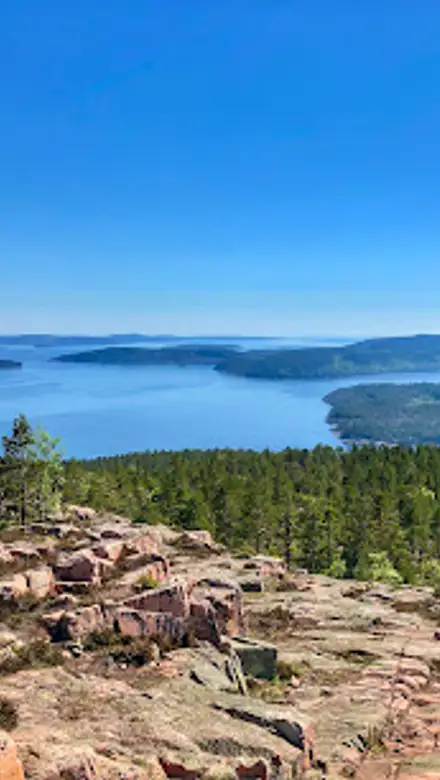
Slåttdalsberget is a granite ridge cleft by a dramatic, narrow fissure known as Slåttdalsskrevan — a deep, linear chasm that cuts the mountain and draws the eye along its sheer rock walls. The crevice runs for roughly two hundred metres and plunges tens of metres, exposing the island’s ancient bedrock and the contrast between harder and softer stone that shaped the split. The summit terrace beyond the crevice levels out into broad expanses of orange‑red granite, smoothed by millennia of ice and sea, where the geology reads like a cross‑section of the High Coast.
Trail character and landscape transitions
Trails approach the ridge through dense boreal forest and across a sequence of terrains: moss‑draped trunks and rooty soil, sections of raised boardwalk where wetlands give way to rock, fields of loose boulders and finally steep stone slabs and hand‑built steps. On the steeper approaches you move from enclosed, shadowed forest into exposed ledges; the last push often requires careful footwork and occasional short scrambling over steps and flagstones. Scattered small tarns and ponds sit near the ridge, offering mirrored views of lichen‑stippled rock and sky.
Views and visual rewards
From the upper terrace the panorama opens out across the High Coast archipelago: a mosaic of islands, sea channels and distant cliffs, every rock rimmed by northern light. The crevice itself forms a theatrical foreground: standing at its lip you get a geometric, almost architectural vista of vertical rock faces and thin sky above. Light and weather alter the scene profoundly — clear days emphasise long sightlines and colour contrasts, while low light or mist softens the cliffs into muted silhouettes.
Seasons, conditions and sensory notes
In summer the forest hums with insects and the granite is warm underfoot; autumn brings vivid leaf colour against the red stone. Winter conceals much under snow and ice, making the approach more demanding and altering the crevice into a quiet, frosted cleft — specialised winter gear is often required. Underfoot, expect a mixture of gritty stone, slippery wet planks and occasional muddy patches; the tactile change from spongy forest floor to hard, wind‑blasted rock is one of the site’s defining contrasts.
Natural history and ancient forces
The exposed rock here tells a long story: ancient igneous intrusions and later glacial sculpting created the present forms, then post‑glacial rebound lifted shorelines to reveal terraces and wave‑polished boulders high above the sea. The mountain’s ledges and fissures provide microhabitats — small, sun‑warmed niches for lichens and hardy alpine plants, and cooler, sheltered crevices where shade‑loving mosses persist. Birdlife is often present along the ridge and coastal views, with raptors and seabirds visible over the archipelago on clear days.
What the place feels like
Slåttdalsberget feels elemental: a place where rock and sky are in direct conversation. There is a theatrical scale to the crevice and a quiet, austere beauty on the open slabs. The soundscape shifts from forest rustle and water trickle on the lower approaches to wind and gull calls on the terrace. The combination of accessible summit vistas and raw, raw geology makes it a place best experienced slowly — pausing to study the fissure, to sit on warm stone, or to watch the changing light over the sea.
Evendo Review Centre
 Google
Guest reviews
Best time to go
Quietest: Jan, Feb & Dec · before 3am
Busy times are Evendo estimates for a typical year, to help you plan. Actual crowds vary with events, school holidays and the weather.
Explore Slattdalsberget on the map
A handpicked selection of must-see spots near Slattdalsberget, mapped for you.
Get your free copy of our complete guide to Slattdalsberget, delivered straight to you.
Everything on this page, from opening hours and how to get there to Eve’s tips and the best time to go, in one PDF you can read offline, print or share.
Already have an account? Sign in
Your Slattdalsberget guide is ready.
We'll send it to · Not you? Sign out

Getting your guide ready…
We are putting together a fresh copy of the Slattdalsberget guide. This can take up to a minute.
This can take a few moments. If your browser asks, choose Allow so the download can start. You'll find the guide in your Downloads folder.
Nothing happened? Download it again
Sorry, the guide is taking longer than usual. Please try again in a minute, or get it by email instead.
Other nearby places you may find interesting
The closest places of the same kind, if this one is not quite what you had in mind.
-
-
-
-
-


Swipe for more places
More to explore near Slattdalsberget

 Best experiences near Slattdalsberget

 Best hotels near Slattdalsberget

 Best landmarks near Slattdalsberget

 Best attractions near Slattdalsberget

 Best shops near Slattdalsberget

 Best restaurants near Slattdalsberget

 Best bars near Slattdalsberget
Do you manage this location?
Take control to get all the benefits, like improved information, better appearance, and stronger visibility across AI-powered discovery.
Explore more

Explore more of Västernorrland
Discover Västernorrland: Where Sweden's natural beauty and cultural heritage come alive. Explore dramatic cliffs, ancient forests, and charming towns.
Explore Västernorrland
Explore more of Sweden
Discover Sweden's breathtaking landscapes, vibrant cities, and rich cultural heritage. From the Northern Lights to historic castles, experience the essence of Scandinavia.
Explore Sweden