

St. Nicolai Ruin, Visby Travel Guide
Free Guide: A 13th‑century stone skeleton in the heart of Visby where arches frame sky, history and seasonal light events.


A brief summary of St. Nicolai Ruin
A 13th‑century stone skeleton in the heart of Visby where arches frame sky, history and seasonal light events.
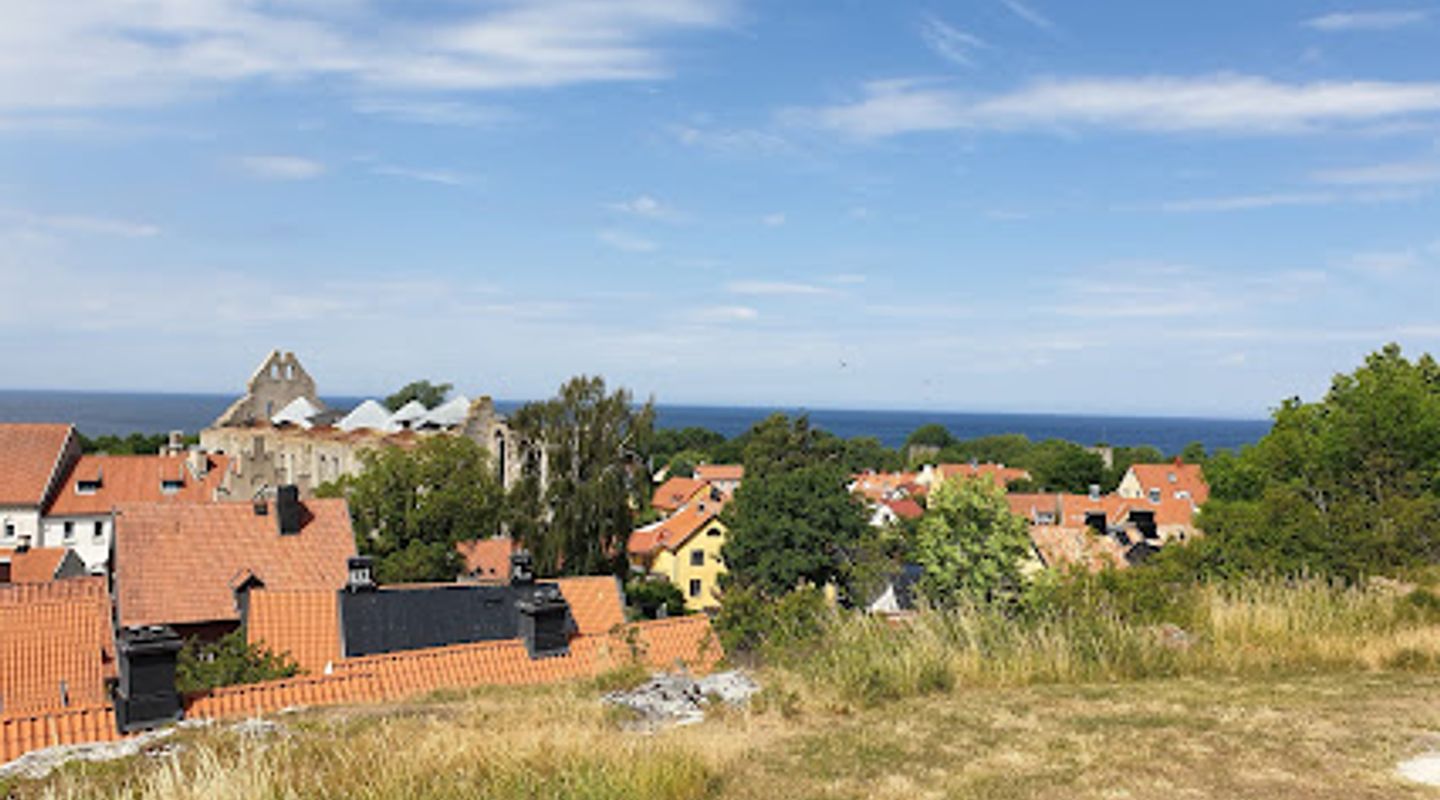
St. Nicolai is a striking 13th‑century church ruin in the medieval core of Visby, its soaring stone arches and exposed west gable framing sky and history. Once a parish and convent church tied to sailors and merchants, the ruin now reads as open-air architecture: grassed interiors, weathered carved stone, and dramatic silhouettes that host seasonal light and music events while remaining a quiet place for reflection amid cobbled streets and the town’s ring wall.
On-site amenities
 Information boards
 Seating areas
 Trash bins
- Address
- Smedjegatan 19, 621 55 Visby
- Phone
- Website
Getting there
Tram / Bus
Walking
Bicycle
Discover more about St. Nicolai Ruin
Origins and medieval purpose
St. Nicolai began life in the early 1200s as a parish church closely connected to Visby’s maritime and mercantile communities; dedication to Saint Nicholas linked it to sailors and foreign traders who made the town prosperous. Construction and later rebuilding in the 13th century produced the robust west gable and lofty nave fragments you see now, elements typical of Gotland’s stonework from the period.
Conflict, decay and survival
The ruin’s present condition is the result of centuries of events: fires, shifting religious practice after the Reformation and the removal of building materials in later centuries left the church roofless and partly dismantled. Instead of being erased, the skeletal walls and arches endured, creating a memory‑space where carved details, buttresses and openings survive as archaeological fragments and architectural statements.
Architectural character and materiality
Stone here is both structural and sculptural. The remaining gable and arch profiles display the clean lines of medieval masonry: dressed blocks, weathered mortar joints and traces of ornamental carving at portal and window surrounds. Inside the ruin the ground is often grassed or planted low; sunlight pours through omitted roofs to create shifting shadow patterns that emphasize vertical rhythm and the original proportions of nave and chancel.
Atmosphere and seasonal life
St. Nicolai’s atmosphere changes with weather and events. On clear days the arches carve the sky into frames; in rain the stone smells of damp lime and old earth. During summer months the ruin is sometimes lit for concerts, vigils or municipal events, when discreet lighting amplifies textures and casts long, theatrical shadows. At quieter hours it reads as contemplative—an open-air ruin in which the city’s medieval heartbeat is still audible.
What to notice while you’re here
Look for surviving sculptural traces around window and doorway openings, the proportions of the west gable and the way later repairs have patched older stonework. The relationship between ruin and street—its proximity to cobbled lanes and the ring wall—reveals how ecclesiastical architecture once threaded through urban life. The ruin’s scale makes it easy to inspect details up close while also appreciating the monumentality of its remaining walls.
Present role and preservation
Today St. Nicolai functions as protected heritage and occasional public venue: a place where conservation balances access. Its maintained grounds, interpretive signage and careful use for cultural programming aim to preserve masonry and archaeological layers while allowing the ruin to exist as a living part of Visby’s streetscape.
Evendo Review Centre
 Google
Guest reviews
Best time to go
Quietest: Jan, Feb & Dec · before 6am or from 9pm
Busy times are Evendo estimates for a typical year, to help you plan. Actual crowds vary with events, school holidays and the weather.
Explore St. Nicolai Ruin on the map
A handpicked selection of must-see spots near St. Nicolai Ruin, mapped for you.
Get your free copy of our complete guide to St. Nicolai Ruin, delivered straight to you.
Everything on this page, from opening hours and how to get there to Eve’s tips and the best time to go, in one PDF you can read offline, print or share.
Already have an account? Sign in
Your St. Nicolai Ruin guide is ready.
We'll send it to · Not you? Sign out

Getting your guide ready…
We are putting together a fresh copy of the St. Nicolai Ruin guide. This can take up to a minute.
This can take a few moments. If your browser asks, choose Allow so the download can start. You'll find the guide in your Downloads folder.
Nothing happened? Download it again
Sorry, the guide is taking longer than usual. Please try again in a minute, or get it by email instead.
Unlock the best of St. Nicolai Ruin
Skip-the-line tickets, guided tours with entry, and walking tours of the area, booked in a few clicks.


Other nearby places you may find interesting
The closest places of the same kind, if this one is not quite what you had in mind.
-
-
-
-
-


Swipe for more places
More to explore near St. Nicolai Ruin

 Best experiences near St. Nicolai Ruin
 Best hotels near St. Nicolai Ruin
 Best landmarks near St. Nicolai Ruin
 Best attractions near St. Nicolai Ruin
 Best shops near St. Nicolai Ruin
 Best restaurants near St. Nicolai Ruin
 Best bars near St. Nicolai Ruin
Do you manage this location?
Take control to get all the benefits, like improved information, better appearance, and stronger visibility across AI-powered discovery.
Explore more

Explore more of Visby
Discover Visby, Sweden's medieval marvel on the island of Gotland, where history, charm, and natural beauty converge in a UNESCO World Heritage site.
Explore Visby
Explore more of Sweden
Discover Sweden's breathtaking landscapes, vibrant cities, and rich cultural heritage. From the Northern Lights to historic castles, experience the essence of Scandinavia.
Explore Sweden
