

Old Town (Lausanne) Travel Guide - Free
Explore Old Town in Lausanne with Evendo's free guide. Find the best shops, historic streets, restaurants, and gems on web or mobile.


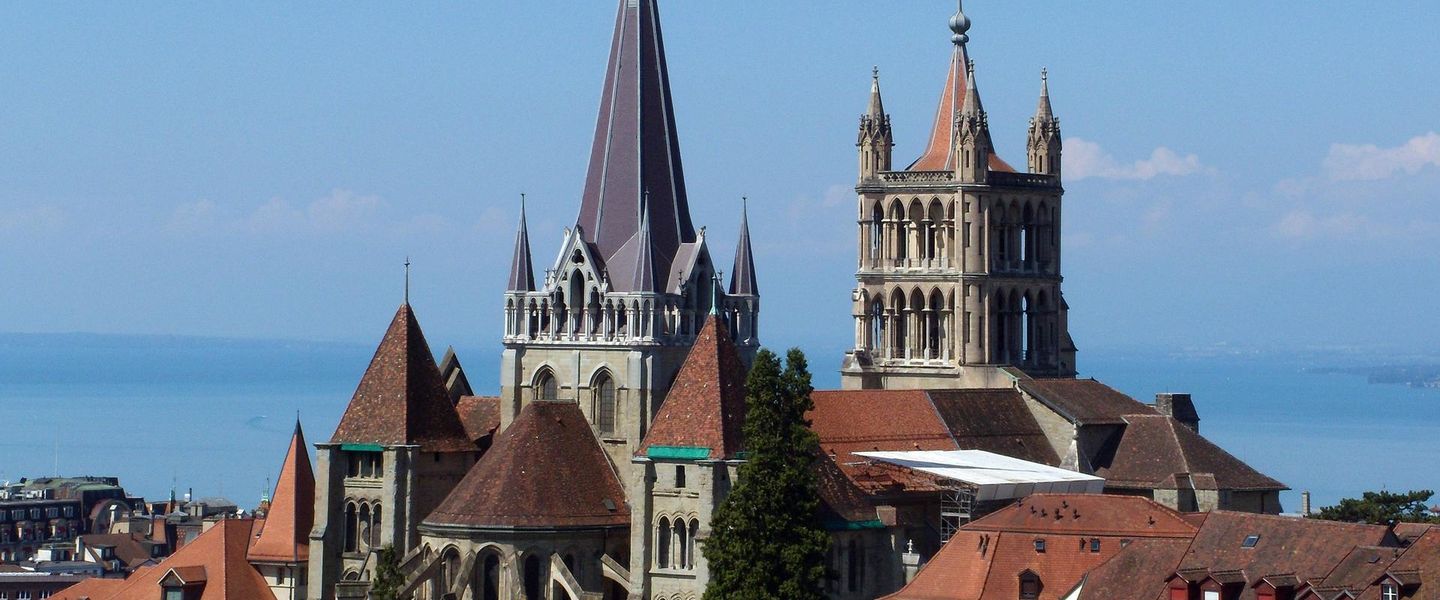


Old Town Lausanne pairs its Gothic cathedral, cobbled lanes, lively markets and lake-facing viewpoints with cafés, museums and Swiss history on the hill.
Cathedral Hill and Medieval Streets
Lausanne’s Old Town climbs the steep southern face of the Cité hill, overlooking the lower districts and, beyond them, Lake Geneva and the mountains. Its centrepiece is Lausanne Cathedral, a monumental Gothic church whose towers, carved portals and broad square give the neighbourhood its historic gravity. Around it, lanes such as Rue de la Mercerie, Rue de Bourg and Rue du Pont thread through a dense townscape of stone façades, arcaded passages and stairways. The Escaliers du Marché, a covered wooden staircase beside the cathedral, is one of the most characteristic routes between the upper city and the market streets below.Read more about Old Town
Squares, Markets and Civic Life
Evening Atmosphere and Lake Views
Explore Old Town on the map
A handpicked selection of must-see spots in Old Town, mapped for you.
Best hotels in Old Town
Old Town essentials
Getting There
Getting Around
Safety
Emergency Situations
Do's and Don'ts
Local Tips

From Eve
Local phrases worth knowing
You don't need to get them perfect. A few words go a long way, and locals appreciate the effort.
Basics
| English | Local | Say it |
|---|---|---|
| Hello | Grüezi | [groo-et-zee] |
| Goodbye | Uf Widerluege | [oof vee-der-loo-geh] |
| Yes | Ja | [yah] |
| No | Nei | [nye] |
| Please/You're welcome | Bitte | [bit-teh] |
| Thank you | Merci vilmal | [mer-see feel-mahl] |
| Excuse me/Sorry | Entschuldigung | [ent-shool-di-gung] |
| How are you? | Wie gohts dir? | [vee gohts deer] |
| Fine. And you? | Guat. Und dir? | [gwat. oond deer] |
| Do you speak English? | Redsch du Englisch? | [red-sh doo ang-gleesh] |
| I don't understand | Ich verstand das ned | [eech fer-shtahnd duss nayd] |
Eating & Drinking
| English | Local | Say it |
|---|---|---|
| I'd like to see the menu, please | Ich möcht gärn d'Menu aluege | [eech merkht gern d'meh-noo ah-loo-geh] |
| I don't eat meat | Ich esse kein Fleisch | [eech ess-eh kine flysh] |
| Cheers! | Proscht! | [proh-sht] |
| I would like to pay, please | Ich möchte bitte zahle | [eech merkht-eh bit-teh tsah-luh] |
Emergencies
| English | Local | Say it |
|---|---|---|
| Help! | Hilf! | [hilf] |
| Go away! | Gang weg! | [gang vehg] |
| Call the Police! | Ruef d'Polizei! | [roof dee-poh-lee-tsey] |
| Call a doctor! | Ruef en Arzt! | [roof en ahr-tst] |
| I'm lost | Ich ha mi verlaufe | [eech hah mee fer-low-fuh] |
| I'm ill | Ich bin krank | [eech been krahng] |
Shopping
| English | Local | Say it |
|---|---|---|
| I'd like to buy... | Ich möcht kaufe... | [eech merkht cow-fuh] |
| I'm just looking | Ich luege nur | [eech loo-geh noor] |
| How much is it? | Wieviel kostet das? | [vee-feel kaw-stet duss] |
| That's too expensive | Das isch zviel tüür | [duss eesh tfeel tewr] |
| Can you lower the price? | Chönd Sie de Priis chürze? | [chohnd zee deh prees choor-tseh] |
Time & Numbers
| English | Local | Say it |
|---|---|---|
| What time is it? | Wieviel Uhr isch es? | [vee-feel oor eesh es] |
| It's one o'clock | Es isch eini | [es eesh eye-nee] |
| Half past (10) | Halb zehni | [hahlb tsey-nee] |
| Morning | Morga | [mor-gah] |
| Afternoon | Namitag | [nah-mee-tahg] |
| Evening | Abe | [ah-buh] |
| Yesterday | Gestere | [geh-steh-ruh] |
| Today | Hüt | [hoot] |
| Tomorrow | Morn | [morn] |
| 1 | Eis | [ice] |
| 2 | Zwei | [ts-vy] |
| 3 | Drei | [dry] |
| 4 | Vier | [feer] |
| 5 | Fünf | [foonf] |
| 6 | Sechs | [zex] |
| 7 | Siebe | [zee-buh] |
| 8 | Acht | [ahkt] |
| 9 | Nün | [noon] |
| 10 | Zäh | [tseh] |
Transport & Directions
| English | Local | Say it |
|---|---|---|
| Where's a/the...? | Wo isch es...? | [voh eesh es] |
| What's the address? | Was isch d'Adresse? | [vahs eesh dah-dreh-suh] |
| Can you show me (on the map)? | Chönd Sie mir zeige (uf em Plan)? | [chohnd zee meer ts-eye-guh (oof em plahn)] |
| When's the next (bus)? | Wänn fahrt de nächscht (Bus)? | [ven fahrt deh nayk-sht (boos)] |
| A ticket (to ....) | E Billett (nach ....) | [eh bee-let (nahk)] |
History of Old Town
The Episcopal Settlement on the Hill
Lausanne’s medieval identity developed around the Cité hill, where the bishop’s seat was established after the decline of the Roman centre at Lousonna beside the lake. The elevated position offered a defensible setting and gradually drew religious, administrative and residential functions away from the lakeside settlement. The cathedral quarter became the political and spiritual core of the town, while roads descending towards the lower districts connected it with markets, workshops and routes across the wider Vaud region. The surviving street pattern, with its steep approaches and compact lanes, reflects this hilltop development rather than a planned modern grid.
The Gothic Cathedral and Medieval Town
The present Lausanne Cathedral was built mainly during the twelfth and thirteenth centuries, replacing earlier religious structures and giving the Cité its defining architectural landmark. Its construction coincided with the growth of Lausanne as an ecclesiastical and commercial centre. Streets around the cathedral accommodated clergy, officials, artisans and traders, while lower routes developed into important places for exchange. The Escaliers du Marché preserves the logic of these connections: it links the upper cathedral quarter with the commercial streets below through a covered stairway whose present form records many phases of rebuilding.
Reformation and Changing Authority
The Reformation transformed the Old Town’s institutional life. In 1536, Bernese forces imposed the Reformation in Lausanne, the bishop left the city and ecclesiastical property was transferred or repurposed. The cathedral became a Protestant place of worship, while former religious buildings acquired civic, educational or residential uses. This change altered the balance of power on the Cité hill and tied Lausanne more closely to Bernese administration. The medieval fabric survived, but its buildings no longer served the same religious hierarchy, creating the mixture of sacred, civic and domestic uses visible in the Old Town today.
Modern Preservation and Urban Change
From the nineteenth century onwards, Lausanne expanded beyond the historic hill as railways, new roads and later public transport shifted commercial growth towards districts such as Saint-François, Flon and the station area. The Old Town retained its administrative, religious and cultural importance but faced the practical pressures of traffic, changing commerce and building modernisation. Conservation work helped protect the cathedral, historic façades, stairways and street pattern, while museums and public institutions gave older buildings new functions. Today the Cité and its surrounding lanes remain part of central Lausanne’s working city rather than a wholly separate heritage quarter.
Old Town in Photos
Browse through our photo collection highlighting the charm and character of the destination.
Neighbourhoods near Old Town
The closest neighbourhoods to Old Town, if you have time for more than one stop.
-

-

-


Swipe for more neighbourhoods
Explore more

Explore more of Lausanne
Lausanne blends Lake Geneva views, Olympic heritage, Gothic architecture, museums and vineyard landscapes in Switzerland’s Vaud region for travellers.
Explore Lausanne