Best Landmarks Near Giessbachfall (Zurich Lake)
Planning a trip to Giessbachfall? Discover the best landmarks nearby with history, expert tips, and routes. Free on web or the Evendo app.


The best landmarks near Giessbachfall
- Top rated
- Closest to Giessbachfall
- Price level: low to high
- Time to spend: shortest first
- A–Z
68 landmarks
-
Protestant church4.5★8,421 reviews
Grossmünster
Grossmünster is one of Zurich’s defining sights: a Romanesque Protestant church with twin towers, a calm interior, and a steep climb to city and lake views. Set in the old town above the Limmat, it combines sacred space, Reformation history, and a compact but memorable panorama. Most visits last under an hour unless you linger for the tower or nearby streets.
Time to spend 0.5–2 hrs
-
Bridge4.7★1,921 reviews
Quaibrücke
Quaibrücke carries road, tram, bicycle and pedestrian traffic across the point where Lake Zürich narrows into the Limmat. The broad bridge links Bellevue with Bürkliplatz and supplies open views along the lake on one side and toward the city and river on the other. Built in the 1880s and widened in 1939, it forms part of Zürich’s historic waterfront development. Visitors cross on foot, pause for photographs or continue along the adjoining quays. The experience is shaped by ordinary urban movement rather than a quiet promenade, with traffic and tram activity present throughout the day.
Open 24 hoursTime to spend 5–15 hrs
-
Hotel4.5★1,320 reviews
Seedamm Plaza
Seedamm Plaza is a large 4-star hotel and conference property in Pfäffikon SZ, set in the transport corridor at the upper end of Lake Zurich. It is geared to business stays, brunches, meetings and short wellness breaks rather than sightseeing. Expect a polished, indoor-heavy complex with restaurants, sauna facilities, a fitness room and event spaces, plus easy rail and road access.
Price level $$Time to spend 0.5–48 hrs
-
Historical landmark4.7★1,011 reviews
Zug Altstadt
Zug Old Town is the compact historic core of the Swiss lakeside city, where narrow streets, plazas, fountains and the Zytturm create an easy, walkable heritage circuit. The area mixes medieval fabric with cafés, restaurants and everyday city life, so a visit feels polished rather than frozen in time. Most travellers come for a slow stroll, photos and a short stop by the lake.
Open 24 hoursTime to spend 0.8–3 hrs
-
Art museum4.6★757 reviews
Pavillon Le Corbusier
Nestled in the heart of Zürich, Pavillon Le Corbusier is a stunning art museum that showcases the genius of modernist architecture and design. This iconic structure, designed by the legendary architect Le Corbusier, serves not only as an exhibition space but also as a testament to innovative design principles. Visitors can explore diverse art exhibitions while enjoying the serene park surroundings that enhance the overall experience.
-
Tourist attraction4.6★535 reviews
Geiserbrunnen
The Geiserbrunnen stands on Bürkliplatz as a monumental limestone fountain completed in 1911. Sculptor Jakob Brüllmann created the central group of a man restraining a powerful bull, while architect Jean Freytag designed the surrounding basin with its twelve water outlets. Commissioned through a bequest from city master builder Arnold Geiser, the work commemorates his civic contributions without depicting his likeness. Visitors can examine the forceful carving at close range and photograph the dramatic composition against the lakefront setting. The fountain forms a brief, free stop within a central Zürich lakeside walk.
Open 24 hoursTime to spend 5–15 min
-
Catholic church4.9★441 reviews
Klosterkirche Einsiedeln
Klosterkirche Einsiedeln is the abbey church of Switzerland’s best-known Benedictine monastery, a grand Baroque interior anchored by the Gnadenkapelle and Black Madonna. Visitors come for prayer, mass, architecture, and the disciplined calm of an active religious house. Expect a substantial church visit rather than a museum stop, with the village of Einsiedeln just outside the monastery walls.
Mon–Sat 6:00–20:30 · Sun 7:00–20:30Time to spend 0.5–2.5 hrs
-
Hotel4.0★538 reviews
ibis Baar Zug
Opposite Baar station, ibis Baar Zug is a straightforward 2-star hotel built for rail arrivals, business overnights, and short stays in the Zug area. Expect modern, compact rooms, breakfast, a bar-snack service, parking, and easy access to trains rather than leisure facilities or scenic grounds.
Price level $$Time to spend 0.5–72 hrs
-
Bridge4.7★428 reviews
Münsterbrücke
Münsterbrücke, a stunning bridge in Zürich, offers breathtaking views of the city and the Limmat River, making it a must-visit for every tourist. With its intricate architecture and vibrant surroundings, it serves as a perfect backdrop for memorable photos and leisurely strolls.
Open 24 hours
-
Hotel4.5★417 reviews
Dialoghotel Eckstein
Dialoghotel Eckstein is a 3-star seminar hotel in Baar, geared to meetings, overnight stays, and group dining rather than leisure sightseeing. The mood is calm and orderly, with a quiet-room concept, courtyard, restaurant, and conference spaces under one roof. It suits business travellers, retreat guests, and anyone wanting a practical base near Zug.
Price level $$Time to spend 2–72 hrs


Ganymede
A bronze sculpture by Hermann Hubacher stands on the raised Bürkliterrasse beside Lake Zürich. Completed in 1952, it shows Ganymed reaching toward an eagle that represents Zeus. The work draws on Greek myth while offering views across the water toward the Alps. Its lakeside position and documented connection to Zürich’s mid-century gay community give the piece a distinctive place among the city’s public artworks.
Daily 0:00–24:00Time to spend 5–15 hrs

Castle Uster
Uster Castle stands on a hill above the town as its defining landmark. Visitors climb the tower for a compact look at historic rooms such as the Knights’ Hall and reach an open viewing platform with wide views across Uster and the surrounding countryside. The short seasonal opening on summer Sunday afternoons makes the visit a focused, free stop rather than a full museum day.
Time to spend 0.5–1 hr

Historische Quais am Zürisee
A double waterfront walkway on Lake Zürich combines an 1880s chestnut-lined avenue with a later platform built directly over the water. The result is two distinct walking experiences side by side along the historic right-bank quay.
Open 24 hoursTime to spend 15–30 min

Kirche Auf der Egg
A striking example of early reinforced-concrete sacred architecture, Kirche Auf der Egg stands on an elevated green ridge in Zürich’s Wollishofen district. Designed by Walter Henauer and Ernst Witschi and completed in 1937, the curved hall, pale limestone cladding and slim tower form part of a planned ensemble with vicarage and terraced housing. The broad interior and noted acoustics suit concerts and events, while the open site offers views toward Lake Zürich. Casual visitors experience the building and setting mainly from outside; interior access depends on services or arranged visits.
Time to spend 0.2–1.5 hrs

Reformierte Kirche Enge
Reformierte Kirche Enge stands as a prominent Neo-Renaissance landmark on an elevated moraine hill in Zürich’s Enge quarter. Designed by Alfred Friedrich Bluntschli and completed between 1892 and 1894, the church features a domed central plan and a separate campanile-style tower that define its silhouette above the city and lake. Visitors can explore the formal granite staircase approach, landscaped grounds, and the light-filled interior used for worship and events. On scheduled dates, guided tours climb the tower to a viewing platform offering broad panoramas over Zürich and the lake basin. The building remains an active Reformed congregation site, so services or events may occasionally affect access.
Daily 7:00–19:30Time to spend 15–45 min

Mahmood Mosque, Zürich
Mahmud Mosque stands as Switzerland’s first purpose-built Islamic place of worship. Completed in 1963 by the Ahmadiyya Muslim Jamaat on Forchstrasse in Zürich, the modest two-storey building with its slender minaret occupies a quiet residential stretch of the Balgrist neighbourhood. Visitors see an active neighbourhood mosque rather than a conventional tourist site: the compact exterior and occasional view into the prayer hall convey the building’s role in the city’s religious landscape. The mosque remains open daily for worship and community use, offering a direct encounter with contemporary Ahmadiyya practice and a modest landmark in Zürich’s built environment.
Daily 5:00–21:00Time to spend 10–30 hrs

Wehrmännerdenkmal
Wehrmännerdenkmal, also known as the Forch memorial, is a compact open-air monument above Küsnacht that honours Zurich soldiers who died in wartime service. Set in an exposed, semi-rural landscape, it is less a place to linger than a place to pause: read the inscriptions, take in the views, and absorb the quiet civic tone. It works best as a short heritage stop in clear weather.
Daily 0:00–24:00Time to spend 0.2–1 hr

Stadthaus Zürich
The Stadthaus stands as Zurich’s working municipal headquarters on the Limmat, its tall neo-Gothic riverside façade and sculpted half-figures marking a late-19th-century expansion of city government. Visitors can view the exterior and accessible interior spaces during weekday hours, with occasional free exhibitions on Zurich topics adding cultural depth when scheduled.
Mon–Fri 8:00–16:30Time to spend 10–20 hrs

Ruine Wildenburg
Ruine Wildenburg is a compact medieval castle ruin above the Lorzentobel ravine in Baar, reached by a short uphill walk through woodland. Stone walls, a round tower and the remains of a palas frame views over the gorge, making this more a scenic heritage stop than a full castle complex. It is quiet, free to enter and best combined with the nearby waterfall or Höllgrotten area.
Daily 0:00–24:00Time to spend 0.5–2 hrs

Church of St. Anton
The Church of St. Anton is an early-20th-century Roman Catholic parish church in Zürich’s Hottingen quarter. Designed by Robert Curjel and Karl Moser and completed in 1908, it combines Romanesque basilica forms with early-modern restraint. Inside, frescoes by Fritz Kunz and the 1914 Kuhn organ, Zürich’s oldest fully preserved organ, give the broad, light-filled nave its principal visual and musical interest. The building remains an active parish church that also hosts English-language Masses, making it a place for both quiet architectural appreciation and regular worship.
Time to spend 15–30 hrs

Flower Clock
At Bürkliplatz on Zürich’s lakefront, the Flower Clock is a compact public landmark built for quick stops and photographs. The oversized clock face changes with the seasons, so the look shifts through the year, but the setting stays constant: flat promenade paving, passing trams, lake views, and steady city movement. Most visitors spend only a few minutes here before continuing along the waterfront.
Open 24 hoursTime to spend 0.1–1 hr

Fatih Camii
Fatih Camii in Baar is an active mosque and community centre rather than a sightseeing monument. Expect a quiet, indoor visit shaped by prayer times, shoes-off etiquette and a respectful, observant atmosphere. Set on a commercial street in the Zug area, it is practical to reach by public transport and best suited to culturally curious visitors or worshippers.
Time to spend 0.2–2 hrs

Ruine Manegg
The modest stone traces of Burg Manegg stand on a wooded spur of the Albis ridge above Zürich-Leimbach. Once the seat of the Manesse family linked to the Codex Manesse, the site today offers a short, quiet stop on a forest walk rather than substantial castle walls or exhibits. Visitors reach the ruin by steep paths through woodland, where the setting and the climb form the main experience. Little masonry survives after centuries of erosion and a recorded fire in 1409, so the attraction lies in the historical association and the surrounding trees rather than panoramic views or restored interiors.
Daily 0:00–24:00Time to spend 15–30 min

Katholische Kirche St. Jakob
St. Jakob is Cham’s parish church and one of the town’s clearest landmarks, its tower rising above the Kirchbühl near the Lorze outlet from Lake Zug. The late-Baroque church dates to the 1780s, but the parish history reaches back to the Middle Ages. Visitors usually come for a quiet look inside, a service, or the setting rather than a long sightseeing stop.
Daily 0:00–24:00Time to spend 0.2–1.5 hrs

Statue Hans Waldmann
The Statue of Hans Waldmann in Zürich is a captivating historical landmark that offers visitors a unique insight into the city's rich past. Erected in honor of the 15th-century mayor, the statue serves as a significant cultural symbol and a perfect spot for photos.
Open 24 hours

Centralhof Monument
Centralhof Monument stands as a magnificent testament to Zürich's rich history and culture. Nestled in the heart of the city, this historical landmark captivates visitors with its intricate architecture and serene ambiance, making it a must-see for tourists exploring Switzerland's largest city.
Open 24 hours

Zytturm Zug
Zytturm is Zug’s emblematic medieval tower, rising from Kolinplatz in the compact old town. Its astronomical clock, former gatehouse role and occasional interior climb make it a short but rewarding stop. Expect cobbled streets, close-set façades and a quick dose of civic history rather than a long museum visit.
Open 24 hoursTime to spend 0.2–1.5 hrs

Pulverturm Zug
Pulverturm Zug is a 16th-century powder tower in the old town, one of the few surviving pieces of the city’s fortifications. Visits are usually arranged, not casual drop-ins, so the experience feels intimate and deliberate: thick walls, a short history-led tour, and, on some visits, views over the old town. It suits travellers who prefer compact heritage sites to large museums.
Price level $$Time to spend 0.5–2 hrs

St. Michael Church - Zug
St. Michael Church is Zug’s largest church and one of its most recognisable historic landmarks, set above the old town on Kirchenstrasse. Built between 1898 and 1902, it combines a calm parish atmosphere with a strong civic presence and broad town views. Most visitors come for a brief, self-guided stop: to step inside, take in the historicist interior, and continue into the compact old town below.
Mon–Thu 9:00–12:00, 14:00–17:00 · Fri 9:00–12:00Time to spend 0.2–2 hrs

Kirchgemeinde Zug
St. Oswald’s Church is one of Zug’s defining historic buildings, a late Gothic Catholic parish church in the old town. Built from 1478 onward, it draws visitors for its stone façade, tower, and calm interior rather than for a long visit. Expect a short, self-directed stop that fits neatly into a walk through the compact historic centre.
Time to spend 0.2–1.5 hrs

Ulrich Zwingli Monument
This bronze statue of Ulrich Zwingli stands in the open air beside the Wasserkirche on Zürich’s Limmatquai. The larger-than-life figure holds a Bible in one hand and a sword in the other, giving a clear visual summary of the reformer’s dual role as preacher and civic leader. Created by Austrian sculptor Heinrich Natter and unveiled in 1885, the memorial forms a compact, free stop on any walk through the Old Town. Its riverside setting places it directly among other Reformation landmarks, making it easy to view the sculpture, read its details, and continue on without tickets or queues.
Open 24 hoursTime to spend 5–15 hrs

Kreuzkirche
Kreuzkirche stands on a raised terrace in Zürich’s Hottingen district, its prominent dome marking the skyline above Dolderstrasse. Built 1902–1905 by architects Otto Pfleghard and Max Haefeli, the cross-shaped Reformed church features a bright central space beneath a large dome and hosts organ and choral performances. The protected building and its landscaped grounds offer a quiet architectural visit during weekday opening hours, with the 75-register organ providing notable acoustics for music events.
Mon–Fri 8:00–16:00Time to spend 15–30 min

Viewpoint Kopf Hoch - Zürichsee
Stones submerged in Lake Zürich spell the quiet encouragement “Kopf Hoch” at the lakeside end of Quaibrücke. This understated public artwork sits at water level beside Bürkliplatz, offering a brief pause to look for the lettering while taking in the open lake, passing boats and the central waterfront promenade. The feature is small and easily missed, best noticed during a lakeside walk rather than as a standalone destination. Light, reflections and water conditions affect visibility, so the experience rewards a slow, curious glance from the public shore. It forms a modest visual detail within Zürich’s historic Quaianlagen rather than a raised viewpoint or organised attraction.
Time to spend 5–15 hrs

Zürichsee Kreisel
A compact observation deck extending over Lake Zurich in the Tiefenbrunnen area provides a close-up vantage across the water. It sits within a recreational lakeshore stretch on Zürich’s eastern side and pairs naturally with a walk along the shore or a visit to the adjacent bathing facility. Clear days may reveal distant alpine outlines, while the platform itself remains a modest stop rather than a destination in its own right.
Daily 0:00–24:00Time to spend 5–15 min

Gubelhof Suites
Gubelhof Suites is a small serviced-apartment property in central Zug, a short walk from the main station and the Metalli shopping area. It suits travellers who want privacy, self-catering convenience, and a quiet, polished base rather than a full-service hotel. Expect apartment-style living, breakfast on request, laundry support, and an easy urban location for business or short stays.
Price level $$Time to spend 1–21 hrs

English-speaking Catholic Mission
The English-Speaking Catholic Mission provides regular English-language Masses for Zürich’s international Catholic community at St Anton Church. Founded in 1962, it serves more than 700 families from over 70 nationalities and welcomes visitors seeking familiar worship in English. Services take place at the substantial early-20th-century church whose long nave, coloured marble and painted chancel create a reflective setting for liturgy and quiet prayer.
Time to spend 0.2–1 hr

Katholische Kirche Dreikönigen
A compact 1951 Catholic parish church in Zürich’s Enge district, built by Ferdinand Pfammatter and Walter Rieger. Its light-filled nave, tall patterned windows, and stained-glass works by Paul Monnier create a quiet, modern sacred space that remains an active place of worship and reflection.
Time to spend 15–30 min

Good Shepherd / Gut Hirt
Good Shepherd, or Gut Hirt, is an active Catholic parish church on Baarerstrasse in Zug, known for its multilingual worship and community life. This is not a grand sightseeing monument but a working church where visitors come for Mass, prayer, confession, concerts, and parish events. Expect a calm, devotional atmosphere and a brief, respectful visit rather than a long tour.
Daily 7:00–19:00Time to spend 0.2–3 hrs

Kirche St. Michael
Kirche St. Michael is Zug’s largest church and a defining old-town landmark, set on Kirchmattstrasse with a strong, elevated presence over the city. Built in a historicist style between 1898 and 1902, it draws visitors for its exterior, quiet interior, and links to local traditions such as the Chriesisturm. Expect a brief, reflective stop rather than a long visit.
Time to spend 0.2–1 hr

St Andrew's Anglican Church
St Andrew's Anglican Church offers English-language worship in a historic Gothic Revival building at the heart of Zurich's Old Town. The active congregation welcomes visitors to traditional and sung Holy Communion services on Sundays and a weekday service on Wednesdays. Set on the Hohe Promenade near the Kunsthaus, the church combines regular Anglican liturgy with choral music and a listed nineteenth-century interior. Attending a service is the primary way to experience the space, with the sung Eucharist providing the fuller musical setting. The congregation draws an international mix of residents and travellers and maintains a welcoming atmosphere for families and individuals of any denomination.
Wed 9:15–9:45 · Sun 9:00–9:45, 10:30–11:45Time to spend 45–90 hrs

Züri Leu von Urs Eggenschwyler
The Züri Leu stands eight metres tall on the Hafendamm Enge, a monumental artificial-stone lion created by Urs Eggenschwyler in 1894. Positioned beside Lake Zurich, it embodies the city’s heraldic symbol in a simple public setting that rewards a brief stop during any waterfront walk. The sculpture’s scale and lakeside placement make it an immediate landmark, yet it remains an unadorned outdoor artwork without interpretive facilities or entry requirements.
Open 24 hoursTime to spend 5–15 hrs

Liebfrauenkapelle
The Liebfrauenkapelle is a small Catholic chapel in Zug’s old town, first documented in 1266 and tied to the city’s medieval wall. Its plain fortified exterior gives way to a compact interior with late Gothic wall paintings and a Baroque Marian cycle. Visits are brief, quiet, and best folded into a walk through the historic centre.
Time to spend 0.2–1 hr

Kolinbrunnen
Kolinbrunnen is a compact 16th-century fountain on Kolinplatz in Zug’s old town, better suited to a brief pause than a long visit. It anchors the square with carved detail, civic history, and a calm, walkable setting among narrow streets and historic façades. Most travellers stop for photos, orientation, and a short look at one of Zug’s oldest ornamental landmarks.
Open 24 hoursTime to spend 6–30 min

Sechseläutenplatz
Sechseläutenplatz is Zürich’s largest inner-city square, a broad paved plaza beside Lake Zürich that serves as both everyday meeting point and stage for the city’s most distinctive public festivals. Visitors cross its Vals quartzite surface between Bellevue and the Opera House, rest on movable chairs beneath tree islands, or watch water features while linking lakeside walks with central tram lines. Its defining character emerges during events, when the spring Sechseläuten festival fills the space with the ritual burning of the Böögg snowman effigy, a tradition maintained here since 1904.
Time to spend 0.2–1 hr

Rotes Schloss
The Rotes Schloss stands out on Zürich’s western lakefront with its imposing red facade and castle-like roofline. Built between 1891 and 1893 as a grand apartment complex during the city’s lakeshore expansion, it remains a privately occupied residential and commercial building. Visitors appreciate its scale and historicist detailing from the public streets and promenade. The structure is listed as an A-category cultural property. It forms a quick, free stop during a walk along General-Guisan-Quai, best combined with the nearby Kongresshaus, Tonhalle, or Arboretum.
Open 24 hoursTime to spend 10–20 min

Zug Reformed Church
The Reformierte Kirche Zug is the main Reformed Protestant church in central Zug, used for worship, organ music, and brief reflective visits. Its weekday CityOase quiet space adds seating and water, making it a practical stop for travellers who want a calm pause rather than a monument tour. Expect a modest urban church interior and a local, contemplative atmosphere.
Time to spend 0.2–2 hrs

Grand Tour of Switzerland - Photo Spot Meilen
Nestled along the picturesque shores of Lake Zurich, the Grand Tour of Switzerland - Photo Spot Meilen offers breathtaking views that are perfect for capturing unforgettable memories. This hidden gem is a must-visit for tourists seeking stunning landscapes and serene environments. Immerse yourself in the natural beauty and enjoy a peaceful stroll along the lakefront, surrounded by the majestic Swiss Alps in the distance.
Open 24 hours

Saint Anna Kloster
Tucked into the outer old town of Zug, St Anna Monastery is a former Capuchin house that still functions as a Catholic place of prayer. The setting is compact and quiet: narrow lanes, plain historic façades, and an interior shaped more by devotion than display. Most visitors come for a brief pause, a service, or a reflective stop on an old-town walk.
Time to spend 0.2–2 hrs

Greth Schell Brunnen
Greth Schell Fountain is a compact historic stop in Zug’s old town, set on Unter Altstadt opposite the Chapel of Our Lady. Visitors usually pause here for a quick look, a photo, and the local legend behind the sculpture, which is tied to Zug’s long-running carnival custom. It is best visited as part of a short walking loop rather than as a standalone attraction.
Time to spend 3–20 min

Das weisse Schloss
Das Weisse Schloss is a protected late-19th-century residential and commercial complex on Zurich’s General-Guisan-Quai. Its pale limestone façade, corner turrets and elaborate roofline create a castle-like silhouette directly beside Lake Zurich. The building dates from 1890–1893 and remains in mixed residential and office use. Visitors view the ornamented exterior from the public street and waterfront; no public interior access is available. It serves as a concise architectural stop during lakefront walks rather than a staffed attraction.
Time to spend 5–15 hrs

Grand Tour of Switzerland - Photo Spot Stäfa
Nestled along the picturesque shores of Lake Zurich, Stäfa offers breathtaking views and a perfect photo opportunity for visitors exploring the Grand Tour of Switzerland. This charming town, known for its scenic landscapes and vibrant culture, invites tourists to capture unforgettable moments amidst its natural beauty.
Open 24 hours

Brunnen am Zentralhof
A compact 1877 cast-iron fountain stands at the centre of a planted courtyard off central Zürich’s busy streets. Its three-winged lion design and the enclosed setting create a brief, quiet pause between Bahnhofstrasse and Paradeplatz. The fountain marks the site of an earlier horse trough once used by stagecoaches, now surrounded by façades that shelter the space from surrounding traffic. Visitors reach it on foot from nearby tram stops or shopping streets. The stop requires only a few minutes yet offers a clear contrast between the commercial district and this small historic enclave.
Time to spend 5–15 hrs

Rhino statue
A life-size rust-brown iron rhinoceros sculpture by Swiss artist John A. Tobler stands on the pavement outside the Zürcher Kantonalbank headquarters. The 500-kilogram artwork, assembled from roughly 1,000 parts, was installed in 1983 and quickly became a familiar photo subject and meeting point on Zürich’s main shopping street. Positioned at street level near the Kantonalbank tram stop, it offers a brief, free encounter with contemporary public art amid the flow of pedestrians and trams.
Time to spend 2–10 hrs

Schutzengelkapelle
The Schutzengelkapelle is a compact 17th-century chapel in a residential part of Zug, valued more for its history and quiet presence than for spectacle. Built in 1666 and consecrated in 1667, it sits on Chamerstrasse in the Schutzengel quarter, where it reads as a modest local landmark rather than a standalone attraction. Expect a brief, calm stop, with the main interest in its historic fabric and neighborhood setting.
Time to spend 6–30 min

Kapuzinerturm
Kapuzinerturm is a compact but telling piece of Zug’s old fortifications, marked by its 16th-century origins and the date 1526 on the structure. Set in the old town, it is best visited as part of a slow walking circuit rather than as a standalone stop. Expect a brief exterior view, a quiet streetscape, and a clear sense of the city’s medieval layout.
Time to spend 0.1–1 hr

Das Haus zum Loch
Das Haus zum Loch is a small but historically weighty heritage house in Zürich’s Old Town, set at Zwingliplatz beside the Grossmünster. Visitors usually pause here for the façade, plaque, and the sense of deep urban history rather than for an interior visit. It works best as part of a walk through the church quarter, where medieval, Reformation-era, and civic layers sit tightly together.
Open 24 hoursTime to spend 6–45 min

In Memoriam Otto Honegger
In Memoriam Otto Honegger in Stallikon is a poignant historical landmark that honors the legacy of Otto Honegger. Visitors can reflect on his contributions in a serene environment surrounded by nature's beauty.

Ganswürger Fountain
The Ganswürger Fountain is a small marble sculpture from around 1855 set within Zurich’s Rieterpark in the Enge district. It shows a child grappling with a goose, the motif that gives the work its name. The piece stands as one of several modest outdoor artworks in the landscaped park near Lake Zurich. Visitors reach it on foot while walking through the green space, making it a brief, quiet stop rather than a destination in its own right. The fountain remains freely accessible at all times and forms part of the city’s public-art collection.
Time to spend 5–15 hrs

Panorama-Sitzbank
Panorama-Sitzbank is a small outdoor viewpoint stop in Zug, set on a hillside edge above the city. There is no formal visitor complex here, just a bench and an open outlook that invites a short pause, a photo, or a quiet break. On clear days, the appeal is the broad sweep over the lake basin and surrounding landscape.
Open 24 hoursTime to spend 6–30 min

Sri Sivasubramaniar Temple
A Tamil Shaivite Hindu temple dedicated to Lord Murugan that served as a key religious and cultural centre for Zürich-area Tamil communities from 1994 until its departure from the Sihlweg site in late 2026.
Time to spend 0.5–2 hrs

Beautiful view point
A straightforward urban waterfront viewpoint on Lake Zürich at Bürkliplatz, offering open views across the water toward the opposite shore and, on clear days, the distant Alps. The site sits beside the tree-shaded Bürkli terrasse and the busy tram stop, forming part of Zürich’s late-19th-century lakeside quay. Visitors stop briefly for photographs, to sit by the water or to continue along the promenade. The experience is public, open-air and integrated with the surrounding square, boat pier and city streets rather than a dedicated scenic platform.
Time to spend 10–30 hrs

Bürgli Brunnen
This 1906 semicircular limestone fountain stands at the Bürglistrasse–Felsenkellerweg junction in Zürich’s Enge district. Designed by Heinrich Emil Schneebeli and Alfred Friedrich Bluntschli, the 8-metre-wide structure with its colonnade and benches offers a quiet pause, drinking water, and a glimpse of the neighbourhood’s historic setting near the Reformed Church Enge.
Open 24 hoursTime to spend 5–15 hrs

Southernmost Point of Meilen District
This is a small shoreline marker on Lake Zurich, more geographic curiosity than formal attraction. Visitors come for a brief pause: a look across the water, a few photos, and an easy lakeside walk in Stäfa. The setting is open, flat, and quiet, with the lake doing most of the work. It suits travellers already on the shore rather than those planning a special trip.
Time to spend 0.1–1 hr

Felsenegg
Felsenegg offers a sweeping panorama over Lake Zürich and the city from an 800-metre hilltop on the Albis ridge. Visitors reach the open viewing area by a short aerial cable-car ride from Adliswil, then enjoy the outlook across the lake and, on clear days, distant Alpine peaks. The site also marks the start of the Planet Trail and several ridge walks that follow the wooded crest toward Uetliberg or Albis Pass. The experience centres on outdoor scenery rather than indoor exhibits, with the five-minute ascent passing over meadows and woodland before the broader landscape opens out. A nearby excursion restaurant provides traditional Swiss dishes and a place to linger with the view, though the viewpoint itself remains a free, publicly accessible destination focused on the panorama and onward trails.
Price level $$Time to spend 0.5–3 hrs

Bellevuepl.
Nestled in the heart of Zürich, Bellevueplatz is a vibrant square that serves as a gateway to the city's cultural treasures. With its stunning views of Lake Zürich and the Alps, it offers tourists a perfect blend of relaxation and exploration. Enjoy the lively atmosphere, explore nearby attractions, and savor local delicacies at nearby cafes and restaurants.

Bellevueplatz
Bellevueplatz is the busy public square and tram hub on the eastern edge of Zürich’s historic centre, where the Limmat flows out of Lake Zürich. It serves as a practical meeting point and navigation landmark for routes to the Old Town, lakefront promenade and Opera House area. The square’s character comes from constant tram and pedestrian movement across paved streets and tracks, with the restored Herter pavilion as its most distinctive structure. It offers little in the way of seating or quiet space, so most visitors pass through or pause briefly before continuing to the adjacent waterfront or Sechseläutenplatz.
Time to spend 5–20 hrs

Bürkliplatz
Bürkliplatz is a picturesque square located in the heart of Zürich, offering stunning views of Lake Zürich and the surrounding mountains. A hub of activity, this iconic location is perfect for leisurely strolls, boat cruises, and soaking in the vibrant atmosphere of the city.

Tram Bürklipl.
Nestled in the heart of Zürich, Tram Bürklipl. is not just a transport hub; it is a vibrant intersection of culture and city life. Tourists will find themselves surrounded by stunning views of Lake Zürich and the Alps, making it a picturesque starting point for exploring the city. Its convenient location connects visitors to various attractions, shops, and eateries, ensuring a delightful experience as you navigate through this beautiful Swiss city.
Explore Giessbachfall on the map
A handpicked selection of must-see spots near Giessbachfall, mapped for you.
More about Giessbachfall
Giessbachfall travel guide
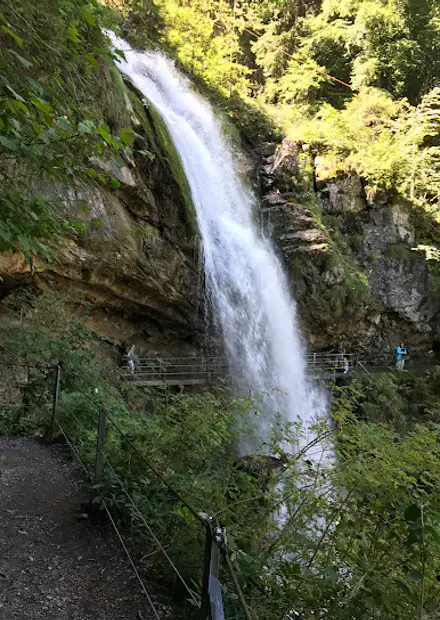
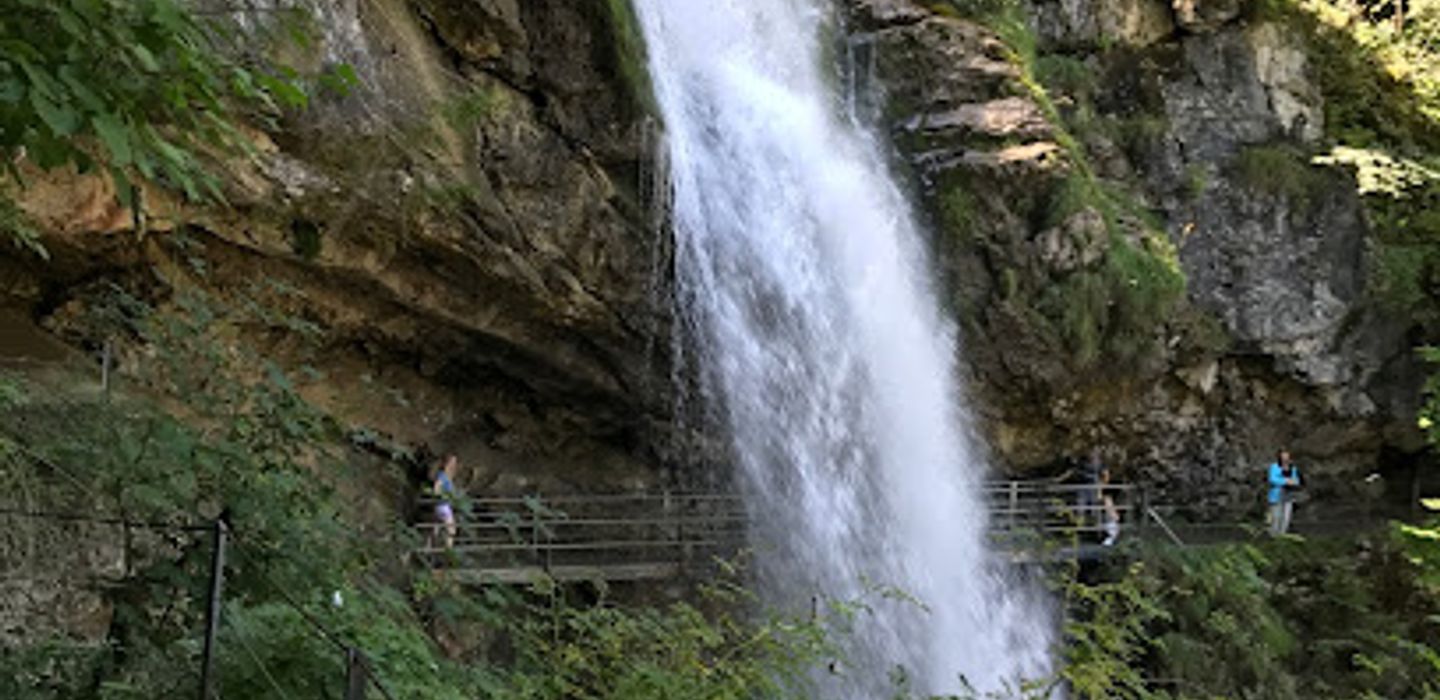
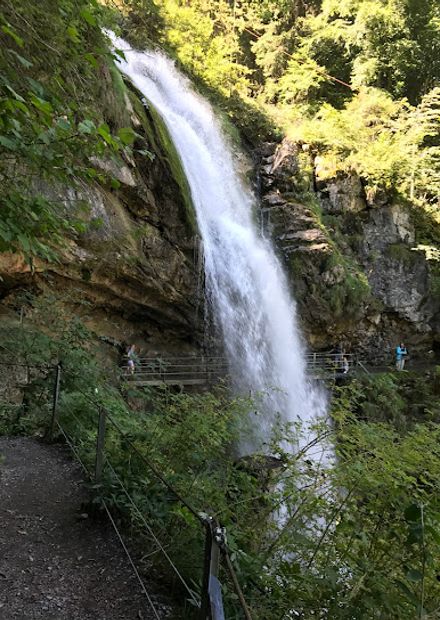
A compact waterfall in Wädenswil’s Giessen area, reached easily by local bus and best enjoyed as part of a short lakeside walk.
Tell me more about GiessbachfallMore to explore near Giessbachfall

 Best experiences near Giessbachfall

 Best hotels near Giessbachfall

 Best attractions near Giessbachfall

 Best shops near Giessbachfall

 Best bars near Giessbachfall

 Best restaurants near Giessbachfall
Explore more

Explore more of Zurich Lake
Discover Zurich Lake: A Swiss haven of tranquility and activity, offering scenic boat tours, charming towns, and cultural events year-round.
Explore Zurich Lake
Getting your guide ready…
We are putting together a fresh copy of the Giessbachfall guide. This can take up to a minute.
This can take a few moments. If your browser asks, choose Allow so the download can start. You'll find the guide in your Downloads folder.
Nothing happened? Download it again
Sorry, the guide is taking longer than usual. Please try again in a minute, or get it by email instead.