
Chapel Bridge, Lucerne: the city’s medieval river crossing
Lucerne’s medieval wooden bridge, with painted panels, the Water Tower, and close-up river views that make a short walk feel like a city landmark stop.
Chapel Bridge is Lucerne’s signature sight: a covered 14th-century wooden footbridge lined with painted panels and paired with the Water Tower. Crossing it takes only minutes, but the river views, old-town façades, and constant camera traffic make it one of the city’s most concentrated photo stops. Best visited early or late, when the bridge feels less compressed.
A brief summary to Chapel Bridge
- Kapellbrücke, Lucerne, 6002, CH
- Click to display
- Click to display
- Duration: 0.25 to 1.5 hours
- Free
-
 Outdoor
- Mobile reception: 5 out of 5

Know before you go
Hi, I'm Eve. Here are a few practical things to know before exploring Chapel Bridge.
- Go early or late if you want cleaner photos and fewer people in the frame.
- Walk slowly under the roof to catch the painted panels; they are easy to miss if you cross too quickly.
- Combine the bridge with the old town and river quays rather than treating it as a standalone stop.
Do you manage this location?
Take control to get all the benefits, like improved information, better appearance, and stronger visibility across AI-powered discovery. Learn more
Activate your presence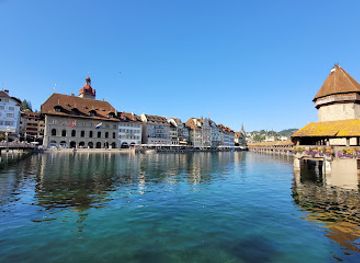
Getting There
-
On foot from the station
The most practical approach is a short walk from Lucerne’s main station, usually around 10 to 15 minutes through the central streets.
-
From the old town
If you are already in the historic centre, the bridge is an easy pedestrian stop folded into a wider walk along the river and squares.
-
By car
Driving is possible, but central parking is less convenient than arriving on foot or by rail, especially at busy times.
-
By public transport
Rail is the most efficient option for visitors coming from outside Lucerne; the bridge is straightforward to reach without a taxi.
For the on-the-go comforts that matter to you
-
 Restrooms
-
 Drink Options
-
 Food Options
-
 Seating Areas
-
 Sheltered Areas
-
 Trash Bins
-
 Information Boards
Discover more about Chapel Bridge
What it is
Chapel Bridge, or Kapellbrücke, is Lucerne’s best-known landmark and one of Europe’s oldest surviving wooden bridges. Built in the 14th century as part of the city’s fortifications, it now serves as a pedestrian crossing over the Reuss River and a compact showcase of Lucerne’s historic identity. The bridge’s painted gable panels, many showing scenes from local history, give it a museum-like quality without turning it into a formal attraction.What the visit feels like
A visit is usually brief and self-directed. You approach from the old town or the riverbank, step under the covered roof, and move slowly with the flow of visitors while looking up at the panels and out through the open sides. The bridge is narrow enough that people naturally pause, which creates a stop-start rhythm rather than a smooth crossing. The Water Tower stands beside it like a visual anchor, and the river, quays, and historic façades frame nearly every photograph. It is busy, but the movement is orderly and the effort is minimal.Why travellers come
People come here because the bridge condenses Lucerne into one view: medieval timber, painted decoration, river reflections, and the old town in a single line of sight. It is especially useful for first-time visitors who want a quick orientation to the city’s historic core. Photographers linger for the tower, the bridge roofline, and the layered cityscape; couples and solo travellers often treat it as a short scenic walk between cafés, squares, and waterfront streets. The bridge is not a long-duration attraction, but it is one of the few places where a city landmark, a working pedestrian route, and a historic object overlap so clearly.History and setting
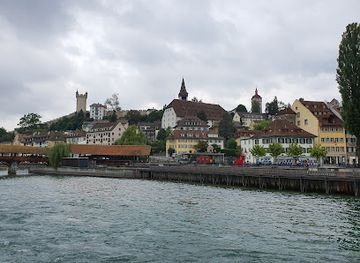
The bridge originally formed part of Lucerne’s defensive system, and its position across the Reuss made it both practical and symbolic. A major fire in 1993 destroyed much of the structure, and the rebuilt bridge reopened the following year, which adds a modern chapter to its medieval story. The adjacent Water Tower has served several roles over time, including prison, archive, treasury, and storehouse. Today the whole setting is urban and compact: river below, old town beside it, and a dense cluster of streets, churches, and quays within a short walk.Practical expectations
Access is easy on foot from Lucerne’s centre and main station, and the bridge itself is free to cross. There are no formal visitor facilities on the bridge, so plan on using nearby city amenities for restrooms, food, and seating. Crowds are heaviest in daylight, especially in good weather and during holiday periods. Early morning and late evening are the quietest times and usually the best for photographs. Rain does not close the bridge, but it shortens visits; clear weather brings the strongest views and the most congestion.Explore the best of what Chapel Bridge has to offer













More about Central Switzerland
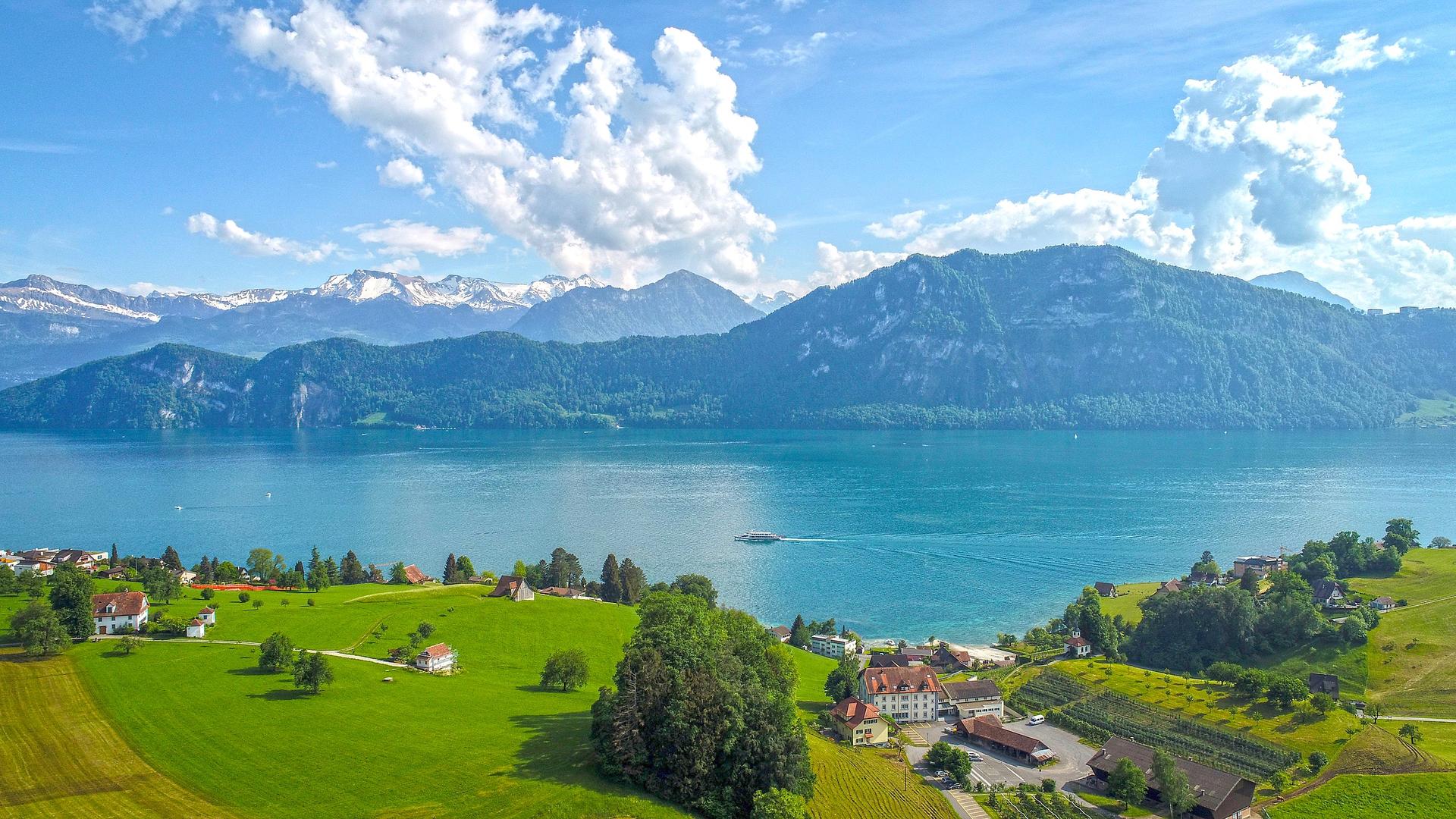
Discover Central Switzerland: A blend of history, culture, and stunning natural landscapes in the heart of Switzerland.
Tell me more about Central Switzerland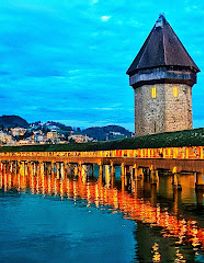
Experience the tranquility of rural Switzerland at the enchanting Shepherd with Sheep, a unique attraction in the heart of Lucerne amidst stunning Alpine views.
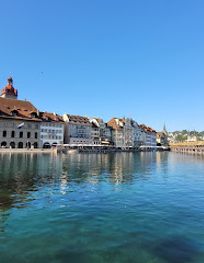
Experience the stunning views and vibrant atmosphere of Rathausquai, Lucerne's picturesque lakeside promenade and cultural hub.
