Castle Sween Travel Guide
Free Guide: Explore Castle Sween, Scotland’s oldest stone castle, perched on Loch Sween’s shore with centuries of clan history and stunning coastal views.


A brief summary of Castle Sween
Explore Castle Sween, Scotland’s oldest stone castle, perched on Loch Sween’s shore with centuries of clan history and stunning coastal views.
Castle Sween, located on a low rocky ridge overlooking Loch Sween in Argyll, is Scotland’s oldest standing stone castle, dating back to the 1100s. Built by Suibhne ‘the Red’, a chieftain of Irish descent, it served as a strategic coastal stronghold for centuries. The castle’s thick curtain walls and historic ruins tell stories of clan battles, Norse influence, and medieval power struggles, making it a captivating site for history enthusiasts and scenic explorers alike.
On-site amenities
 Information boards
 Seating areas
 Trash bins
Opening hours
- Every dayOpen 24 hours
Opening hours as listed on the venue’s Google Business Profile. Hours can change for services and special events, so check with the venue before you go.
- Address
- Lochgilphead PA31 8PT
- Website
Getting there
Car
Bus and Walk
Walking
Discover more about Castle Sween
Origins and Early Foundations
Castle Sween is widely recognized as the oldest stone castle on the Scottish mainland that can be confidently dated, with its origins tracing back to the 1100s. It was constructed by Suibhne ‘the Red’, an Irish-descended chieftain and ancestor of the MacSweens clan. The castle’s location on a low rocky ridge overlooking Loch Sween was chosen for its strategic importance, providing commanding views over the sea loch and surrounding lands. Its rectangular curtain wall, approximately 2 meters thick and 8 meters high, enclosed a quadrangular courtyard, with architectural features such as broad buttresses dating the structure to the Norman style of the 12th century. Originally, the castle likely incorporated timber and earth defenses alongside its stone walls, serving as a fortified harbour for Suibhne’s warships amid the Norse-dominated western coast of Argyll.
Medieval Power and Clan Rivalries
Throughout the 13th and 14th centuries, Castle Sween was a focal point of clan power struggles and shifting lordships. The MacSweens held sway over Knapdale and the surrounding territories until the mid-1200s, when control passed to the Stewart Earls of Menteith as part of Scottish efforts to consolidate power in the region. Around 1300, John MacSween attempted to reclaim the castle but failed despite assembling a fleet. The castle then came under the influence of the MacDonald Lords of the Isles, who held it for roughly 150 years. During this period, the castle was maintained by castellans from the MacNeil and MacMillan families. The castle’s role extended beyond military defense; it was a symbol of clan dominance and a center for regional governance.
Architectural Evolution and Strategic Importance
Castle Sween’s architecture evolved over centuries, reflecting its enduring strategic importance. A notable addition was a three-story seaward tower built circa 1300, enhancing its coastal defense capabilities. Later, in the late 15th century, the Campbells of Argyll took possession, adding a round tower known as the MacMillan Tower and a rectangular building within the courtyard, possibly serving as barracks. The castle’s proximity to the sea was vital, with a nearby islet cleared to serve as a boat landing, underscoring the importance of maritime access for trade, travel, and military maneuvers in medieval Scotland.
Conflict and Decline
The castle’s fortunes waned during the mid-17th century amid the Wars of the Three Kingdoms. In 1647, it was attacked and burnt by Alasdair MacColla, a Scottish-Irish soldier allied with the MacDonalds, inflicting damage that was never repaired. This assault marked the beginning of the castle’s decline into ruin. Despite its abandonment, the site remains a powerful emblem of Scotland’s turbulent medieval history and the shifting allegiances of its ruling clans.
Archaeological Discoveries and Cultural Legacy
Excavations at Castle Sween have uncovered artifacts spanning from the Neolithic to the medieval period, including a stone axe, medieval brooches, and a 15th-century harp peg associated with the Lords of the Isles. These finds highlight the site’s long-term significance and continuous occupation. The castle also features in Gaelic literature, notably in poems lamenting clan struggles and loss, enriching its cultural heritage. Today, Castle Sween is protected by Historic Scotland and offers visitors a tangible connection to Scotland’s Norse and Gaelic past.
Visiting the Ruins Today
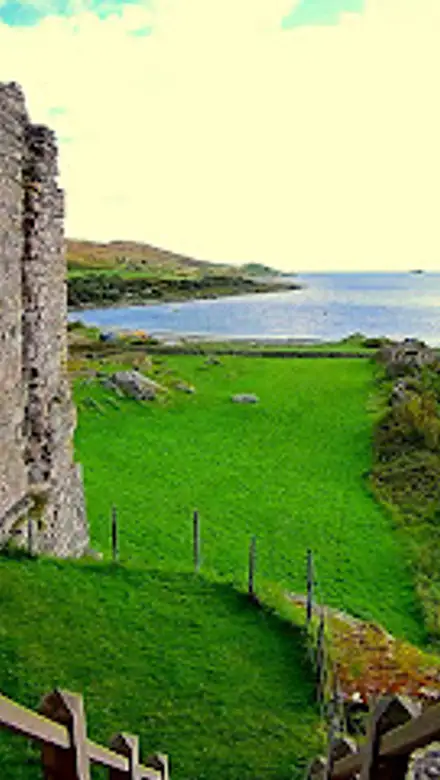
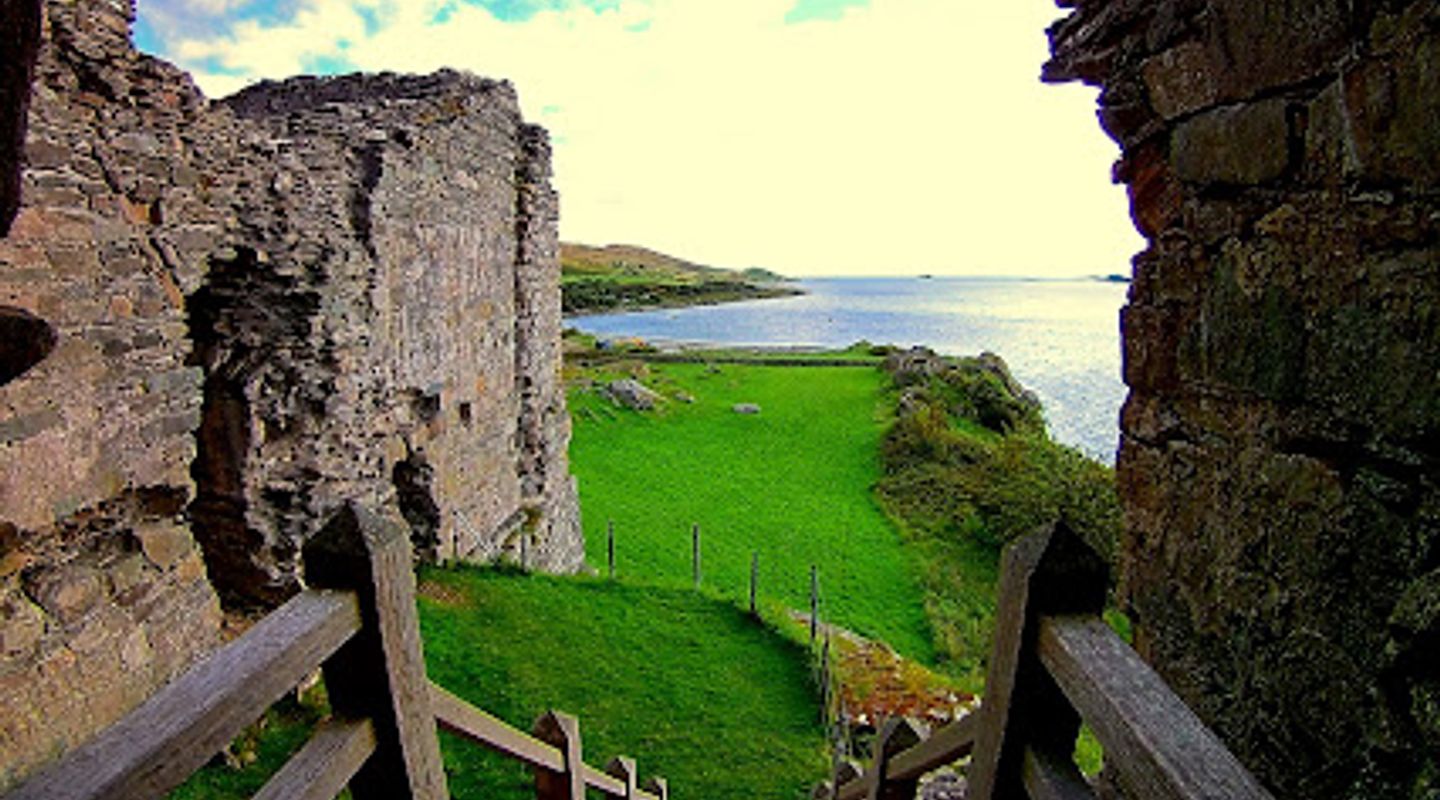
Set against the scenic backdrop of Loch Sween and with views extending to Jura, the ruins of Castle Sween invite exploration and reflection. The site’s atmospheric remains evoke the power and prestige once wielded here, while interpretive panels help illuminate its complex history. Its coastal setting provides a tranquil yet evocative environment for visitors interested in medieval architecture, clan history, and the rugged beauty of Argyll’s shoreline.
Evendo Review Centre
 Google
Guest reviews
Best time to go
Quietest: Jan, Feb & Dec · before 6am
Busy times are Evendo estimates for a typical year, to help you plan. Actual crowds vary with events, school holidays and the weather.
Explore Castle Sween on the map
A handpicked selection of must-see spots near Castle Sween, mapped for you.
Get your free copy of our complete guide to Castle Sween, delivered straight to you.
Everything on this page, from opening hours and how to get there to Eve’s tips and the best time to go, in one PDF you can read offline, print or share.
Already have an account? Sign in
Your Castle Sween guide is ready.
We'll send it to · Not you? Sign out

Getting your guide ready…
We are putting together a fresh copy of the Castle Sween guide. This can take up to a minute.
This can take a few moments. If your browser asks, choose Allow so the download can start. You'll find the guide in your Downloads folder.
Nothing happened? Download it again
Sorry, the guide is taking longer than usual. Please try again in a minute, or get it by email instead.
Other nearby places you may find interesting
The closest places of the same kind, if this one is not quite what you had in mind.
-
-
-
-
-


Swipe for more places
More to explore near Castle Sween

 Best experiences near Castle Sween
 Best hotels near Castle Sween
 Best landmarks near Castle Sween
 Best attractions near Castle Sween
 Best shops near Castle Sween
 Best restaurants near Castle Sween
 Best bars near Castle Sween
Do you manage this location?
Take control to get all the benefits, like improved information, better appearance, and stronger visibility across AI-powered discovery.
Explore more

Explore more of Argyllshire
Explore Argyllshire: A Scottish paradise of rugged coastlines, ancient castles, and charming villages, offering a blend of natural beauty and rich history.
Explore Argyllshire
Explore more of United Kingdom
Discover the United Kingdom: A blend of rich history, stunning landscapes, and vibrant cities, offering a unique travel experience for every visitor.
Explore United Kingdom