St Patrick's Church, Belfast Travel Guide
Free Guide: A majestic Romanesque Catholic church in Belfast, famed for its soaring spire, sacred relics, and the celebrated artwork of Sir John Lavery.


A brief summary of St Patrick's Church
A majestic Romanesque Catholic church in Belfast, famed for its soaring spire, sacred relics, and the celebrated artwork of Sir John Lavery.
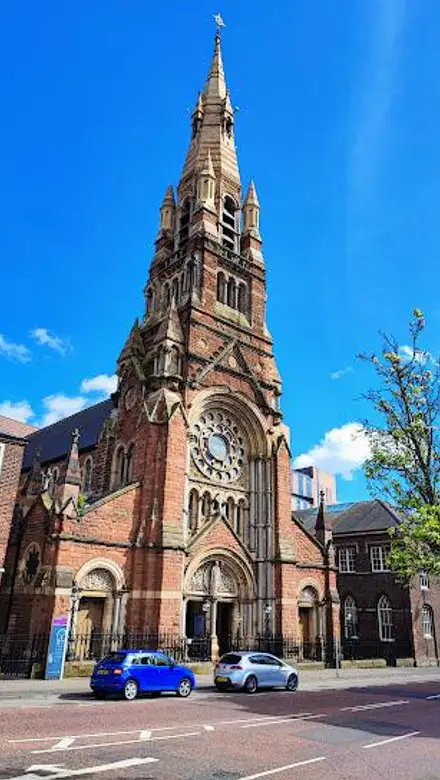
St Patrick's Church in Belfast is a striking Romanesque-style Catholic church located at 199 Donegall Street. Consecrated in 1877, it features a soaring 54-meter spire, beautiful sandstone arches, and houses significant religious relics including a medieval silver reliquary of St Patrick’s arm. The church is renowned for its rich history, architectural grandeur, and artworks, including a triptych by Sir John Lavery, a celebrated local artist.
On-site amenities
 Restrooms
 Seating areas
 Information boards
Opening hours
- Mon9 am–6 pm
- Tue9 am–6 pm
- Wed9 am–6 pm
- Thu9 am–6 pm
- Fri9 am–6 pm
- Sat9 am–7 pm
- Sun8:30 am–7 pm
Opening hours as listed on the venue’s Google Business Profile. Hours can change for services and special events, so check with the venue before you go.
- Address
- 199 Donegall St, Belfast BT1 2FL
- Phone
- Website
Getting there
Bus
Taxi
Walking
Discover more about St Patrick's Church
Historical Roots and Reclamation
St Patrick's Church stands on a site with deep historical significance dating back to the early Christian era in Belfast. The ancient parish of Shankill originally encompassed the area, with the first church linked to the White Church of Shankill. Following the Reformation, the church was acquired and rebuilt by English Protestant settlers in 1812, renamed in honor of St George. However, the Catholic community reclaimed the ancient title and dedicated the new church on Donegall Street to St Patrick, the patron saint of Ireland. The present church’s foundation stone was laid in 1875 by Bishop Patrick Dorrian, marking a pivotal moment in Belfast’s Catholic heritage.
Architectural Grandeur and Design
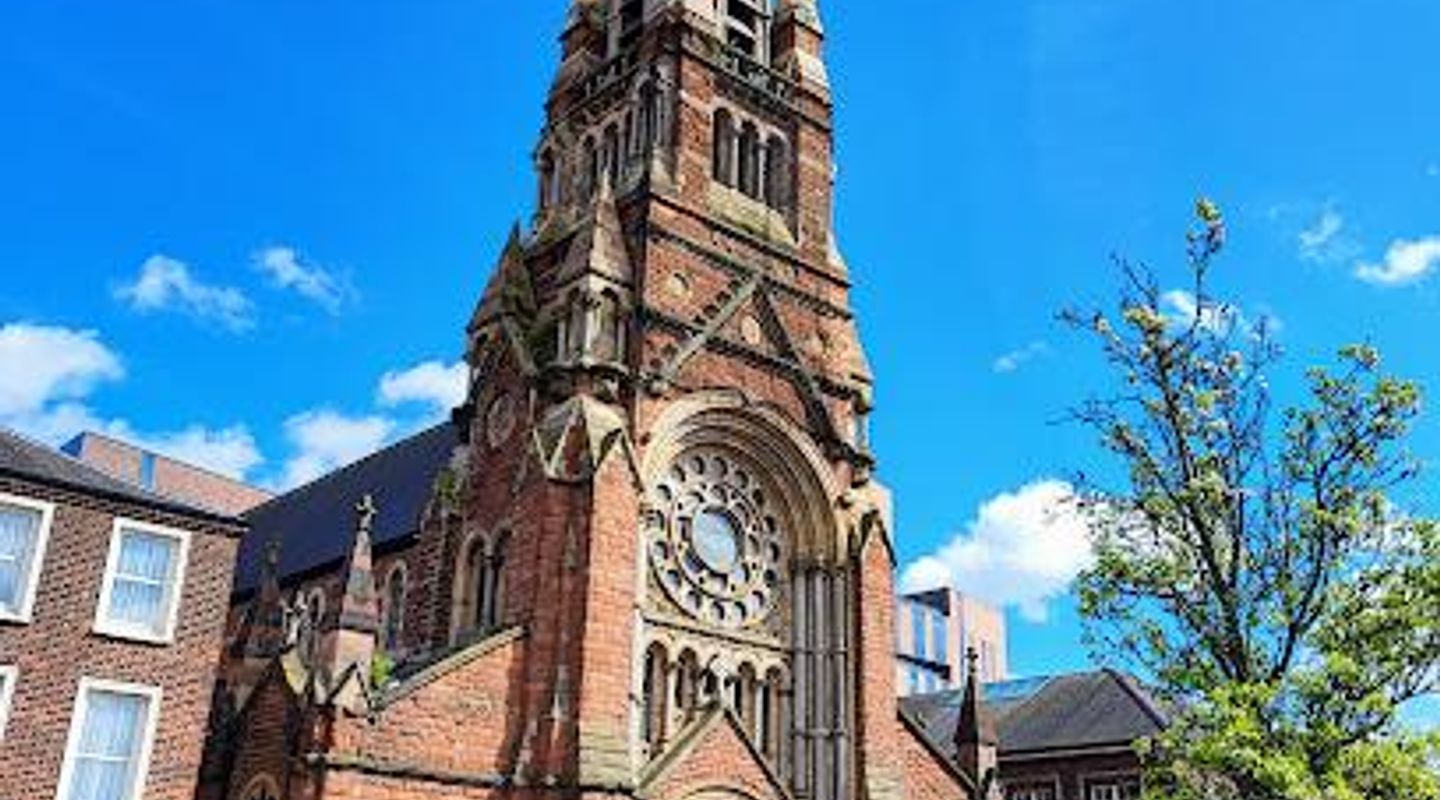
Designed by architect Timothy Hevey, a former associate of Augustus Pugin, St Patrick's Church was completed rapidly and consecrated in 1877. The building showcases Romanesque style with multi-colored sandstone and an imposing 54-meter (180 feet) spire crowned by a two-ton bell cast in Dublin. Inside, the nave is separated from the aisles by ten elegant red sandstone arches supported by slender rose and grey Dumfries granite pillars. The sanctuary is highlighted by three further arches and a striking 15-meter-high pitch pine ceiling, creating a majestic and contemplative atmosphere.
Artistic Treasures and Relics
The church houses several treasures of international importance. Among these is a priceless medieval silver reliquary containing a relic believed to be part of St Patrick’s arm, a symbol of deep spiritual significance. Additionally, a small bone relic from St Patrick’s burial site in Downpatrick is permanently kept here. The parish also holds a relic of St Anthony of Padua. Artistic heritage is represented by a notable triptych altarpiece titled 'Madonna of the Lakes,' painted by Sir John Lavery, a renowned Belfast-born society painter who was baptized in the church.
Spiritual and Community Significance
St Patrick’s Church remains a vibrant center for worship and community life in Belfast. The burial place of Bishop Dorrian lies beneath the sanctuary, marked by a red marble line, and his memorial in sandstone and alabaster is situated in the left transept. The church has witnessed Belfast’s complex religious history and continues to serve as a beacon of faith and reconciliation amidst a city known for its cultural and sectarian divides.
Preservation and Restoration Efforts
The church has undergone careful restoration to preserve its architectural and artistic heritage. These efforts have ensured that original features, including the reredos and tabernacle, remain faithful to historical designs. The parish archives maintain extensive documentation, including correspondence from Sir John Lavery, which enriches the understanding of the church’s cultural legacy.
Location and Visitor Experience
Situated on Donegall Street in central Belfast, St Patrick’s Church is easily accessible and offers visitors a profound experience of Northern Ireland’s religious history, architectural beauty, and artistic wealth. Its towering spire is a prominent landmark in the city skyline, inviting exploration and reflection within its serene interior.
Evendo Review Centre
 Google
Guest reviews
Best time to go
Quietest: Jan, Feb & Mar · before 7am or at 9pm
Busy times are Evendo estimates for a typical year, to help you plan. Actual crowds vary with events, school holidays and the weather.
Explore St Patrick's Church on the map
A handpicked selection of must-see spots near St Patrick's Church, mapped for you.
Get your free copy of our complete guide to St Patrick's Church, delivered straight to you.
Everything on this page, from opening hours and how to get there to Eve’s tips and the best time to go, in one PDF you can read offline, print or share.
Already have an account? Sign in
Your St Patrick's Church guide is ready.
We'll send it to · Not you? Sign out

Getting your guide ready…
We are putting together a fresh copy of the St Patrick's Church guide. This can take up to a minute.
This can take a few moments. If your browser asks, choose Allow so the download can start. You'll find the guide in your Downloads folder.
Nothing happened? Download it again
Sorry, the guide is taking longer than usual. Please try again in a minute, or get it by email instead.
Unlock the best of St Patrick's Church
Skip-the-line tickets, guided tours with entry, and walking tours of the area, booked in a few clicks.


Other nearby places you may find interesting
The closest places of the same kind, if this one is not quite what you had in mind.
-
-
-
-
-


Swipe for more places
More to explore near St Patrick's Church

 Best experiences near St Patrick's Church
 Best hotels near St Patrick's Church
 Best landmarks near St Patrick's Church
 Best attractions near St Patrick's Church
 Best shops near St Patrick's Church
 Best restaurants near St Patrick's Church
 Best bars near St Patrick's Church
Do you manage this location?
Take control to get all the benefits, like improved information, better appearance, and stronger visibility across AI-powered discovery.
Explore more

Explore more of Belfast
Discover Belfast, a city of history, culture, and modern charm, where the legacy of the Titanic meets vibrant street life and stunning natural beauty.
Explore Belfast
Explore more of United Kingdom
Discover the United Kingdom: A blend of rich history, stunning landscapes, and vibrant cities, offering a unique travel experience for every visitor.
Explore United Kingdom