Norham Castle Travel Guide
Free Guide: Explore Norham Castle, a majestic medieval fortress on the River Tweed steeped in border history and stunning riverside views.


A brief summary of Norham Castle
Explore Norham Castle, a majestic medieval fortress on the River Tweed steeped in border history and stunning riverside views.
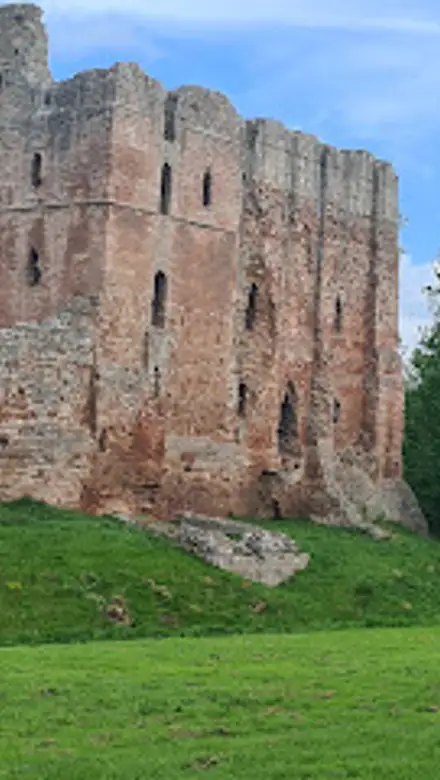
Norham Castle is a striking medieval ruin perched on a grassy mound overlooking the River Tweed in Northumberland, England. Built in the 12th century, it served as a vital stronghold during centuries of Anglo-Scottish border conflicts. Visitors can explore extensive outer wards, remnants of the Great Tower, and historical information boards that illuminate its turbulent past. The castle’s dramatic riverside setting inspired renowned artists and offers a captivating glimpse into border history.
On-site amenities
 Parking
 Information boards
Opening hours
- Every day10 am–6 pm
Opening hours as listed on the venue’s Google Business Profile. Hours can change for services and special events, so check with the venue before you go.
- Address
- Castle St, Norham, Berwick-upon-Tweed TD15 2JY
- Phone
- Website
Getting there
Car
Bus
Walking
Discover more about Norham Castle
A Fortress Born of Border Conflict
Norham Castle was originally constructed in 1121 by Bishop Ranulph Flambard of Durham to protect his lands from Scottish raids and local unrest. Positioned strategically on a grassy mound commanding a vital ford over the River Tweed, it quickly became a key military stronghold. The castle endured numerous sieges, changing hands multiple times between English and Scottish forces, including a lengthy siege by Robert the Bruce. Its powerful 12th-century keep and massive towered bailey walls were built to withstand prolonged assaults, reflecting the constant threat of conflict along this turbulent border.
Architectural Evolution Reflecting Changing Warfare
The castle’s architecture evolved significantly over the centuries. After Scottish attacks in the 12th century, Bishop Hugh de Puiset rebuilt it on a grander scale in the late 1100s, including the Great Tower, which still impresses visitors today despite its hollow shell form. Further enhancements occurred in the early 1400s, culminating in extensive 16th-century rebuilding to adapt the fortress for artillery warfare following damage sustained during James IV’s 1513 siege. These modifications are still clearly traceable in the surviving walls and structures, showcasing the castle’s adaptation to the gunpowder age.
The Castle’s Role in History and Culture
Norham Castle was a focal point in the Anglo-Scottish border wars for over 450 years. It was besieged at least 13 times and changed hands multiple times, including surrender to the Earl of Warwick during the Wars of the Roses and seizure by Queen Elizabeth I in 1559. After falling out of military use, the castle gradually decayed, with stone quarried for other buildings. Today, the ruins stand as a powerful symbol of the border’s turbulent history and have inspired artists such as J.M.W. Turner, whose famous paintings captured its dramatic riverside silhouette.
Exploring the Grounds and Ruins Today
Visitors can explore the extensive outer ward, which sweeps around the hillside, and the inner ward reached via a wooden bridge over the moat. The Great Tower’s remains allow exploration of vaulted ground floors and partial climbing to the first floor. Informative boards scattered across the site provide historical context about its construction, sieges, and the lives of those who defended it. While some areas are currently closed for conservation, the open grounds offer stunning views of the River Tweed and a palpable sense of the castle’s former might.
Setting and Surroundings
Norham Castle’s dramatic location on the banks of the River Tweed provides scenic vistas and a tranquil atmosphere. The surrounding landscape of Northumberland’s border country enhances the visitor experience, with nearby attractions including Etal Castle, St Cuthbert’s Church, and the Holy Island Priory. The castle’s riverside setting and expansive ruins create a memorable historical and natural escape.
Visitor Information and Practical Details
The castle is open daily from 10am to 6pm during the main season (April to September) and on weekends during the winter months. Entry is free, with free parking available nearby. The site is uneven and can be muddy, limiting wheelchair access. There are no public toilets on-site, so plan accordingly. Guidebooks and refreshments can be found in the nearby village. Conservation work is ongoing, so some parts, including main gates and bridges, may be temporarily closed for safety.
Evendo Review Centre
 Google
Guest reviews
Best time to go
Quietest: Jan, Feb & Dec · before 6am or at 9pm
Busy times are Evendo estimates for a typical year, to help you plan. Actual crowds vary with events, school holidays and the weather.
Explore Norham Castle on the map
A handpicked selection of must-see spots near Norham Castle, mapped for you.
Get your free copy of our complete guide to Norham Castle, delivered straight to you.
Everything on this page, from opening hours and how to get there to Eve’s tips and the best time to go, in one PDF you can read offline, print or share.
Already have an account? Sign in
Your Norham Castle guide is ready.
We'll send it to · Not you? Sign out

Getting your guide ready…
We are putting together a fresh copy of the Norham Castle guide. This can take up to a minute.
This can take a few moments. If your browser asks, choose Allow so the download can start. You'll find the guide in your Downloads folder.
Nothing happened? Download it again
Sorry, the guide is taking longer than usual. Please try again in a minute, or get it by email instead.
Other nearby places you may find interesting
The closest places of the same kind, if this one is not quite what you had in mind.
-
-
-
-
-


Swipe for more places
More to explore near Norham Castle

 Best experiences near Norham Castle
 Best hotels near Norham Castle
 Best landmarks near Norham Castle
 Best attractions near Norham Castle
 Best shops near Norham Castle
 Best restaurants near Norham Castle
 Best bars near Norham Castle
Do you manage this location?
Take control to get all the benefits, like improved information, better appearance, and stronger visibility across AI-powered discovery.
Explore more
Explore more of Berwickshire
Discover Berwickshire: A blend of coastal beauty, historic landmarks, and charming villages in Scotland's serene southeastern corner.
Explore Berwickshire
Explore more of United Kingdom
Discover the United Kingdom: A blend of rich history, stunning landscapes, and vibrant cities, offering a unique travel experience for every visitor.
Explore United Kingdom