Blackpool Town Hall, Blackpool Travel Guide
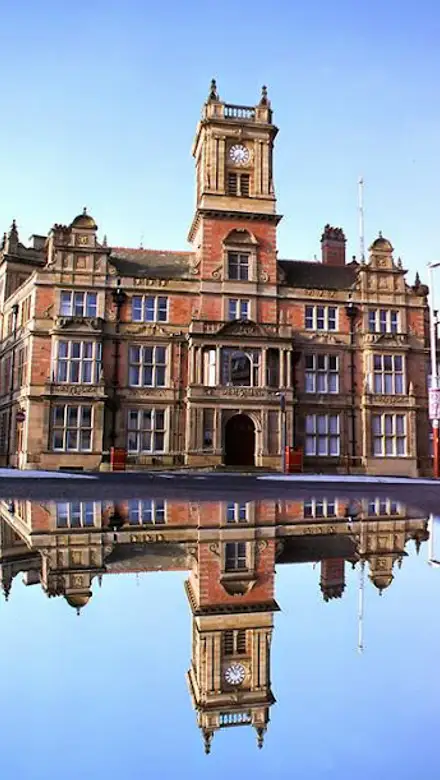
Historic Jacobean-style Blackpool Town Hall, a civic landmark with grand clock tower and rich heritage in the heart of Talbot Square.
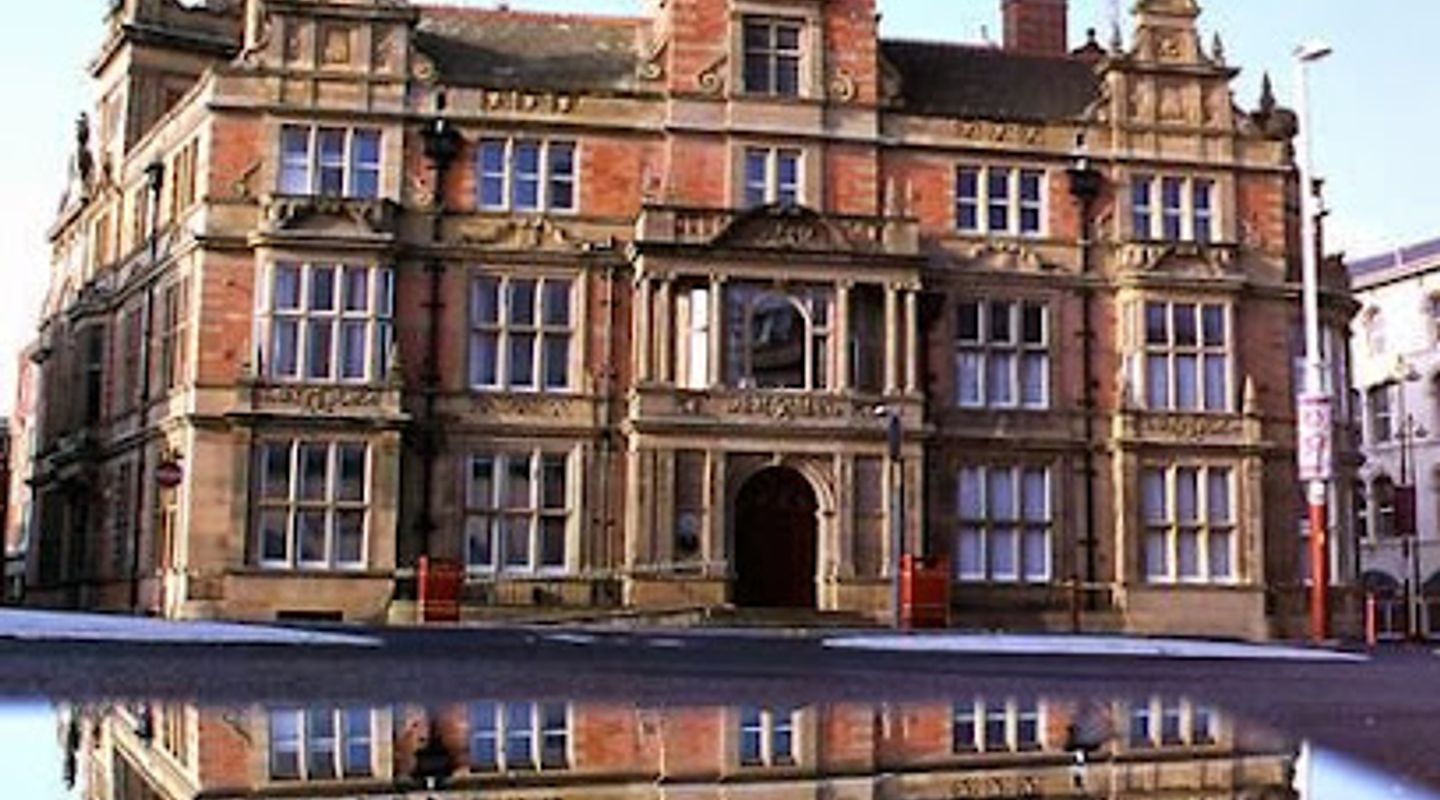
Blackpool Town Hall, located in Talbot Square, is a striking Jacobean-style municipal building completed in 1900. Serving as the headquarters of Blackpool Council, it features a grand clock tower, ornate porticos, and historic interiors including murals and a ship’s bell from HMS Foudroyant. The Grade II listed building blends civic pride with rich history, hosting council activities and ceremonial events in the heart of Blackpool.
A brief summary to Blackpool Town Hall
- Talbot Square, Blackpool, FY1 1AD, GB
- Click to display
- Click to display
- Duration: 0.5 to 1.5 hours
- Free
-
 Outdoor
- Mobile reception: 4 out of 5
- Monday 9 am-5 pm
- Tuesday 9 am-5 pm
- Wednesday 9 am-5 pm
- Thursday 9 am-5 pm
- Friday 9 am-5 pm

Know before you go
Hi, I'm Eve. Here are a few practical things to know before exploring Blackpool Town Hall.
- Visit during weekdays between 9am and 5pm to explore the building’s historic interiors when council offices are open.
- Look out for the ship’s bell from HMS Foudroyant inside, a unique maritime artifact linked to Blackpool’s coastal history.
- Check for special events or heritage open days offering guided tours of the council chamber and murals.
- Photograph the building’s illuminated clock tower at night for striking architectural shots.
Do you manage this location?
Take control to get all the benefits, like improved information, better appearance, and stronger visibility across AI-powered discovery. Learn more about listing your business on Evendo
Activate your presenceOther nearby places you may find interesting
The closest places of the same kind, if this one is not quite what you had in mind.
Explore Blackpool Town Hall on the Map
A handpicked selection of must-see spots near Blackpool Town Hall, mapped for you.
Getting There
-
Bus
Frequent bus services connect Blackpool Town Hall to key points across the town, including Blackpool North and South railway stations. Typical journey times range from 10 to 20 minutes depending on starting location. Tickets cost approximately £2-£4 GBP. Buses run regularly throughout the day but may have reduced frequency on weekends.
-
Train and Walk
Arrive at Blackpool North railway station, approximately 1.5 km from the Town Hall. The walk takes about 20 minutes on mostly flat terrain through the town centre. Suitable for most travelers with moderate mobility.
-
Car
Driving to Talbot Square is straightforward with parking available in nearby public car parks. Travel times vary by traffic but typically range from 15 to 30 minutes from Blackpool outskirts. Parking fees apply, generally around £3-£6 GBP for a few hours.
For the on-the-go comforts that matter to you
-
 Restrooms
-
 Drink Options
-
 Food Options
-
 Seating Areas
-
 Information Boards
Discover more about Blackpool Town Hall
Architectural Grandeur Rooted in Jacobean Style
Blackpool Town Hall stands as a distinguished example of Jacobean architecture, designed by the firm Potts, Son and Hennings and completed in 1900. Its symmetrical façade features seven bays facing Talbot Square, with the outer bays curving elegantly around the sides. The centerpiece is a five-stage square clock tower rising above the parapet, crowned with a stone belfry and balustrade. The ground floor portico is supported by Tuscan order pilasters, while the first floor boasts Ionic columns beneath a segmental pediment, lending a grand classical air to the building’s entrance. The upper walls are constructed of pink brick with stone dressings, combining robustness with ornamental detail to create a commanding civic presence.Historical Significance and Civic Role
Replacing an 18th-century predecessor, Blackpool Town Hall was built to serve as the headquarters of the local government, becoming the seat of Blackpool County Borough in 1904 and later the unitary authority of Blackpool Council in 1998. The building has witnessed key historical moments, including a royal visit by King George VI and Queen Elizabeth in 1938 after a major fire led to reconstruction and expansion designed by John Charles Robinson. It continues to function as the administrative heart of Blackpool, hosting council meetings and civic ceremonies, symbolizing the town’s governance and community identity.Interior Highlights and Artistic Treasures
Inside, the Town Hall houses remarkable features that reflect Blackpool’s heritage. The council chamber contains murals painted by J. R. Brown in 1901 depicting significant historical events such as the marriage of King Henry VII and Princess Elizabeth of York, the surrender of Jacobite rebels at the Battle of Preston, and King Richard III’s last charge at Bosworth Field. A notable artifact is the ship’s bell from HMS Foudroyant, Lord Nelson’s former flagship, which was wrecked off Blackpool Sands in 1897 and now serves as a maritime relic within the building. The main entrance hall showcases a large stained glass window completed in 1900, portraying Queen Victoria and symbolizing the era of the building’s completion.Symbolism and Decorative Elements
The Town Hall’s design incorporates symbolic elements that celebrate Blackpool’s culture and history. The stained glass windows and murals emphasize local identity, including depictions of education, industry, agriculture, and recreation. The mace, positioned before the mayoral chair, represents civic authority. Portraits of notable figures such as Queen Elizabeth II, the Duke of Edinburgh, and Sir Winston Churchill adorn the walls, alongside memorabilia from Blackpool’s adopted ships, connecting the building to broader national narratives and local pride.Community and Ceremonial Functions
Beyond its administrative duties, Blackpool Town Hall serves as a wedding venue and a site for public events, reinforcing its role as a community hub. Its central location in Talbot Square places it at the heart of Blackpool’s cultural and civic life. The building’s historic and aesthetic qualities make it an iconic landmark, frequently illuminated at night to highlight its architectural features and clock tower, attracting photographers and visitors interested in Blackpool’s heritage.Preservation and Modern Relevance
As a Grade II listed building, Blackpool Town Hall is protected for its architectural and historic importance. Restoration efforts, including the 2019 refurbishment of the stained glass window in the council chamber, ensure the preservation of its unique character. The Town Hall continues to balance its historic legacy with modern governance, standing as a testament to Blackpool’s past and present civic life.












Your all‑in‑one travel companion app
Explore expert travel guides, compare and book tours, experiences, hotels, and more—all from the palm of your hand. Download now for seamless trip planning wherever your wanderlust takes you.


Explore More of Blackpool
Looking beyond Blackpool Town Hall? Discover Blackpool for broader travel guides, local hot-spots, and regional highlights.
Explore Blackpool