Carn Liath Travel Guide
Free Guide: Step into Scotland’s Iron Age at this remarkably preserved coastal broch, where ancient stone walls meet sweeping sea views and a rare glimpse of early Highland life.


A brief summary of Carn Liath
Step into Scotland’s Iron Age at this remarkably preserved coastal broch, where ancient stone walls meet sweeping sea views and a rare glimpse of early Highland life.
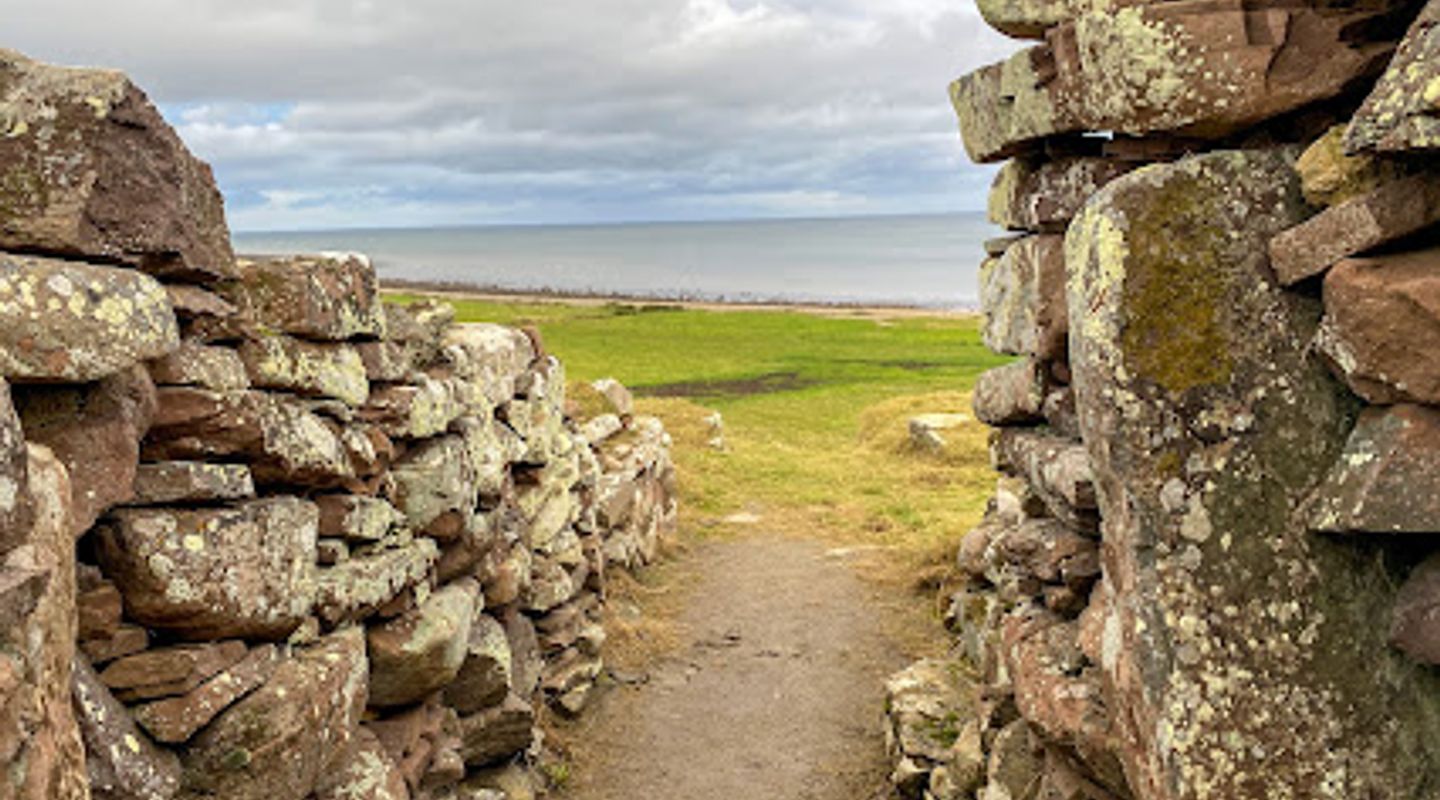
Perched on a grassy terrace overlooking the Moray Firth, Carn Liath Broch is a remarkably preserved Iron Age tower near Golspie in the Scottish Highlands. Dating from the last century BC or first century AD, this dry-stone broch features thick walls up to 12 feet high, a well-preserved entrance passage, guard cell, and internal steps. Surrounded by traces of an ancient settlement, it offers a rare glimpse into sophisticated Iron Age architecture and daily life, all free to visit and open year-round with panoramic sea views.
On-site amenities
 Restrooms
 Information boards
Opening hours
- Every dayOpen 24 hours
Opening hours as listed on the venue’s Google Business Profile. Hours can change for services and special events, so check with the venue before you go.
- Address
- Brora KW10 6SF
- Phone
- Website
Getting there
By car
By public transport
By bicycle
Discover more about Carn Liath
Scotland’s Ancient Coastal Tower
Standing on a grassy terrace just east of Dunrobin Castle, Carn Liath Broch is one of the most accessible and impressive Iron Age brochs in the Scottish Highlands. Built around 2,000 years ago, this circular stone tower was once a formidable dwelling, possibly serving as a status symbol, defensive stronghold, or family residence for an extended Iron Age community. The broch’s thick, double-skinned walls still rise up to 12 feet in places, enclosing a deep interior space that once held living quarters, storage, and possibly livestock. Its single, narrow entrance passage, complete with a guard cell, hints at the need for security in a turbulent era.
Architecture of the Iron Age
The broch at Carn Liath showcases the ingenuity of Scotland’s early builders, who constructed these sophisticated towers without mortar, using carefully stacked local stone. Inside, visitors can still see the remains of internal steps built into the wall, leading to what would have been upper levels or a gallery. The lintelled doorway and well-preserved entrance passage give a strong sense of how people once moved in and out of this imposing structure. Around the broch, the ground bears traces of an associated settlement: low walls and earthworks that may represent houses, workshops, or storage buildings, offering a rare glimpse of a small Iron Age village alongside its central tower.
Layers of Ancient Life
Excavations at Carn Liath have revealed that people lived here long before the broch was built. Evidence of Bronze Age occupation, including a burial with grave goods, shows that this coastal terrace was a significant place for millennia. Later, during the Iron Age, the broch itself was constructed, likely in the last century BC or first century AD. Finds from the site include pottery, stone and bone tools, an iron knife blade, and even a silver ornament, all testaments to the craftsmanship and daily life of its inhabitants. The surrounding landscape, with its sea views and access to both land and marine resources, would have supported farming, fishing, and trade.
A Place of Quiet Contemplation
Today, Carn Liath is a peaceful, open-air monument where visitors can walk around, peer into the interior, and even climb onto parts of the structure to appreciate its scale and setting. The broch commands sweeping views across the Moray Firth, with the sea stretching to the horizon and the distant outline of Dunrobin Castle visible to the north. The site is free to visit and open year-round, making it a perfect stop for those exploring the North Coast 500 or simply passing along the A9. Interpretive panels provide historical context, helping visitors imagine life in this ancient coastal stronghold.
Visiting the Broch Today
The broch lies immediately on the seaward side of the A9, about a mile east of Dunrobin Castle and a short distance from Golspie. A small car park on the inland side of the road provides access, with a signposted path leading to a designated crossing point over the busy highway. From there, a short, well-marked track leads down to the broch on its grassy terrace. The terrain is uneven but manageable for most visitors, and the site is suitable for a brief stop or a longer visit to soak in the atmosphere and views. Because it is an exposed coastal site, conditions can be windy and changeable, so sturdy footwear and weather-appropriate clothing are recommended.
Evendo Review Centre
 Google
Guest reviews
Best time to go
Quietest: Jan, Feb & Dec · before 3am
Busy times are Evendo estimates for a typical year, to help you plan. Actual crowds vary with events, school holidays and the weather.
Explore Carn Liath on the map
A handpicked selection of must-see spots near Carn Liath, mapped for you.
Get your free copy of our complete guide to Carn Liath, delivered straight to you.
Everything on this page, from opening hours and how to get there to Eve’s tips and the best time to go, in one PDF you can read offline, print or share.
Already have an account? Sign in
Your Carn Liath guide is ready.
We'll send it to · Not you? Sign out

Getting your guide ready…
We are putting together a fresh copy of the Carn Liath guide. This can take up to a minute.
This can take a few moments. If your browser asks, choose Allow so the download can start. You'll find the guide in your Downloads folder.
Nothing happened? Download it again
Sorry, the guide is taking longer than usual. Please try again in a minute, or get it by email instead.
Unlock the best of Carn Liath
Skip-the-line tickets, guided tours with entry, and walking tours of the area, booked in a few clicks.


Other nearby places you may find interesting
The closest places of the same kind, if this one is not quite what you had in mind.
-
Dunnet Head Lighthouse Scotland’s northernmost lighthouse atop dramatic cliffs, offering wild coastal views, rich wildlife, and historic maritime heritage.
-
The Wick Heritage Museum Explore Wick’s rich maritime heritage through immersive exhibits and engaging stories at this charming seasonal museum.
-
Caithness Broch Centre Discover Scotland’s Iron Age brochs and coastal heritage at the Caithness Broch Centre, a vibrant museum nestled in Auckengill’s historic old school.
-
Cairn of Get Explore the ancient Neolithic chambered cairn of Cairn o'Get, a 5,000-year-old burial site set in a stunning prehistoric Caithness landscape.
-
Castlehill Heritage Centre A community-run museum in Castletown, Caithness, preserving the maritime and industrial heritage of Scotland’s far north with engaging exhibits and local stories.
Swipe for more places
More to explore near Carn Liath

 Best experiences near Carn Liath
 Best hotels near Carn Liath
 Best landmarks near Carn Liath
 Best attractions near Carn Liath
 Best shops near Carn Liath
 Best restaurants near Carn Liath
 Best bars near Carn Liath
Do you manage this location?
Take control to get all the benefits, like improved information, better appearance, and stronger visibility across AI-powered discovery.
Explore more

Explore more of Caithness
Discover Caithness, Scotland's northern gem, where rugged coastlines, ancient history, and vibrant wildlife come together in a breathtakingly beautiful landscape.
Explore Caithness
Explore more of United Kingdom
Discover the United Kingdom: A blend of rich history, stunning landscapes, and vibrant cities, offering a unique travel experience for every visitor.
Explore United Kingdom