Bute Park, Cardiff Travel Guide
Free Guide: Cardiff's verdant 130-acre sanctuary where Victorian heritage meets modern celebration, beneath ancient trees and winter lights.


A brief summary of Bute Park
Cardiff's verdant 130-acre sanctuary where Victorian heritage meets modern celebration, beneath ancient trees and winter lights.
Bute Park is Cardiff's verdant 56-hectare urban sanctuary, stretching across 130 acres of mature parkland in the heart of Wales's capital. Once the private pleasure garden of Cardiff Castle, this Grade 1 listed landscape now welcomes over one million visitors annually. The park features a magnificent arboretum with over 3,000 catalogued trees—including rare champion specimens—alongside historic monuments, wildlife habitats, and a vibrant events calendar. From peaceful woodland walks to seasonal light festivals, Bute Park offers something for every visitor.
On-site amenities
 Restrooms
 Drink options
 Drinking water
 Food options
 Seating areas
 Sheltered areas
 Picnic areas
 Trash bins
 Information boards
 Visitor centre
- Address
- North Rd, Cardiff CF10 3ER
- Phone
- Website
Getting there
Bus from Cardiff City Centre
Walking from Cardiff Castle
Car with Visitor Parking
Train to Cardiff Central Station
Discover more about Bute Park
A Victorian Legacy Transformed into Public Green Space
Bute Park's story begins in the 1870s when the Bute family commissioned renowned gardener Andrew Pettigrew to design their private pleasure grounds adjacent to Cardiff Castle. Between 1873 and 1903, Pettigrew crafted an elegant Victorian landscape that remains the only known example of his work in existence. The park's character was shaped by the second and third Marquesses of Bute, who acquired surrounding land, cleared existing buildings, and enclosed the area to create an exclusive retreat. In 1947, the fifth Marquess gifted the entire estate to the people of Cardiff, transforming it from aristocratic sanctuary into a cherished public asset. Today, Bute Park stands as a Grade 1 listed historic landscape on Cadw's Register of Landscapes, recognized for its international significance.
A Living Arboretum of Rare and Champion Trees
The park's botanical heart is its extraordinary arboretum, home to more than 3,000 individually catalogued trees spanning diverse species and origins. Among these are "champion trees"—specimens recognized as the tallest or widest examples of their kind anywhere in the United Kingdom. Walking through the arboretum feels like traversing a living encyclopedia of dendrology, where ancient oaks stand beside exotic imports, and native woodland merges seamlessly with cultivated collections. The variety of tree species creates a constantly shifting palette of color and form across the seasons, from spring blossom to autumn gold. Beyond the trees themselves, the park supports a thriving ecosystem: visitors may encounter all three species of British woodpecker, jays, tree creepers, otters, leaping salmon, herons, damselflies, and countless fungi varieties.
Historic Monuments and Architectural Treasures
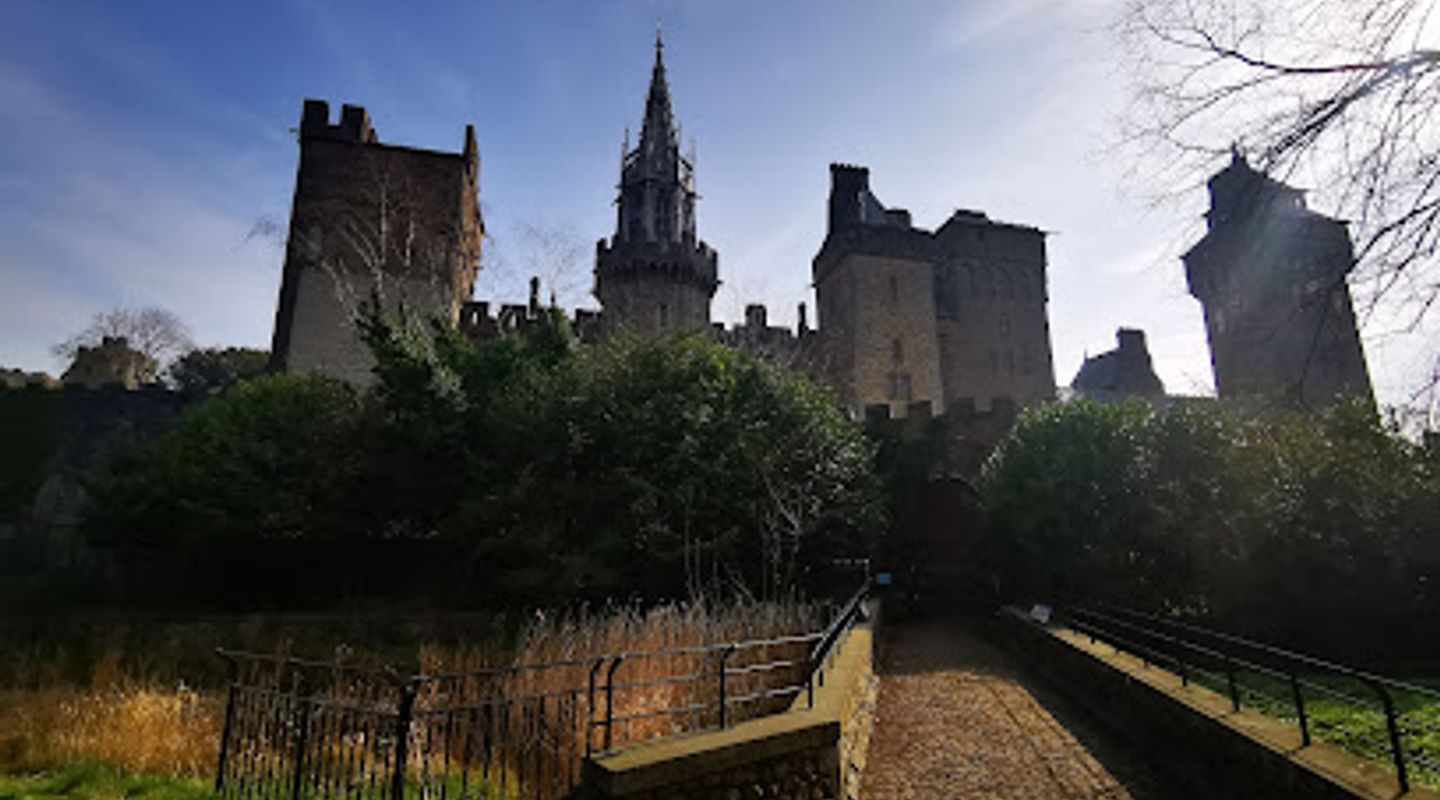
Scattered throughout Bute Park are remnants of centuries past. The Blackfriars Friary, a scheduled ancient monument, stands as a tangible link to medieval Cardiff. The Animal Wall, an iconic William Burges creation, captivates visitors with its whimsical carved creatures. The dock feeder canal, originally a medieval mill-leat converted during the 1830s, winds through the landscape as a testament to industrial heritage. Lady Bute's Bridge and the North Gate bridge connect the park to Cardiff Castle, their arches framing views of the castle's fairy-tale towers. A network of QR code history points allows visitors to access archival photographs, historical maps, and detailed narratives that bring these structures to life. The Gorsedd Stones and the salmon pass represent further layers of historical and ecological significance woven into the park's fabric.
Seasonal Transformations and Year-Round Events
Bute Park's calendar pulses with activity throughout the year. The most spectacular transformation occurs each winter when Christmas at Bute Park arrives—an award-winning light trail that has become Wales's largest festive attraction. Running from late November through December, the event draws up to 100,000 visitors who walk a mile-long illuminated route featuring 15 distinct light zones. New installations for 2025 include Water Willow, a majestic tree adorned with thousands of radiant lights that pulse and cascade like glistening raindrops, and Icefall, a shimmering cascade of luminous whites and frosty blues synchronized to winter-themed soundscapes. Beyond Christmas, the park hosts music festivals, charity runs, firework displays, and cultural events that leverage its exceptional setting and accessibility. The RHS Show and numerous community gatherings make Bute Park a vital venue in Cardiff's events landscape.
Visitor Facilities and Sustainable Design
The Bute Park Visitor Centre, opened in 2011 as part of a £5.6 million restoration project, exemplifies sustainable architecture. Built with reclaimed bricks, featuring a grass roof, solar panels, and timber cladding, the centre has maintained Green Dragon Environmental Standard Level 4 certification since 2013. Open daily from noon to 3 pm, it serves as a hub for learning about the park's heritage and wildlife, offering educational visits for schools and community groups. Three cafés—including the Summerhouse Café and Secret Garden Café—provide refreshment throughout the park. The Woodland Play Trail, hidden behind the Summerhouse, features eleven outdoor play items for children and the young-at-heart. Self-guided trails cater to diverse interests: the Champion Tree Trail celebrates arboreal giants, the Wildlife Explorer Trail invites nature observation, the Story Trail engages younger visitors with narrative stops, and the Nature Activity Trail targets ages 4–10.
Connectivity and Accessibility Within Cardiff's Heart
Situated just a short walk from Cardiff Castle and the city's main shopping streets, Bute Park occupies a unique position as an expansive green sanctuary within urban reach. The park's 56 hectares—equivalent to 75 football pitches—make it one of Wales's largest urban parks, yet its mature woodland and river corridors create an atmosphere of countryside escape. The River Taff flanks the eastern boundary, while Sophia Gardens and Pontcanna Fields extend the green corridor northward. Accessible pathways and multiple entry points welcome visitors of all abilities. The park's proximity to the city centre, combined with its tranquil mature landscape, creates a compelling contrast that defines Cardiff's character as a capital city with a genuine green heart.
Evendo Review Centre
 Google
Guest reviews
Best time to go
Quietest: Jan, Feb & Mar · before 6am or at 10pm
Busy times are Evendo estimates for a typical year, to help you plan. Actual crowds vary with events, school holidays and the weather.
Explore Bute Park on the map
A handpicked selection of must-see spots near Bute Park, mapped for you.
Get your free copy of our complete guide to Bute Park, delivered straight to you.
Everything on this page, from opening hours and how to get there to Eve’s tips and the best time to go, in one PDF you can read offline, print or share.
Already have an account? Sign in
Your Bute Park guide is ready.
We'll send it to · Not you? Sign out

Getting your guide ready…
We are putting together a fresh copy of the Bute Park guide. This can take up to a minute.
This can take a few moments. If your browser asks, choose Allow so the download can start. You'll find the guide in your Downloads folder.
Nothing happened? Download it again
Sorry, the guide is taking longer than usual. Please try again in a minute, or get it by email instead.
Unlock the best of Bute Park
Skip-the-line tickets, guided tours with entry, and walking tours of the area, booked in a few clicks.


Other nearby places you may find interesting
The closest places of the same kind, if this one is not quite what you had in mind.
-
-
-
-
-


Swipe for more places
More to explore near Bute Park

 Best experiences near Bute Park
 Best hotels near Bute Park
 Best landmarks near Bute Park
 Best attractions near Bute Park
 Best shops near Bute Park
 Best restaurants near Bute Park
 Best bars near Bute Park
Do you manage this location?
Take control to get all the benefits, like improved information, better appearance, and stronger visibility across AI-powered discovery.
Explore more

Explore more of Cardiff
Discover Cardiff, the vibrant capital of Wales, where history, culture, and modernity merge to create unforgettable experiences for every traveler.
Explore Cardiff
Explore more of United Kingdom
Discover the United Kingdom: A blend of rich history, stunning landscapes, and vibrant cities, offering a unique travel experience for every visitor.
Explore United Kingdom