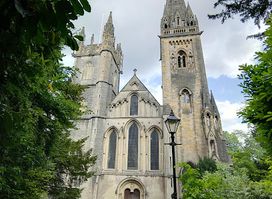
Llandaff Cathedral, Cardiff Travel Guide
Explore centuries of Welsh history and artistry in the serene and architecturally rich Llandaff Cathedral, Cardiff’s spiritual heart.
Llandaff Cathedral, located in Cardiff, Wales, is a remarkable religious site with origins dating back to the 6th century and major construction beginning in 1120. This cathedral blends Norman, Gothic, Victorian, and modern architectural elements, reflecting centuries of history, destruction, and restoration. Visitors can explore its serene chapels, stunning stained glass, and notable artworks like the Majestas sculpture, all set within a peaceful village atmosphere close to the city.
A brief summary to Llandaff Cathedral
- Cathedral Cl, Cardiff, CF5 2LA, GB
- Click to display
- Click to display
- Duration: 1 to 2 hours
- Free
-
 Outdoor
- Mobile reception: 4 out of 5
- Monday 8 am-5:30 pm
- Tuesday 8 am-5:30 pm
- Wednesday 8 am-5:30 pm
- Thursday 8 am-5:30 pm
- Friday 8 am-5:30 pm
- Saturday 8 am-5:30 pm
- Sunday 8 am-5 pm

Know before you go
Hi, I'm Eve. Here are a few practical things to know before exploring Llandaff Cathedral.
- Entry to Llandaff Cathedral is free, but donations are encouraged to support maintenance and restoration.
- Visit the Lady Chapel to see beautiful stained glass windows casting vibrant colors across the stone.
- Don’t miss the modern concrete arch and the Majestas sculpture by Jacob Epstein, a striking 20th-century addition.
- The cathedral is mostly wheelchair accessible with ramps and disabled toilets; some older sections may have steps.
- Allow 1 to 2 hours to explore the cathedral and nearby Llandaff village for a full experience.
Do you manage this location?
Take control to get all the benefits, like improved information, better appearance, and stronger visibility across AI-powered discovery. Learn more about listing your business on Evendo
Activate your presenceOther nearby places you may find interesting
The closest places of the same kind, if this one is not quite what you had in mind.



Explore Llandaff Cathedral on the Map
A handpicked selection of must-see spots near Llandaff Cathedral, mapped for you.
Unlock the Best of Llandaff Cathedral
Buy tickets
-
No tickets available
Book tours with entry


Getting There
-
Train and Bus Combination
From Cardiff Central Station, take a local bus towards Llandaff village, approximately 20 minutes travel time. Buses run frequently but check schedules in advance. Walking from the bus stop to the cathedral is about 10 minutes on mostly flat terrain. Total cost around £2-£4.
-
Car
Driving from central Cardiff takes about 15 minutes via main roads. Limited parking is available near the cathedral and in Llandaff village; expect to pay for parking. Accessibility is good, but spaces fill quickly during peak hours.
-
Walking
For those staying nearby, walking to Llandaff Cathedral from central Cardiff is a pleasant 40-50 minute walk through urban and green areas. The route is mostly flat and suitable for wheelchairs and pushchairs.
For the on-the-go comforts that matter to you
-
 Restrooms
-
 Seating Areas
-
 Information Boards
Discover more about Llandaff Cathedral
Ancient Origins and Early Construction
Llandaff Cathedral stands on one of the oldest Christian sites in Britain, with its origins tracing back to the 6th century when Saint Teilo founded a church near the River Taff. The current cathedral's foundation was laid in 1120 by Bishop Urban, who sought to elevate the prestige of the see by bringing the relics of St Dyfrig and dedicating the church to multiple saints, including St Peter and St Dyfrig. The early Romanesque structure featured a sanctuary arch with distinctive medallions and doorways dating from the late 12th century, marking the beginning of a complex architectural evolution.Medieval Expansion and Architectural Flourishes
During the 13th century, the cathedral underwent significant Gothic-style expansions. The nave was rebuilt with two-storey arcades and extended aisles, while the Lady Chapel was added around 1300 under Bishop William de Braose. The Chapter House, a vaulted space resembling a tower base, was also constructed in this period. Later medieval enhancements included new windows, a high altar reredos, and several funerary monuments. The north-west tower, funded by Jasper Tudor in the late 15th century, added to the cathedral’s imposing silhouette.Periods of Decline and Restoration Efforts
The cathedral suffered damage during the Welsh rebellion of the early 15th century and fell into disrepair over subsequent centuries. By the early 18th century, structural collapses, including the south-west tower falling in 1722, left the cathedral roofless and largely unusable. Partial restoration began in 1734 under architect John Wood, focusing on the eastern sections in a classical style, but the nave remained a ruin. A major 19th-century Gothic revival restoration led by John Prichard restored much of the cathedral’s medieval character, including the addition of the south-west tower and spire in 1869.20th-Century Wartime Damage and Modern Rebuilding
World War II inflicted severe damage when a German parachute mine destroyed much of the building, leaving it roofless again. The post-war restoration, led by architect George Pace from 1949 to 1963, was a bold blend of old and new. Pace introduced a striking concrete arch dividing the nave and choir, topped by Jacob Epstein’s unpolished aluminium Majestas sculpture depicting Christ in Majesty. This radical intervention created a spacious, airy interior that harmonizes medieval, Victorian, and modern elements.Artistic Highlights and Spiritual Atmosphere
Visitors to Llandaff Cathedral can admire exquisite stained glass windows that fill the space with vibrant light and explore chapels such as the Lady Chapel and the Welsh Regiment chapel. The cathedral houses a 10th-century Celtic cross and numerous historic monuments. Its peaceful setting within the Llandaff conservation area offers a tranquil retreat amid the nearby bustle of Cardiff, making it both a spiritual sanctuary and a cultural landmark.Living Heritage and Community Role
Today, Llandaff Cathedral remains an active place of worship and community gathering. It welcomes visitors to experience its rich heritage, attend services, and participate in guided tours that reveal its layered history and architectural evolution. The cathedral’s ongoing preservation is supported by donations, ensuring this iconic Welsh monument continues to inspire future generations.












Your all‑in‑one travel companion app
Explore expert travel guides, compare and book tours, experiences, hotels, and more—all from the palm of your hand. Download now for seamless trip planning wherever your wanderlust takes you.


Explore More of Cardiff
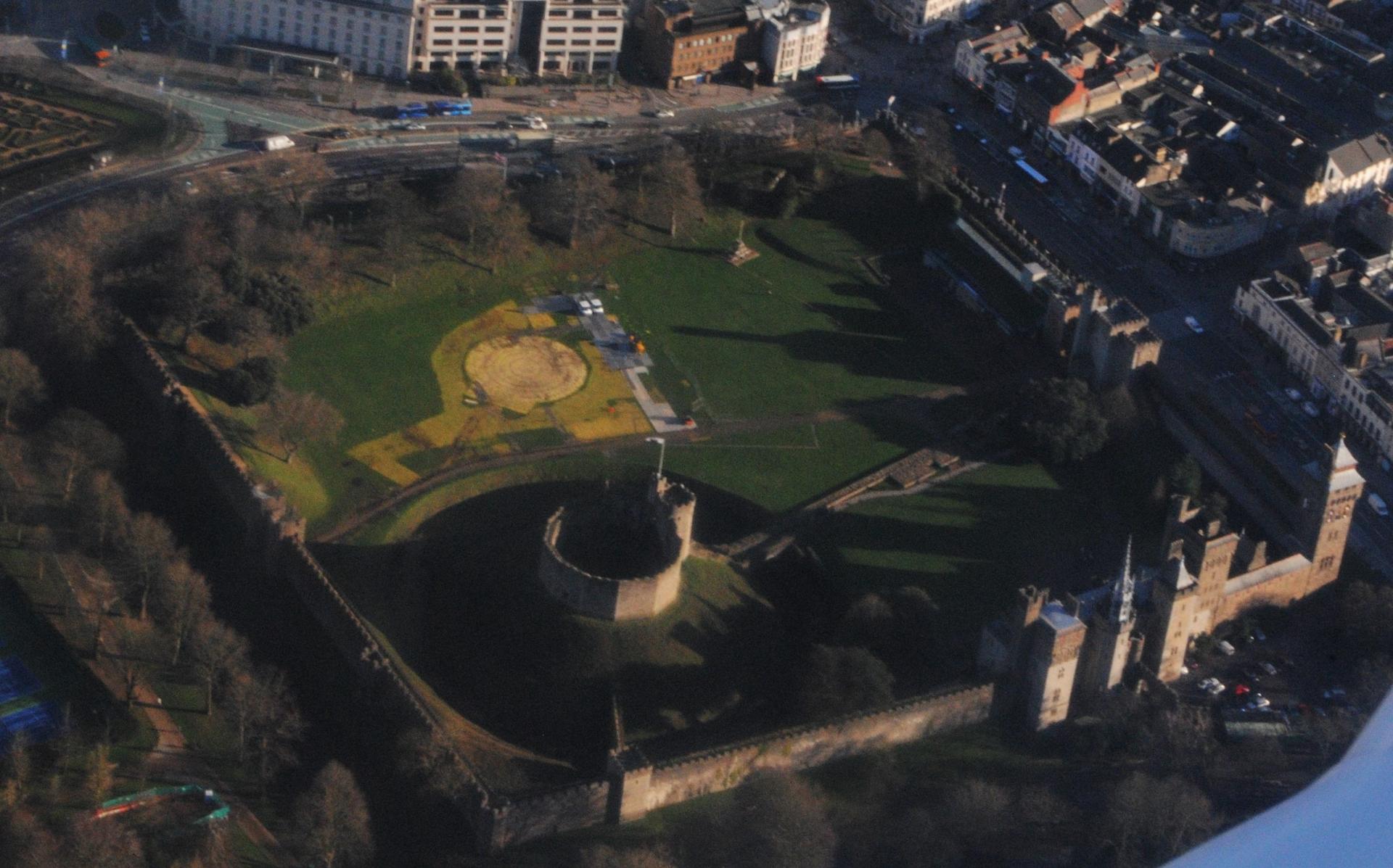
Looking beyond Llandaff Cathedral? Discover Cardiff for broader travel guides, local hot-spots, and regional highlights.
Explore Cardiff