Red Abbey Tower, Cork Travel Guide
Free Guide: Discover Cork’s oldest medieval relic, the Red Abbey Tower, a striking red sandstone sentinel steeped in history and heritage.


A brief summary of Red Abbey Tower
Discover Cork’s oldest medieval relic, the Red Abbey Tower, a striking red sandstone sentinel steeped in history and heritage.
The Red Abbey Tower, standing on Red Abbey Street in Ballintemple, Cork, is the city's oldest surviving medieval structure. This 14th-century Augustinian abbey tower, made from distinctive red sandstone, is a National Monument that witnessed pivotal moments in Cork’s history, including the 1690 Siege of Cork. Though much of the abbey was lost to fire and later industrial use, the tower remains a striking relic of Cork’s medieval past and architectural heritage.
On-site amenities
 Information boards
 Seating areas
 Trash bins
Opening hours
- Every dayOpen 24 hours
Opening hours as listed on the venue’s Google Business Profile. Hours can change for services and special events, so check with the venue before you go.
- Address
- Red Abbey St, Ballintemple, Cork, Ireland
- Website
Getting there
Bus
Taxi
Walking
Discover more about Red Abbey Tower
A Medieval Legacy in Cork's Urban Fabric
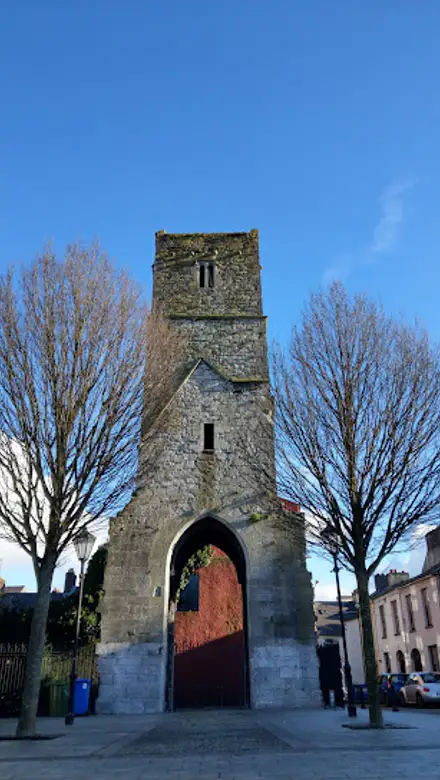
The Red Abbey Tower is the sole surviving structure of a once extensive Augustinian friary founded in the late 13th or early 14th century. Situated on Red Abbey Street in Ballintemple, this tower is a rare architectural survivor from Cork's medieval walled town era. Constructed primarily from red sandstone, which gives the abbey its name, the tower’s Gothic features are evident in its pointed arches and upper windows, offering a tangible link to the city's Anglo-Norman past.
Historical Significance and Turbulent Times
Throughout its history, the Red Abbey played a significant role beyond its religious function. The friars remained at the abbey through the Reformation until the Irish Rebellion of 1641. Later, during the 1690 Siege of Cork, the abbey’s tower was strategically used by John Churchill, the future Duke of Marlborough, as an observation post and artillery battery. This military use underscores the abbey’s importance in Cork’s defense history and the turbulent political landscape of 17th-century Ireland.
Transformation and Decline
By the early 18th century, the abbey grounds had been repurposed as a sugar refinery, reflecting the industrial shifts in Cork. However, in 1799, a devastating fire ravaged the refinery and much of the abbey’s remaining structures. Archaeological excavations in the late 20th century uncovered medieval walls, pottery, and even skeletons, providing invaluable insights into the site’s long history and the lives of its inhabitants.
Architectural Features and Preservation Efforts
The tower, approximately 20 meters high, is notable for its star-shaped design and Gothic architectural details, including the lower arch and upper window tracery. Although climbing the tower is not permitted, its imposing silhouette dominates the small public square around it. Recognized as a National Monument, the Red Abbey Tower is under ongoing restoration efforts by Cork City Council to preserve its structural integrity and historical value for future generations.
Atmosphere and Surrounding Context
Today, the Red Abbey Tower stands quietly amid a primarily residential area, just across the river from Cork’s bustling shopping districts. The surrounding Red Abbey Street retains a sense of historical continuity, with the tower serving as a poignant reminder of Cork’s medieval origins amidst modern urban life. The site’s modest size and tranquil setting invite reflection on the passage of time and the layers of history embedded in the cityscape.
Engaging with Cork’s Past
Visitors to the Red Abbey Tower can appreciate not only its architectural charm but also its layered stories—from religious devotion and military strategy to industrial transformation. The site encapsulates key moments in Cork’s evolution, making it a vital cultural heritage landmark that enriches understanding of the city’s medieval and early modern periods.
Evendo Review Centre
 Google
Guest reviews
Best time to go
Quietest: Jan, Feb & Dec · before 6am or at 10pm
Busy times are Evendo estimates for a typical year, to help you plan. Actual crowds vary with events, school holidays and the weather.
Explore Red Abbey Tower on the map
A handpicked selection of must-see spots near Red Abbey Tower, mapped for you.
Get your free copy of our complete guide to Red Abbey Tower, delivered straight to you.
Everything on this page, from opening hours and how to get there to Eve’s tips and the best time to go, in one PDF you can read offline, print or share.
Already have an account? Sign in
Your Red Abbey Tower guide is ready.
We'll send it to · Not you? Sign out

Getting your guide ready…
We are putting together a fresh copy of the Red Abbey Tower guide. This can take up to a minute.
This can take a few moments. If your browser asks, choose Allow so the download can start. You'll find the guide in your Downloads folder.
Nothing happened? Download it again
Sorry, the guide is taking longer than usual. Please try again in a minute, or get it by email instead.
Unlock the best of Red Abbey Tower
Skip-the-line tickets, guided tours with entry, and walking tours of the area, booked in a few clicks.

Other nearby places you may find interesting
The closest places of the same kind, if this one is not quite what you had in mind.
-
-
-
-
-


Swipe for more places
More to explore near Red Abbey Tower

 Best experiences near Red Abbey Tower
 Best hotels near Red Abbey Tower
 Best landmarks near Red Abbey Tower
 Best attractions near Red Abbey Tower
 Best shops near Red Abbey Tower
 Best restaurants near Red Abbey Tower
 Best bars near Red Abbey Tower
Do you manage this location?
Take control to get all the benefits, like improved information, better appearance, and stronger visibility across AI-powered discovery.
Explore more

Explore more of Cork
Discover Cork, Ireland's vibrant southern city, where history, culture, and natural beauty converge in a lively and welcoming atmosphere.
Explore Cork
Explore more of Ireland
Discover Ireland: A land of enchanting landscapes, rich history, and vibrant culture, where every corner tells a story and every visit feels like coming home.
Explore Ireland