
Home of Charles Darwin - Down House, Devon Travel Guide
The Victorian home where Darwin's revolutionary theory of evolution took shape through patient observation and meticulous experiment.
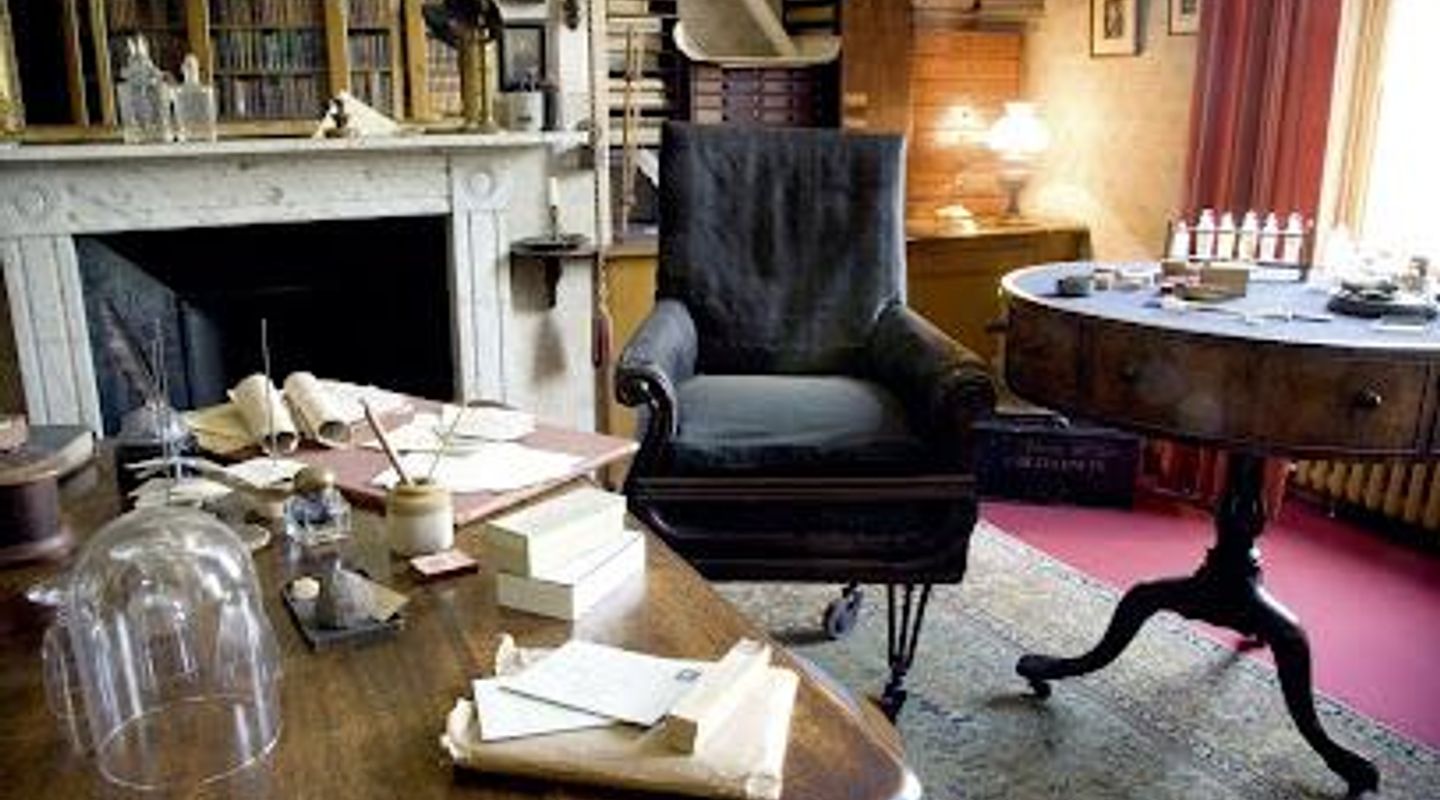
Step into the Victorian home where Charles Darwin developed his revolutionary theory of evolution. This modest but historically significant house in rural Kent served as Darwin's personal laboratory and sanctuary for over 40 years. Explore the rooms where he conducted groundbreaking research, examine his study filled with specimens and notes, and wander the gardens where he performed countless experiments on plants and animals. The house offers a fascinating glimpse into the life of one of history's greatest scientists and the everyday environment that shaped his monumental work.
A brief summary to Home of Charles Darwin - Down House
- Luxted Rd, Orpington, Downe, BR6 7JT, GB
- Click to display
- Click to display
- Duration: 2 to 3.5 hours
- Mid ranged
-
 Mixed
Mixed
- Mobile reception: 4 out of 5
- Saturday 10 am-4 pm
- Sunday 10 am-4 pm

Know before you go
Hi, I'm Eve. Here are a few practical things to know before exploring Home of Charles Darwin - Down House.
- Visit on a weekday or early in the day to avoid queues, particularly during summer months. The house has limited capacity per room due to conservation requirements.
- Allow at least 2–3 hours for a thorough visit. The audio guide is excellent for understanding the significance of each room and Darwin's work.
- Check the website for specialist guided garden tours offered during summer months, which provide expert interpretation of Darwin's botanical experiments.
- Use public transport if possible; car parking is very limited in the village. Buses from Bromley South or Orpington railway stations provide direct access.
- Wear comfortable walking shoes for exploring the gardens. The grounds are extensive and include gravel paths and uneven terrain.
Do you manage this location?
Take control to get all the benefits, like improved information, better appearance, and stronger visibility across AI-powered discovery. Learn more about listing your business on Evendo
Activate your presenceOther nearby places you may find interesting
The closest places of the same kind, if this one is not quite what you had in mind.
Explore Home of Charles Darwin - Down House on the Map
A handpicked selection of must-see spots near Home of Charles Darwin - Down House, mapped for you.
Unlock the Best of Home of Charles Darwin - Down House
Buy tickets
-
No tickets available
Book tours with entry

Book tours without entry
-
No tours available
Getting There
-
Train and Bus from London Victoria
Travel from London Victoria to Bromley South railway station (approximately 30 minutes). From Bromley South, take TfL Bus 146 departing at 36 minutes past each hour, which travels directly to Down House (approximately 25 minutes). Total journey time approximately 1 hour. Buses run regularly throughout the day. Return buses available hourly. Advance booking not required for buses.
-
Train and Bus from Orpington
Travel to Orpington railway station. From Orpington, take Bus R8 which stops near Down House (approximately 15 minutes). Note that Bus R8 does not operate on Sundays. This route is slightly shorter than the Bromley South option but less frequent service. Total journey time from central London approximately 1 hour 15 minutes including initial train travel to Orpington.
-
Car from London
Drive via the M25 and A21 towards Orpington, then follow local roads to Luxted Road in Downe (approximately 45 minutes from central London depending on traffic). Car parking at Down House is extremely limited with only a small number of spaces available. Parking in the village of Downe is not available for visitors. Public transport is strongly recommended, especially on weekends and during peak summer season.
-
Taxi or Ride-Share from Orpington
From Orpington railway station, a taxi or ride-share service to Down House covers approximately 3 kilometers (approximately 10–15 minutes depending on traffic). Estimated cost approximately £8–15 depending on service and time of day. This option provides flexibility if arriving outside regular bus operating hours or with luggage.
For the on-the-go comforts that matter to you
-
 Restrooms
-
 Drink Options
-
 Food Options
-
 Seating Areas
-
 Sheltered Areas
-
 Picnic Areas
-
 Trash Bins
-
 Information Boards
-
 Visitor Center
Discover more about Home of Charles Darwin - Down House
Darwin's Living Laboratory
Down House was Charles Darwin's home and workspace for 43 years, from 1842 until his death in 1882. Far more than a simple residence, the house functioned as a living laboratory where Darwin conducted the observations and experiments that would ultimately support his theory of evolution. The modest Victorian villa, set on the edge of the village of Downe in rural Kent, provided the perfect sanctuary for a man of intense intellectual focus. Here, Darwin worked in relative isolation, conducting meticulous studies on plant variation, animal behavior, and heredity that would reshape scientific understanding forever.The house itself reflects Darwin's personality—practical, unadorned, and purposeful. Every room tells a story of his scientific method and personal life. His study remains the heart of the house, lined with books, specimens, and the very desk where he wrote much of his correspondence and notes. The drawing room, dining room, and bedrooms reveal the domestic life of the Darwin family, offering visitors a rare window into how Victorian scientific genius balanced family obligations with groundbreaking research.The Gardens as Scientific Workspace
Darwin's true outdoor laboratory extended across the gardens surrounding Down House. For over four decades, he transformed the grounds into an experimental paradise where he studied orchids, sundews, peas, hollyhocks, and even common weeds. These plants were not mere decoration but essential subjects in his investigations of variation, adaptation, and natural selection. Darwin would spend hours observing how plants responded to light, gravity, and other environmental factors, meticulously recording his findings in notebooks that would later inform his published works.The gardens have been carefully restored to reflect Darwin's era, with many of his original experiments recreated by the modern gardening team. Guided tours during the summer months bring these botanical studies to life, explaining the specific experiments Darwin conducted and why each plant species mattered to his research. The garden paths wind through areas where Darwin made his most important observations, creating an immersive experience that connects visitors directly to the scientific process that changed the world.A Window into Victorian Scientific Life
Visiting Down House provides intimate insight into how science was conducted in the nineteenth century, long before laboratories, computers, and institutional research facilities. Darwin's methods were observational, patient, and deeply personal. He relied on correspondence with naturalists around the world, careful record-keeping, and years of patient experimentation. The house displays letters, manuscripts, and personal effects that illustrate his working life and the intellectual networks he maintained with fellow scientists.The Victorian setting also reveals the social context of Darwin's work. His family lived alongside his research; his children played in the same gardens where he conducted experiments. The house shows how domestic life and scientific inquiry were intertwined, how illness and personal tragedy shaped his work, and how a country gentleman could produce ideas that would influence all of human knowledge. This human dimension makes Down House far more than a museum—it is a biographical space that illuminates the person behind the theory.Preservation and Modern Interpretation
Down House is now managed by English Heritage and has been meticulously preserved to maintain its historical authenticity. The rooms are furnished as they would have been during Darwin's lifetime, with original and period-appropriate pieces creating an atmosphere of genuine historical immersion. The house underwent significant restoration work to ensure that visitors experience the spaces much as Darwin himself would have known them.The interpretation throughout the house balances scholarly rigor with accessibility. Displays explain Darwin's major works and ideas without requiring advanced scientific knowledge, making the site valuable for visitors of all ages and educational backgrounds. Audio guides enhance the experience by providing detailed information about specific rooms and objects. The combination of physical space, personal artifacts, and contextual information creates a compelling narrative about one man's intellectual journey and its profound impact on science and society.Seasonal Character and Visitor Experience
The experience of Down House changes with the seasons, much as it did during Darwin's own time. Spring brings the gardens to life with flowering plants that Darwin studied, while summer offers the best conditions for exploring the outdoor spaces and attending specialist guided tours. Autumn and winter reveal the quieter, more introspective side of the property, with bare branches and dormant gardens creating a contemplative atmosphere suited to reflection on Darwin's solitary work. The modest size of the house means that visits remain intimate rather than overwhelming, allowing visitors to linger in rooms and absorb the atmosphere at their own pace.More to explore near Home of Charles Darwin - Down House
-

Best experiences near Home of Charles Darwin - Down House
-

Best hotels near Home of Charles Darwin - Down House
-

Best landmarks near Home of Charles Darwin - Down House
-

Best shops near Home of Charles Darwin - Down House
-

Best restaurants near Home of Charles Darwin - Down House
-

Best bars near Home of Charles Darwin - Down House







Your all‑in‑one travel companion app
Explore expert travel guides, compare and book tours, experiences, hotels, and more—all from the palm of your hand. Download now for seamless trip planning wherever your wanderlust takes you.


Explore More of Devon
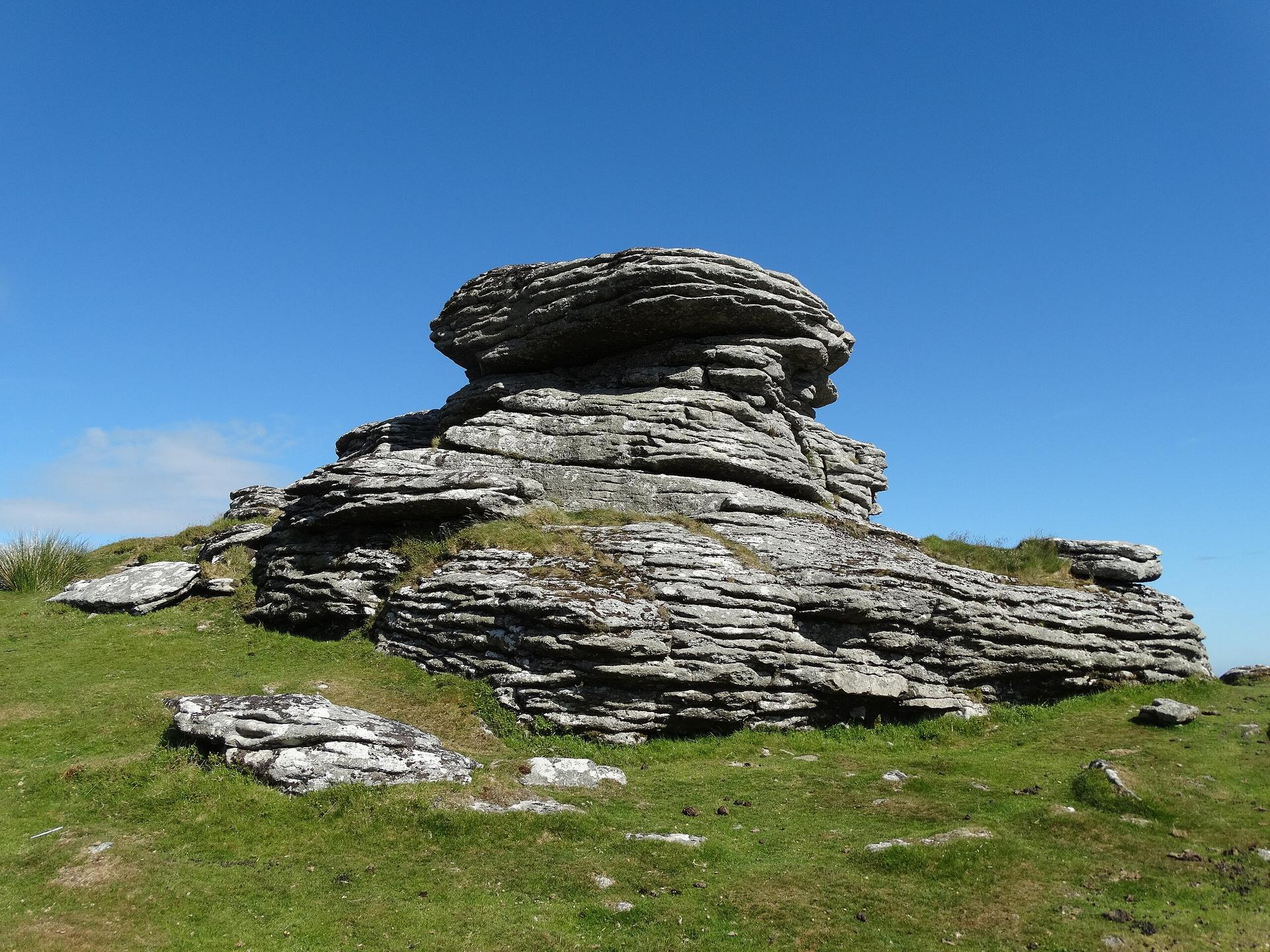
Looking beyond Home of Charles Darwin - Down House? Discover Devon for broader travel guides, local hot-spots, and regional highlights.
Explore Devon
A heritage hangar at Biggin Hill where RAF history, restored aircraft, and active airfield views come together in a compact, enthusiast-focused visit.
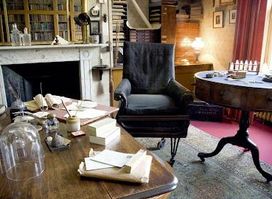
The quiet Kent home where Charles Darwin developed his theory of evolution, with preserved rooms and gardens that served as his living laboratory.
