Caerlaverock Castle, Down Travel Guide
Explore Scotland’s unique triangular medieval fortress with a moat, twin towers, rich history, and scenic nature reserve near Dumfries.
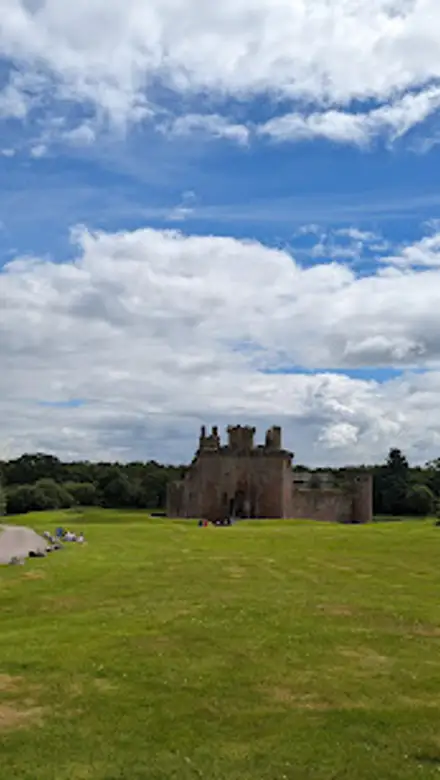
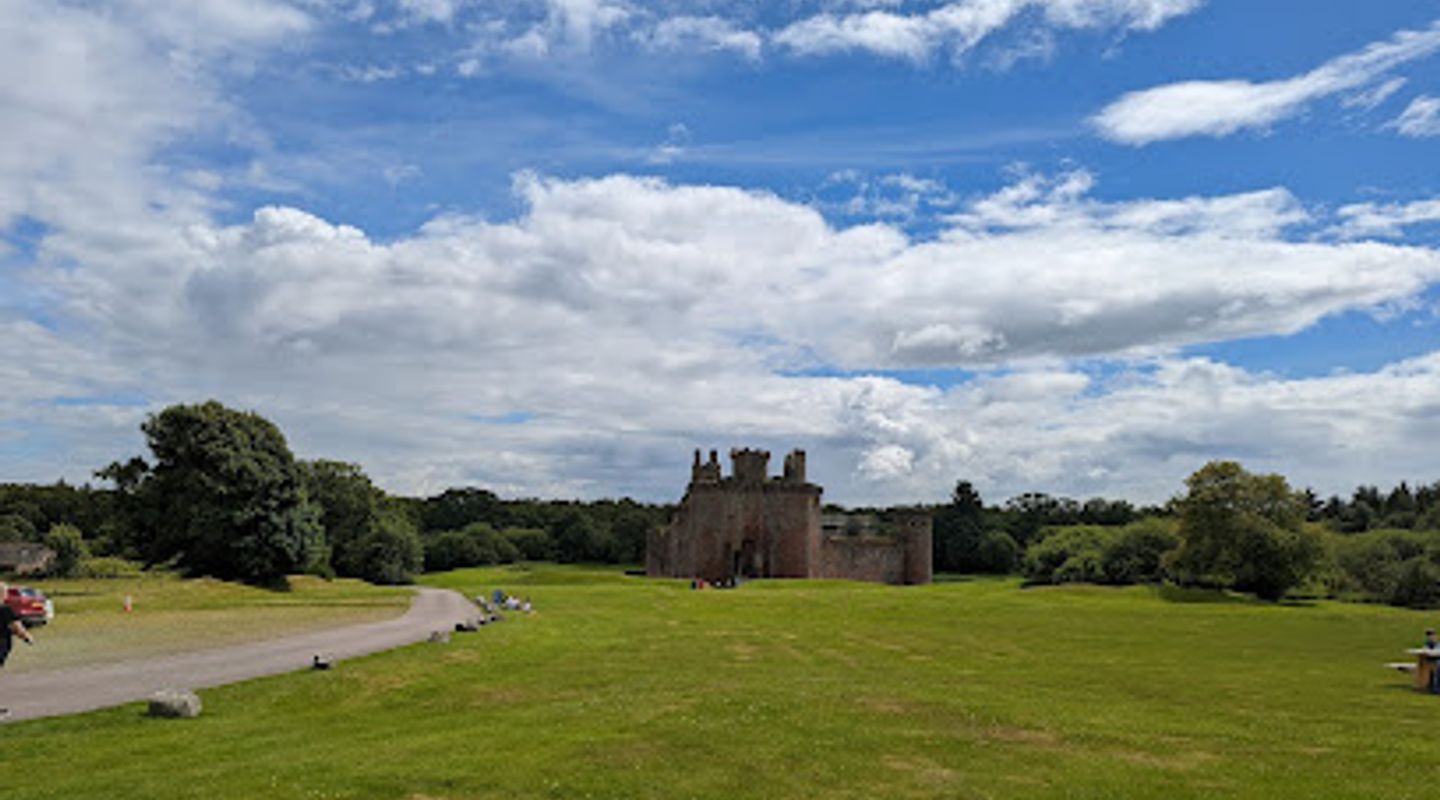
Caerlaverock Castle, located near Dumfries on Scotland’s southern coast, is a unique 13th-century moated fortress renowned for its rare triangular layout and twin-towered gatehouse. Once a stronghold of the Maxwell family, it played a pivotal role in border conflicts and the Wars of Scottish Independence. Today, visitors explore its dramatic ruins, siege exhibitions, and surrounding nature reserve, experiencing a remarkable blend of history and scenic beauty.
A brief summary to Caerlaverock Castle
- Castle Road End, Dumfries, DG1 4RU, GB
- Click to display
- Click to display
- Duration: 1 to 3 hours
- Mid ranged
-
 Outdoor
- Mobile reception: 4 out of 5
- Monday 9:30 am-5 pm
- Tuesday 9:30 am-5 pm
- Wednesday 9:30 am-5 pm
- Thursday 9:30 am-5 pm
- Friday 9:30 am-5 pm
- Saturday 9:30 am-5 pm
- Sunday 9:30 am-5 pm

Know before you go
Hi, I'm Eve. Here are a few practical things to know before exploring Caerlaverock Castle.
- Book tickets online in advance to secure entry and benefit from reduced prices.
- Wear sturdy footwear as the grounds can be damp and uneven, especially near the moat and nature trails.
- Visit during summer mornings for pleasant weather and fewer crowds.
- Explore the adjacent Caerlaverock National Nature Reserve for birdwatching and scenic walks.
- Historic Scotland members enjoy free entry; consider purchasing an Explorer Pass if visiting multiple sites.
Do you manage this location?
Take control to get all the benefits, like improved information, better appearance, and stronger visibility across AI-powered discovery. Learn more about listing your business on Evendo
Activate your presenceOther nearby places you may find interesting
The closest places of the same kind, if this one is not quite what you had in mind.

Explore Caerlaverock Castle on the Map
A handpicked selection of must-see spots near Caerlaverock Castle, mapped for you.
Getting There
-
Car
Driving from Dumfries to Caerlaverock Castle takes approximately 20-30 minutes via the A710 and B725 roads. Parking is available on site free of charge. Note that rural roads can be narrow, so drive cautiously.
-
Bus
Local bus services run from Dumfries town centre to nearby stops within 2 km of the castle, with a journey time of around 40-50 minutes. From the stop, a moderate walk on gravel paths leads to the site. Check seasonal schedules as frequency varies.
-
Walking
For active visitors staying in Dumfries, walking to Caerlaverock Castle is possible but requires 2.5-3 hours over mixed terrain including rural roads and gravel paths. Suitable only for experienced walkers with appropriate footwear.
For the on-the-go comforts that matter to you
-
 Restrooms
-
 Food Options
-
 Drink Options
-
 Seating Areas
-
 Trash Bins
-
 Information Boards
-
 Visitor Center
Discover more about Caerlaverock Castle
A Fortress of Strategic Design and Enduring Legacy
Caerlaverock Castle stands out as one of Scotland’s most distinctive medieval fortifications, famed for its rare triangular plan, a design shaped by the natural promontory on which it was built. Constructed initially in the early 13th century, the castle’s layout was intended to maximize defensive capabilities, with three curtain walls converging to form a formidable stronghold. Its twin-towered gatehouse remains an iconic symbol of medieval military architecture, guarding the entrance with imposing battlements and a protective moat.Historical Turbulence on the Borderlands
The castle’s history is deeply intertwined with Scotland’s turbulent border conflicts, especially during the Wars of Scottish Independence. It changed hands multiple times, notably enduring a siege by King Edward I in 1300. Over centuries, Caerlaverock was repeatedly attacked, partially demolished, and rebuilt, reflecting the shifting power struggles between England and Scotland. Its last siege occurred in 1640 during the Covenanter Wars, after which it was deliberately slighted to prevent further military use.The Maxwell Family and Renaissance Influence
For over 400 years, Caerlaverock was the ancestral seat of the Maxwell family, who rose to prominence as Earls of Nithsdale. In the 17th century, they added the Nithsdale Apartments within the castle walls, an early example of classical domestic architecture in Scotland, contrasting with the fortress’s medieval origins. This blend of Renaissance refinement within a defensive stronghold offers a unique glimpse into evolving architectural tastes and social history.Exploring the Castle and Its Grounds Today
Visitors to Caerlaverock can explore its substantial ruins, including the moat, gatehouse, and many interior features, though some areas remain closed for preservation. The castle’s triangular footprint allows for an engaging walk around its ramparts, with interpretive displays and a siege warfare exhibition featuring medieval siege engine reconstructions. Nearby, the remains of the earlier 'old castle' provide additional historical context, accessible via a nature trail through the surrounding woodland.Natural Beauty and Wildlife at the Reserve
Caerlaverock Castle is situated on the edge of the Caerlaverock National Nature Reserve, a protected area known for its rich birdlife and scenic landscapes overlooking the Solway Firth. Visitors can enjoy tranquil walks through the reserve’s merse and woodlands, offering panoramic views and opportunities for wildlife spotting. The combination of cultural heritage and natural environment makes the site a compelling destination for history enthusiasts and nature lovers alike.Visitor Facilities and Practical Information
The site includes a visitor centre with a small museum, restrooms, a gift shop, and a seasonal tearoom offering refreshments. Accessibility is supported by compacted gravel paths and a wide wooden bridge, though some internal castle steps may pose challenges. Tickets are reasonably priced, with discounts for Historic Scotland members and concessions. Opening times vary seasonally, generally from 9:30am to 5pm in summer and 10am to 4pm in winter, with some access restrictions currently in place for conservation.












Your all‑in‑one travel companion app
Explore expert travel guides, compare and book tours, experiences, hotels, and more—all from the palm of your hand. Download now for seamless trip planning wherever your wanderlust takes you.


Explore More of Down
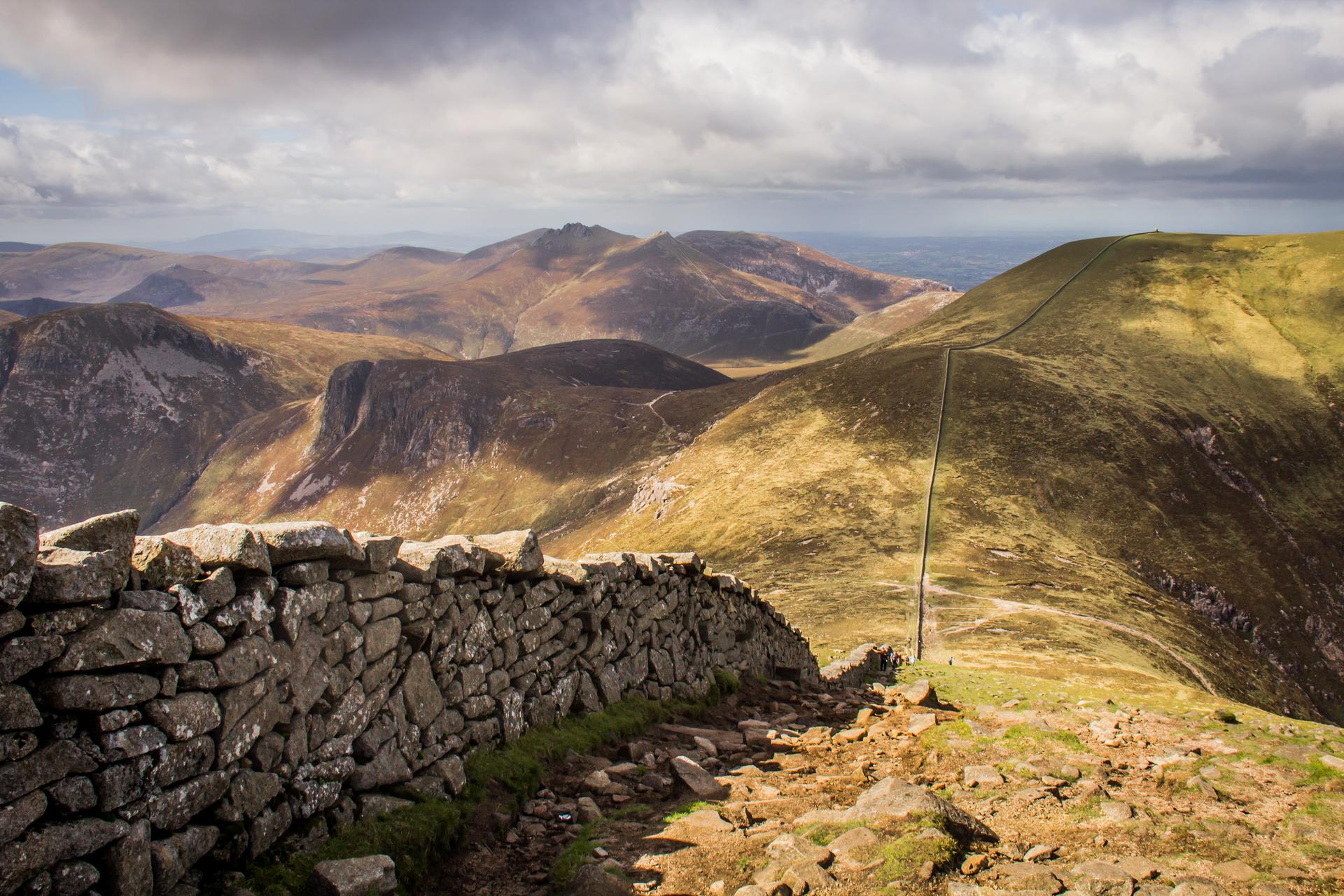
Looking beyond Caerlaverock Castle? Discover Down for broader travel guides, local hot-spots, and regional highlights.
Explore Down
Discover the ancient Ruthwell Cross inside Scotland’s oldest church, a masterpiece of Anglo-Saxon art and literature from the 8th century.
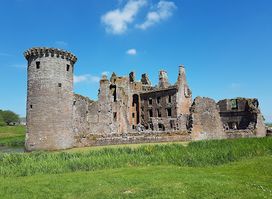
Explore Scotland’s only triangular castle, a moated medieval fortress rich in history and surrounded by stunning natural beauty.