Claypotts Castle, Dundee Travel Guide
Free Guide: Discover the enchanting 16th-century Claypotts Castle, a beautifully preserved Scottish Z-plan tower house blending history, legend, and unique architecture.


A brief summary of Claypotts Castle
Discover the enchanting 16th-century Claypotts Castle, a beautifully preserved Scottish Z-plan tower house blending history, legend, and unique architecture.
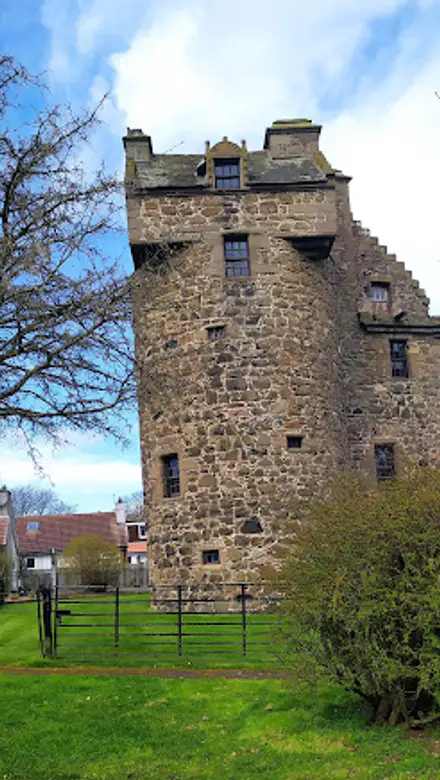
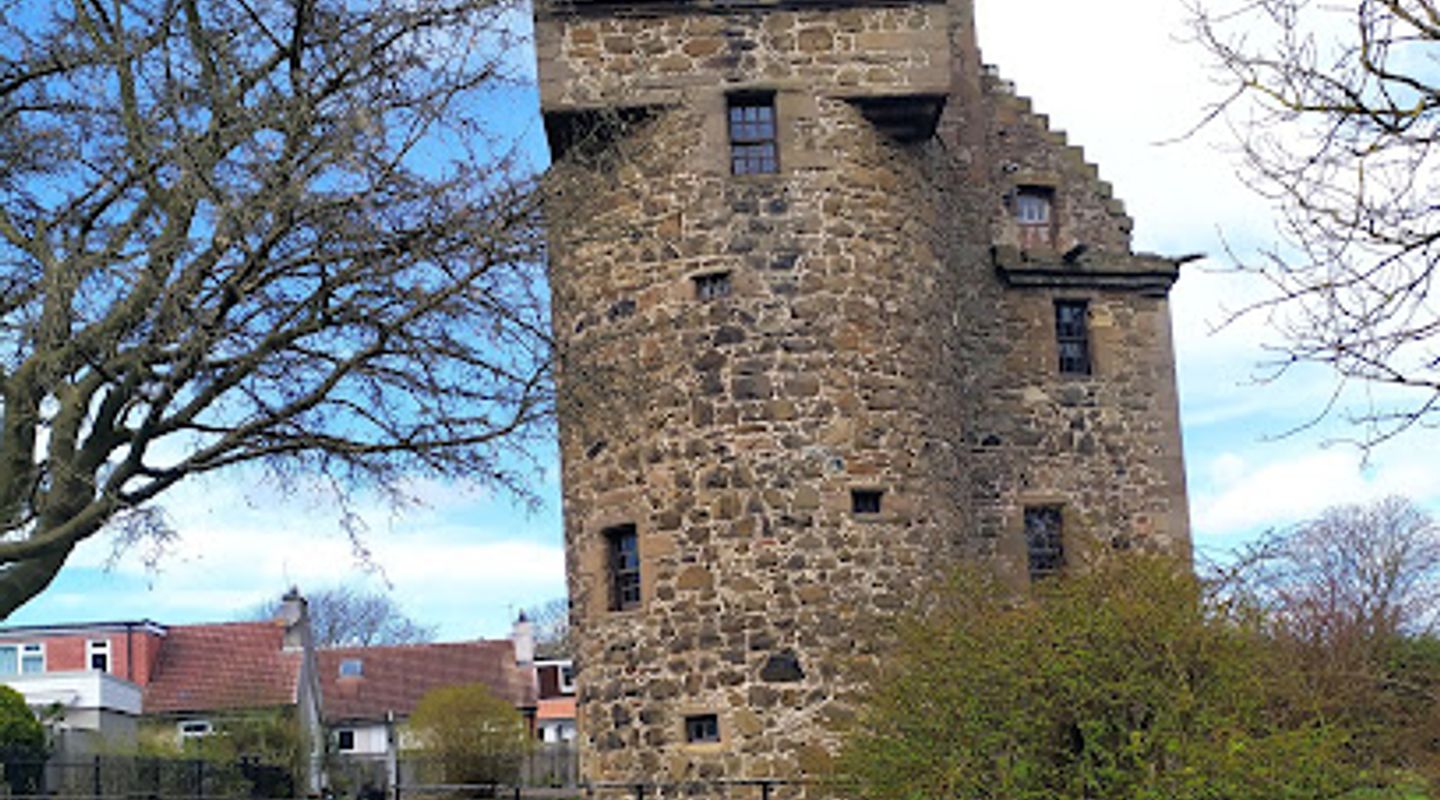
Claypotts Castle, located in Broughty Ferry, Dundee, is a remarkably well-preserved 16th-century Z-plan tower house built between 1569 and 1588 by John Strachan of Claypotts. Known for its distinctive crow-stepped gables, round towers, and original timber roof, the castle blends defensive features with elegant domestic comfort. Surrounded today by modern housing, it stands as a unique architectural gem maintained by Historic Environment Scotland.
On-site amenities
 Seating areas
 Information boards
- Address
- 64 Claypotts Rd, Broughty Ferry, Dundee DD5 1LH
- Phone
- Website
Getting there
Public Bus
Car
Taxi
Discover more about Claypotts Castle
Origins and Historical Context
Claypotts Castle was constructed over nearly two decades from 1569 to 1588 by John Strachan of Claypotts, a landowner who rose in status following the Protestant Reformation which dissolved the Catholic Church’s hold on the lands. Prior to this, the Strachans were tenants of Lindores Abbey. The castle’s construction marked their transition to landowners and reflected their desire for a residence that balanced prestige, comfort, and some defensive capability. After John Strachan’s death in 1593, the estate passed through several hands, including the Grahams of Ballunie and Claverhouse, the latter being the family of the Jacobite leader John Graham, Viscount Dundee, known as 'Bonnie Dundee'. The castle eventually became crown property in 1689 and later passed to the Douglas family before being gifted to the state in 1926.
Architectural Distinctiveness and Design
Claypotts Castle is a classic example of a Scottish Z-plan tower house, a design popular in the late 16th century. Its layout features a rectangular central block flanked diagonally by two large round towers capped with square gabled chambers. This configuration allowed defenders to cover all sides of the castle, though by this period, defensive needs were secondary to aesthetics and domestic comfort. The castle’s twelve gun holes served more as deterrents, akin to modern security measures. The crow-stepped gables and corbelled turrets add to its fairy-tale appearance, while the survival of much of the original late-medieval timber roof is exceptional. Inside, the basement housed the kitchen and cellars, the first floor contained the great hall, and the towers provided private chambers for the laird’s family and guests.
Changing Roles and Occupants
Though originally a family home for the Strachans, Claypotts Castle’s role evolved over centuries. After the Strachans sold it in 1601, it was owned by prominent Scottish families who rarely resided there, instead using it to house farmworkers. In the 19th century, the castle served primarily as accommodation for labourers working the surrounding estates. Despite this utilitarian use, the castle remained remarkably intact, avoiding the extensive alterations or decay common to many contemporaneous buildings.
Legends and Local Lore
Claypotts Castle is surrounded by intriguing legends, including tales of a 'White Lady' ghost said to appear annually at a window, possibly linked to Marion Ogilvie, mistress of Cardinal David Beaton. However, historical evidence suggests these stories are more folklore than fact, as no castle existed here during her lifetime. The castle is also reputedly haunted by John Graham of Claverhouse, though he likely never stayed at Claypotts. Another charming local legend speaks of a helpful brownie spirit who abandoned the castle due to a lazy kitchen maid, adding to the castle’s mystical aura.
Present-Day Significance and Preservation
Today, Claypotts Castle stands as one of Scotland’s quirkiest and best-preserved late medieval castles. Maintained by Historic Environment Scotland as an Ancient Monument, it offers visitors a rare glimpse into 16th-century Scottish domestic architecture. The castle’s exterior and grounds are open to the public, showcasing its complex geometry of towers, turrets, and corbelling. Its preservation owes much to continuous occupation and adaptive use over nearly five centuries, making it a valuable cultural and architectural heritage site.
Setting and Visitor Experience
Nestled within the suburban area of Broughty Ferry, Dundee, Claypotts Castle contrasts sharply with the surrounding modern housing. Historically, it would have been set amid gardens and a courtyard, with views over fields and towards the Grampian foothills. Today, visitors can appreciate its fairy-tale silhouette and intricate stonework, imagining the lives of the lairds and labourers who once inhabited it. The castle’s enduring charm lies in its blend of historical significance, architectural uniqueness, and the evocative stories woven into its fabric.
Evendo Review Centre
 Google
Guest reviews
Best time to go
Quietest: Jan, Feb & Dec · before 6am
Busy times are Evendo estimates for a typical year, to help you plan. Actual crowds vary with events, school holidays and the weather.
Explore Claypotts Castle on the map
A handpicked selection of must-see spots near Claypotts Castle, mapped for you.
Get your free copy of our complete guide to Claypotts Castle, delivered straight to you.
Everything on this page, from opening hours and how to get there to Eve’s tips and the best time to go, in one PDF you can read offline, print or share.
Already have an account? Sign in
Your Claypotts Castle guide is ready.
We'll send it to · Not you? Sign out

Getting your guide ready…
We are putting together a fresh copy of the Claypotts Castle guide. This can take up to a minute.
This can take a few moments. If your browser asks, choose Allow so the download can start. You'll find the guide in your Downloads folder.
Nothing happened? Download it again
Sorry, the guide is taking longer than usual. Please try again in a minute, or get it by email instead.
Other nearby places you may find interesting
The closest places of the same kind, if this one is not quite what you had in mind.
-
Verdant Works Museum Step inside Dundee’s iconic jute mill to experience the sights, sounds, and stories of a city shaped by industry and innovation.
-
Camperdown Wildlife Centre Discover endangered wildlife and immersive animal experiences in Dundee’s largest country park, a family-friendly conservation gem.
-
Dundee Science Centre Hands-on science fun for all ages in the heart of Dundee – explore interactive exhibits, live shows, and immersive experiences that make learning exciting.
-
Riverside Nature Park Explore Dundee’s restored green sanctuary with rich wildlife, scenic estuary views, and peaceful walking trails at Riverside Nature Park.
-
Dundee Maritime Trail Explore Dundee’s rich maritime heritage on a scenic 2km waterfront trail linking historic ships, museums, and vibrant public art.
Swipe for more places
More to explore near Claypotts Castle

 Best experiences near Claypotts Castle
 Best hotels near Claypotts Castle
 Best landmarks near Claypotts Castle
 Best attractions near Claypotts Castle
 Best shops near Claypotts Castle
 Best restaurants near Claypotts Castle
 Best bars near Claypotts Castle
Do you manage this location?
Take control to get all the benefits, like improved information, better appearance, and stronger visibility across AI-powered discovery.
Explore more

Explore more of Dundee
Discover Dundee: From historic ships to modern design, experience a dynamic city blending rich heritage with vibrant culture on Scotland's stunning east coast.
Explore Dundee
Explore more of United Kingdom
Discover the United Kingdom: A blend of rich history, stunning landscapes, and vibrant cities, offering a unique travel experience for every visitor.
Explore United Kingdom