Tron Theatre, Glasgow Travel Guide
Free Guide: Historic church-turned-theatre at the heart of Glasgow's Merchant City, showcasing bold contemporary work and emerging Scottish talent.


A brief summary of Tron Theatre
Historic church-turned-theatre at the heart of Glasgow's Merchant City, showcasing bold contemporary work and emerging Scottish talent.
A historic performing arts venue housed in a converted 18th-century church on Glasgow's Trongate, the Tron Theatre is a leading Scottish theatre company producing contemporary work, classic texts, and new writing. Originally established as a theatre club in 1979 and fully public since 1989, it operates two performance spaces and hosts an active bar and restaurant that serves as a cultural hub for Glasgow's arts community.
On-site amenities
 Restrooms
 Drink options
 Food options
 Seating areas
 Information boards
- Address
- 63 Trongate, Glasgow G1 5HB
- Phone
- Website
Getting there
Public Transport - Subway
Bus Services
Walking from City Centre
Taxi or Ride-Share
Discover more about Tron Theatre
From Sacred Ground to Theatrical Stage
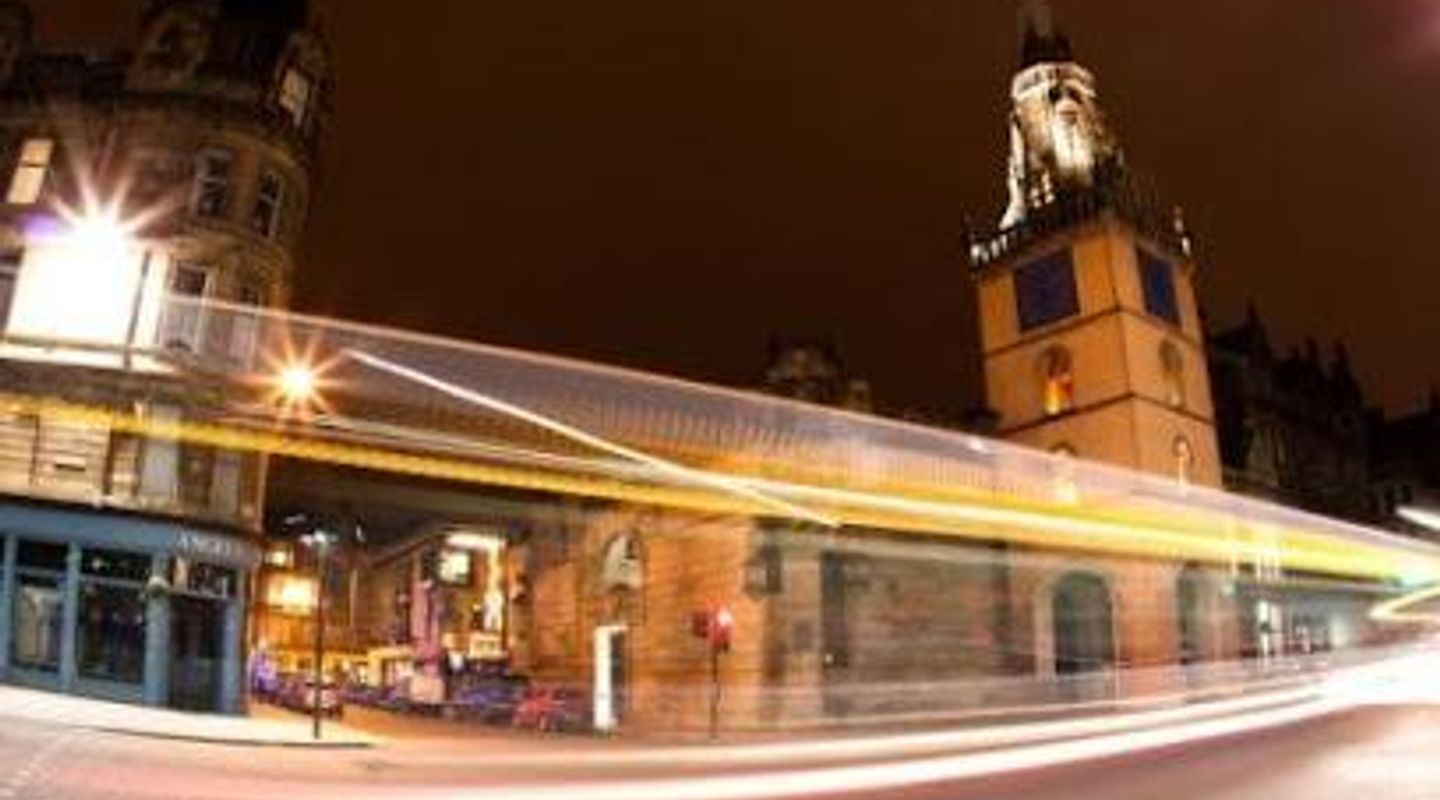
The Tron Theatre occupies one of Glasgow's most historically layered buildings, with roots stretching back to 1529 when a church first stood on this site. The distinctive blue-faced clock tower that crowns the structure today is one of Glasgow's most recognizable landmarks, a survivor of the building's dramatic past. In 1793, the original church was destroyed in a fire set by members of Glasgow's notorious Hellfire Club—a dark chapter in the city's history. The steeple alone remained standing, and architects James and Robert Adam incorporated it into a replacement structure that still forms the basis of the Tron building today. This architectural continuity creates a tangible link between centuries of Glasgow life, from medieval commerce to contemporary culture.
The Name and the Mercantile Heart of Glasgow
The name 'Trongate' derives from the 'tron'—a beam used to officially weigh trading goods when they entered Glasgow's city walls around 1560. For three centuries, this area remained at the heart of Glasgow's mercantile and financial activity, earning the district its enduring nickname: Merchant City. The Tron Theatre thus stands at the intersection of Glasgow's commercial heritage and its modern cultural identity, occupying a street that once bustled with merchants and traders.
Resurrection as a Theatre and Cultural Powerhouse
After centuries of decline, the building was rescued in the late 1970s when the Glasgow Theatre Club took over the almost derelict Tron Kirk. The theatre opened its doors on 10 May 1981, launching with a production of Eine Kleine Nacht Musik in the Victorian Bar. Under the artistic direction of Michael Boyd from 1986 to 1996, the Tron established itself as a powerhouse of new Scottish writing and dynamic classical productions. This era saw the emergence of internationally renowned artists including Alan Cumming, Forbes Masson, Peter Mullan, Craig Ferguson, and Siobhan Redmond. Boyd's landmark productions included an award-winning adaptation of Janice Galloway's The Trick is to Keep Breathing and a series of popular Glaswegian Christmas shows that became beloved traditions.
Architectural Evolution and Modern Facilities
The building underwent significant development in 1992 and 1995, and a major £5 million refurbishment project began in 1996, funded by the Scottish Arts Council National Lottery Fund, Strathclyde European Partnership, and Glasgow City Council. The new Tron Bar on Chisholm Street opened in November 1998, and the theatre officially reopened in July 1999 with enhanced facilities. Today, the venue comprises a main auditorium with 230 seats and the intimate Changing House Studio Theatre with 50 seats, allowing for diverse programming from large-scale productions to experimental work.
Contemporary Leadership and Cultural Vision
Following decades of artistic leadership by figures including Irina Brown, Neil Murray, Gregory Thomson, and Andy Arnold, the Tron Theatre is currently under the artistic direction of Jemima Levick, who joined in April 2024. The theatre continues its mission as both a producing house for contemporary theatrical work and a receiving venue for visiting programs of theatre, comedy, and music from Scotland, the UK, and beyond. The Education and Outreach department offers drama workshops for children and young people, creative writing for adults, and professional development opportunities for theatre practitioners.
A Living Cultural Hub
Beyond its role as a theatre, the Tron has become integral to Glasgow's cultural fabric. The bar and restaurant remain a regular gathering place for the city's arts community, maintaining a tradition of live jazz performances on Sundays that dates back to the theatre's early days. The venue's location in the historic Merchant City, combined with its commitment to accessible programming and community engagement, makes it a vital cultural institution that bridges Glasgow's mercantile past with its vibrant contemporary arts scene.
Evendo Review Centre
 Google
Guest reviews
Best time to go
Quietest: Jan, Feb & Mar · before 8am or from 11pm
Busy times are Evendo estimates for a typical year, to help you plan. Actual crowds vary with events, school holidays and the weather.
Explore Tron Theatre on the map
A handpicked selection of must-see spots near Tron Theatre, mapped for you.
Get your free copy of our complete guide to Tron Theatre, delivered straight to you.
Everything on this page, from opening hours and how to get there to Eve’s tips and the best time to go, in one PDF you can read offline, print or share.
Already have an account? Sign in
Your Tron Theatre guide is ready.
We'll send it to · Not you? Sign out

Getting your guide ready…
We are putting together a fresh copy of the Tron Theatre guide. This can take up to a minute.
This can take a few moments. If your browser asks, choose Allow so the download can start. You'll find the guide in your Downloads folder.
Nothing happened? Download it again
Sorry, the guide is taking longer than usual. Please try again in a minute, or get it by email instead.
Unlock the best of Tron Theatre
Skip-the-line tickets, guided tours with entry, and walking tours of the area, booked in a few clicks.


Other nearby places you may find interesting
The closest places of the same kind, if this one is not quite what you had in mind.
-
-
-
-
-


Swipe for more places
More to explore near Tron Theatre

 Best experiences near Tron Theatre
 Best hotels near Tron Theatre
 Best landmarks near Tron Theatre
 Best attractions near Tron Theatre
 Best shops near Tron Theatre
 Best restaurants near Tron Theatre
 Best bars near Tron Theatre
Do you manage this location?
Take control to get all the benefits, like improved information, better appearance, and stronger visibility across AI-powered discovery.
Explore more

Explore more of Glasgow
Discover Glasgow, Scotland's cultural capital, where history, architecture, and vibrant arts scene meet, offering a unique and unforgettable travel experience.
Explore Glasgow
Explore more of United Kingdom
Discover the United Kingdom: A blend of rich history, stunning landscapes, and vibrant cities, offering a unique travel experience for every visitor.
Explore United Kingdom