The Clock Tower of St Albans: Medieval Symbol of Civic Pride
Explore England’s only medieval town belfry, a symbol of St Albans’ historic independence and rich heritage.
The Clock Tower in St Albans, built between 1403 and 1412, is England’s only surviving medieval town belfry. Erected by the townspeople as a symbol of independence from the powerful Abbey, it served as a curfew bell, lookout, and alarm during historic conflicts. Today, visitors can climb its 93 narrow steps to explore five floors of rich history and enjoy panoramic views of the city and the nearby Roman site of Verulamium.
A brief summary to The Clock Tower
- High St, St Albans, AL3 4EL, GB
- Click to display
- Duration: 0.5 to 1.5 hours
- Mid ranged
-
 Outdoor
- Mobile reception: 4 out of 5

Know before you go
Hi, I'm Eve. Here are a few practical things to know before exploring The Clock Tower.
- Prepare for a climb of 93 narrow spiral steps; the tower is not suitable for those with limited mobility.
- Visit between Easter and late September on weekends or bank holidays for public access.
- Don’t miss the panoramic views of St Albans Cathedral and the Roman Verulamium from the rooftop.
- Look for the plaque commemorating the Eleanor Cross near the tower’s base.
Do you manage this location?
Take control to get all the benefits, like improved information, better appearance, and stronger visibility across AI-powered discovery. Learn more
Activate your presence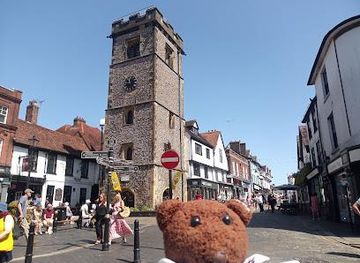

Getting There
-
Train and Walk
From London St Pancras International, take a Thameslink train to St Albans City station (approximately 25-35 minutes). From the station, enjoy a 20-minute walk through the historic city center to the Clock Tower. The walk is on paved streets but may include some cobblestones. No parking restrictions apply at the tower itself.
-
Bus
Local bus services from St Albans Bus Station connect to stops near High Street, about a 5-minute walk from the Clock Tower. Buses run frequently during the day, with fares around £2-£4. Service frequency may reduce on weekends and public holidays.
-
Car
Driving to St Albans is possible via the M25 and A414. Parking is available in nearby public car parks such as the Abbey View or Riverside car parks, approximately 5-10 minutes’ walk from the tower. Parking fees typically range from £1.50 to £3 per hour. Note that the High Street is pedestrianized, so vehicle access is limited.
For the on-the-go comforts that matter to you
-
 Restrooms
-
 Drink Options
-
 Food Options
-
 Information Boards
The Clock Tower location weather suitability
-
 Any Weather
-
 Clear Skies
-
 Mild Temperatures
Discover more about The Clock Tower
A Monument Born of Civic Defiance
The Clock Tower of St Albans was constructed between 1403 and 1412 by the townspeople as a bold statement of their autonomy against the dominance of the wealthy and powerful St Albans Abbey. Designed by Thomas Wolvey, a former Royal Mason, the tower was built on higher ground to literally and figuratively ‘look the Abbey in the eye.’ It allowed the town to mark its own hours and sound the curfew, asserting civic independence in a period when the Abbey controlled many aspects of daily life, including milling rights. This medieval belfry remains the only one of its kind in England, standing as a rare and tangible symbol of the town’s historical struggle for freedom.Architectural Layers and Historical Functions
The tower rises in four main stages and comprises five floors, each revealing a different facet of its multifaceted past. The ground floor once housed a shop, with the shopkeeper’s lodgings on the first floor. The second floor was home to the clock keeper and his family, who lived there from the tower’s completion until the mid-19th century. The third floor contains the Victorian clock mechanism installed during the 1866 restoration, designed by Lord Grimthorpe, the same expert who worked on Big Ben. The fourth floor holds the original one-ton bell, cast in 1335, which tolled the curfew and rang alarms during events such as the First Battle of St Albans in 1455. The roof features the shutter telegraph station used during the Napoleonic Wars to relay messages rapidly between London and the North Sea Fleet.A Witness to Historic Moments and Communication Advances
Throughout its life, the Clock Tower has played a crucial role in the town’s history. Its bell sounded alarms during the War of the Roses and was integral in the town’s defense. During the Napoleonic Wars, the tower’s roof was equipped with a semaphore shutter telegraph, part of a chain of 16 stations enabling communication across approximately 300 miles in minutes, a remarkable technological achievement of its time. The tower also functioned as a government telegraph station and a beerhouse in the 19th century, reflecting its adaptability and continued relevance.Panoramic Views and Cultural Significance
Visitors who climb the 93 narrow spiral steps are rewarded with sweeping views of St Albans, including the majestic St Albans Cathedral and the historic Roman town of Verulamium. The tower’s location near Waxhouse Gate marks the site where Queen Eleanor’s funeral procession rested in 1290, commemorated by a plaque recalling the Eleanor Cross that once stood nearby. The Clock Tower remains a Scheduled Ancient Monument and a focal point for understanding the town’s medieval heritage and civic identity.Preservation and Public Engagement
The tower has undergone several restorations, notably in the 1860s under Sir Gilbert Scott and more recently in the 21st century, ensuring its preservation for future generations. It is maintained by volunteers from the Civic Society and the St Albans and Hertfordshire Architectural & Archaeological Society. Although temporarily closed at times due to weather or maintenance, it generally opens to the public on weekends and bank holidays from Easter to late September, offering an immersive historical experience.Experiencing the Clock Tower Today
Exploring the Clock Tower offers a unique journey through centuries of local history, architecture, and technological innovation. Its intimate spaces and historic artifacts provide insight into the lives of those who built and maintained it. The climb is steep and access is limited for those with mobility challenges, but the sense of stepping back into medieval England and the panoramic vistas make it a rewarding visit for history enthusiasts and curious travelers alike.Explore the best of what The Clock Tower has to offer















More about Hertfordshire
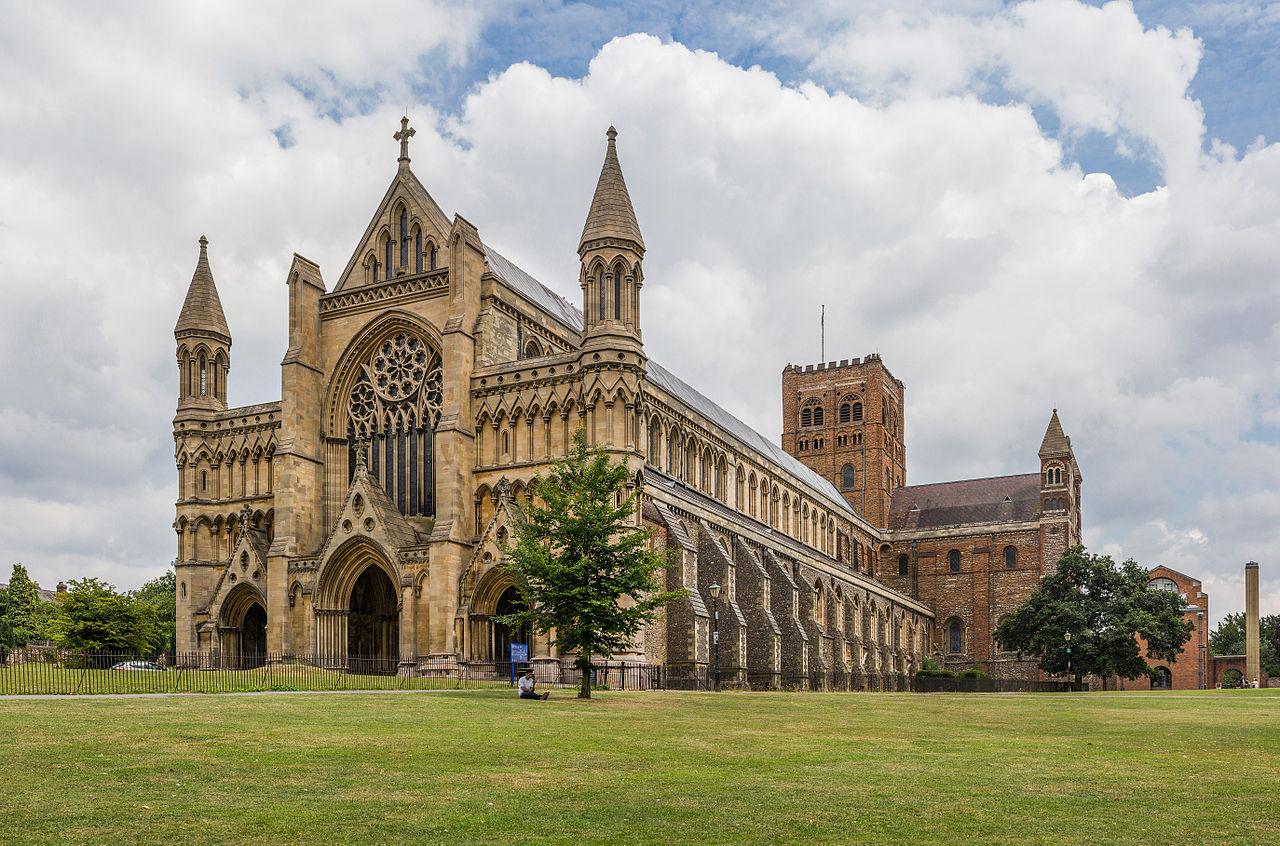
Explore the historic charm, scenic landscapes, and vibrant culture of Hertfordshire, a county that perfectly blends tradition and modernity just north of London.
Tell me more about Hertfordshire