Hamilton Mausoleum Travel Guide
Free Guide: Explore Hamilton Mausoleum, a grand 19th-century tomb famed for its soaring dome, intricate carvings, and one of the world’s longest echoes.


A brief summary of Hamilton Mausoleum
Explore Hamilton Mausoleum, a grand 19th-century tomb famed for its soaring dome, intricate carvings, and one of the world’s longest echoes.
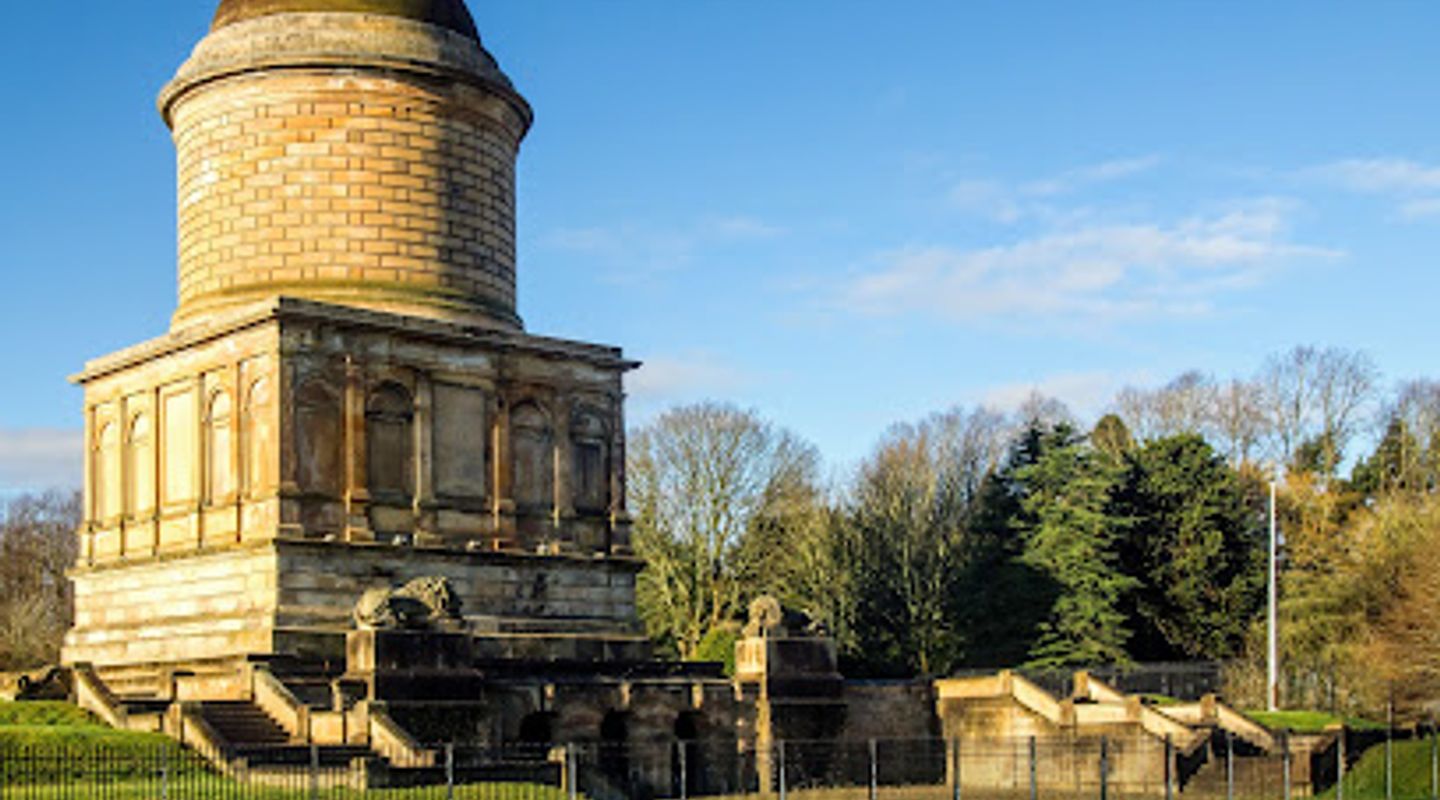
Hamilton Mausoleum, located in Hamilton, South Lanarkshire, is a grand 19th-century mausoleum built as the resting place for the Dukes of Hamilton. Renowned for its massive dome, intricate sandstone carvings, and one of the longest echoes in the world, the mausoleum is a unique historical landmark offering guided tours that reveal its architectural grandeur and fascinating symbolism.
On-site amenities
 Restrooms
 Information boards
 Visitor centre
 Seating areas
Opening hours
- Every dayOpen 24 hours
Opening hours as listed on the venue’s Google Business Profile. Hours can change for services and special events, so check with the venue before you go.
- Address
- Mausoleum Dr, Hamilton ML3 0DJ
- Phone
- Website
Getting there
Public Bus
Train and Walk
Car
Discover more about Hamilton Mausoleum
A Monument to a Magnificent Legacy
Hamilton Mausoleum was constructed between 1842 and 1858 as the private tomb for the Hamilton family, notably Alexander, the 10th Duke of Hamilton, known as 'El Magnifico.' Though incomplete at his death in 1852, the mausoleum stands as a testament to the family's wealth and status. The structure was originally intended to accompany the now-demolished Hamilton Palace, once one of Scotland's grandest residences. The mausoleum's imposing presence and elaborate design reflect the opulence and ambition of the family it commemorates.
Architectural Grandeur and Symbolism
The mausoleum is distinguished by its massive dome, soaring to an impressive height of 123 feet, and its magnificent bronze doors. Inside, the floor is crafted from marble sourced worldwide, showcasing intricate biblical and Masonic symbolism embedded in the floors, doors, and architectural details. Two stone lions guard the entrance—one awake and one asleep—symbolizing eternal vigilance. The building’s sandstone carvings are finely detailed, highlighting the craftsmanship of the era.
The World’s Longest Echo
One of the mausoleum’s most remarkable features is its extraordinary 15-second echo, reputedly one of the longest in the world. This acoustic phenomenon is caused by the vast interior space and the dome’s shape, creating a haunting and memorable auditory experience for visitors. The echo adds a mystical atmosphere to the mausoleum, enhancing its solemn and grand character.
Hidden Engineering Marvels
Beneath the mausoleum lies a dark crypt and an extensive 200-metre underground tunnel designed to vent smoke from the underfloor heating system, preserving the building’s aesthetic integrity. This hidden engineering highlights the innovative solutions employed to maintain comfort without compromising the mausoleum’s appearance. The crypt and tunnel add layers of intrigue and depth to the visitor experience.
Visiting and Guided Tours
Hamilton Mausoleum is accessible to the public by guided tours held on the second and fourth Saturdays from February to November, requiring advance booking through the Low Parks Museum. Tours last approximately 1 to 2 hours and include both the dome structure and the crypt below. The mausoleum is situated about half a mile north of Hamilton town centre, with a level 10-minute walk from the museum. Entrance fees are modest, supporting preservation efforts.
A Lasting Tribute in South Lanarkshire
Today, the mausoleum stands as one of South Lanarkshire’s most iconic historical landmarks. It offers visitors a glimpse into Scotland’s aristocratic past, architectural innovation, and cultural heritage. The building’s grandeur, combined with its unique acoustic and symbolic features, makes it a compelling destination for history enthusiasts, architecture admirers, and curious travelers alike.
Evendo Review Centre
 Google
Guest reviews
Best time to go
Quietest: Jan, Feb & Dec · before 8am or from 9pm
Busy times are Evendo estimates for a typical year, to help you plan. Actual crowds vary with events, school holidays and the weather.
Explore Hamilton Mausoleum on the map
A handpicked selection of must-see spots near Hamilton Mausoleum, mapped for you.
Get your free copy of our complete guide to Hamilton Mausoleum, delivered straight to you.
Everything on this page, from opening hours and how to get there to Eve’s tips and the best time to go, in one PDF you can read offline, print or share.
Already have an account? Sign in
Your Hamilton Mausoleum guide is ready.
We'll send it to · Not you? Sign out

Getting your guide ready…
We are putting together a fresh copy of the Hamilton Mausoleum guide. This can take up to a minute.
This can take a few moments. If your browser asks, choose Allow so the download can start. You'll find the guide in your Downloads folder.
Nothing happened? Download it again
Sorry, the guide is taking longer than usual. Please try again in a minute, or get it by email instead.
Other nearby places you may find interesting
The closest places of the same kind, if this one is not quite what you had in mind.
-
-
-
-
-


Swipe for more places
More to explore near Hamilton Mausoleum

 Best experiences near Hamilton Mausoleum
 Best hotels near Hamilton Mausoleum
 Best landmarks near Hamilton Mausoleum
 Best attractions near Hamilton Mausoleum
 Best shops near Hamilton Mausoleum
 Best restaurants near Hamilton Mausoleum
 Best bars near Hamilton Mausoleum
Do you manage this location?
Take control to get all the benefits, like improved information, better appearance, and stronger visibility across AI-powered discovery.
Explore more

Explore more of Lanarkshire
Discover Lanarkshire: Where Scotland's rich history, stunning landscapes, and vibrant local culture come together for an unforgettable travel experience.
Explore Lanarkshire
Explore more of United Kingdom
Discover the United Kingdom: A blend of rich history, stunning landscapes, and vibrant cities, offering a unique travel experience for every visitor.
Explore United Kingdom