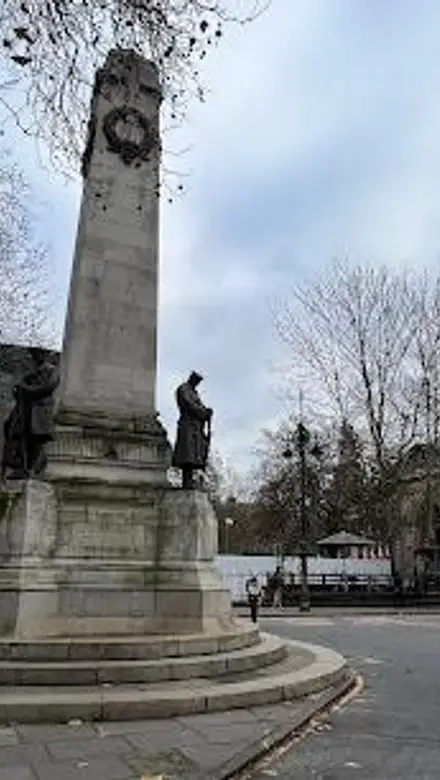
Euston War Memorial, London Travel Guide
A dignified First World War memorial honoring London’s railway heroes, blending historic reverence with urban reflection at Euston Station.
The Euston War Memorial, located at 190 Euston Road in London, is a distinguished First World War monument honoring 3,719 employees of the London and North Western Railway who sacrificed their lives. Featuring a 13-meter Portland stone obelisk with bronze wreaths, stone crosses, and four bronze statues of servicemen, it stands as a poignant symbol of remembrance amidst the urban bustle near Euston Station.
A brief summary to Euston War Memorial
- 190 Euston Rd., London, NW1 2EF, GB
- Duration: 0.25 to 1 hours
- Free
-
 Outdoor
- Mobile reception: 5 out of 5

Know before you go
Hi, I'm Eve. Here are a few practical things to know before exploring Euston War Memorial.
- Visit early morning or late afternoon for quieter moments and optimal lighting for photography.
- Take time to read the inscriptions and plaques to understand the personal sacrifices commemorated.
- Combine your visit with nearby historical sites like Euston Square Gardens or the British Library for a fuller cultural experience.
Do you manage this location?
Take control to get all the benefits, like improved information, better appearance, and stronger visibility across AI-powered discovery. Learn more about listing your business on Evendo
Activate your presenceOther nearby places you may find interesting
The closest places of the same kind, if this one is not quite what you had in mind.



Explore Euston War Memorial on the Map
A handpicked selection of must-see spots near Euston War Memorial, mapped for you.
Unlock the Best of Euston War Memorial
Buy tickets
-
No tickets available
Book tours with entry


Getting There
-
London Underground
Take the Northern or Victoria Line to Euston Station. From the station, it is a 5-minute walk along Euston Road to the memorial located at 190 Euston Road. Services run frequently, with fares ranging from £2.50 to £5.00 depending on ticket type.
-
Bus
Catch bus numbers 73 or 390 from outside Euston Station. Both buses stop near the memorial, with a short walk required. Bus fares typically cost around £1.65 with an Oyster or contactless card.
-
Walking
From King’s Cross Station, a 15-minute walk west along Euston Road leads to the memorial. The route is mostly flat and accessible, suitable for most visitors.
For the on-the-go comforts that matter to you
-
 Seating Areas
-
 Information Boards
Discover more about Euston War Memorial
Architectural Grandeur and Symbolism
The Euston War Memorial is a striking monument designed by Reginald Wynn Owen, architect to the London and North Western Railway. The centerpiece is a 13-meter (43 feet) high Portland stone obelisk, mounted on a tall pedestal and circular grey granite base. Near the top of the obelisk are bronze wreaths and stone crosses in relief, symbolizing honor and sacrifice. At its base stand four bronze statues representing an artilleryman, infantryman, sailor, and airman—an unusual inclusion of an airman for its time—each with bowed heads in mourning. The inscription "IN MEMORY OF OUR GLORIOUS DEAD" faces south, while granite tablets commemorate the 3,719 LNWR employees who died in the Great War, emphasizing the memorial’s focus on honoring the fallen rather than celebrating victory.Historical Context and Unveiling
Unveiled on 21 October 1921, the memorial ceremony was presided over by Field Marshal Douglas Haig, 1st Earl Haig, commander of British forces during the First World War. Haig praised the LNWR’s contributions and loyalty throughout the conflict. The memorial was originally positioned in the center of Euston Square on an axis with the grand Euston Arch, the ceremonial entrance to the original station. The surrounding lodges and the memorial itself are the only remnants of the original Euston station complex, surviving the extensive 1960s redevelopment that replaced the old station and demolished the arch.Urban Setting and Preservation
Today, the memorial stands on a roundabout in front of Euston Station, partially obscured by a 1970s office building. Despite this, it remains a Grade II* listed structure, recognized for its architectural quality and historical significance. The listing protects the memorial and the two adjacent station lodges, highlighting their value as eloquent witnesses to the impact of world events on the local community. Network Rail currently maintains the site, ensuring its preservation as a place of remembrance.Visitor Experience and Reflection
Surrounded by a small landscaped area, the memorial offers a tranquil spot for quiet contemplation amidst the busy city. The detailed craftsmanship invites visitors to pause and reflect on the human cost of war, while the inscriptions provide insight into the sacrifices of railway workers who served. The memorial is particularly poignant during remembrance ceremonies and commemorative events, where it serves as a focal point for honoring the legacy of bravery and service.Connection to London's Railway Heritage
The Euston War Memorial not only commemorates the fallen but also symbolizes the integral role of the railway industry in Britain’s wartime efforts. The LNWR was a major employer and vital to wartime logistics, and the memorial’s prominent location near Euston Station underscores this heritage. Smaller LNWR memorials exist at other key stations, but this remains the principal monument to those lost from the railway company.Enduring Significance in a Modern Landscape
Despite urban changes and modern developments around it, the memorial stands as a solemn reminder of sacrifice and history. Its presence amidst the modern transport hub of Euston connects past and present, inviting visitors to remember those who served while experiencing the dynamic life of contemporary London.












Your all‑in‑one travel companion app
Explore expert travel guides, compare and book tours, experiences, hotels, and more—all from the palm of your hand. Download now for seamless trip planning wherever your wanderlust takes you.


Explore More of London
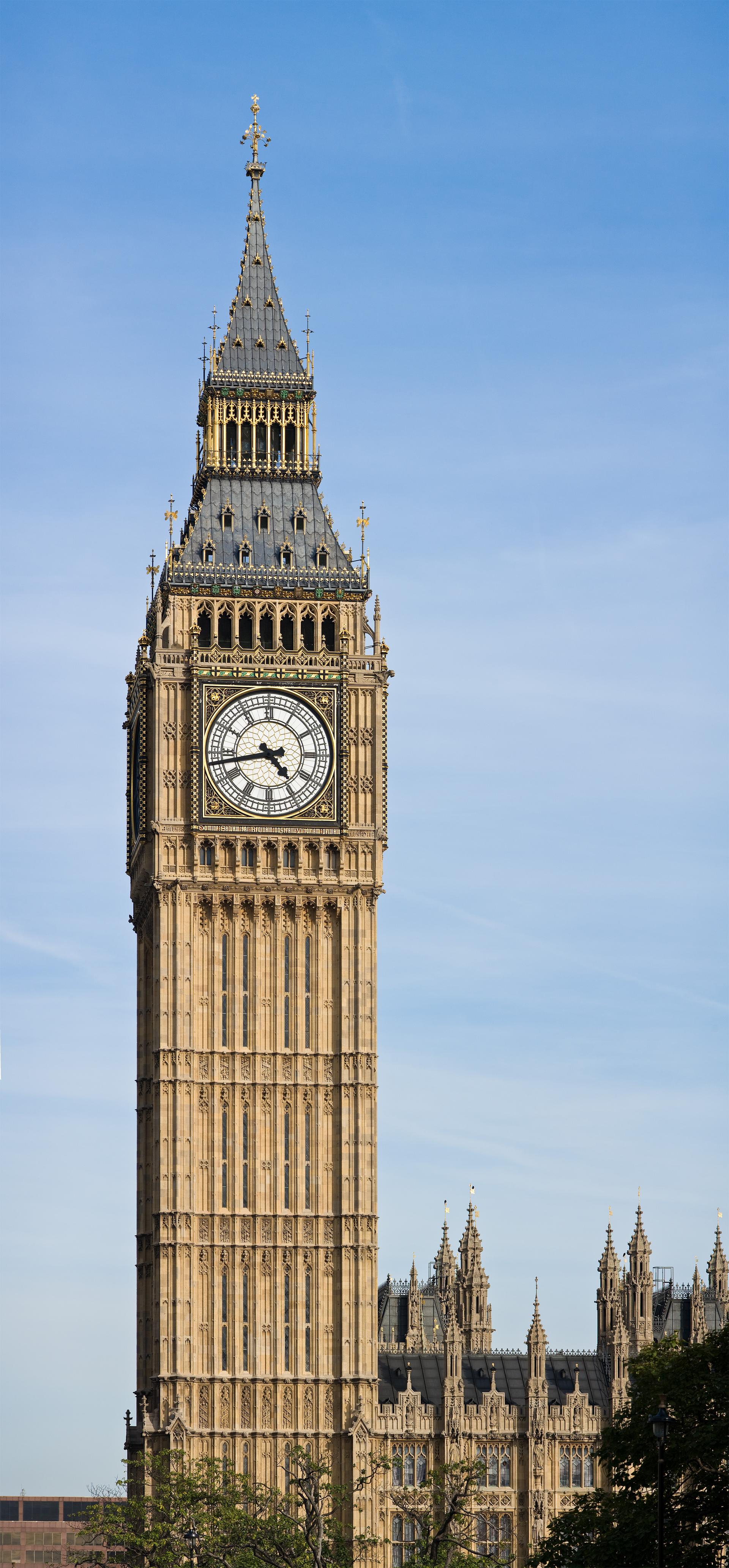
Looking beyond Euston War Memorial? Discover London for broader travel guides, local hot-spots, and regional highlights.
Explore London