
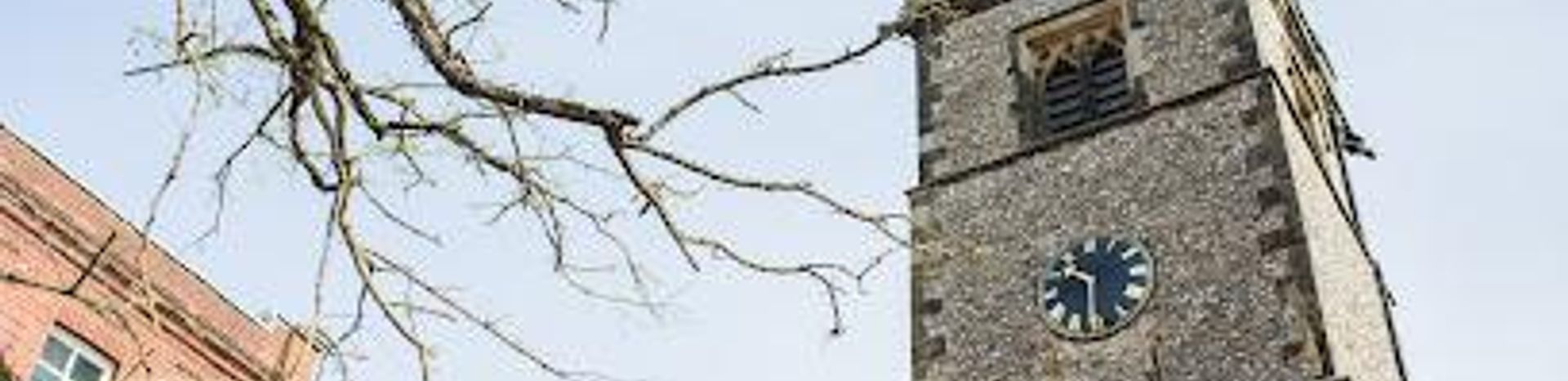
St Albans Clock Tower
Medieval defiance meets history: England's only surviving town belfry with 620 years of stories to tell.
England's only surviving medieval town belfry, built in 1405 as a symbol of civic independence against the power of St Albans Abbey. This five-story tower stands at the heart of the historic market place and has served multiple roles throughout its 620-year history—from curfew bell and fire alarm to telegraph station during the Napoleonic Wars. Climb 93 spiral steps to discover each floor's unique story, culminating in panoramic views of the abbey and surrounding Hertfordshire countryside.
A brief summary to The Clock Tower
- High St, St Albans, AL3 4EL, GB
- Visit website
- Duration: 0.75 to 1.5 hours
- Free
-
 Outdoor
- Mobile reception: 4 out of 5
Local tips
- Climb to the roof for exceptional panoramic views of St Albans Abbey and the surrounding Hertfordshire countryside. The vista is particularly striking on clear days and provides excellent photography opportunities.
- Visit on a weekend or bank holiday when the tower is open to the public. Weekday access is limited, so plan accordingly. The 93 spiral steps require moderate fitness, though the pace is self-directed.
- Combine your visit with exploration of nearby St Albans Abbey and the Eleanor Cross memorial site, located just across the market place. These three landmarks form a cohesive historical trail.
- Allow time to examine each floor's distinct historical period. The Victorian clock mechanism on the third floor and the original medieval bell on the fourth floor are particularly noteworthy.
- Visit the St Albans Museum to deepen your understanding of the tower's role in the town's civic history and its significance during the Wars of the Roses and Napoleonic Wars.

For the on-the-go comforts that matter to you
- Information Boards
- Seating Areas
Getting There
-
Bus
Multiple bus services operate to St Albans town center from surrounding areas. Journey times vary from 20 to 60 minutes depending on origin. Services run regularly throughout the day. Fares typically range from £2 to £6 per journey. The Clock Tower is a 5-minute walk from the main bus station in the town center.
-
Train
St Albans Abbey railway station is served by regular trains from London and surrounding regions. Journey time from London Blackfriars is approximately 20 minutes. Standard fares range from £5 to £15 depending on time of travel and advance booking. The Clock Tower is a 10-minute walk from the station through the historic town center.
-
Car
St Albans is accessible via the A1(M) motorway and A405. On-street parking is available in the town center near the Clock Tower, though spaces are limited during peak hours. Parking charges typically apply from Monday to Saturday, ranging from £1 to £3 per hour. Several car parks are located within 5 minutes' walk of the Clock Tower.
-
Walking
The Clock Tower is centrally located on High Street in St Albans market place. It is easily accessible on foot from the town center, with flat, paved routes throughout the historic core. Walking from the railway station takes approximately 10 minutes via well-marked streets.
The Clock Tower location weather suitability
-
 Any Weather
-
 Clear Skies
Discover more about The Clock Tower
A Monument to Civic Defiance
Built between 1403 and 1412 by master mason Thomas Wolvey, the St Albans Clock Tower stands as England's only surviving medieval town belfry. The tower was conceived as a bold statement of independence by the townspeople of St Albans, who resented the immense wealth and power wielded by St Albans Abbey. The Abbey's ability to levy taxes and control essential services—particularly its monopoly on grain milling—had bred deep resentment among the townspeople. Memories of the Peasants' Revolt of 1381 still lingered in the collective memory when the tower was commissioned. By constructing this four-stage structure on higher ground overlooking the market place, the townspeople created a physical symbol of their freedom, power, and wealth. The tower allowed them to sound their own hours and ring the curfew bell, functions previously controlled by the Abbey. This act of architectural rebellion transformed the Clock Tower into one of the most significant civic monuments of medieval England.A Bell That Rang Through History
At the heart of the Clock Tower lies a one-ton bell, cast in 1335 and still hanging in the belfry chamber after more than 690 years of service. This ancient bell has witnessed pivotal moments in English history. Most notably, it rang out an alarm during the First Battle of St Albans in 1455, one of the bloodiest engagements of the Wars of the Roses. The bell's role extended beyond warfare—for centuries it marked the rhythm of daily life, sounding the curfew that called townspeople indoors until 1863. In times of emergency, whether fire or invasion, the bell's urgent tolling would alert the entire community to danger. This continuity of purpose, spanning nearly seven centuries, makes the bell one of the most historically resonant objects in English civic architecture.Five Floors of Evolving Purpose
Climbing the tower's 93 spiral steps reveals a fascinating cross-section of social and economic history. The ground floor once housed a shop, with the shopkeeper's lodgings on the first floor—a commercial arrangement that persisted until approximately 1900. The second floor served as the clock keeper's residence, where successive families lived between 1412 and 1866, maintaining the mechanism that governed the town's timekeeping. The third floor displays the Victorian clock installed during the tower's major restoration in 1866, designed by Lord Grimthorpe, the leading Victorian authority on horology who also created the mechanism for Big Ben. The fourth floor houses the original medieval bell, a massive bronze presence that has survived centuries of use and neglect. Finally, the roof provides access to the shutter telegraph installation, a remarkable piece of Napoleonic-era military technology that once linked this modest market-place tower to the nation's defense infrastructure.Telegraph Station and Naval Communications
During the Napoleonic Wars, the Clock Tower underwent a dramatic transformation into a critical communications hub. The Admiralty installed a naval shutter-telegraph system on the roof, one of 16 signaling stations linking Whitehall with the North Sea Fleet Command at Great Yarmouth, approximately 220 miles away. On clear days, messages could travel this entire distance and return in just five minutes—a revolutionary feat of long-distance communication for the early 19th century. This system operated from 1808 to 1814, turning a medieval civic monument into an instrument of national defense. The telegraph station represented the tower's most technologically advanced incarnation, though it was a temporary role that ended with the Napoleonic Wars.Decline, Restoration, and Modern Stewardship
Following the Napoleonic Wars, the Clock Tower fell into serious decline and came perilously close to demolition. In 1837, two local brewers took over the tower and adjacent building, converting them into a beerhouse—a pragmatic if unglamorous use of the historic structure. The tower's fortunes changed dramatically in the 1860s when Sir Gilbert Scott, the renowned Victorian architect, supervised a comprehensive restoration. This intervention saved the tower from destruction and resulted in the installation of the Victorian clock mechanism. Subsequent restoration work in the 21st century has ensured the tower's continued preservation. Today, the Clock Tower is maintained as a public monument by dedicated volunteers from the St Albans History Society and the Civic Society, who keep this extraordinary medieval survivor open to visitors and ensure its story continues to be told to new generations.For the vibe & atmosphere seeker
- Historic
- Scenic
- Unique
- Adventurous
For the design and aesthetic lover
- Vintage Styles
- Historic
For the architecture buff
- Historic
- Landmarks
- Viewpoints
- Heritage Neighborhoods
For the view chaser and sunset hunter
- Iconic Views
- Panoramas
- Skyline
For the social media creator & influencer
- Instagrammable
- Photo Spots
- Architectural Shots
For the eco-conscious traveler
- Protected Area
- Locally Managed
For the kind of experience you’re after
- Cultural Heritage
- Myth & Legends
- Day Trip
- Photowalk
For how adventurous you want the journey to be
- Easy Access
- Requires Hike
Location Audience
- Family Friendly
- Senior Friendly
- Solo Friendly
- Couple Friendly


