

Christ Church Spitalfields Travel Guide
Free Guide: Discover Christ Church Spitalfields, a stunning English Baroque landmark with rich history, grand architecture, and a vibrant community heart in London’s East End.


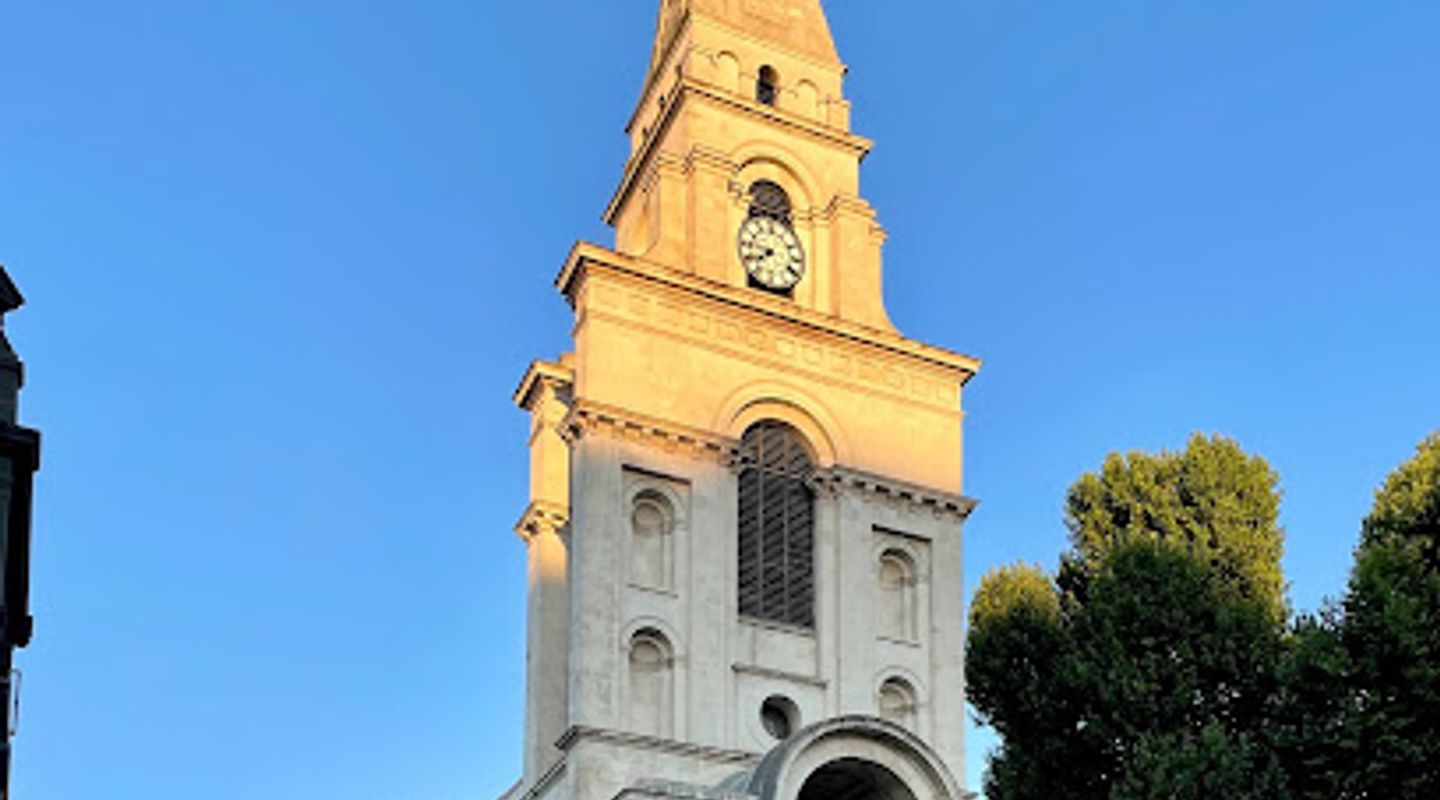
A brief summary of Christ Church Spitalfields
Discover Christ Church Spitalfields, a stunning English Baroque landmark with rich history, grand architecture, and a vibrant community heart in London’s East End.
Christ Church Spitalfields, completed in 1729 and designed by Nicholas Hawksmoor, stands as a Grade I listed Anglican church in London’s East End. Celebrated for its bold English Baroque style, the church features a striking tower and steeple, a grand nave with galleries, and a recently restored crypt that blends historic architecture with modern community spaces. It remains an active place of worship and cultural landmark, renowned for its magnificent organ and rich history.
On-site amenities
 Restrooms
 Drink options
 Food options
 Seating areas
 Information boards
 Visitor centre
Opening hours
- Mon–SatClosed
- Sun9 am–10 am, 11 am–3 pm, 5 pm–6:30 pm
Opening hours as listed on the venue’s Google Business Profile. Hours can change for services and special events, so check with the venue before you go.
- Address
- Commercial St, London E1 6LY
- Website
Getting there
Public Transport
Taxi or Rideshare
Walking
Discover more about Christ Church Spitalfields
Architectural Vision and Historical Context
Christ Church Spitalfields was built between 1714 and 1729 under the direction of architect Nicholas Hawksmoor, a key figure in English Baroque architecture. Commissioned as part of the 1711 Act to build fifty new churches for London's expanding population, the church was intended to assert Anglican presence in an area then dominated by Huguenot immigrants. Hawksmoor’s design is notable for its boldness and complexity, combining classical and Gothic elements. The plain rectangular nave is crowned by a three-stage tower topped with a Gothic-style steeple, while the imposing porch with Tuscan columns adds grandeur to the west façade.
Interior Grandeur and Restoration Efforts
The interior reflects Protestant emphasis on preaching, with a spacious nave flanked by wide wooden galleries supported by giant composite columns on tall pedestals. These columns uphold a grand entablature broken into sections spanning the side galleries, culminating in high arches and coffered barrel vaults that reference Roman basilicas. The church underwent significant alterations in the 19th century, including removal of galleries and changes to window configurations. After decades of neglect and closure in 1957 due to structural issues, a major restoration from 1976 to 2004 painstakingly returned the church to its mid-18th-century appearance, revealing Hawksmoor’s intricate interior design and restoring its original proportions and light.
The Crypt and Modern Adaptations
In 2015, the crypt was redeveloped by Dow Jones Architects to create a multifunctional space that respects the historic fabric while serving contemporary needs. The crypt now houses a café, kitchen, prayer spaces, and event areas, designed with advanced acoustic treatments to balance performance and quiet reflection. This redevelopment opened the crypt to the public for the first time in the church’s history, enhancing community engagement and cultural use.
Musical Heritage and the Richard Bridge Organ
Installed in 1735, the Richard Bridge organ was the largest in England at the time, with over two thousand pipes. Despite periods of dereliction, it was fully restored by 2015 and is now regularly used for weddings, funerals, concerts, and recitals. The organ’s restoration is internationally acclaimed and adds a rich auditory dimension to the church’s heritage.
Community and Cultural Significance
Christ Church Spitalfields remains an active parish church and a beacon of cultural heritage in East London. It hosts tours exploring its architecture, history, and the diverse communities it has served, including Huguenot immigrants. The church’s location near Spitalfields Market and the City of London situates it at a vibrant crossroads of commerce, culture, and faith.
Preservation and Future Prospects
Ongoing maintenance is supported by a dedicated foundation ensuring the church’s long-term care. The building’s layered history—from its Baroque origins through Victorian alterations, mid-20th-century decline, and 21st-century restoration—makes it a living monument to London’s architectural and social evolution. Its continued use for worship, events, and community gatherings secures its place as a dynamic landmark for generations to come.
Evendo Review Centre
 Google
Guest reviews
Best time to go
Quietest: Jan, Feb & Nov · before 7am or at 9pm
Busy times are Evendo estimates for a typical year, to help you plan. Actual crowds vary with events, school holidays and the weather.
Explore Christ Church Spitalfields on the map
A handpicked selection of must-see spots near Christ Church Spitalfields, mapped for you.
Get your free copy of our complete guide to Christ Church Spitalfields, delivered straight to you.
Everything on this page, from opening hours and how to get there to Eve’s tips and the best time to go, in one PDF you can read offline, print or share.
Already have an account? Sign in
Your Christ Church Spitalfields guide is ready.
We'll send it to · Not you? Sign out

Getting your guide ready…
We are putting together a fresh copy of the Christ Church Spitalfields guide. This can take up to a minute.
This can take a few moments. If your browser asks, choose Allow so the download can start. You'll find the guide in your Downloads folder.
Nothing happened? Download it again
Sorry, the guide is taking longer than usual. Please try again in a minute, or get it by email instead.
Unlock the best of Christ Church Spitalfields
Skip-the-line tickets, guided tours with entry, and walking tours of the area, booked in a few clicks.


Other nearby places you may find interesting
The closest places of the same kind, if this one is not quite what you had in mind.
-
-
-
-
-


Swipe for more places
More to explore near Christ Church Spitalfields
-
 Best experiences near Christ Church Spitalfields
-
 Best hotels near Christ Church Spitalfields
-
 Best landmarks near Christ Church Spitalfields
-
 Best attractions near Christ Church Spitalfields
-
 Best shops near Christ Church Spitalfields
-
 Best restaurants near Christ Church Spitalfields
-
 Best bars near Christ Church Spitalfields


Do you manage this location?
Take control to get all the benefits, like improved information, better appearance, and stronger visibility across AI-powered discovery.
Explore more
Explore more of Middlesex
Discover Middlesex: A blend of historic charm and modern excitement, offering scenic beauty, cultural events, and easy access to London.
Explore Middlesex
Explore more of United Kingdom
Discover the United Kingdom: A blend of rich history, stunning landscapes, and vibrant cities, offering a unique travel experience for every visitor.
Explore United Kingdom
