Tintern Abbey Travel Guide
Free Guide: Gothic masterpiece where medieval splendour meets Romantic inspiration on the River Wye.


A brief summary of Tintern Abbey
Gothic masterpiece where medieval splendour meets Romantic inspiration on the River Wye.
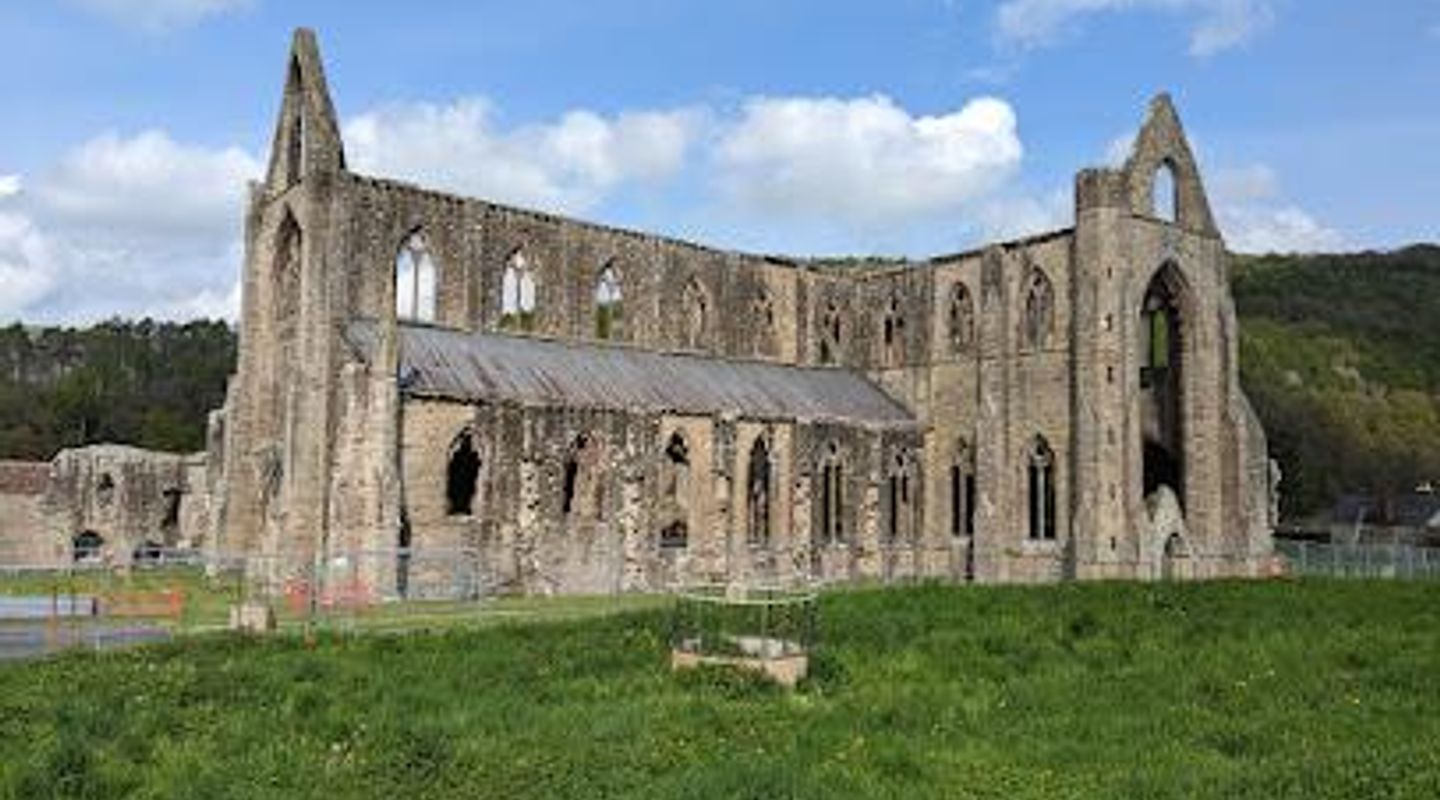
Tintern Abbey stands as one of Britain's most iconic medieval ruins, a breathtaking Cistercian monastery founded in 1131 on the banks of the River Wye in Monmouthshire, Wales. Built from local Old Red Sandstone, its soaring Gothic arches and magnificent west front with a seven-light window showcase exceptional medieval architecture. Though roofless and partially scaffolded for ongoing conservation work, the abbey remains the best-preserved medieval abbey in Wales. Dissolved in 1536, it later inspired Romantic-era poets and artists including Wordsworth and Turner, who were captivated by its sublime beauty. Today managed by Cadw, it welcomes approximately 17,000 visitors annually seeking to experience its unique blend of spiritual tranquility, architectural grandeur, and natural riverside setting.
On-site amenities
 Restrooms
 Drink options
 Food options
 Seating areas
 Trash bins
 Information boards
 Visitor centre
Opening hours
- Every day10 am–4 pm
Opening hours as listed on the venue’s Google Business Profile. Hours can change for services and special events, so check with the venue before you go.
- Address
- Tintern Abbey, Tintern NP16 6SE
- Phone
- Website
Getting there
Car from Cardiff
Car from London
Public Transport from Chepstow
Walking from Tintern Village
Discover more about Tintern Abbey
A Cistercian Vision in Stone
Tintern Abbey was founded in 1131 by Cistercian monks seeking solitude in the verdant Wye Valley. What began as humble timber structures evolved into one of Wales' most important spiritual and architectural centres. The monks constructed a stone church and cloisters, and by 1269, wealthy Marcher Lords' patronage enabled the construction of a magnificent new abbey church. Built from local Old Red Sandstone in varying shades of purple, buff, and grey, the abbey church stretches 228 feet in length with a cruciform design, its soaring arches and intricate stonework representing the pinnacle of Gothic ecclesiastical architecture. For over 400 years, Tintern thrived as a centre of monastic life, prayer, and learning, its influence extending across the Welsh borderlands.
Dissolution and Romantic Rediscovery
Tintern's fortunes changed dramatically with Henry VIII's Dissolution of the Monasteries. On 3 September 1536, Abbot Wych surrendered the abbey and its estates to the King's visitors, ending four centuries of monastic life. Valuables were sent to the royal Treasury, the remaining twelve monks pensioned off, and the buildings granted to Henry Somerset, 2nd Earl of Worcester. The lead roof was sold, stone was plundered for local building projects, and nature gradually reclaimed what had been one of Wales' most important spiritual centres. Yet this abandonment paradoxically preserved the abbey's essential structure, leaving behind the magnificent shell that captivates visitors today.The 18th century brought unexpected redemption through the Romantic movement. As the French Revolution and Napoleonic Wars made continental travel perilous, British travellers discovered the sublime beauty of wild landscapes such as the Wye Valley. Artists and poets flocked to Tintern, drawn by its picturesque ruins and atmospheric setting. William Wordsworth's celebrated poem "Lines Composed a Few Miles above Tintern Abbey" (1798) immortalised the site as a symbol of memory, nature, and personal transformation. Turner's evocative paintings captured its Gothic splendour, cementing Tintern's status as an icon of the Romantic imagination.
Architectural Splendour and Gothic Mastery
The abbey's most striking feature is its magnificent Gothic west front, dominated by a soaring seven-light window that frames the sky beyond. The vast nave, with its ribbed vaults and slender columns, demonstrates the sophisticated engineering and aesthetic vision of medieval craftsmen. The transepts, chancel, and remains of the cloister reveal the complex spatial organisation of monastic life. Though open to the elements, the abbey's structural integrity remains remarkable—a testament to both medieval construction techniques and the durability of Old Red Sandstone. The intricate tracery, pointed arches, and decorative mouldings showcase the refined artistic sensibilities of the Gothic period, while the scale of the structure speaks to the abbey's former wealth and influence.
Conservation and Modern Stewardship
In 1901, the Crown purchased Tintern Abbey for £15,000, initiating serious archaeological investigation and conservation work. Now under Cadw's (Welsh Historic Environment Service) care since 1984, Tintern is Grade I listed and subject to ongoing preservation efforts. Recent conservation programmes have addressed the weathered and crumbling sandstone on the church's upper walls, with scaffolding erected to enable essential repairs that ensure future generations can experience this magnificent site. These interventions, while temporarily affecting visitor access to certain areas, reflect a commitment to preserving Tintern's authenticity and structural integrity for centuries to come.
The Wye Valley Setting and Visitor Experience
Tintern Abbey's location on the banks of the River Wye amplifies its romantic appeal and spiritual resonance. The river's gentle flow, the surrounding woodland, and the valley's natural beauty create an atmosphere of serene contemplation. Visitors can explore the ruins at their own pace, discovering details in the stonework and imagining the rhythms of monastic life that once animated these spaces. Information boards throughout the site provide historical context, while the gift shop offers publications and mementos. The nearby car park, pub, and facilities make Tintern an accessible destination for day-trippers from Bristol, Cardiff, and beyond. Whether drawn by architectural interest, literary connections, historical curiosity, or simply the tranquil atmosphere, visitors find themselves transported by the abbey's enduring power to inspire wonder and reflection.
Evendo Review Centre
 Google
Guest reviews
Best time to go
Quietest: Jan, Feb & Dec · before 8am or from 7pm
Busy times are Evendo estimates for a typical year, to help you plan. Actual crowds vary with events, school holidays and the weather.
Explore Tintern Abbey on the map
A handpicked selection of must-see spots near Tintern Abbey, mapped for you.
Get your free copy of our complete guide to Tintern Abbey, delivered straight to you.
Everything on this page, from opening hours and how to get there to Eve’s tips and the best time to go, in one PDF you can read offline, print or share.
Already have an account? Sign in
Your Tintern Abbey guide is ready.
We'll send it to · Not you? Sign out

Getting your guide ready…
We are putting together a fresh copy of the Tintern Abbey guide. This can take up to a minute.
This can take a few moments. If your browser asks, choose Allow so the download can start. You'll find the guide in your Downloads folder.
Nothing happened? Download it again
Sorry, the guide is taking longer than usual. Please try again in a minute, or get it by email instead.
Unlock the best of Tintern Abbey
Skip-the-line tickets, guided tours with entry, and walking tours of the area, booked in a few clicks.
 Tour with entry
Castles and Mountains of Wales Small Group Day Tour from Bristol
from $82.13 Tour with entry
From Cardiff: 3 Amazing Castles, Tintern Abbey & Roman Caerleon
from $333.86 Tour with entry
Private Full-Day Wye Valley Tour
from $692.91 Tour with entry
3-Day Mountains & Coasts of South Wales from Bristol
from $729.54
 Tour
TourWye Valley & Forest of Dean Road Trip - Tintern & Symonds Yat
from $16.32 Tour
TourThe Valleys tour or Swansea Bay tour. Please choose correctly.
from $92.09 Tour
TourPrivate Day Tour from Bath to Wonderful Wales with Pickup
from $1,385.83 Tour
TourPrivate Cardiff Walking Tour: South Wales Historic Castles
from $2,102.59
Other nearby places you may find interesting
The closest places of the same kind, if this one is not quite what you had in mind.
-
-
-


Swipe for more places
More to explore near Tintern Abbey

 Best experiences near Tintern Abbey
 Best hotels near Tintern Abbey
 Best landmarks near Tintern Abbey
 Best attractions near Tintern Abbey
 Best shops near Tintern Abbey
 Best restaurants near Tintern Abbey
 Best bars near Tintern Abbey
Do you manage this location?
Take control to get all the benefits, like improved information, better appearance, and stronger visibility across AI-powered discovery.
Explore more

Explore more of Monmouthshire
Discover the charm of Monmouthshire, a picturesque county in Wales known for its stunning landscapes, historic sites, and vibrant food scene.
Explore Monmouthshire
Explore more of United Kingdom
Discover the United Kingdom: A blend of rich history, stunning landscapes, and vibrant cities, offering a unique travel experience for every visitor.
Explore United Kingdom