
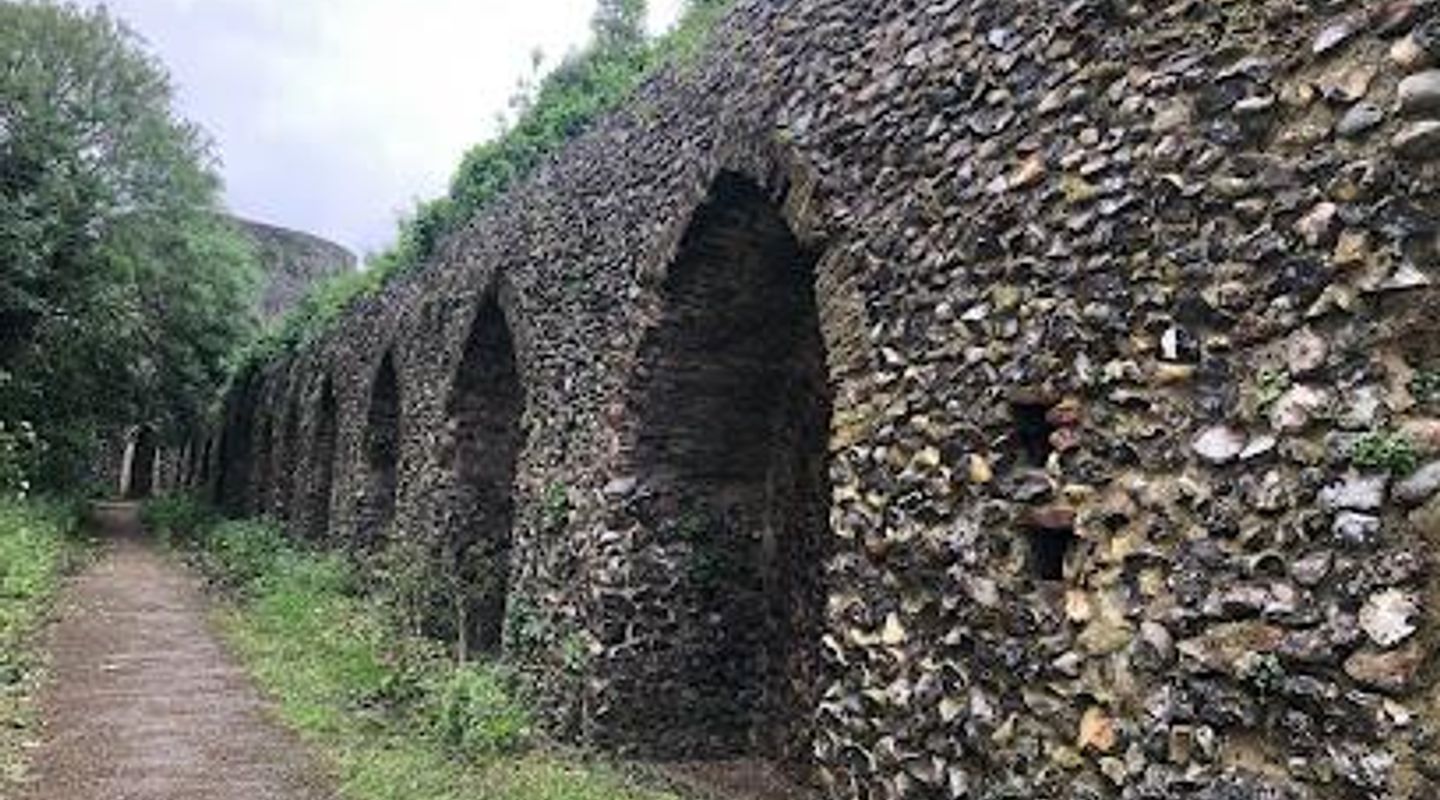
Black Tower and Wall, Norwich Travel Guide
Discover Norwich's brooding Black Tower: a 14th-century sentinel turned plague prison, whispering tales of defense, disease, and defiant survival amid Britain's longest medieval city walls.
The Black Tower stands as a formidable remnant of Norwich's medieval city walls, constructed between 1294 and 1343. Measuring 11 meters high and 10 meters wide, this historic structure once served as the constable's residence and a grim isolation site for plague victims during devastating outbreaks in the 16th and 17th centuries. Nestled quietly near Carrow Hill, it offers a haunting glimpse into the city's defensive past amid the longest urban wall circuit in medieval Britain. Explore its crumbling spiral staircase and surrounding flint walls for an atmospheric encounter with Norwich's layered history.
A brief summary to Black Tower and Wall
- Norwich, NR1 2BH, GB
- Click to display
- Duration: 0.5 to 1.5 hours
- Free
-
 Outdoor
- Mobile reception: 4 out of 5
- Monday 12 am-12 pm
- Tuesday 12 am-12 pm
- Wednesday 12 am-12 pm
- Thursday 12 am-12 pm
- Friday 12 am-12 pm
- Saturday 12 am-12 pm
- Sunday 12 am-12 pm

Know before you go
Hi, I'm Eve. Here are a few practical things to know before exploring Black Tower and Wall.
- Wear sturdy shoes for uneven paths and potential mud after rain; the site blends wild overgrowth with historic stone.
- Visit at dawn or dusk for ethereal light and fewer passersby, enhancing the tower's haunting medieval atmosphere.
- Combine with nearby Cow Tower or River Wensum walks to trace the full wall circuit's remnants.
Do you manage this location?
Take control to get all the benefits, like improved information, better appearance, and stronger visibility across AI-powered discovery. Learn more about listing your business on Evendo
Activate your presenceOther nearby places you may find interesting
The closest places of the same kind, if this one is not quite what you had in mind.

Explore Black Tower and Wall on the Map
A handpicked selection of must-see spots near Black Tower and Wall, mapped for you.
Getting There
-
Walking
From Norwich Railway Station, 20-minute walk southeast via King Street and Carrow Hill path; free, scenic urban trail.
-
Bus
Bus 1 or 11 from city center to Carrow Hill stop, 10 minutes, £2 single; alight and follow 2-minute path downhill.
-
Cycling
10-minute ride from center via quiet lanes to Carrow; secure bike at nearby railings, free public access.
For the on-the-go comforts that matter to you
-
 Information Boards
Discover more about Black Tower and Wall
Historical Foundations
The Black Tower forms part of Norwich's expansive city walls, built from 1294 to 1343 using knapped flint and limestone. These fortifications created the longest circuit of urban defenses in medieval Britain, stretching 2.5 miles and enclosing an area larger than the City of London. Incorporating around 40 towers and 12 gates, the walls symbolized the city's prosperity and readiness against threats from French invasions to domestic unrest.The Tower's Strategic Role
Standing 11 meters high and 10 meters wide at Carrow Hill, the Black Tower watched over approaches to the city. It traditionally housed the constable overseeing defenses. Its robust design featured arrow slits facing inward, hinting at dual roles in protection and control. Nearby, boom towers spanned the River Wensum, where iron chains deterred unauthorized vessels, marking key river crossings in the wall system.Dark Chapter: Plague Isolation
Norwich endured brutal plague epidemics in 1579, 1603, 1625, and 1665. The Black Tower transformed into a pest house, imprisoning 'unruly, infected persons' to curb spread. City council watchmen guarded it, enforcing isolation amid agonizing symptoms like blackened skin, swollen limbs, and relentless fever. Victims often received mass burials without rites, fueling local tales of restless spirits.Decline and Preservation
Post-1549 Kett's Rebellion, walls breached and outdated, maintenance waned. Gates like St Augustine's were earth-blocked during the English Civil War. By 1793-94, most gates fell to boost trade; 20th-century roads claimed more. The Black Tower endured, its ground floor once vaulted, later marred by an 18th-century snuff mill removed in 19th-century restorations. Today, it stands as a poignant, accessible ruin.Visiting the Site
Tucked down a quiet path off bustling streets, the tower blends into modern Norwich yet evokes a lost era. A crumbling spiral staircase invites cautious exploration, while adjacent wall fragments and a lower watch tower enhance the scene. Birdsongs replace ancient alarms, offering solitude for reflection on medieval resilience and tragedy.












Your all‑in‑one travel companion app
Explore expert travel guides, compare and book tours, experiences, hotels, and more—all from the palm of your hand. Download now for seamless trip planning wherever your wanderlust takes you.


Explore More of Norwich
Looking beyond Black Tower and Wall? Discover Norwich for broader travel guides, local hot-spots, and regional highlights.
Explore Norwich
Discover Norwich's hidden medieval gem: St John the Baptist Timberhill, where 11th-century roots meet vibrant Anglo-Catholic worship and exquisite stained glass in a tranquil city heart.
Carrow Bridge: Norwich's 1923 lifting marvel over the River Wensum, blending industrial history, scenic walks, wildlife spotting, and match-day buzz near Carrow Road stadium.
