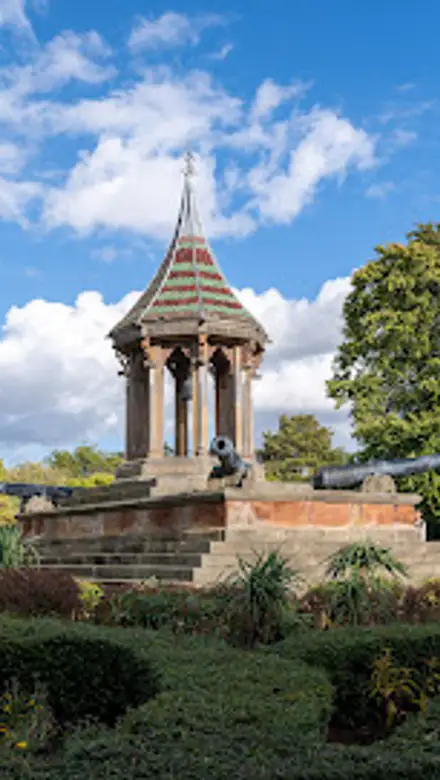
Chinese Bell Tower, Nottingham Travel Guide
Free Guide: A Victorian war memorial pagoda in Nottingham Arboretum, blending Eastern design with British military history and lush heritage gardens.


A brief summary of Chinese Bell Tower
A Victorian war memorial pagoda in Nottingham Arboretum, blending Eastern design with British military history and lush heritage gardens.
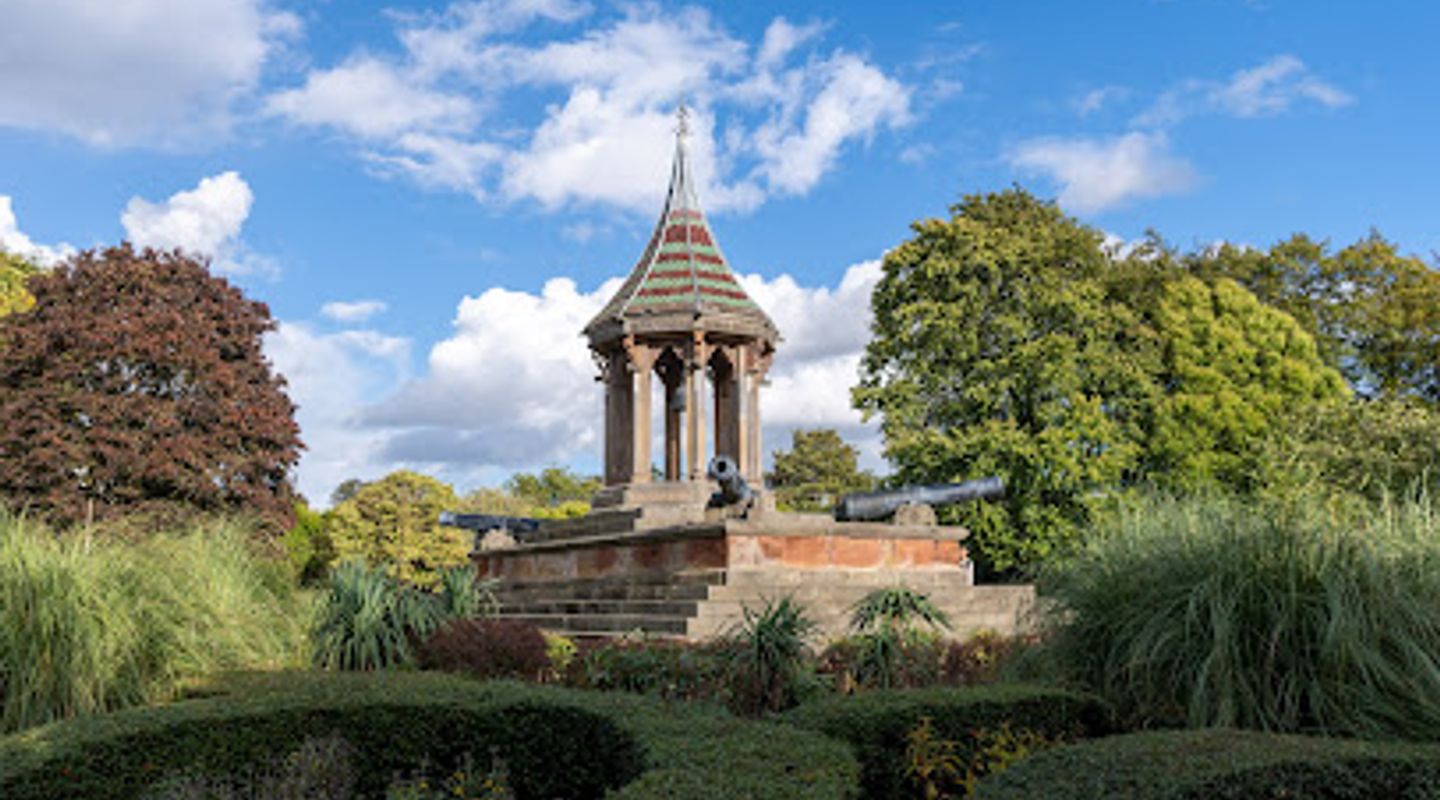
The Chinese Bell Tower, located in Nottingham’s historic Arboretum, is a unique Victorian war memorial built in 1862. Designed by Marriott Ogle Tarbotton, this octagonal pagoda commemorates the 59th Nottinghamshire Regiment’s role in the Anglo-Chinese Wars and the Crimean War. Originally housing a bronze bell looted from a temple in Canton, the tower blends Eastern architectural motifs with British military history, set amidst a lush 17-acre Victorian park renowned for its diverse tree collection and heritage landscape.
On-site amenities
 Restrooms
 Drink options
 Food options
 Seating areas
 Information boards
Opening hours
- Every dayOpen 24 hours
Opening hours as listed on the venue’s Google Business Profile. Hours can change for services and special events, so check with the venue before you go.
- Address
- 14 Mansfield Grove, Nottingham NG1 4GQ
- Website
Getting there
Bus
Walking
Taxi
Discover more about Chinese Bell Tower
A Victorian Tribute with Eastern Influences
The Chinese Bell Tower is a striking octagonal pagoda constructed in 1862 within Nottingham Arboretum, the city's oldest public park. Designed by civil engineer Marriott Ogle Tarbotton, the tower was conceived as a war memorial honoring the 59th Nottinghamshire Regiment’s involvement in two significant 19th-century conflicts: the Crimean War and the Anglo-Chinese Wars (also known as the Opium Wars). Its design incorporates distinctive Chinese architectural elements, such as traceried brackets, round columns, and a spire, reflecting Victorian fascination with exotic styles and imperial reach.
Historical Artefacts and Symbolism
At the heart of the tower originally hung a large bronze bell taken from a Joss house (Chinese temple) near Canton (modern Guangzhou) during the Second Opium War in 1859. This bell, inscribed in Chinese, was seized by the 59th Regiment of Foot and gifted to Nottingham as a trophy of empire. Although the original bell was relocated to the regimental museum in Preston in 1956, a replica now hangs in the tower. The monument is further accented by four cannons at its corners—two are authentic Crimean War cannons captured at Sebastopol, while the other two are replicas—creating a defensive ring that underscores the tower’s martial significance.
Setting Within Nottingham Arboretum
The tower stands in the midst of Nottingham Arboretum, a 17-acre Victorian park opened in 1852 as part of a civic initiative following the 1845 Inclosure Act. The Arboretum was designed by botanist Samuel Curtis and features over 800 trees of 65 species, many planted in the 19th century. Its winding paths, sweeping lawns, and historic structures—including the Chinese Bell Tower—have remained largely unchanged, earning it a Grade II listing on England’s Register of Historic Parks and Gardens. The Arboretum offers a tranquil green space combining botanical education, recreation, and heritage.
Architectural and Cultural Significance
The Chinese Bell Tower exemplifies Victorian-era memorial architecture that blends cultural motifs to reflect Britain’s imperial history. Its pagoda form and Eastern stylistic details contrast with the martial symbolism of the cannons and war trophies, creating a layered narrative of conquest and commemoration. The tower also contributes to Nottingham’s rich Victorian heritage and serves as a unique landmark within the city’s green heart.
Legacy and Visitor Experience
Visitors to the Chinese Bell Tower can appreciate not only its architectural charm but also its complex history as a symbol of 19th-century military campaigns and imperialism. Set within the peaceful Arboretum, the tower invites reflection on Nottingham’s past and the global reach of its regiments. The surrounding park’s mature trees and historic landscape enhance the contemplative atmosphere, making it a favored spot for locals and tourists alike.
Preservation and Contemporary Context
Though the original bell was removed in the mid-20th century and the pagoda was partly demolished during that period, restoration efforts have preserved the tower’s distinctive form and historical integrity. Today, it stands as one of nine Grade II listed structures within the Arboretum, maintaining its role as a cultural and historical asset. The site also connects to local lore, including associations with author J.M. Barrie, adding layers of cultural resonance to its military and architectural significance.
Evendo Review Centre
 Google
Guest reviews
Best time to go
Quietest: Jan, Feb & Dec · before 6am or at 10pm
Busy times are Evendo estimates for a typical year, to help you plan. Actual crowds vary with events, school holidays and the weather.
Explore Chinese Bell Tower on the map
A handpicked selection of must-see spots near Chinese Bell Tower, mapped for you.
Get your free copy of our complete guide to Chinese Bell Tower, delivered straight to you.
Everything on this page, from opening hours and how to get there to Eve’s tips and the best time to go, in one PDF you can read offline, print or share.
Already have an account? Sign in
Your Chinese Bell Tower guide is ready.
We'll send it to · Not you? Sign out

Getting your guide ready…
We are putting together a fresh copy of the Chinese Bell Tower guide. This can take up to a minute.
This can take a few moments. If your browser asks, choose Allow so the download can start. You'll find the guide in your Downloads folder.
Nothing happened? Download it again
Sorry, the guide is taking longer than usual. Please try again in a minute, or get it by email instead.
Other nearby places you may find interesting
The closest places of the same kind, if this one is not quite what you had in mind.
-
-
-
-
-


Swipe for more places
More to explore near Chinese Bell Tower

 Best experiences near Chinese Bell Tower
 Best hotels near Chinese Bell Tower
 Best landmarks near Chinese Bell Tower
 Best attractions near Chinese Bell Tower
 Best shops near Chinese Bell Tower
 Best restaurants near Chinese Bell Tower
 Best bars near Chinese Bell Tower
Do you manage this location?
Take control to get all the benefits, like improved information, better appearance, and stronger visibility across AI-powered discovery.
Explore more

Explore more of Nottingham
Nottingham travel guide: explore Robin Hood legends, medieval caves, grand museums, historic markets, independent culture and green landscapes nearby.
Explore Nottingham
Explore more of United Kingdom
Discover the United Kingdom: A blend of rich history, stunning landscapes, and vibrant cities, offering a unique travel experience for every visitor.
Explore United Kingdom