

King's Walk sign, Nottingham Travel Guide
Free Guide: A pedestrianised passage where Georgian elegance meets contemporary commerce in Nottingham's historic heart.


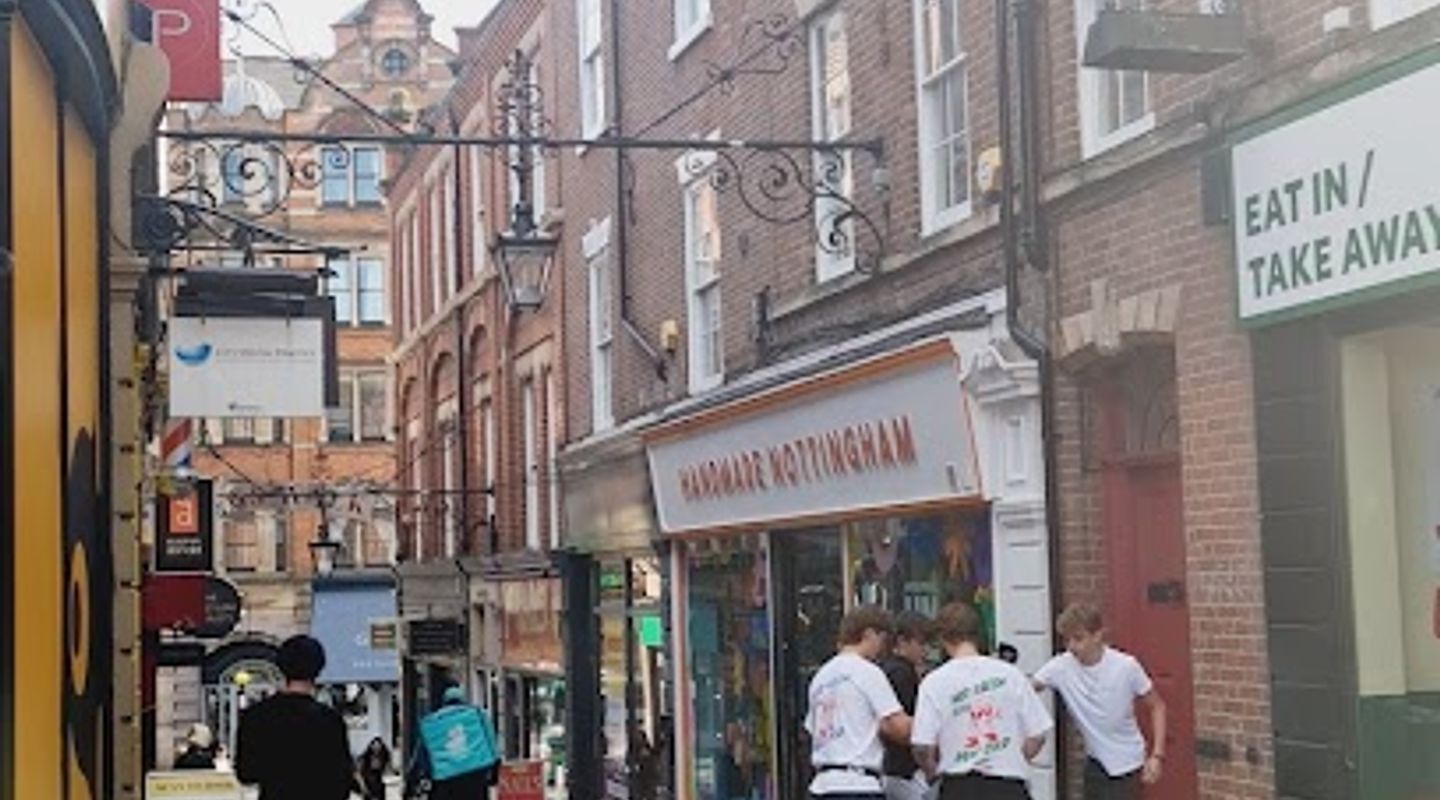
A brief summary of King's Walk sign
A pedestrianised passage where Georgian elegance meets contemporary commerce in Nottingham's historic heart.
King's Walk is a pedestrianised thoroughfare in the heart of Nottingham city centre, linking Lower Parliament Street to Trinity Square. This charming walkway occupies a site rich with historical significance, once home to Robert Goodacre's Academy where mathematical genius George Green and poet Lord Byron studied. Today, the street features boutique shops, independent retailers, and period architecture that reflects Nottingham's Georgian heritage. The walkway serves as both a practical shopping destination and a tangible connection to centuries of the city's intellectual and cultural development.
On-site amenities
 Food options
 Drink options
 Seating areas
 Trash bins
 Information boards
Opening hours
- Every dayOpen 24 hours
Opening hours as listed on the venue’s Google Business Profile. Hours can change for services and special events, so check with the venue before you go.
- Address
- King's Walk, Nottingham NG1 2AE
Getting there
Public Transport
Walking from Nottingham Railway Station
Cycling
Parking and Walking
Discover more about King's Walk sign
A Passage Through Time
King's Walk occupies ground that has witnessed the intellectual and social evolution of Nottingham for centuries. The site was once home to Robert Goodacre's Academy, an institution of considerable repute in the 18th and 19th centuries. Among its distinguished pupils were George Green, the mathematical prodigy whose work in physics and mathematics would earn him lasting recognition, and Lord Byron, the Romantic poet whose literary genius shaped English literature. Walking this passage today, you tread the same stones where these remarkable minds once studied and developed their talents.
Georgian Elegance and Architectural Heritage
The buildings flanking King's Walk showcase the architectural refinement of Nottingham's Georgian period. The facades display the careful proportions and classical detailing characteristic of 18th-century design, with period windows and brickwork that have been preserved to maintain the street's historical character. These structures represent the prosperity and cultural ambitions of Nottingham during an era when the city was establishing itself as a centre of commerce, learning, and artistic endeavour. The careful preservation of these buildings demonstrates the city's commitment to maintaining its architectural heritage.
A Modern Shopping Destination with Historic Roots
Today, King's Walk functions as a pedestrianised shopping street, offering a curated selection of independent retailers and boutique establishments. The street hosts Nottingham's oldest jewellers alongside contemporary shops celebrating local craftsmanship and products. Cafés and small businesses line the walkway, creating a vibrant atmosphere that balances commercial activity with the preservation of historical ambience. The street remains a popular destination for those seeking both retail therapy and a sense of connection to Nottingham's past.
Connectivity Within the City Centre
Positioned strategically between Lower Parliament Street and Trinity Square, King's Walk serves as an important pedestrian link within Nottingham's city centre. Its location places it within easy reach of major transport hubs, shopping districts, and cultural attractions. The walkway's role as a connecting passage has evolved over centuries—from a residential street serving the city's inhabitants to a commercial thoroughfare facilitating movement through the modern city centre. This continuity of purpose reflects Nottingham's enduring urban vitality.
Evendo Review Centre
 Google
Guest reviews
Best time to go
Quietest: Jan, Feb & Mar · before 6am or from 11pm
Busy times are Evendo estimates for a typical year, to help you plan. Actual crowds vary with events, school holidays and the weather.
Explore King's Walk sign on the map
A handpicked selection of must-see spots near King's Walk sign, mapped for you.
Get your free copy of our complete guide to King's Walk sign, delivered straight to you.
Everything on this page, from opening hours and how to get there to Eve’s tips and the best time to go, in one PDF you can read offline, print or share.
Already have an account? Sign in
Your King's Walk sign guide is ready.
We'll send it to · Not you? Sign out

Getting your guide ready…
We are putting together a fresh copy of the King's Walk sign guide. This can take up to a minute.
This can take a few moments. If your browser asks, choose Allow so the download can start. You'll find the guide in your Downloads folder.
Nothing happened? Download it again
Sorry, the guide is taking longer than usual. Please try again in a minute, or get it by email instead.
Other nearby places you may find interesting
The closest places of the same kind, if this one is not quite what you had in mind.
-
-
-
-

-


Swipe for more places
More to explore near King's Walk sign

 Best experiences near King's Walk sign
 Best hotels near King's Walk sign
 Best landmarks near King's Walk sign
 Best attractions near King's Walk sign
 Best shops near King's Walk sign
 Best restaurants near King's Walk sign
 Best bars near King's Walk sign
Do you manage this location?
Take control to get all the benefits, like improved information, better appearance, and stronger visibility across AI-powered discovery.
Explore more

Explore more of Nottingham
Explore Nottingham, a dynamic city where history meets modernity, with its legendary tales, cultural vibrancy, and stunning natural landscapes.
Explore Nottingham
Explore more of United Kingdom
Discover the United Kingdom: A blend of rich history, stunning landscapes, and vibrant cities, offering a unique travel experience for every visitor.
Explore United Kingdom
