Carlton House Terrace Travel Guide
Free Guide: A Georgian masterpiece where royal palaces gave way to London's most prestigious address.


A brief summary of Carlton House Terrace
A Georgian masterpiece where royal palaces gave way to London's most prestigious address.
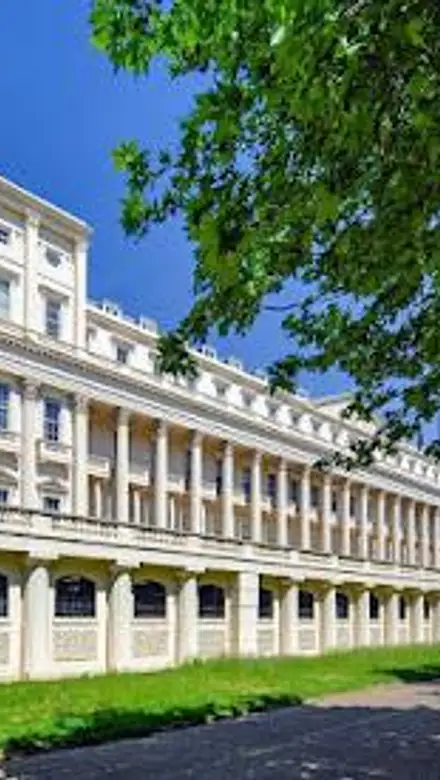
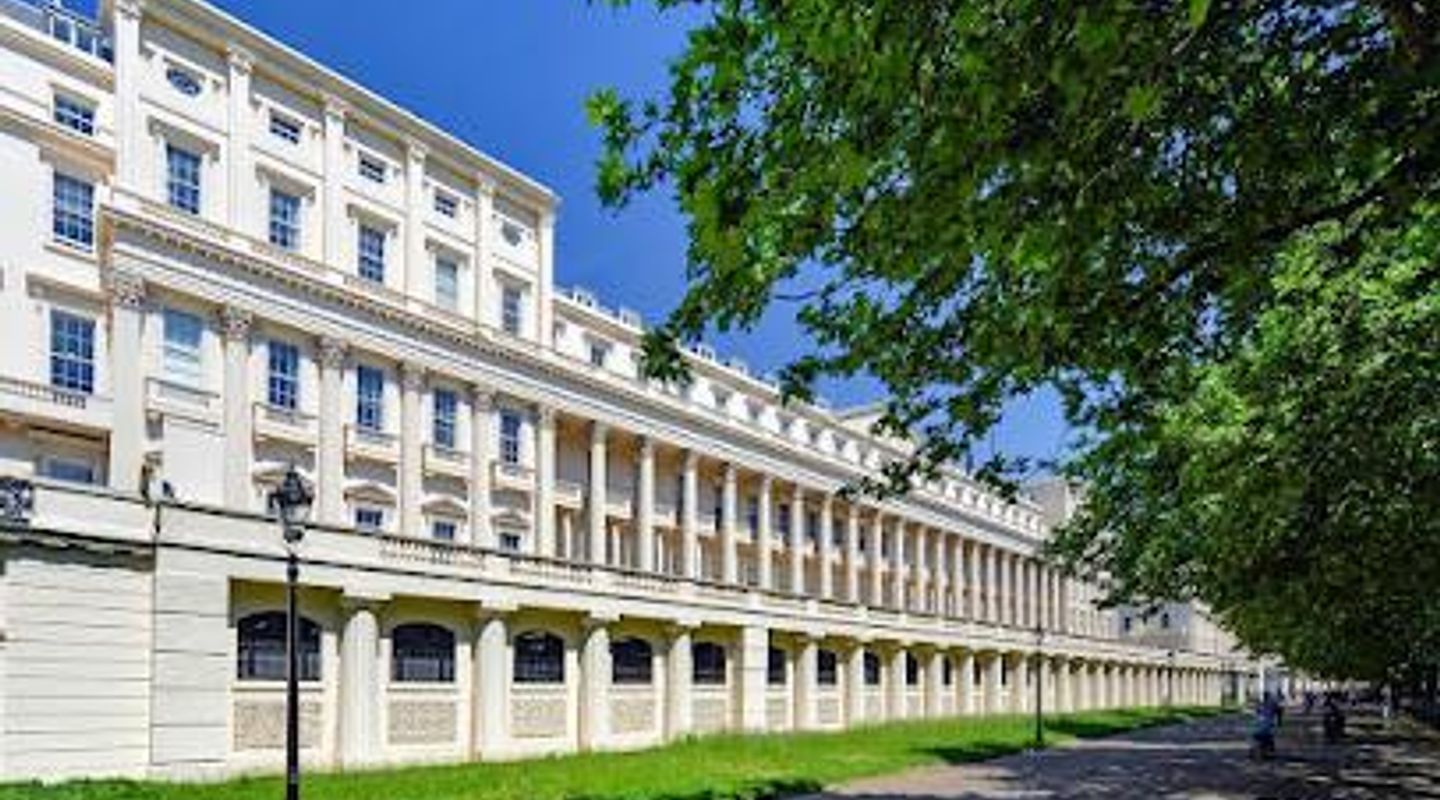
Carlton House Terrace is a magnificent Grade I listed Georgian terrace in London's St James's, designed by John Nash and built between 1827 and 1833 on the site of the former Carlton House, the opulent residence of George IV when he was Prince Regent. This iconic white stucco-fronted development consists of two residential blocks separated by the Duke of York's Column, serving as an impressive backdrop to St James's Park and the Mall. The terrace has housed notable residents including Prime Minister William Gladstone and the Guinness family, and today numbers 10–11 are home to the British Academy.
On-site amenities
 Seating areas
 Information boards
 Visitor centre
- Address
- London
Getting there
London Underground
Walking from St James's Park
Taxi or Private Car
Bus
Discover more about Carlton House Terrace
From Royal Palace to Georgian Jewel
Carlton House Terrace stands on ground steeped in royal history. The site was originally part of the grounds of St James's Palace, known as "the Royal Garden" and "the Wilderness." In the early 18th century, an aristocratic townhouse was built here and rented by Baron Carleton, from whom the terrace derives its name. The property passed through distinguished hands—including the architect Lord Burlington and Frederick, Prince of Wales—before being granted to George, Prince of Wales (the future George IV) in 1783 when he came of age.The Prince Regent transformed the modest townhouse into Carlton House, an opulent palace. He engaged architect Henry Holland to expand and almost entirely rebuild it into a lavish residence, spending enormous sums on improvements and enlargements. Carlton House became the rival court to his father's, a centre of brilliant social life and political intrigue. When George became King in 1820, however, he deemed the palace insufficient for his needs and relocated to Buckingham House, which he then renovated extensively to become Buckingham Palace. Carlton House was demolished in 1826, with some architectural elements salvaged—notably the column bases and capitals, which were reused on the portico of the National Gallery on Trafalgar Square.
Nash's Vision and Architectural Triumph
In 1826, instructions were given that the site should be cleared and laid out as building ground for "dwelling houses of the First Class." John Nash, the leading architect of the era, was commissioned to design Carlton House Terrace between 1827 and 1833, with detailed input from architects including Decimus Burton. Nash conceived the terraces as a scenic backdrop to St James's Park, telling a Parliamentary committee that he was thinking "as a painter." His designs were inspired by Ange-Jacques Gabriel's buildings in the Place de la Concorde in Paris. The white stucco-faced terraces consist of two residential blocks separated by the Duke of York's Column, creating an ensemble of considerable grandeur. Both terrace blocks are Grade I listed buildings, placing them in the top 2 percent of all listed buildings in Britain. Architectural historian Sir Nikolaus Pevsner described the Terrace as among "the greatest terrace houses ever built in Britain," though his contemporary Sir John Summerson more grudgingly admitted they were "impressive in their loose, almost shoddy fashion."
A Century of Distinguished Residents
Carlton House Terrace rapidly became one of London's most fashionable addresses. From 1831 to 1924, No. 10 was the London residence of the Ridley family of Northumberland. The 2nd Viscount Ridley commissioned architects Detmer Blow and Fernand Billerey in 1905 to remodel significant portions of the house in the French classical style, including the installation of a striking black marble staircase with a bronze balustrade by Bainbridge Reynolds. No. 11 had an equally varied and illustrious history. Its original resident was Lord Monson, followed by William Crockford, proprietor of the celebrated gambling hall. The Duke of Norfolk occupied it next, and in 1875, William Gladstone and his family moved in. During his first term as Prime Minister (1868–1874), Gladstone's diaries reveal that the Cabinet occasionally met at the house. When Gladstone was defeated at the general election of 1875, he was forced to leave, writing poignantly that departing was "like a little death...I had grown to the house, having lived more time in it than any other since I was born." The Guinness family, owners of the Guinness brewery in Dublin, then took the lease, holding it until 1946.
War, Transformation, and Modern Purpose
When the First World War broke out in 1914, Lady Ridley opened No. 10 as a Hospital for Wounded Officers. The ballroom and south drawing room were converted into wards, and by 1917, further rooms had been transformed, with huts built on the terrace, bringing the total to 60 beds. An operating theatre was established on the ground floor. During the Second World War, No. 10 suffered bomb damage during the Blitz, though much of the Edwardian interior survived. The social upheavals of the twentieth century and rising maintenance costs meant that many houses in the terrace became clubs, learned societies, and institutional offices. The Union Club took the lease of both No. 10 and No. 11 in 1923, beginning the process of combining the two houses. Conditions stipulated that the building must appear as a private house. Following the club's departure in the 1950s, the Commonwealth Secretariat and the Foreign Press Association occupied the buildings. In 1998, the British Academy moved into No. 10 and parts of No. 11, expanding into the whole of No. 11 in 2010. The Academy undertook an ambitious £2.75 million renovation project between March 2010 and January 2011, restoring the public rooms and linking the two buildings together, creating a 150-seat state-of-the-art auditorium.
Cultural Significance and Literary Legacy
Carlton House Terrace has featured prominently in British cultural life. The terrace is the setting for Oscar Wilde's play "Lady Windermere's Fan," cementing its place in literary history. The location has also housed various government and institutional offices, including the Information Research Department, a secret branch of the UK Foreign Office dedicated to Cold War propaganda efforts. Today, the terrace remains Grade I listed and is owned by the Crown Estate, leased to various occupants who maintain these architectural treasures as living monuments to Georgian elegance and British history.
Evendo Review Centre
 Google
Guest reviews
Best time to go
Quietest: Jan, Feb & Dec · before 6am or from 11pm
Busy times are Evendo estimates for a typical year, to help you plan. Actual crowds vary with events, school holidays and the weather.
Explore Carlton House Terrace on the map
A handpicked selection of must-see spots near Carlton House Terrace, mapped for you.
Get your free copy of our complete guide to Carlton House Terrace, delivered straight to you.
Everything on this page, from opening hours and how to get there to Eve’s tips and the best time to go, in one PDF you can read offline, print or share.
Already have an account? Sign in
Your Carlton House Terrace guide is ready.
We'll send it to · Not you? Sign out

Getting your guide ready…
We are putting together a fresh copy of the Carlton House Terrace guide. This can take up to a minute.
This can take a few moments. If your browser asks, choose Allow so the download can start. You'll find the guide in your Downloads folder.
Nothing happened? Download it again
Sorry, the guide is taking longer than usual. Please try again in a minute, or get it by email instead.
Unlock the best of Carlton House Terrace
Skip-the-line tickets, guided tours with entry, and walking tours of the area, booked in a few clicks.

Other nearby places you may find interesting
The closest places of the same kind, if this one is not quite what you had in mind.
-
-

-
-
-


Swipe for more places
More to explore near Carlton House Terrace

 Best experiences near Carlton House Terrace
 Best hotels near Carlton House Terrace
 Best landmarks near Carlton House Terrace
 Best attractions near Carlton House Terrace
 Best shops near Carlton House Terrace
 Best restaurants near Carlton House Terrace
 Best bars near Carlton House Terrace
Do you manage this location?
Take control to get all the benefits, like improved information, better appearance, and stronger visibility across AI-powered discovery.
Explore more
Explore more of Sutherland
Discover Sutherland, the untamed beauty of the Scottish Highlands, where rugged landscapes, serene lochs, and dramatic coastlines await the adventurous traveler.
Explore Sutherland
Explore more of United Kingdom
Discover the United Kingdom: A blend of rich history, stunning landscapes, and vibrant cities, offering a unique travel experience for every visitor.
Explore United Kingdom