

Free Uinta County Travel Guide & Mobile App
Explore Uinta County with free travel guides. Discover regional history, expert tips, proposed trips, and audio guides on web or mobile app.


Uinta County, Wyoming combines railroad history, frontier heritage, river trails and open high-country landscapes around Evanston and Bridger Valley.
Read more about Uinta County
Getting to and around Uinta County
How to get there
Transportation
Best landmarks in Uinta County
Fort Bridger State Historic Site is Uinta County’s most recognisable historic landmark: its buildings and enclosed grounds mark the position of the nineteenth-century trading post that became a key waypoint on westward routes and a military installation. In Evanston, the town’s surviving railroad-related buildings, historic streets and museum collections express the importance of the Union Pacific line in the county’s formation, even where the original railway landscape has changed. Piedmont Charcoal Kilns are among the county’s most distinctive industrial landmarks, with their beehive-shaped masonry forms preserving the story of charcoal production for the expanding railroad. Bear River itself is a geographical landmark as well as a recreational feature, threading through the valley near Evanston and supporting a greener corridor amid otherwise open sagebrush country. The surrounding Bridger Valley, framed by distant uplands and broad skies, provides the county’s defining visual setting. Together these places show Uinta County through three connected themes: movement across the West, the industries that sustained that movement and the river-and-valley landscape that made settlement possible.
-
State park
Bear River State Park
Experience the natural beauty of Bear River State Park in Wyoming, a serene destination for outdoor adventures and breathtaking landscapes.
-
Monument
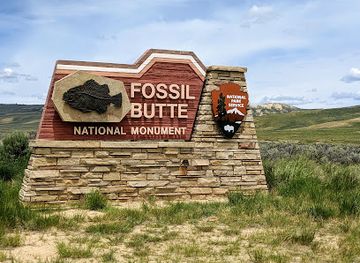
Fossil Butte National Monument
Explore the fossil-rich landscapes of Fossil Butte National Monument in Wyoming, a must-visit for paleontology enthusiasts and nature lovers.
-
Historical place museum
South Pass City State Historic Site
Explore the rich heritage of South Pass City State Historic Site, a must-visit historical museum showcasing the gold rush era in Wyoming.
-
Visitor center
Bear River State Park Visitor Center
Explore the Bear River State Park Visitor Center, your gateway to nature and history in Wyoming's stunning landscapes, perfect for all outdoor enthusiasts.

Explore Uinta County on the map
Plan your trip on one map. See where the top cities, national parks and sights are, and book hotels and experiences in a few clicks.
Best hotels in Uinta County
Best restaurants in Uinta County
Dining in Uinta County is centred on the practical, unpretentious restaurant and café culture of Evanston and the smaller communities of Bridger Valley. Visitors can expect American diner-style breakfasts, burgers, sandwiches, steaks, pizza and Mexican-influenced dishes, alongside coffee shops and family restaurants serving residents, road travellers and railway workers. Evanston offers the broadest choice, while options in Lyman, Mountain View and Fort Bridger are more limited and may follow local schedules. Local ranching influences the prominence of beef and other hearty meals, although the county does not have a single signature dish comparable to a nationally recognised regional cuisine. Groceries, bakeries and seasonal farm products are useful for picnics and longer drives, particularly near Bear River State Park or rural historic sites. Tipping in table-service restaurants follows wider United States practice, and sales tax is commonly added to displayed prices. Because rural distances are considerable, planning meals and carrying water and snacks is sensible when visiting sites outside Evanston.
-
American
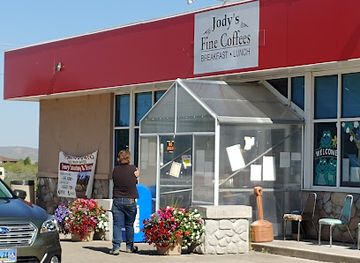
Jody's Diner
Discover Jody's Diner in Evanston - A cozy American eatery offering delicious breakfasts and family-friendly dining experiences.
-
Live music bar
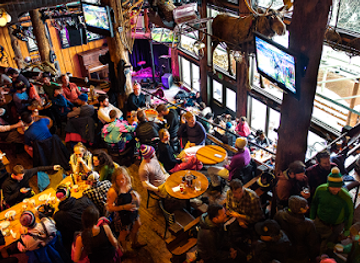
Mangy Moose Jackson Hole
Discover lively entertainment and delicious American cuisine at Mangy Moose in Jackson Hole - where every night is a celebration.
-
Hotel
Best Western Dunmar Inn
Experience comfort and convenience at Best Western Dunmar Inn in Evanston, Wyoming - your perfect home away from home.
-
Truck stop
Pilot Travel Center
Discover convenience at Pilot Travel Center in Evanston - fuel up, dine well, and continue your journey refreshed.



Best bars in Uinta County
Uinta County’s evening life is modest and community-oriented rather than built around a large nightclub district. Evanston has the county’s widest selection of bars, traditional pubs, restaurants with evening service and occasional live entertainment, while smaller communities rely more heavily on local taverns, cafés and dining rooms. Some establishments serve as informal meeting places for residents, road travellers and people connected with the region’s ranching, transport and industrial economy. Nightclubs are not a defining feature of the county, and late-night options can be limited, especially outside Evanston. Visitors should not assume that rural venues operate to city schedules, particularly on quiet weeknights or during severe weather. Alcohol service is regulated under Wyoming law, and identification may be requested. Brewing and bar culture are best approached as one part of the local social scene, alongside community events, seasonal activities and evenings spent exploring the historic town centres or the open landscape.
-
American
Jody's Diner
Discover the charm of Jody's Diner in Evanston, Wyoming, where delicious American comfort food meets a warm, family-friendly atmosphere.
-
Restaurant
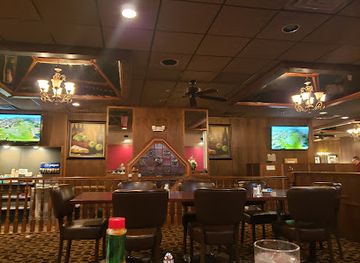
Legal Tender Restaurant
Discover the best American cuisine and vibrant entertainment at Legal Tender Restaurant in Evanston, Wyoming.
-
Bar
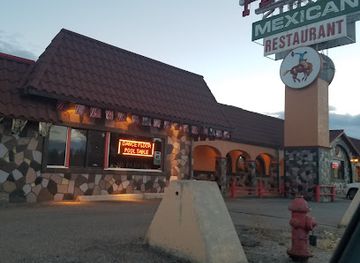
Don Pedro's Family Mexican Restaurant
Experience authentic Mexican cuisine at Don Pedro's Family Mexican Restaurant in Evanston, Wyoming, where flavor and tradition meet in a vibrant setting.
-
Brewpub
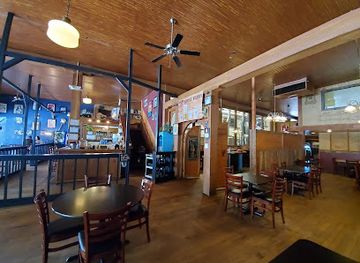
Suds Brothers Inc
Experience unique craft brews and delicious food at Suds Brothers Brewery in Evanston, Wyoming - a perfect blend of flavor and fun.
Best shops in Uinta County
Shopping in Uinta County is practical and locally scaled, with Evanston providing the greatest concentration of groceries, outdoor supplies, independent services, antiques, gifts and everyday retail. Its historic commercial areas are more suited to browsing small businesses and local collections than to extensive department-store shopping. Lyman, Mountain View and Fort Bridger serve as smaller community centres, where visitors may find basic supplies, rural-oriented goods and occasional locally made items. Food products, western-style clothing, books, artwork and crafts make more meaningful souvenirs than generic tourist merchandise, while farm and ranch products may appear through seasonal sales or community markets rather than a permanent destination market. Visitors should not expect a major luxury-shopping scene or a continuous chain of specialist boutiques. Stock up before travelling to remote historic sites, and ask locally about current market days or seasonal producers because these arrangements can change. The most distinctive purchases are those connected with Wyoming’s open-country culture, railroad history and regional craft traditions.
-
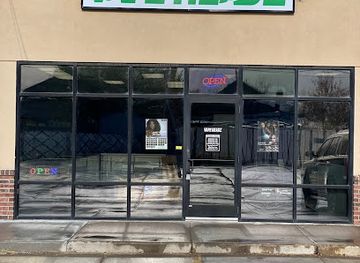
Vaporizer store
Vape Headz Smoke Shop & Vape Shop
Discover the ultimate vaporizer experience at Vape Headz Smoke Shop & Vape Shop in Evanston, Wyoming, with quality products and friendly service.
-
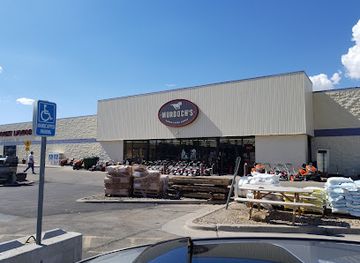
Department store
Murdoch's Ranch & Home Supply
Explore Murdoch's Ranch & Home Supply in Evanston, Wyoming, your ultimate destination for clothing, hardware, and sporting goods.
-
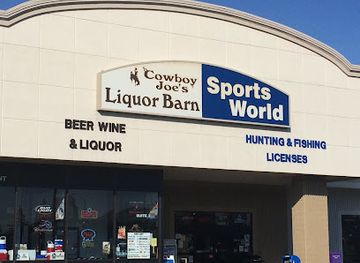
Liquor store
Cowboy Joe's Liquor Barn
Explore Cowboy Joe's Liquor Barn in Evanston, WY, for a fantastic selection of spirits, friendly service, and unbeatable prices.
-
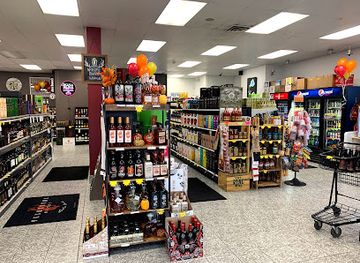
Liquor store
Border Beverage
Discover a diverse selection of beverages at Border Beverage in Evanston, Wyoming, perfect for every taste and occasion.
Get your free copy of our complete guide to Uinta County, delivered straight to you.
Everything on this page, from attractions and restaurants to essentials and local phrases, in one PDF you can read offline, print or share.
Already have an account? Sign in
Your Uinta County guide is ready.
We'll send it to · Not you? Sign out

Getting your guide ready…
We are putting together a fresh copy of the Uinta County guide. This can take up to a minute.
This can take a few moments. If your browser asks, choose Allow so the download can start. You'll find the guide in your Downloads folder.
Nothing happened? Download it again
Sorry, the guide is taking longer than usual. Please try again in a minute, or get it by email instead.
Uinta County essentials
Currency and Payment
Safety
Emergency Situations
Do's and Don'ts
Local Tips
From Eve
Local phrases worth knowing
You don't need to get them perfect. A few words go a long way, and locals appreciate the effort.
Basics
| English | Local | Say it |
|---|---|---|
| Hello | Howdy | [how-dee] |
| Goodbye | See ya | [see yah] |
| Yes | Yep | [yehp] |
| No | Nope | [nohp] |
| Please/You're welcome | Sure thing | [shoar thing] |
| Thank you | Thanks a lot | [thangs a lot] |
| Excuse me/Sorry | Pardon me | [par-dun mee] |
| How are you? | How ya doin'? | [how yah doin'?] |
| Fine. And you? | Good, and you? | [good, and you?] |
| Do you speak English? | You speakin' English? | [yoo speekin' ing-lish?] |
| I don't understand | I ain't got it | [I ain't got it] |
Eating & Drinking
| English | Local | Say it |
|---|---|---|
| I'd like to see the menu, please | Can I see the menu? | [can I see the men-yoo?] |
| I don't eat meat | I don't do meat | [I don't do meet] |
| Cheers! | Cheers! | [cheers!] |
| I would like to pay, please | Can I get the check? | [can I get the chek?] |
Emergencies
| English | Local | Say it |
|---|---|---|
| Help! | Help! | [help!] |
| Go away! | Leave me be! | [leave me bee!] |
| Call the Police! | Get the cops! | [get the kops!] |
| Call a doctor! | Get a doc! | [get a dok!] |
| I'm lost | I'm turned around | [I'm turnd around] |
| I'm ill | I'm not feeling well | [I'm not feelin' well] |
Shopping
| English | Local | Say it |
|---|---|---|
| I'd like to buy... | I want to buy... | [I want to buy...] |
| I'm just looking | Just browsing | [just brow-zing] |
| How much is it? | What’s the price? | [what's the prys?] |
| That's too expensive | That's a bit steep | [that's a bit steep] |
| Can you lower the price? | Can you cut the price? | [can you kut the prys?] |
Time & Numbers
| English | Local | Say it |
|---|---|---|
| What time is it? | What’s the time? | [what's the time?] |
| It's one o'clock | It's one | [it's wun] |
| Half past (10) | Half past ten | [half past ten] |
| Morning | Mornin' | [mornin'] |
| Afternoon | Afternoon | [afternun] |
| Evening | Evenin' | [evenin'] |
| Yesterday | Yesterday | [yes-ter-day] |
| Today | Today | [to-day] |
| Tomorrow | Tomorrow | [to-mor-row] |
| 1 | One | [wun] |
| 2 | Two | [too] |
| 3 | Three | [three] |
| 4 | Four | [for] |
| 5 | Five | [fiv] |
| 6 | Six | [siks] |
| 7 | Seven | [sev-en] |
| 8 | Eight | [ait] |
| 9 | Nine | [nain] |
| 10 | Ten | [ten] |
Transport & Directions
| English | Local | Say it |
|---|---|---|
| Where's a/the...? | Where's the...? | [where's the...?] |
| What's the address? | What’s the address? | [what's the ad-dress?] |
| Can you show me (on the map)? | Can you point it out? | [can you point it out?] |
| When's the next (bus)? | When’s the next bus? | [when's the next bus?] |
| A ticket (to ....) | A ticket to... | [a tik-et to...] |
History of Uinta County
Indigenous Homelands and the Bear River Corridor
Long before Euro-American settlement, the valleys and uplands of present-day Uinta County were used by Indigenous peoples for hunting, travel and seasonal activity. The Bear River and surrounding grasslands formed a natural corridor through an otherwise rugged landscape. Shoshone communities were particularly associated with the wider Bear River country, while the region also lay within the broader cultural geography of other Great Basin and Rocky Mountain peoples. Later trading and migration routes followed paths that had long been shaped by Indigenous knowledge of water, passes and resources.
Fur Trade and the Founding of Fort Bridger
Jim Bridger and Louis Vasquez established Fort Bridger in 1843 as a trading post on the route across the Rocky Mountain frontier. It served travellers moving between the Great Salt Lake region and the Missouri country, including fur traders, emigrants and Native visitors. The post’s location near water and established travel corridors made it commercially useful, and its later buildings and reconstructed features remain the most tangible historic expression of Uinta County’s early contact period.
Emigration, the Overland Routes and Military Expansion
During the middle decades of the nineteenth century, Fort Bridger became an important landmark for emigrants travelling west along routes later associated with the Oregon, California and Mormon trails. The United States Army occupied the post in 1858 during tensions connected with the Utah expedition, and the site subsequently formed part of the military infrastructure of the expanding United States. Telegraph, stage and mail connections added to the fort’s strategic importance before the railway transformed regional travel.
The Railroad and the Birth of Evanston
The Union Pacific Railroad reached south-west Wyoming during the construction of the first transcontinental railway, and Evanston developed as a division point and service community. Rail facilities, roundhouses, workshops and associated businesses brought workers and investment to the area. The town’s location on a major east-west route continued to shape its economy and identity, while the railway linked local livestock, coal and other resources with distant markets.
Coal, Charcoal and Nineteenth-Century Industry
Railroad expansion created demand for fuel and encouraged coal mining around Evanston, including operations near Almy. The industry brought hazardous work, immigrant labour and periods of rapid economic growth, but also exposed workers to serious risks; the Almy mine disaster of 1886 is one of the county’s important industrial tragedies. At Piedmont, masonry charcoal kilns preserve evidence of an earlier fuel industry that converted local timber into charcoal for use by the railway and nearby mining operations.
Uinta County and the Development of Wyoming
Uinta County was organised during the territorial period in 1869, the same year Wyoming Territory was created and the transcontinental railway was completed. Its communities grew through a mixture of railway employment, ranching, trade and public services. The long-term pattern was not one of uninterrupted boom: industries changed, rail technology evolved and many rural settlements remained small. Today, historic sites, town buildings, museums and surviving transport corridors show how national movements westward were experienced locally.
Modern Bridger Valley Communities
In the twentieth and twenty-first centuries, Uinta County retained a mixed economy rooted in ranching, transport, energy, public services and small-town commerce. Evanston remained the county’s principal centre, while Lyman, Mountain View and Fort Bridger continued to serve the surrounding agricultural valley. Historic preservation and outdoor recreation now complement those working landscapes, giving the county a contemporary identity that recognises its frontier and railroad past without reducing local life to a museum display.
Uinta County in Photos
Browse through our photo collection highlighting the charm and character of the destination.
Neighbouring regions of Uinta County
The closest regions to Uinta County, if you have time for more than one.
-

-

-

-

-


Swipe for more regions
Explore more

Explore more of Wyoming
Discover Wyoming: A Land of Unspoiled Beauty, Rich History, and Boundless Outdoor Adventures in the Heart of the American West.
Explore Wyoming