

Corinth Christian 4 hours shore excursion
 Piraeus, GR
 50% of travellers recommend this
Highlights
- Private tour with professional English-speaking driver
- Visiting the sites where St Paul preached
- Exploring the Agora of Ancient Corinth
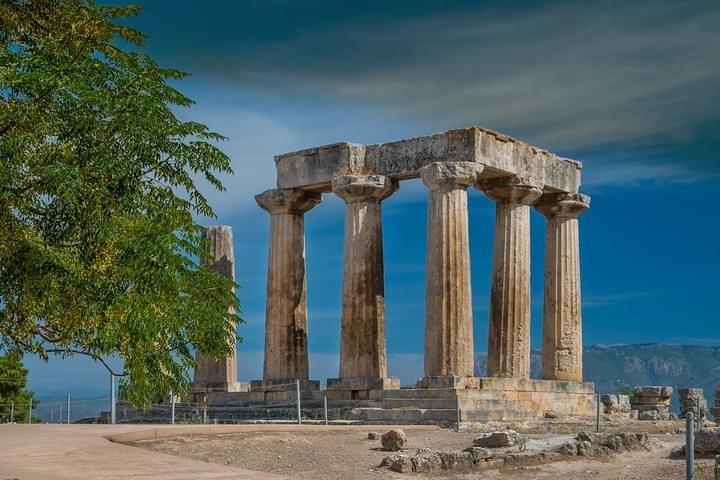
- Admiring the temple of Apollo
- Customizable tour itinerary
-
Duration 4 hours
-
Private Tour
-
Piraeus Port pickup included
-
English-speaking driver
-
Customizable itinerary
-
Air-conditioned vehicle
Experience the rich history of Greece on the Corinth Christian 4 hours shore excursion. This private tour takes you to the sites where St. Paul preached the word of God in South Greece, including the Agora of Ancient Corinth, the temple of Apollo, the temple of Aphrodite, and the Bema. You'll also have the opportunity to marvel at the famous Corinth Canal. Customize your tour within the itinerary and let your professional English-speaking driver guide you through the fascinating history and culture of Greece. Travel through the beautiful region of Attica, visit the bustling city of Athens, and explore the Peloponnese peninsula. Immerse yourself in the ancient world and discover the treasures of Greek civilization. Book now and embark on a journey of enlightenment and adventure.
At a Glance
-
 Free cancellation
-
 4 hours
-
 Instant Confirmation
-
 Available in English
-
 Mobile voucher
-
 Private Tour
-
 Guided
-
 Family friendly

Featured Reviews

Explore the ancient wonders of Corinth with a private 4-hour shore excursion, led by an expert English-speaking driver, from Piraeus Port.
Included
-
 OtherA professional English speaking driver with good knowledge in history and culture of Greece, to guide you till you enter archaeological sites and museums. Tour drivers are not licensed to companion you inside the archaeological sites and museums. If you'd like to have a licensed by the state tour guide to escort you inside the sites and museums, we can arrange it for you with an additional cost. Licenced by the state tour guides are freelance and it is subject of availability on bookings day!
 -
OtherPiraeus Port pickup and drop-off
-
OtherTransport by air-conditioned vehicle appropriate for the size of your group
-
OtherHotel pickup and drop-off in Athens
Excluded
-
 OtherEntrance fees to the archaeological sites and museum
 -
GratuitiesGratuities
-
OtherFood and drinks
-
OtherEnglish-speaking licensed tour guide (We can arrange for a tour guide for you with an extra cost)
Pickup
Check if pick-up is available from your location, you will select during checkout (providers may allow other pickup locations)

What to expect
Attica
You will be traveling through Attica till will reach the famous Corinth Canal. A journey” in 6,000- year history, the land that gave birth to ideas and arts, has created and shaped what we call today the western civilization. Today, a visit to Attica offers visitors a unique experience. A “journey” in its 6,000-year history, including the chance to see renowned monuments and masterpieces of the art of antiquity and the Middle Ages, and the architectural heritage of the 19th and 20th centuries. Here lies Athens, the capital of Greece, the busiest city of the country with the most prominent archaeological site and symbol of the country, the world-famous sacred rock of the Acropolis. Attica is home to some of the world’s most important and fascinating museums and archaeological sites, testimony to its long and prominent role in world history. Festivals featuring ancient Greek drama, as well as performances, sports, or culinary events are organized. Then travel towards Peloponnese!
Piraeus
Pick up from your accommodation in Athens or your cruise ship pier at Piraeus port. We will drive along the coastal road of Saronic Gulf to enjoy the Piraeus and Athens riviera. The Port of Piraeus is the chief seaport of Athens, Greece, located on the Saronic Gulf on the western coasts of the Aegean Sea. Piraeus port is the largest port in Greece, home to Europe's biggest passenger port, and as such is a huge draw for cruise ships from around the world bringing tourists eager to explore this centuries-old city, and one of the largest in Europe. But yet another major draw is the fact that it's easy to visit Athens because it's located nearby. The Greek capital city of Athens is just 12 kilometers or 7 miles from Piraeus port. We will drive directly to the Acropolis to admire the Temple of Democracy!
70 minutes
Peloponnese
The Peloponnese is a peninsula and geographic region in southern Greece. It is connected to the central part of the country by the Isthmus of Corinth land bridge which separates the Gulf of Corinth from the Saronic Gulf. Peloponnese grape varieties have a very special place in the treasure of native Greek grape varieties. Τhe Peloponnese Wine Roads take you on a journey to a modern, sometimes rare and definitely unknown to many wine world, full of authenticity and history. Native Peloponnese grape varieties do not only reflect the diversity of Greek and Peloponnesian wine, but also the significance of some very special Greek varieties. Among them are two of the four most renowned varieties of the Greek vineyard in the world’s best markets: the exotic Moschofilero-Mantinia and the captivating Agiorgitiko-Nemea. Moreover, Mavrodafni is known for the popular Greek dessert wine and Muscat produces sweet and potentially exquisite wines along with many more rare grape varieties.
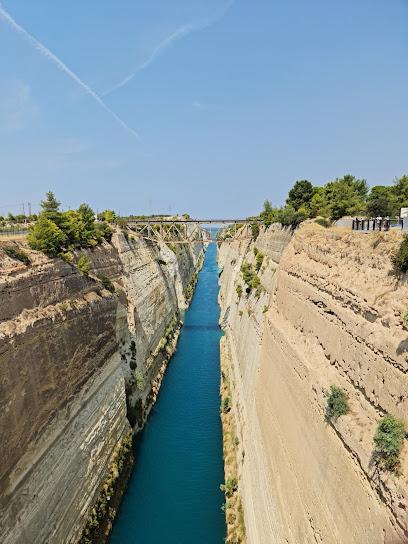
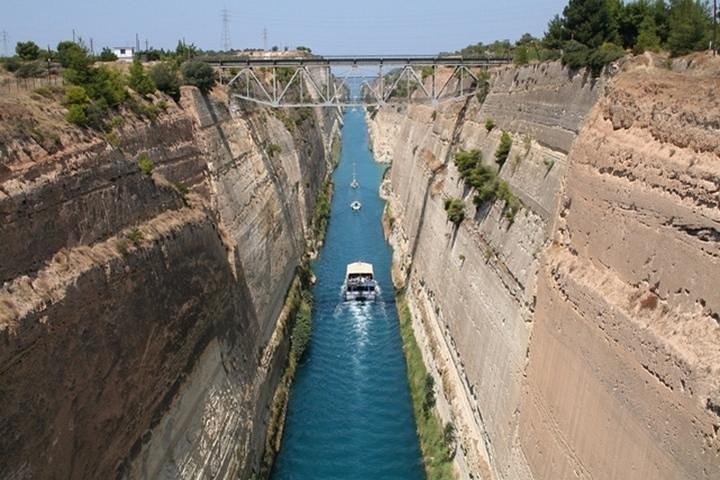
The Corinth Canal one of the most important projects of modern Greece, which played a catalytic role for the Mediterranean trade, has constituted an inspiration for centuries and was completed 25 centuries after the conception of its idea. It is a man-made canal in Greece, that connects the Gulf of Corinth in the Ionian Sea with the Saronic Gulf in the Aegean Sea. It cuts through the narrow Isthmus of Corinth and separates the Peloponnese from the Greek mainland, arguably making the peninsula an island. Back to the late 7th century B.C., and specifically in 602 B.C. At that time, the tyrant of Corinth Periander decided to connect the Gulf of Corinth with the Saronic Gulf. His purpose was to try and open a canal in the isthmus of Corinth which would allow the avoidance of a dangerous circumnavigation of the Peloponnese and shorten the route. The plans of Periander, one of the seven sages of antiquity, as ancient writers testify, remained unaccomplished.
15 minutes
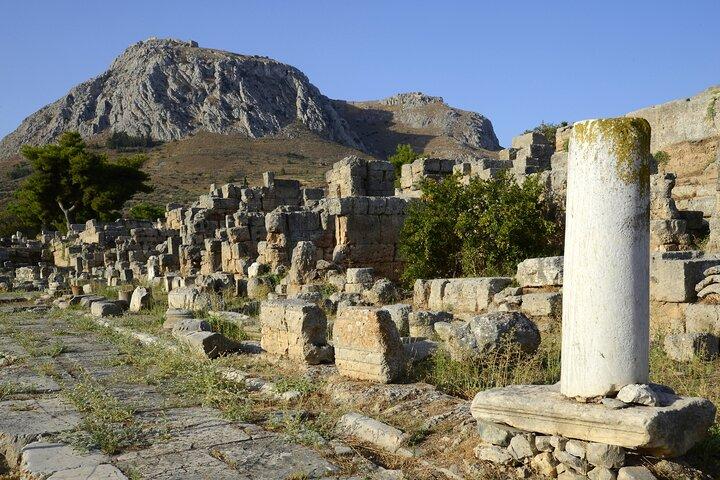
Ancient Corinth was first inhabited in the Neolithic period (6500-3250 B.C.). It is located at the northern base of the hill of Acrocorinth at the site of today’s agglomeration. Its fertile soil but mainly its strategic location at the intersection of land routes from the Balkan peninsula of Aimos and mainland Greece on towards the Peloponnese and waterways that connect the western Mediterranean to its Eastern counterpart, to Asia Minor and to Syro-Palestine, offered the region from very early on enormous potential for communication, growth and prosperity. The city, known since the Mycenaean period. The tremendous output of agricultural products, already in earlier historical periods, favored intense expansion in trade activities mainly towards the Western Mediterranean, while in the 8th century BC Corinthian colonies were founded, like Corfu in the Ionian Sea, Syracuse in Sicily, with an important role and contribution in the history of the ancient Mediterranean world.
45 minutes
 Admission Not Included
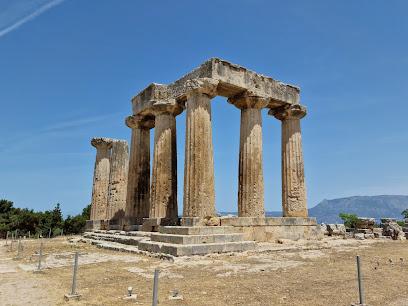
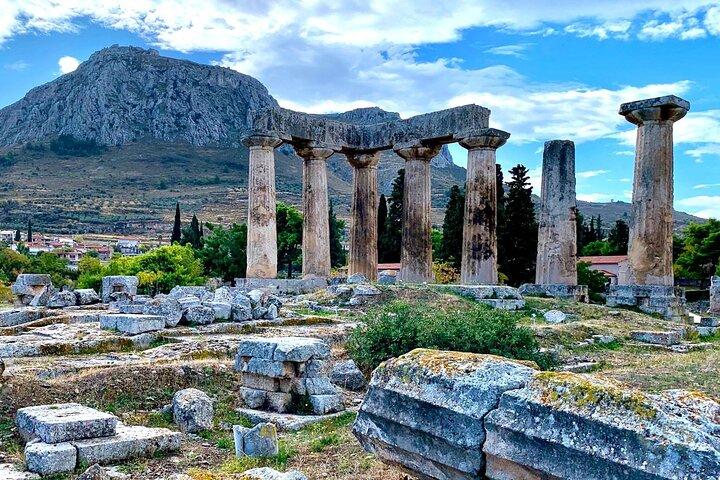
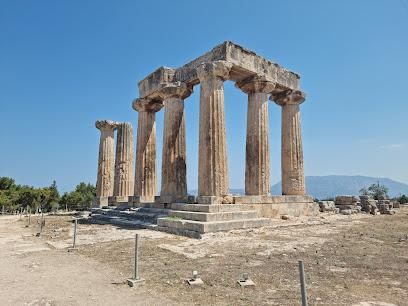
The temple of Apollo at Corinth is one of the earliest Doric temples in the Peloponnese and the Greek mainland. Built around 560 B.C.E., of local oolithic limestone on top of an imposing, rocky hill to the north of Acrocorinth, the Archaic temple was an emblem for the Greek city of Corinth, reflecting its growth and prosperity. The temple was peripteral, surrounded by a pteron of 42 monolithic, limestone columns (6×15), over 7 m. high. Its central structure was divided into three parts: an antechamber with two columns in antis (pronaos), a central oblong, rectangular room subdivided into two parts (cella), and a rear room with two columns in antis (opistodomos).In the Roman period, when the city of Corinth was refounded by the Romans, the Temple of Apollo was renovated in order to house the cult of the Emperor. In the Byzantine era a basilica was built on the northeast part of Temple Hill, whereas in the Ottoman period, the eastern part of the Temple was demolished...
10 minutes
Admission Not Included
Temple of Apollo
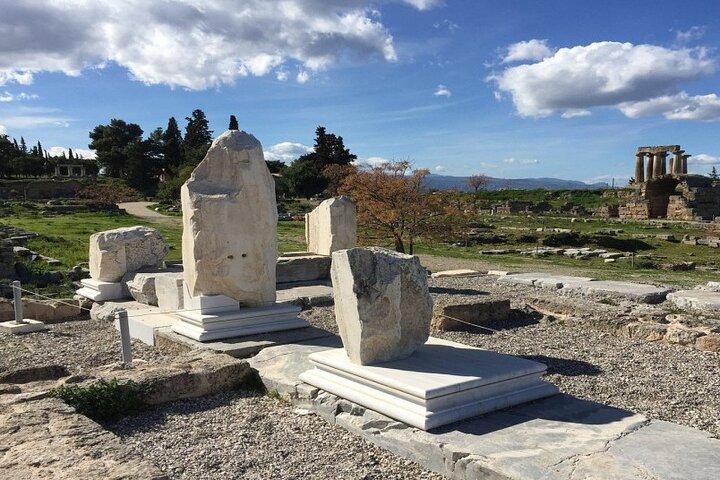
The Rostra (Bema) of the Roman Forum. Saint Paul is also known as the Apostle of the Nations because of his missionary journeys throughout the eastern Mediterranean for the dissemination of Christianity. In this context he visited several Greek cities, including the island of Samothrace, Philippi, Thessalonica and Veroia in Macedonia, Athens and, most importantly, Corinth. Corinth, a Roman imperial colony and capital of the province of Achaea (Peloponnese and Central Greece), experienced a period of great prosperity during the Roman era. Saint Paul arrived in the city in the mid-1st c. A.D. and took up lodging and work with the Jewish tentmakers Aquila and Priscilla. At the same time, he reasoned and preached the Gospel to the Jews of the city, being confronted, however, with strong opposition from several members of the city’s large Jewish community.Saint Paul thus resolved to devote his full attention to the conversion of the Gentiles, a decision which proved highly successful.
10 minutes
Admission Not Included
Peirene Fountain
The Glauke Fountain was curved on the western slope of the Hill of the Temple of Apollo in Roman times. The fountain was probably created and initially used in the Archaic period. According to local narratives, Glauke, daughter of king Kreon, was about to marry the hero of the Argonauts Jason, who was already related to the Kaukasian witch Medea.A little before her wedding, Glauke received a poisoned peplos by Medea, which inflamed immediately after it was worn, In order to be saved, the girl fell in the fountain, which was named after her.
10 minutes
Admission Not Included

Inside the Ancient Agora of ancient Corinth, you will admire the Temple of Octavia. This represents one of the best-preserved examples of roman architecture. During its initial construction phase, the temple was Doric with six columns on its façade with stone foundations, very possibly on a three-stepped crepidoma. The shrine was surrounded by a wall to the west and stoas to the north and south. Towards the end of the 1st c. A.D., the early temple was replaced by a new marble one, of the Corinthian order, with 6 x 12 columns surrounding it on a high pedestal. It included a long cella and a pronaos with two columns in antis, preceded by a staircase. The architrave of the eastern side bore a Latin inscription with inlaid, bronze letters. The temple was probably dedicated to the cult of the Triad of the Capitol or to the cult of the imperial family, while according to Pausanias, it was a place of worship of Octavia, the sister of Octavian Augustus.
Peirene Fountain
According to myth, the monument owes its name to the nymph Peirini, while another myth links it to Pegasus. The first indications alluding to its use date back to the Neolithic period, while the first spatial configuration dates to the geometric and archaic periods. During the 2nd c. B.C. included six chambers with access to three pumping basins. Its façade was constructed during the early Roman period, bearing Doric semi-columns framing the arched openings in front of the old chambers. Later, a rectangular yard placed to the north of the fountain was surrounded by high walls. At the center of the courtyard, the open-air fountain was created at a lower level and supplied with water through large ducts below the courtyard floor. The three-niche courtyard building was constructed in the late 4th c. A.D. During the Byzantine era, a small church was built at the southwest corner of the courtyard, which was gradually filled with earth and used as a burial ground.
10 minutes
Admission Not Included
Ancient Corinth
The Roman Odeion (Odeum) of Ancient Corinth was constructed in the 1st century AD, as an integral part of the new – founded Roman Imperial colony of Corinth. The Odeion is estimated to hold an audience of 3,000 spectators of musical and rhetorical contests. In the 2nd century AD it was renovated, probably thanks to a donation of the famous benefactor and philosopher Herodes Atticus, while in the 3rd century AD it was converted into an arena. The monument was destroyed and abandoned in the 4th century AD.
Piraeus
It is time now to take the way back to Athens or to Piraeus port. We will drop you off at the same spot we have picked you up! End of our services. Thank you for choosing us for your tour in Greece!
70 minutes
The experience can be subject to change due to bad weather or unforseen circumstances. We always endeavour to give you the best possible experience.
Additional Information
-
 At time of booking, Cruise ship passengers must provide the following information at time of booking: ship name, docking time, disembarkation time and re-boarding time
 -
Athens International Airport transfers can be arranged on request at an extra cost!
-
Dress code is formal
-
Important note: You will have a professional English-speaking driver with good knowledge of the history and culture of Greece, to guide you till you enter archaeological sites and museums according to the program. Tour drivers are not licensed to companion you inside the archaeological sites and museums. If you'd like to have one, we can arrange it for you at an additional cost. Licensed by the state tour guides are freelance and it is subject to availability on bookings day!
-
Specialized infant seats are available
-
Suitable for all physical fitness levels
What our experts say
-
 Try local olives at a nearby shop.
 -
Visit the Corinth Canal for photos.
-
Consider a licensed guide for deeper insights.
-
Wear comfortable shoes for walking.
-
Plan to explore Ancient Corinth ruins.

More About this Experience
Introduction
Discover the rich history and spiritual significance of Corinth with the Corinth Christian 4-hour shore excursion. This private tour takes you to the sites where St. Paul preached the word of God in South Greece. With a professional English-speaking driver as your guide, you will explore the Agora of Ancient Corinth, visit the Agora museum, and marvel at the temples of Apollo and Aphrodite. The highlight of the tour is the famous Corinth Canal, a marvel of engineering that connects the Aegean and Ionian Seas. This tour can be customized within the itinerary to suit your preferences, making it a truly personalized experience.What to Expect
During the Corinth Christian 4-hour shore excursion, you can expect to immerse yourself in the ancient history and biblical significance of Corinth. Your professional English-speaking driver will provide you with in-depth knowledge of the history and culture of Greece as you explore the archaeological sites and museums. Please note that tour drivers are not licensed to accompany you inside the sites and museums, but licensed tour guides can be arranged at an additional cost if you prefer a guided experience inside these attractions. The tour includes pickup and drop-off at Piraeus Port, ensuring a convenient and hassle-free experience.Who is This For?
The Corinth Christian 4-hour shore excursion is perfect for history enthusiasts, spiritual seekers, and anyone interested in exploring the biblical significance of the Corinth region. This tour is suitable for individuals, couples, families, or small groups who want a private and personalized experience. Whether you are a devout Christian or simply curious about the historical and cultural heritage of Greece, this tour offers a unique opportunity to delve into the ancient world and its connections to Christianity.Why Book This?
By booking the Corinth Christian 4-hour shore excursion, you will have the chance to step back in time and walk in the footsteps of St. Paul. This tour offers a unique blend of historical exploration and spiritual reflection, providing a deeper understanding of Corinth's significance in Christianity. The personalized nature of the tour allows you to customize the itinerary to your preferences, ensuring a tailored experience that meets your specific interests. With a knowledgeable and friendly English-speaking driver as your guide, you can trust that you will receive expert insights and recommendations throughout the tour.Good to Know
It is important to note that the entrance fees to the archaeological sites and museum are not included in the tour price. Additionally, food and drinks, as well as gratuities, are not included. If you would like a licensed tour guide to accompany you inside the sites and museums, this can be arranged at an extra cost, subject to availability. The tour concludes with drop-off at the same location where you were picked up, ensuring a seamless return to your accommodation or Piraeus Port. Thank you for choosing the Corinth Christian 4-hour shore excursion for your tour in Greece!Reviews
Customers who have experienced the Corinth Christian 4-hour shore excursion have praised its unique blend of history and spirituality. They have commended the knowledgeable and friendly English-speaking drivers who provided insightful commentary throughout the tour. Many reviewers appreciated the option to customize the itinerary and found the tour to be a memorable and enriching experience. The convenience of the pickup and drop-off at Piraeus Port was also highly valued. Overall, customers were satisfied with their decision to book this tour and highly recommend it to others seeking a deeper understanding of Corinth's Christian heritage.


Your all‑in‑one travel companion app
Explore expert travel guides, compare and book tours, experiences, hotels, and more—all from the palm of your hand. Download now for seamless trip planning wherever your wanderlust takes you.


This is a popular product and the date you are looking for just sold out. Next available date is
