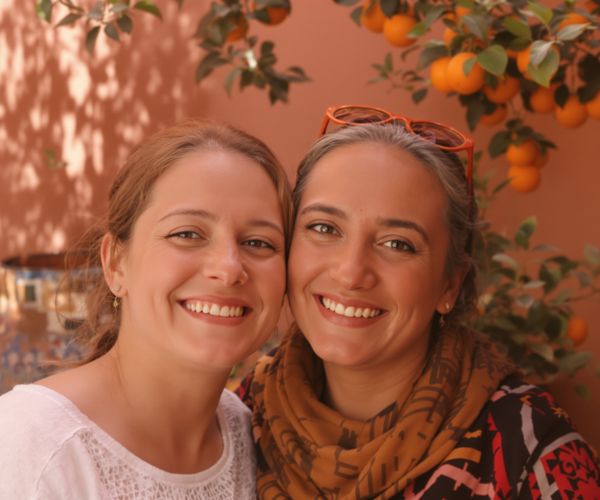
Hello, fellow travelers! Eman here, ready to share some insights on one of my favorite topics: storytelling. As someone who's journeyed from the small towns of Egypt to the charming streets of Germany, I've learned that every trip, every encounter, holds a story waiting to be told. But how do we transform our personal adventures into narratives that resonate with others? Let's dive into the art of crafting compelling travel stories that not only capture the essence of your experiences but also inspire your audience.
Finding Your Unique Angle: What Makes Your Story Different?
Every traveler sees the world through a different lens. What makes your perspective special? It's about identifying that unique angle that sets your story apart. Think about it: millions visit Paris each year, but each person experiences the city in their own way. Your personal background, your cultural insights, your passions – these all contribute to a distinctive narrative.
As a cultural mediator, I often find myself drawing on my Egyptian heritage to interpret my experiences in Germany, and vice versa. This cross-cultural perspective shapes how I see the world and, consequently, how I tell my stories. What are the unique aspects of your background that you can bring to your travel narratives? What passions can you infuse into your storytelling to make it truly your own?
Structuring Your Narrative: Building a Compelling Story Arc
A well-structured story is like a well-planned journey: it takes your audience from point A to point B in a way that's both engaging and satisfying. The basic elements of a story arc – exposition, rising action, climax, falling action, and resolution – provide a framework for crafting a compelling narrative.
Consider different ways to structure your travel story. Will you opt for a chronological account, retracing your steps from beginning to end? Or perhaps a thematic approach, focusing on a particular aspect of your trip, such as the food, the people, or the history? A quest narrative, where you set out to achieve a specific goal, can also be effective. Whatever structure you choose, make sure to create a roadmap for your readers, giving them a sense of what to expect. For instance, you could start with a captivating hook that hints at the adventure to come, or provide a brief overview of the places you'll be visiting.
Adding Sensory Details: Immersing Your Audience in the Experience
Travel is a multi-sensory experience, and your stories should reflect that. Don't just tell your audience what you saw; help them feel the warmth of the sun on their skin, hear the bustling sounds of the marketplace, smell the fragrant spices in the air.
Instead of saying The market was crowded, try something like: The air buzzed with the cacophony of hawkers' calls, the scent of saffron and cardamom mingling with the sweet aroma of dates. The press of bodies was a constant reminder of the vibrant energy that pulsed through the marketplace. Show, don't tell, is the key here. Use descriptive language and sensory imagery to create a more immersive experience for your readers.
Developing Your Personal Voice: Authenticity and Connection
Your personal voice is what makes your stories uniquely yours. It's the way you express yourself, your perspective, your personality. Don't try to imitate someone else's writing style; instead, embrace your own natural voice. Write as if you were talking to a friend, sharing your experiences in a relaxed and conversational manner.
Authenticity is crucial for connecting with your readers. Be honest about your experiences, both the good and the bad. Share your thoughts, your feelings, your reflections. When you're genuine, your audience is more likely to trust you and connect with you on a deeper level.
Incorporating Cultural Insights: Sharing Meaningful Perspectives
Travel offers a unique opportunity to learn about different cultures and perspectives. As you explore new places, pay attention to the local customs, traditions, and values. Be respectful and mindful of cultural differences, and avoid making generalizations or stereotypes.
Share your personal experiences and reflections on cultural encounters. What did you learn from interacting with locals? How did your perspectives change as a result of your travels? As someone who has lived in both Egypt and Germany, I've gained a deep appreciation for the richness and diversity of human cultures. I try to incorporate these insights into my stories, hoping to promote understanding and empathy among my readers.
Polishing Your Prose: Tips for Effective Writing and Editing
Once you've written your story, take the time to polish your prose. Vary your sentence length to create a more dynamic rhythm. Use active voice to make your writing more direct and engaging. Avoid clichés and overused phrases.
Read your work aloud to check for flow and clarity. Pay attention to the way your words sound together. Are there any awkward phrases or sentences that need to be revised? Editing is an essential part of the writing process, so don't skip this step. A fresh pair of eyes can also help, so consider asking a friend to read your story and provide feedback.
Learn how to craft and share compelling travel stories that engage and inspire your audience. Discover tips on structure, narrative, and personal voice in travel writing.