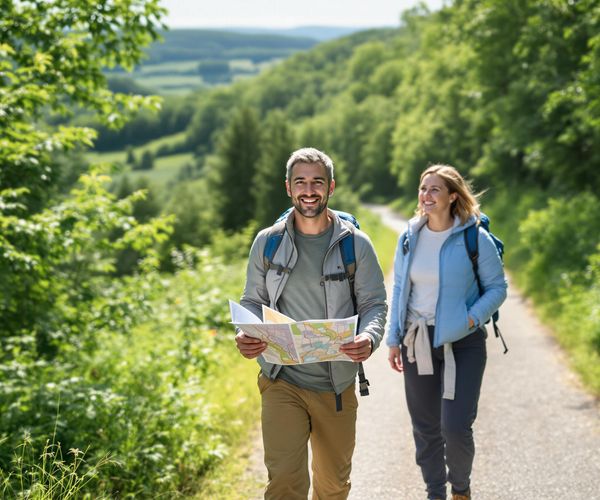
The Odenwald. Just the name conjures images of dense forests, rolling hills, and whispers of ancient legends. For Erika and me, it's a sanctuary, a place where we can escape the bustle of Heidelberg and reconnect with nature. Over the years, we've learned a thing or two about what makes for a comfortable and safe day hike in this beautiful region. This isn't just a packing list; it's a collection of experiences and lessons learned on the trails.
Embracing the Odenwald: A Hiker's Perspective
The Odenwald holds a special place in my heart. It’s more than just a forest; it’s a living tapestry of history and nature. I often find myself drawn to the trails around the Katzenbuckel, the highest point in the Odenwald, especially during the autumn when the leaves explode in a riot of color. Erika prefers the quieter paths near the Neckar River, where the forest meets the water in a serene dance. But beyond the specific locations, it's the Odenwald's stories that truly captivate me. Legends of knights, mythical creatures, and hidden treasures seem to linger in the air, adding a layer of intrigue to every hike. It's a place where you can truly feel connected to the past while immersing yourself in the present.
Footwear First: Selecting the Right Hiking Shoes
If there's one piece of gear I wouldn't skimp on, it's footwear. A comfortable and supportive pair of hiking shoes can make or break your day. In the Odenwald, where trails can range from well-maintained paths to rocky, uneven terrain, sturdy hiking boots are a must. I learned this the hard way during one particularly ambitious hike when I decided to wear my old sneakers. The lack of ankle support resulted in a painfully twisted ankle, and a much slower, more cautious return journey. Now, I always opt for boots with good ankle support, a grippy sole, and a waterproof membrane, especially during the wetter months. Erika, with her lighter frame, prefers trail running shoes for shorter, less demanding hikes. The key is to choose footwear that fits well, provides adequate support, and is appropriate for the type of terrain you'll be encountering.
Layering Up: Clothing for Comfort and Protection
The weather in the Odenwald can be unpredictable, even on a seemingly clear day. That's why layering is essential. Start with a base layer of moisture-wicking material like merino wool or synthetic fabric. This will help keep you dry and comfortable, even when you're working up a sweat. Next, add a mid-layer of fleece or an insulated jacket for warmth. This layer can be easily removed or added depending on the temperature. Finally, an outer layer that is both waterproof and windproof is crucial for protection against the elements. I always carry a lightweight rain jacket in my pack, even if the forecast looks promising. Don't forget about socks! Moisture-wicking hiking socks will help prevent blisters and keep your feet dry. A hat is also essential for both warmth in the winter and sun protection in the summer.
The Essential Pack: Choosing and Loading Your Backpack
A good daypack is your home away from home on the trail, carrying everything you need for a comfortable and safe hike. For most day hikes in the Odenwald, a pack with a capacity of 20-30 liters should suffice. Look for a pack with comfortable shoulder straps, a hip belt for weight distribution, and plenty of pockets for organization. When loading your pack, keep heavier items closer to your back and lower down for better balance. A rain cover is also a must-have to protect your belongings from unexpected showers. I also recommend investing in a pack with an internal frame for better support and stability, especially if you plan on carrying heavier loads.
Navigation and Safety: Staying on Course
While many trails in the Odenwald are well-marked, it's always a good idea to carry a map and compass or a GPS device. Learning how to read trail markers and use navigational tools is a valuable skill that can help you stay on course and avoid getting lost. I also recommend downloading offline maps on your smartphone as a backup. Safety should always be a top priority. A well-stocked first-aid kit is essential for treating minor injuries. A whistle can be used to signal for help in an emergency. And a lightweight emergency shelter, such as a bivy sack or a tarp, can provide protection from the elements if you get caught out in bad weather. Erika is particularly diligent about safety, and she always makes sure we have a fully charged power bank for our phones.
Sustenance on the Trail: Food and Hydration
Hiking is a great way to burn calories, so it's important to pack plenty of high-energy snacks and a satisfying lunch. I like to bring a mix of nuts, dried fruit, energy bars, and sandwiches. Erika is a fantastic cook, and she often prepares delicious onigiri (Japanese rice balls) for our hikes. Staying hydrated is also crucial. I recommend carrying at least two liters of water, either in water bottles or a hydration reservoir. If you're planning on hiking in a remote area, consider bringing a water filter or purification tablets to treat water from natural sources. Remember to drink regularly throughout the day, even if you don't feel thirsty.
The Little Extras: Comfort and Convenience Items
These are the items that can make your hike more comfortable and enjoyable. Sun protection is essential, even on cloudy days. Sunscreen, sunglasses, and a hat will protect you from harmful UV rays. Insect repellent and a tick remover are a must, especially during the warmer months. A multi-tool or knife can be useful for a variety of tasks, from repairing gear to preparing food. A headlamp or flashlight is essential for hiking in low light conditions or in case you get caught out after dark. Don't forget toiletries, such as hand sanitizer and toilet paper, and a small trash bag to pack out your waste.
Respecting Nature: Leave No Trace Principles
As hikers, it's our responsibility to protect the natural environment. The Leave No Trace principles provide a framework for minimizing our impact on the outdoors. Pack out everything you pack in, including trash, food scraps, and even biodegradable items like orange peels. Stay on marked trails to avoid damaging vegetation and disturbing wildlife. Minimize campfire impacts by using existing fire rings or camp stoves. Respect wildlife by observing them from a distance and avoiding feeding them. By following these principles, we can help ensure that the Odenwald remains a beautiful and pristine place for generations to come.
A comprehensive guide to packing the essentials for a day hike in the Odenwald forest, focusing on safety, comfort, and convenience.