A Family Pilgrimage through Kumano Kodo: Exploring Japan's Sacred Trails
Day 5: Reflections on Sacred Ground: Tracing Ancient Footsteps in Kumano Kodo
Discover the spiritual heart of Japan with a family pilgrimage through Kumano Kodo's Oyunohara, Kumano Hongu Taisha, and Nakahechi trails.
Echoes of the Past
Today, the fifth day of our Kumano Kodo journey, was a profound experience, one that resonated with history, spirituality, and the enduring power of nature. It was a day of walking in the footsteps of pilgrims, feeling their presence, and connecting with the soul of Japan. The air was thick with the scent of cedar and the whispers of ancient prayers, a symphony that played out as we traversed sacred grounds.
Our day began with breakfast at Kumano Kodo Omotenashi-Kan. It was a hearty meal, fueling us for the day's adventures. The restaurant was bustling with fellow travelers, all eager to explore the wonders of Kumano Kodo. It was a great start to the day, and after breakfast we were ready to immerse ourselves in the rich history and natural beauty that awaited us.
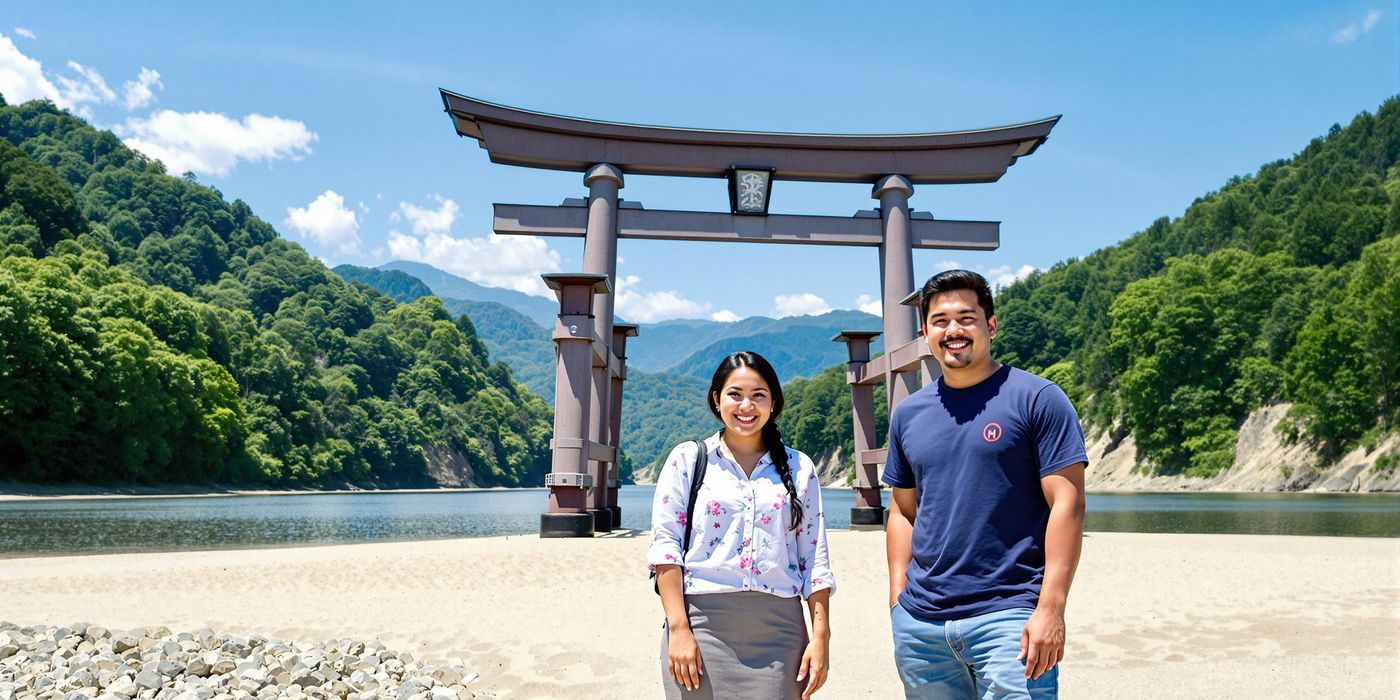
Our first stop was Oyunohara, the original site of the Kumano Hongu Taisha. Stepping onto this sandbank at the confluence of the Kumano and Otonashi Rivers felt like stepping back in time. It's hard to imagine that this serene location was once the heart of the Kumano pilgrimage, home to a grand shrine complex. Though a flood in 1889 swept away much of the original structures, the spirit of Oyunohara remains palpable. Today, Oyunohara is marked by the Otorii, the largest torii gate in the world, standing at an impressive 33.9 meters tall. As we walked beneath this imposing gateway, I couldn't help but feel a sense of awe and reverence, a reminder of the division between the secular and spiritual worlds. Miguel was particularly impressed, snapping photos from every angle, trying to capture the sheer scale of the structure. Elena and I simply stood in silence, letting the moment wash over us.

Discover the spiritual essence of Japan at Oyunohara, a breathtaking Shinto shrine and historical landmark nestled in the heart of Wakayama's Kumano Kodo.
The journey is the destination, and the destination is a deeper understanding of oneself and the world.
Next on our itinerary was the Kumano Hongu Taisha itself. As we approached the shrine, I was struck by its serene beauty and understated elegance. Unlike some of the more ornate shrines we've visited, Kumano Hongu Taisha exudes a sense of tranquility and harmony with nature. The shrine is surrounded by towering cedar trees, their presence adding to the atmosphere of reverence. We climbed the 158 stone steps to the main building, a symbolic ascent towards the divine. Inside, the air was thick with the scent of incense, and the soft murmur of prayers filled the hall. I took a moment to reflect on the countless pilgrims who have walked this path before us, their hopes, dreams, and fears echoing through the centuries. Kumano Hongu Taisha enshrines not only its own deity but also those of the other two Kumano shrines and the Sun Goddess Amaterasu. It serves as the head shrine for over 3,000 Kumano shrines throughout Japan, a testament to its significance. We learned that the shrine was originally located at Oyunohara but was moved to its current location after the devastating floods of 1889. The austere pavilions are an outstanding example of Japanese Shrine architecture. I found it fascinating that the Kumano Hongu Taisha is a mixture between Kasuga and Taisha styles, and it has a sacred corridor where pilgrims would meditate and pray.
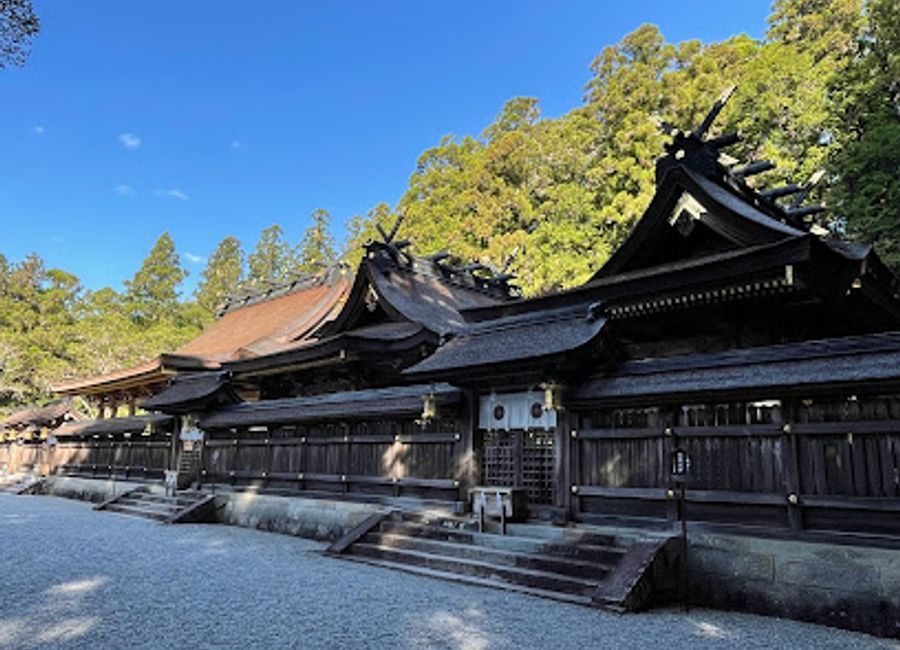
Explore the enchanting Kumano Hongu Taisha, a historic Shinto shrine set amidst nature's beauty, pivotal to Japan's spiritual journey.
After paying our respects at the shrine, we enjoyed a delightful lunch at Fushiogami Teahouse. The teahouse is known for its panoramic views of the Kumano Hongu Taisha, and as we savored our meal, we couldn't help but feel grateful for the opportunity to experience this sacred place. Legend says that around 1000 years ago, a female poet, Izumi Shikibu, was on pilgrimage and started to menstruate at Fushiogami-oji, and because blood was considered impure, she was not allowed to worship. This story highlights the importance of purification in Japanese religion and the challenges faced by women on the pilgrimage route. As we sat there, sipping tea and enjoying the peaceful atmosphere, I felt a deep connection to the history and traditions of Kumano Kodo. It was a moment of quiet contemplation, a chance to reflect on the journey so far and the path that lay ahead.
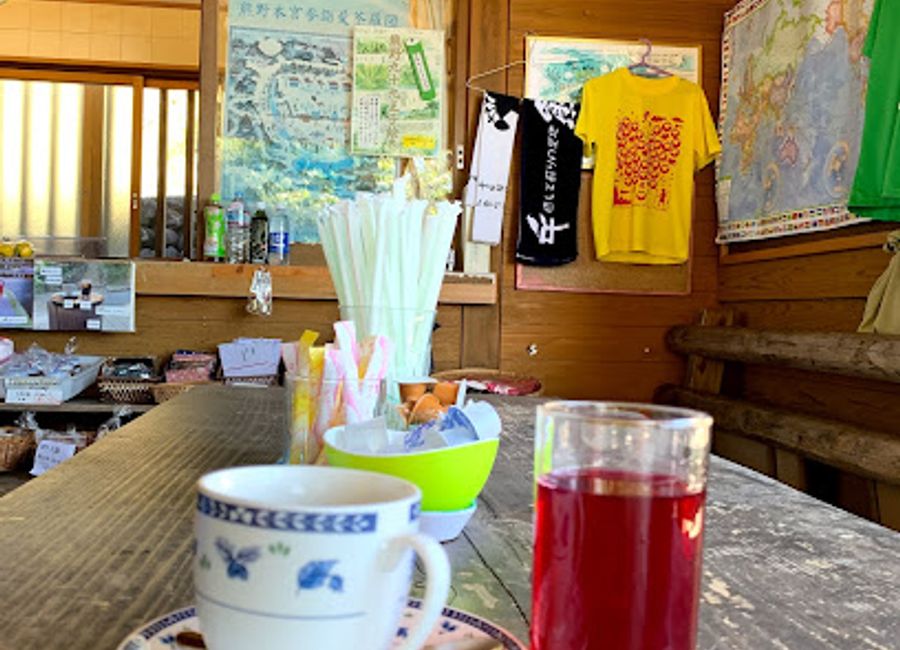
Experience tranquility at Fushiogami Teahouse in Tanabe - your serene escape into traditional Japanese tea culture amidst stunning natural beauty.
Our final adventure for the day was a trek along the Kumano Kodo Nakahechi Daimon-saka Pilgrim Route. This ancient path, part of the UNESCO World Heritage Site, is one of the most well-preserved sections of the Kumano Kodo. The trail winds through a lush forest of towering cedar and cypress trees, their gnarled roots clinging to the earth. Sunlight filtered through the canopy, creating an ethereal glow that illuminated the path ahead. As we walked, I couldn't help but feel a sense of awe and wonder at the natural beauty that surrounded us. The air was fresh and clean, and the only sounds were the rustling of leaves and the chirping of birds. It was a welcome escape from the hustle and bustle of modern life, a chance to reconnect with nature and find inner peace. The Daimon-zaka is an impressive cobblestone staircase slope which runs from the base of the valley to Kumano Nachi Taisha, Seiganto-ji Temple and Nachi waterfall. It is an excellent short walk on the Kumano Kodo pilgrimage route. The actual stone staircase is about 600 meters long with 267 stairs.
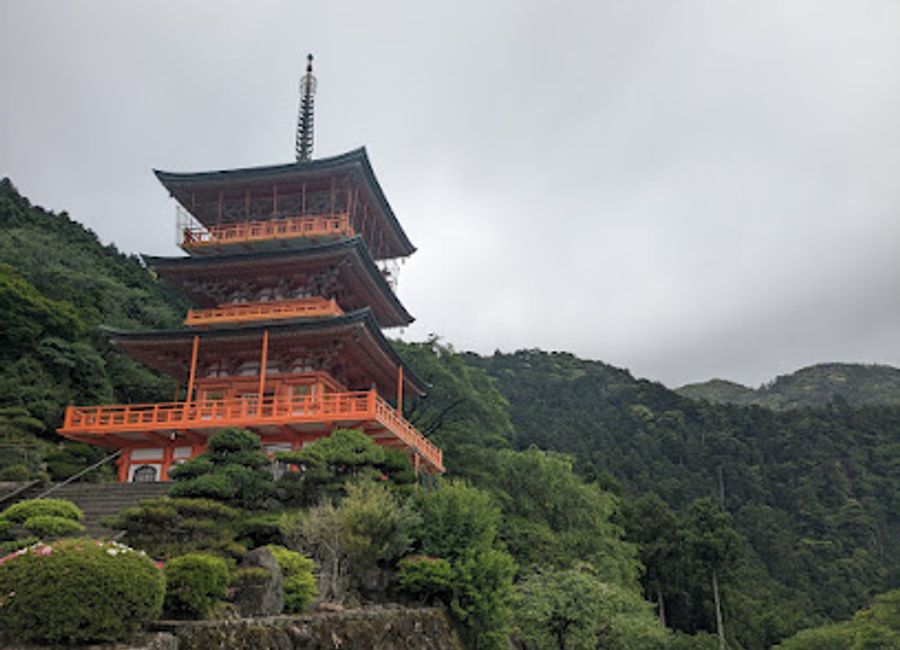
Discover the Kumano Kodo Nakahechi Daimon-saka Pilgrim Route: a UNESCO World Heritage site blending history, spirituality, and breathtaking landscapes.
Tonight, we decided to try HANGOVER for dinner. It was quite a change of pace from the traditional Japanese cuisine we've been enjoying, but Miguel was craving a burger, and Elena and I were happy to indulge him. The restaurant had a lively atmosphere, and the food was surprisingly good. It was a fun and relaxed way to end a day filled with history and spirituality.

Discover HANGOVER in Tanabe: Where American Comfort Food Meets Japanese Hospitality for an Unforgettable Dining Experience.
Before heading back to our accommodation, we made a quick stop at KUMANOYASAI CAFE for a nightcap. This cozy café is known for its healthy homemade meals and locally grown produce. We enjoyed a quiet drink, reflecting on the day's experiences and savoring the tranquility of the Kumano countryside.
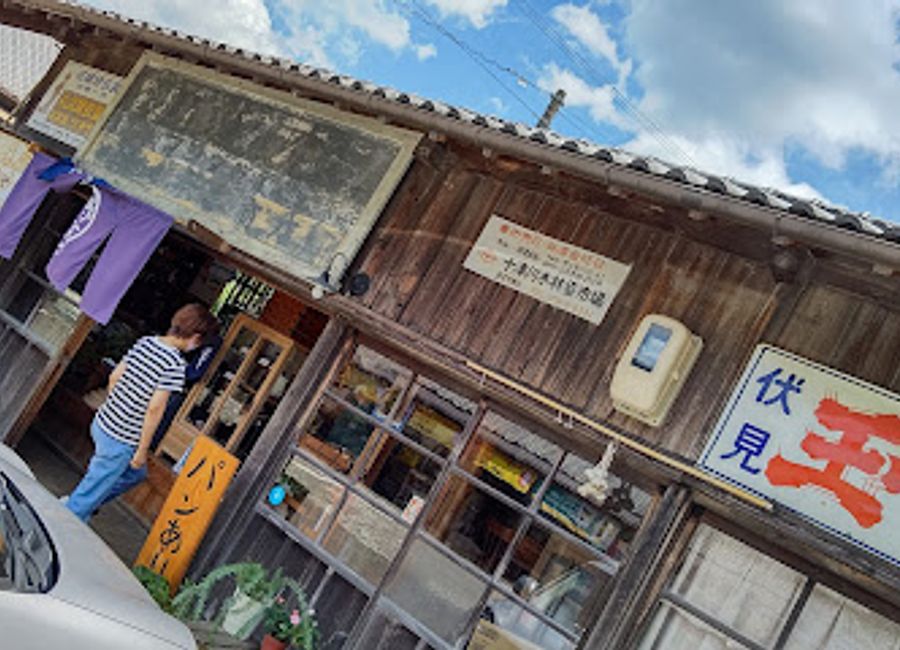
Discover the flavors of Wakayama at Kumonoyasai Cafe, where fresh ingredients meet a cozy atmosphere for a delightful dining experience.
As I write this, I'm filled with a sense of gratitude for the opportunity to experience the magic of Kumano Kodo. It's a place that touches the soul, a place where history, nature, and spirituality intertwine. Tomorrow, we'll continue our journey, exploring more of this sacred landscape. Our itinerary includes visits to Tsugizakura-Oji and Tsubo-yu, promising another day of discovery and reflection. I'm particularly excited about Tsubo-yu, a UNESCO World Heritage Site, where pilgrims would perform purification rituals in the hot spring water. It's a unique and fascinating tradition, and I'm eager to learn more about it.
The Kumano Kodo is more than just a hiking trail; it's a journey through time, a connection to the past, and a path to self-discovery. It's an experience that I'll cherish forever, and I'm grateful to be sharing it with my family. As we continue our pilgrimage, I know that we'll continue to be inspired by the beauty, history, and spirituality of this sacred place. It is a challenging multi-day walk so being fit and prepared is important. Walks can be shortened or skipped with the use of public transport. We are so happy we decided to take this trip with the family.
The Kumano Kodo is NOT a route suitable for everyone. It can be classified as Hiking on the hiking difficulty scale. The main difficulties of the route are linked to the differences in altitude, the climatic conditions and the reduced amount of daylight hours, at least in certain periods of the year. But the reward is well worth the effort ! The walks were beautiful, obviously of great historical significance, and challenging enough to have felt a sense of achievement in completion each day. Coupled with arriving at onsen to bathe and enjoy wonderful food and hospitality each night, this was for me a great combination. It has been a wonderful experience that I hope everyone can have the opportunity to experience.
I'm falling asleep now thinking about our next day, and the wonderful adventures that await us!

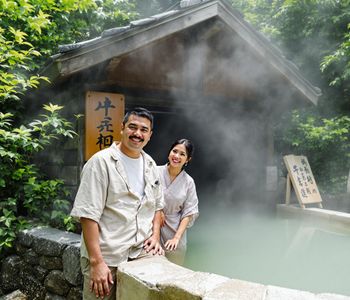

Join us on a family journey through Japan's Kumano Kodo, exploring sacred trails, rich culture, and serene landscapes in a 10-day adventure.
Meet this Featured Explorer

-
 Occupation:
Data Analyst at a local manufacturing company
Occupation:
Data Analyst at a local manufacturing company
-
 Country:
Canada
Country:
Canada
-
 Age:
51
Age:
51
Mabuhay! I'm Rogelio Santos, a Filipino-Canadian travel blogger with a passion for cultural immersion and family adventures. Born in Laoag, Philippines, and now residing in Stratford, Canada, I blend my love for local history, culinary arts, and photography to craft engaging travel stories. Join me as I explore the world, one unique experience at a time, always with my family by my side. Whether you're a fellow Filipino expat, a family seeking enriching travel, or simply someone who appreciates authentic cultural encounters, I hope my stories inspire you to embark on your own journeys of discovery.
- Genealogy
- Local history
- Bird watching
- Culinary arts
- Photography
Find Similar Travel Diaries
Explore locations from this diary
-
Jokiin
Discover Koya's serene charm at Jokiin, a welcoming guest house perfect for exploring the city's historic landmarks and natural beauty.
-
Oyunohara
Discover the spiritual essence of Japan at Oyunohara, a breathtaking Shinto shrine and historical landmark nestled in the heart of Wakayama's Kumano Kodo.
-
Kumano Hongu Taisha
Explore the enchanting Kumano Hongu Taisha, a historic Shinto shrine set amidst nature's beauty, pivotal to Japan's spiritual journey.
-
Kumano Kodo - Nakahechi Daimon-saka Pilgrim Route
Discover the Kumano Kodo Nakahechi Daimon-saka Pilgrim Route: a UNESCO World Heritage site blending history, spirituality, and breathtaking landscapes.
-
Kumano Kodo Omotenashi-Kan
Discover Kumano Kodo Omotenashi-Kan: A charming cafe offering delicious coffee and local cuisine along Japan's historic pilgrimage route.
-
Fushiogami Teahouse
Experience tranquility at Fushiogami Teahouse in Tanabe - your serene escape into traditional Japanese tea culture amidst stunning natural beauty.
-
HANGOVER
Discover HANGOVER in Tanabe: Where American Comfort Food Meets Japanese Hospitality for an Unforgettable Dining Experience.
-
KUMANOYASAI CAFE
Discover the flavors of Wakayama at Kumonoyasai Cafe, where fresh ingredients meet a cozy atmosphere for a delightful dining experience.