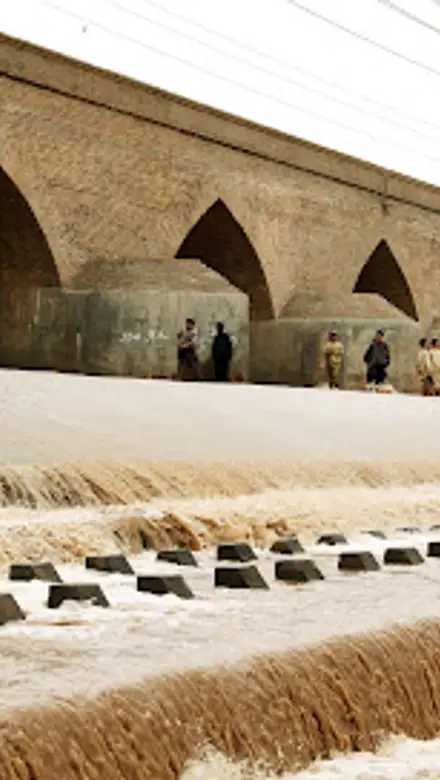
Malan Bridge, Herat Travel Guide
Free Guide: Discover the timeless beauty of Malan Bridge in Herat, a historic marvel connecting cultures and eras along the ancient Silk Road.


A brief summary of Malan Bridge
Discover the timeless beauty of Malan Bridge in Herat, a historic marvel connecting cultures and eras along the ancient Silk Road.
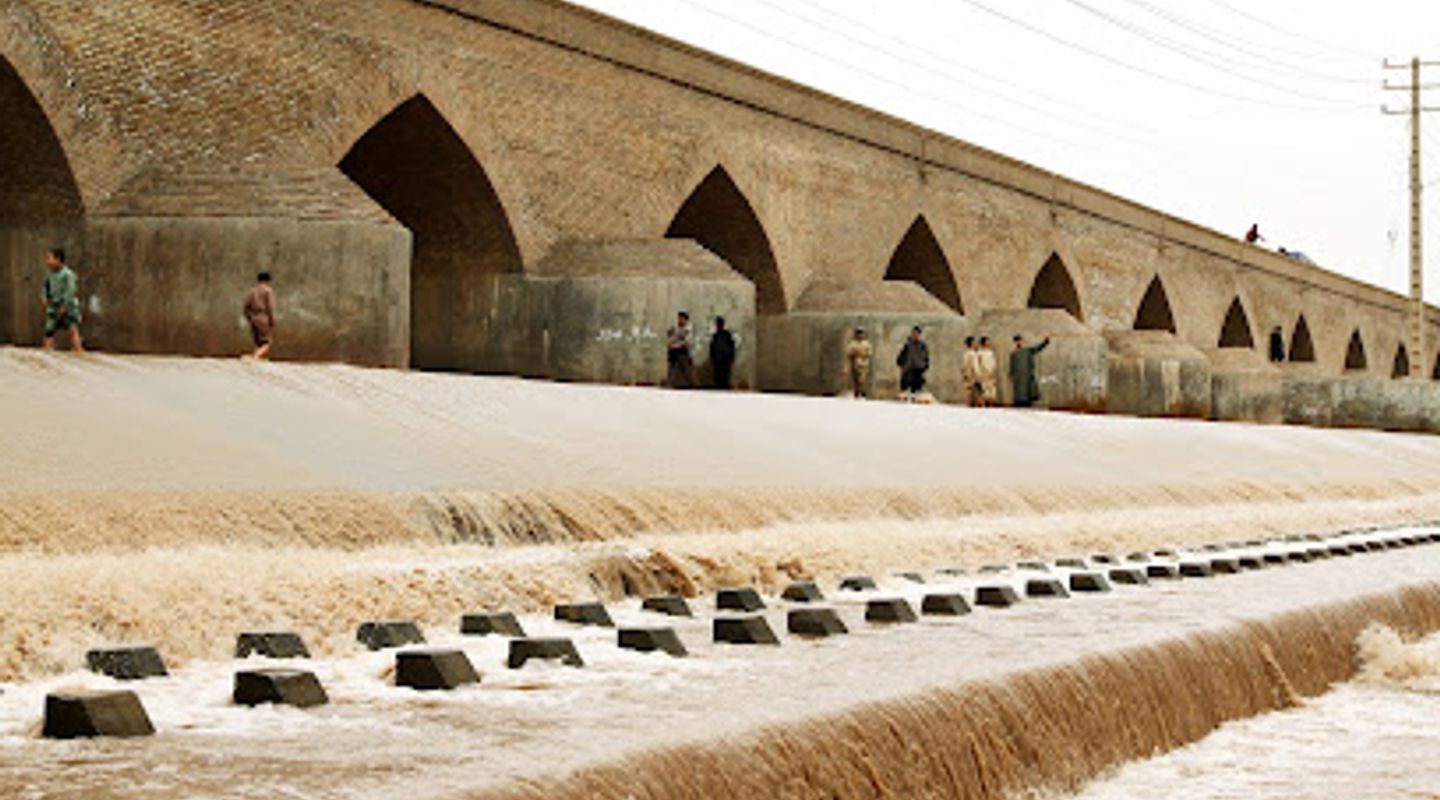
Malan Bridge, also known as Pul-i-Malan, is an ancient bridge located 12 kilometers south of Herat, Afghanistan [5, 6]. Believed to have been built around 1110 AD during the Seljuk dynasty, it has served as a vital link for trade and travel for centuries, connecting the Injil and Guzara districts [5, 6, 9].
- Address
- 75PR+HGW، Unnamed Road, Herat, Afghanistan
- Phone
Getting there
Taxi
Discover more about Malan Bridge
Overview
Malan Bridge, historically known as Pul-i-Malan, stands as a proud emblem of Herat's rich past, gracefully arching over the Hari River [5]. Located approximately 12 kilometers (7.5 miles) south of Herat city center, this ancient bridge connects the Injil and Guzara districts, serving not only as a functional structure but also as a poignant reminder of the region's historical and architectural significance [5, 6, 9].Constructed around 1110 AD during the reign of Seljuk Sultan Ahmad Sanjar, Malan Bridge has been a vital artery for trade and travel for centuries [5, 6]. Its strategic importance stemmed from its location on the caravan route connecting Sistan, Kandahar, and India, facilitating the movement of goods and people across the region [5]. The bridge has witnessed the rise and fall of empires, the ebb and flow of cultures, and the enduring spirit of the Afghan people [5].Legend intertwines with history in the tales surrounding Malan Bridge's creation. One popular story attributes its construction to two mythical princesses, Bibi Nur and Bibi Hur, followers of Zoroastrianism [5, 6, 12]. According to the legend, the sisters ingeniously mixed eggshells with clay, creating a remarkably strong and resilient structure that has defied the ravages of time [5, 6, 15]. Whether this legend holds truth or not, the bridge's construction showcases the engineering prowess of the medieval period [5].The architectural design of Malan Bridge is a testament to the engineering skills of the medieval period [5]. Originally featuring 17 arches, the bridge now boasts 22, a result of subsequent reconstructions and expansions [5, 6, 9]. Spanning 230 meters (750 feet) in length, 8 meters (26 feet) in width, and 10 meters (33 feet) in height, the bridge is constructed from baked bricks and concrete, showcasing a blend of durability and aesthetic appeal [5, 6, 9].Throughout its long history, Malan Bridge has faced numerous challenges, including floods, wars, and neglect [5, 9]. In the late 19th century, it was reported to be in a state of decay, and by 1972, a portion of the bridge had been washed away, rendering it impassable [5, 6]. The bridge was partially destroyed during the Soviet–Afghan War, with two guard towers crumbled and 5 arches demolished [6, 9]. However, the bridge's significance and the determination to preserve its legacy led to its reconstruction in 1995 by the Danish Committee for Aid to Afghan Refugees [6, 9]. The restoration efforts not only repaired the damage but also strengthened the bridge's foundation and roadway, ensuring its continued survival for generations to come [9].Today, Malan Bridge stands as a symbol of resilience and a testament to the enduring spirit of Herat [5, 9]. Visitors can stroll across its ancient stones, taking in the panoramic views of the Hari River and the surrounding landscape [5]. The bridge offers a tranquil escape from the bustling city, providing a space for reflection and appreciation of the region's rich cultural heritage [5, 8].
Evendo Review Centre
 Google
Guest reviews
Explore Malan Bridge on the map
A handpicked selection of must-see spots near Malan Bridge, mapped for you.
Get your free copy of our complete guide to Malan Bridge, delivered straight to you.
Everything on this page, from opening hours and how to get there to Eve’s tips and the best time to go, in one PDF you can read offline, print or share.
Already have an account? Sign in
Your Malan Bridge guide is ready.
We'll send it to · Not you? Sign out

Getting your guide ready…
We are putting together a fresh copy of the Malan Bridge guide. This can take up to a minute.
This can take a few moments. If your browser asks, choose Allow so the download can start. You'll find the guide in your Downloads folder.
Nothing happened? Download it again
Sorry, the guide is taking longer than usual. Please try again in a minute, or get it by email instead.
Other nearby places you may find interesting
The closest places of the same kind, if this one is not quite what you had in mind.
-
-
-
-
-


Swipe for more places
More to explore near Malan Bridge

 Best experiences near Malan Bridge
 Best hotels near Malan Bridge
 Best landmarks near Malan Bridge
 Best attractions near Malan Bridge
 Best shops near Malan Bridge
 Best restaurants near Malan Bridge
 Best bars near Malan Bridge
Do you manage this location?
Take control to get all the benefits, like improved information, better appearance, and stronger visibility across AI-powered discovery.
Explore more

Explore more of Herat
Discover Herat, Afghanistan's cultural heart, where ancient history meets vibrant arts, and stunning architecture tells tales of a rich Persian heritage.
Explore Herat
Explore more of Afghanistan
Discover Afghanistan's rich history, stunning landscapes, and diverse cultures. From ancient cities to breathtaking nature, this Central Asian gem offers a unique travel experience.
Explore Afghanistan