

Pirámide de Mayo, Pampas Travel Guide
A historic monument in Buenos Aires' Plaza de Mayo, commemorating Argentina's independence and serving as a symbol of human rights.
The Pirámide de Mayo, situated in the heart of Plaza de Mayo, is Buenos Aires' oldest national monument. Erected in 1811 to commemorate the first anniversary of the May Revolution, it represents Argentina's journey toward independence from Spanish colonial rule.
A brief summary to Pirámide de Mayo
- Plaza de Mayo, Buenos Aires, Monserrat, Comuna 1, Buenos Aires, C1064, AR
- Click to display

Know before you go
Hi, I'm Eve. Here are a few practical things to know before exploring Pirámide de Mayo.
- Visit during the day for the best lighting for photos and to avoid crowds.
- Be aware of ongoing demonstrations, as the Plaza de Mayo is a popular meeting place for political rallies.
- Join the Madres de Plaza de Mayo as they march around the pyramid every Thursday at 3:30 pm.
Do you manage this location?
Take control to get all the benefits, like improved information, better appearance, and stronger visibility across AI-powered discovery. Learn more about listing your business on Evendo
Activate your presenceOther nearby places you may find interesting
The closest places of the same kind, if this one is not quite what you had in mind.


Explore Pirámide de Mayo on the Map
A handpicked selection of must-see spots near Pirámide de Mayo, mapped for you.
Unlock the Best of Pirámide de Mayo
Buy tickets
-
No tickets available
Book tours with entry


Book tours without entry

Getting There
-
Walking
The Pirámide de Mayo is located in Plaza de Mayo, in the Monserrat neighborhood. From nearby landmarks like the Casa Rosada or the Metropolitan Cathedral, it is easily accessible on foot. The pyramid is in the center of the Plaza.
-
Public Transport
Plaza de Mayo is well-served by public transportation. Several Subte (subway) lines have stations near the plaza, including Catedral Station (Line D), Plaza de Mayo Station (Line A), and Bolivar Station (Line E). Numerous bus lines (colectivos) also stop nearby. A single ride on the Subte or bus costs approximately AR$757 for registered SUBE users. A SUBE card is needed to use public transport.
-
Taxi
Taxis are readily available in Buenos Aires. A short taxi ride to Plaza de Mayo from a nearby location in the city center will likely cost between ARS 5,500 and ARS 11,000. Fares increase by 20% at night. Be sure the driver uses the meter.
Discover more about Pirámide de Mayo













Your all‑in‑one travel companion app
Explore expert travel guides, compare and book tours, experiences, hotels, and more—all from the palm of your hand. Download now for seamless trip planning wherever your wanderlust takes you.


Explore More of Pampas
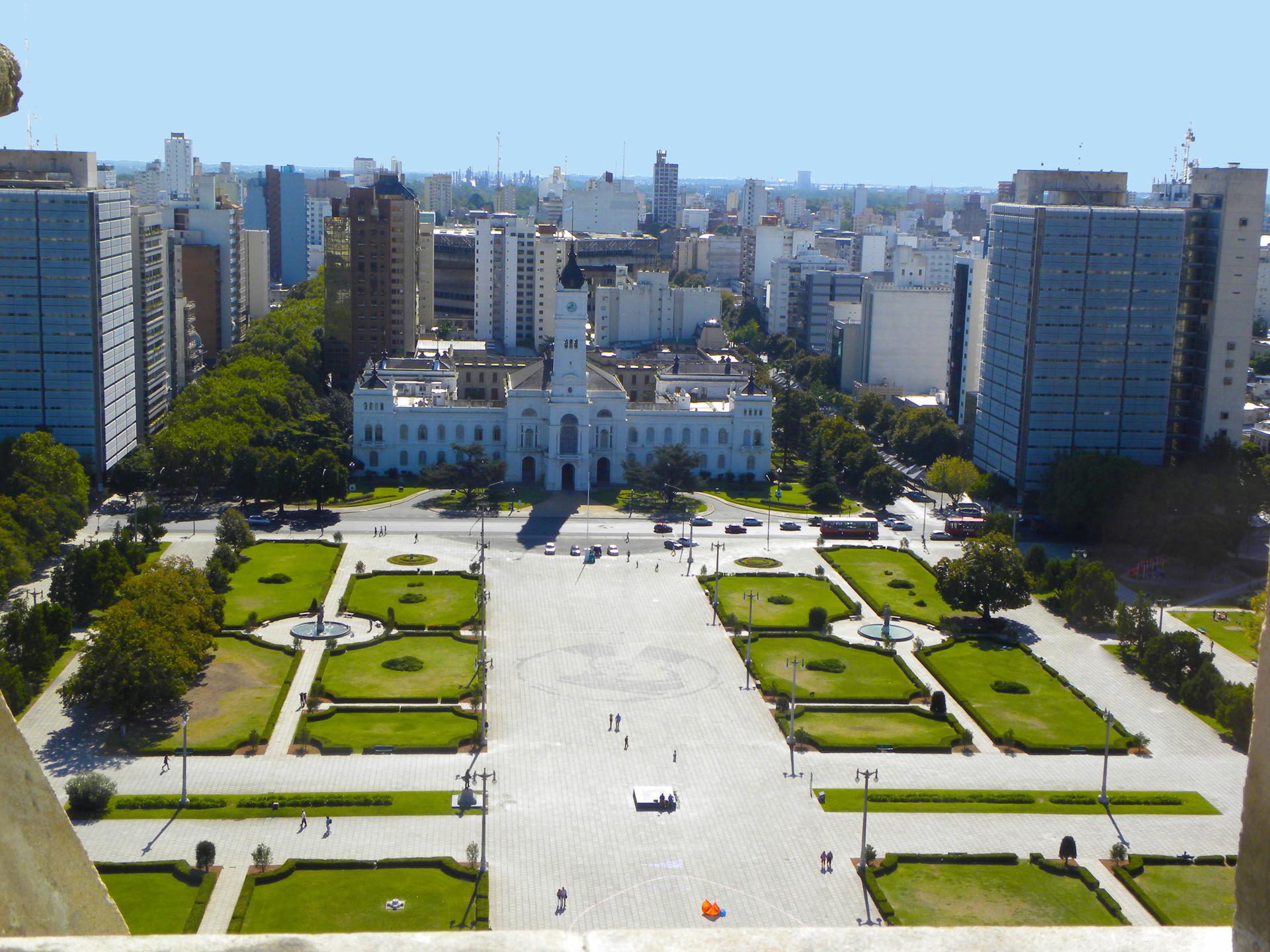
Looking beyond Pirámide de Mayo? Discover Pampas for broader travel guides, local hot-spots, and regional highlights.
Explore Pampas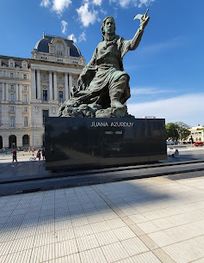
Explore the Monumento a Juana Azurduy in Buenos Aires, a historic landmark honoring Argentina's fierce independence heroine amidst vibrant city life.

Discover the rich history and vibrant culture at Plaza de Mayo, Buenos Aires' iconic historical landmark and social hub.
