

Siegmundstor Travel Guide
Free Guide: Discover Salzburg's oldest road tunnel, a historic gateway adorned with Baroque art, connecting the Altstadt with Riedenburg, Maxglan and Leopoldskron.


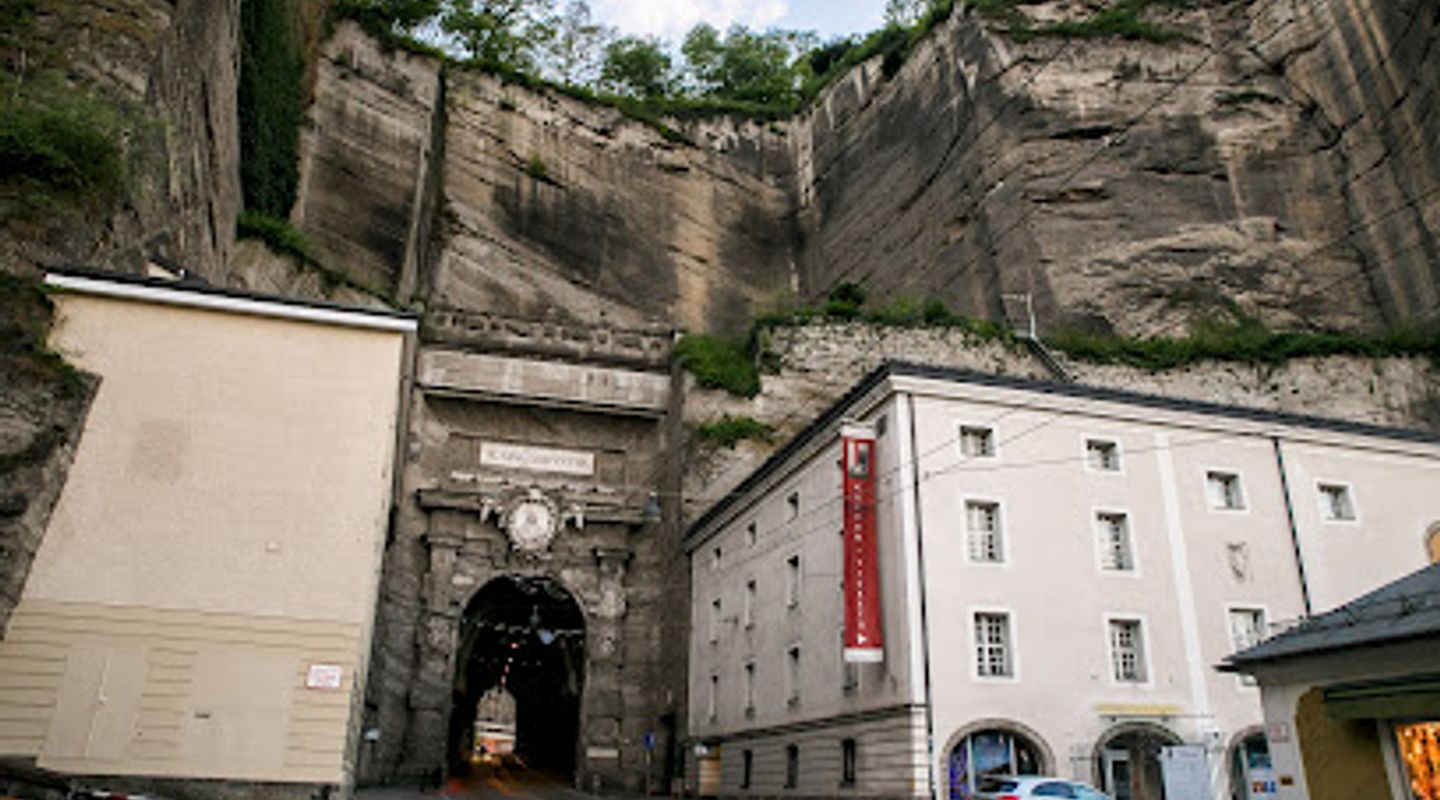
A brief summary of Siegmundstor
Discover Salzburg's oldest road tunnel, a historic gateway adorned with Baroque art, connecting the Altstadt with Riedenburg, Maxglan and Leopoldskron.
The Siegmundstor, also known as the Neutor, is Austria's oldest road tunnel, connecting Salzburg's Altstadt with Riedenburg. Built in the 18th century, it features Baroque art and is a vital transport route, offering a glimpse into Salzburg's history and engineering ingenuity.
Opening hours
- Every dayOpen 24 hours
Opening hours as listed on the venue’s Google Business Profile. Hours can change for services and special events, so check with the venue before you go.
- Address
- Mönchsberg 19A, 5020 Salzburg
Getting there
Walking
Public Transport
Driving
Discover more about Siegmundstor
Overview
The Siegmundstor, often called Neutor by locals, is more than just a tunnel; it's a journey through time and a symbol of Salzburg's ingenuity. Constructed between 1764 and 1767 during the reign of Prince-Archbishop Sigismund von Schrattenbach, this 135-meter-long tunnel was a groundbreaking project, marking it as Austria's oldest road tunnel. Its creation was driven by the need to connect Salzburg's historic Altstadt with the districts of Riedenburg, Maxglan, and Leopoldskron, facilitating trade and transportation.Approaching the Siegmundstor from the Altstadt, visitors are greeted by a grand entrance featuring a bas-relief portrait of Prince-Archbishop Schrattenbach. Above the portrait, a Latin inscription, "Te saxa loquuntur" ("The stones speak of you"), pays homage to the Prince-Archbishop's vision and legacy. The tunnel itself is ingeniously designed with a gentle incline, allowing for natural drainage and the penetration of natural light, creating an airy and inviting passage. On the Riedenburg side, the tunnel's western entrance showcases a statue of St. Sigismund in antique armor, complete with war trophies and the coat of arms of Prince-Archbishop Schrattenbach.Throughout its history, the Siegmundstor has adapted to the changing needs of Salzburg. In 1916, a tramline was laid through the tunnel, followed by a trolleybus route in 1940. Today, the tunnel remains a vital transportation artery, accommodating both car traffic and trolleybus lines. To preserve the tunnel's structure and decorations, a parallel tunnel for pedestrians and cyclists was constructed to the north in 1968/69. Despite its functionality, the Siegmundstor retains its artistic and historical significance.
Evendo Review Centre
 Google
Guest reviews
Explore Siegmundstor on the map
A handpicked selection of must-see spots near Siegmundstor, mapped for you.
Get your free copy of our complete guide to Siegmundstor, delivered straight to you.
Everything on this page, from opening hours and how to get there to Eve’s tips and the best time to go, in one PDF you can read offline, print or share.
Already have an account? Sign in
Your Siegmundstor guide is ready.
We'll send it to · Not you? Sign out

Getting your guide ready…
We are putting together a fresh copy of the Siegmundstor guide. This can take up to a minute.
This can take a few moments. If your browser asks, choose Allow so the download can start. You'll find the guide in your Downloads folder.
Nothing happened? Download it again
Sorry, the guide is taking longer than usual. Please try again in a minute, or get it by email instead.
Unlock the best of Siegmundstor
Skip-the-line tickets, guided tours with entry, and walking tours of the area, booked in a few clicks.

Other nearby places you may find interesting
The closest places of the same kind, if this one is not quite what you had in mind.
-
-

-
-
-


Swipe for more places
More to explore near Siegmundstor

 Best experiences near Siegmundstor
 Best hotels near Siegmundstor
 Best landmarks near Siegmundstor
 Best attractions near Siegmundstor
 Best shops near Siegmundstor
 Best restaurants near Siegmundstor
 Best bars near Siegmundstor
Do you manage this location?
Take control to get all the benefits, like improved information, better appearance, and stronger visibility across AI-powered discovery.
Explore more
Explore more of Pinzgau
Discover the breathtaking beauty and outdoor adventures of Pinzgau, Austria, a year-round destination offering skiing, hiking, and rich cultural experiences.
Explore Pinzgau
Explore more of Austria
Discover Austria's blend of alpine landscapes, rich cultural heritage, and culinary delights, from Vienna's historic charm to Tyrol's dramatic beauty.
Explore Austria
