

Favoriten (Vienna) Travel Guide - Free
Explore Favoriten in Vienna with Evendo's free guide. Find the best shops, historic streets, restaurants, and gems on web or mobile.


Explore Favoriten in Vienna for lively markets, multicultural dining, railway history, green spaces, Oberlaa thermal baths and the Böhmischer Prater.
A District Shaped by Arrival
Favoriten occupies Vienna’s broad southern tenth district, stretching from the railway landscape around Hauptbahnhof towards the vineyards, thermal springs and open hills of Oberlaa. It is one of the city’s most populous districts, but its character changes noticeably from north to south. Around Favoritenstraße, Reumannplatz and Viktor-Adler-Markt, apartment blocks, market stalls, cafés and small shops create an urban neighbourhood with a strong everyday rhythm. Further south, Laaer Berg and Oberlaa bring wooded paths, allotments, vineyards and Vienna’s thermal-bath culture into the district.Read more about Favoriten
Markets, Brickwork and Public Life
Open Space and Contemporary Vienna
Best attractions in Favoriten
Favoriten’s attractions are distributed across a large district rather than concentrated in one historic centre. Viktor-Adler-Markt provides an immediate introduction to local food culture and everyday street life, while Favoritenstraße links the market quarter with Reumannplatz and the monumental Amalienbad. The former Ankerbrotfabrik, a substantial brick industrial complex, now hosts cultural and creative activities in its converted spaces. Around Laaer Berg, the Böhmischer Prater offers a traditional amusement park atmosphere distinct from the grander Prater across the Danube, and nearby green paths lead towards the district’s southern open spaces. Oberlaa adds village streets, vineyards and Therme Wien, whose thermal bathing facilities are one of Favoriten’s most established leisure attractions. Wienerberg provides woodland, meadows and ponds within the urban area, while the new architecture and public spaces around Hauptbahnhof and Sonnwendviertel reveal the district’s contemporary transformation.
-
Museum
Wasserturm Favoriten
Discover Vienna's historic Wasserturm Favoriten: Industrial architecture, panoramic views, and a refreshing water park experience in a unique cultural space.
5 min drive · 1.5 km from neighbourhood centre
-
Tourist attraction
Kurteich
Escape to the serene Kurteich, a picturesque pond in Vienna's Favoriten district, offering tranquility and natural beauty within Kurpark Oberlaa.
11 min drive · 3.6 km from neighbourhood centre
-
Tourist attraction
Brunnengarten
Escape the city buzz in Brunnengarten, a tranquil Viennese garden oasis with lush greenery, charming fountains, and a serene atmosphere.
11 min drive · 3.7 km from neighbourhood centre
-
Tourist attraction
Teichkette 3
Discover a serene urban oasis in Vienna's Favoriten district. Teichkette 3 offers tranquil ponds, lush greenery, and a peaceful escape from city life.
10 min drive · 3.4 km from neighbourhood centre


Best landmarks in Favoriten
Favoriten’s landmarks tell the story of a district built through public services, industry, transport and suburban growth. Amalienbad on Reumannplatz is a major municipal-era building, remembered for its interwar ambition to combine bathing, sport and public welfare in an architecturally prominent setting. The former Ankerbrotfabrik on Absberggasse preserves the scale and brick character of the district’s industrial past, even as its spaces have acquired cultural and creative uses. The Favoriten Water Tower, associated with Vienna’s historic water infrastructure, stands on the Wienerberg as a particularly recognisable local structure. Hauptbahnhof represents a newer chapter: its platforms, concourses and surrounding Sonnwendviertel mark the replacement of the old Südbahnhof railway landscape with a major transport and urban-development project. In the south, Oberlaa’s village fabric and vineyards provide a physical reminder that Favoriten extends beyond dense metropolitan streets.
-
Park
Kurpark Oberlaa
Discover themed gardens, recreational activities, and tranquil escapes at Vienna's expansive Kurpark Oberlaa, a green oasis for all ages.
9 min drive · 3.1 km from neighbourhood centre
-
Park
Parkanlage Löwygrube
Discover a revitalized green space in Vienna's Favoriten: Parkanlage Löwygrube, offering recreation, panoramic views, and a glimpse into the city's industrial past.
9 min drive · 3.1 km from neighbourhood centre
-
Historical landmark
Wasserturm Favoriten
Discover Vienna's historic Wasserturm Favoriten, a unique cultural space with panoramic city views and a refreshing water park.
5 min drive · 1.5 km from neighbourhood centre
-
Tourist attraction
Maramureș-Tor
Discover Romanian heritage in Vienna's Favoriten district at Maramureș-Tor, a cultural gateway to the Maramureș region.
9 min drive · 3.0 km from neighbourhood centre


Explore Favoriten on the map
A handpicked selection of must-see spots in Favoriten, mapped for you.
Best hotels in Favoriten
Best restaurants in Favoriten
Favoriten’s food scene reflects its working-class history, large residential population and long-standing international connections. The area around Viktor-Adler-Markt and Favoritenstraße is particularly useful for exploring produce stalls, bakeries, cafés, delicatessen counters and casual meals, while Quellenstraße is known for a broad mix of Turkish, Balkan, Middle Eastern and Austrian influences. Traditional Viennese dishes appear alongside kebabs, grilled meats, filled pastries and other inexpensive everyday foods, creating a dining culture more local and unceremonious than the restaurant quarters around the Ring. Independent cafés and family-run eateries are interspersed with newer businesses near Hauptbahnhof and Sonnwendviertel. In Oberlaa, food and drink can be combined with a visit to the spa or a walk through the southern landscape, although the area has a quieter village character than northern Favoriten. Menus and opening patterns vary, so the market streets are best approached as a browsing and grazing district rather than a formal dining destination.
-
Restaurant
URBAN´s Lounge
Experience the best of American, Italian & Middle Eastern cuisine at URBAN's Lounge in Vienna – where every meal is a celebration.
10 min drive · 3.3 km from neighbourhood centre
-
Restaurant
Der Ringsmuth
Experience authentic Austrian cuisine with modern flair at Der Ringsmuth in Vienna's charming Favoriten district.
10 min drive · 3.3 km from neighbourhood centre
-
Turkish
Kent Restaurant Favoriten
Experience the vibrant flavors of authentic Turkish cuisine at Kent Restaurant Favoriten in Vienna - A culinary gem for food lovers.
8 min drive · 2.7 km from neighbourhood centre
-
Restaurant
Restaurant Kaiser´s
Experience authentic Austrian flavors at Restaurant Kaiser´s - a culinary gem in the heart of Vienna.
10 min drive · 3.3 km from neighbourhood centre


Best bars in Favoriten
Favoriten is not one of Vienna’s principal late-night club districts, but its evening life is substantial and varied. Traditional cafés, neighbourhood pubs and casual bars cluster around Favoritenstraße, Reumannplatz and the surrounding residential streets, with a more contemporary selection developing near Hauptbahnhof and Sonnwendviertel. Some restaurants and cafés remain social gathering places after dinner, while cultural programming at former industrial sites such as the Ankerbrotfabrik can add concerts, performances or evening events when scheduled. The Böhmischer Prater has a seasonal leisure atmosphere rather than a central-city club scene, and Oberlaa generally becomes quiet after its daytime and spa activities. Visitors seeking a relaxed local evening should follow the district’s cafés, pubs and programmed cultural venues; those looking for concentrated nightclub choices will find a broader selection in other parts of Vienna.
-
Bar
MABEL'S No90
Discover MABEL'S No90, a lively bar in Vienna's Favoriten district, offering a diverse drink menu and a vibrant atmosphere for all visitors.
5 min drive · 1.7 km from neighbourhood centre
-
Irish pub
Beer Mama
Experience the warmth of Irish hospitality at Beer Mama, Vienna's lively pub featuring great food, diverse beers, and sports entertainment.
8 min drive · 2.7 km from neighbourhood centre
-
Pub
Bierochs-Bierkeller
Discover the heart of Viennese culture at Bierochs-Bierkeller, where traditional flavors and a lively atmosphere await.
9 min drive · 3.0 km from neighbourhood centre
-
Wine bar
Lilly´s Weinstube
Experience the best of Austrian wines at Lilly's Weinstube, a cozy wine bar in Vienna, perfect for unwinding and enjoying local flavors.
8 min drive · 2.6 km from neighbourhood centre


Best nightclubs in Favoriten
Favoriten is not one of Vienna’s principal late-night club districts, but its evening life is substantial and varied. Traditional cafés, neighbourhood pubs and casual bars cluster around Favoritenstraße, Reumannplatz and the surrounding residential streets, with a more contemporary selection developing near Hauptbahnhof and Sonnwendviertel. Some restaurants and cafés remain social gathering places after dinner, while cultural programming at former industrial sites such as the Ankerbrotfabrik can add concerts, performances or evening events when scheduled. The Böhmischer Prater has a seasonal leisure atmosphere rather than a central-city club scene, and Oberlaa generally becomes quiet after its daytime and spa activities. Visitors seeking a relaxed local evening should follow the district’s cafés, pubs and programmed cultural venues; those looking for concentrated nightclub choices will find a broader selection in other parts of Vienna.
-
Disco club
U4 Vienna
Discover the vibrant nightlife at U4 Vienna, a premier disco club offering unforgettable parties, diverse music, and a lively atmosphere for all.
11 min drive · 3.8 km from neighbourhood centre
-
Disco club
Cabaret Fledermaus
Discover the electrifying nightlife of Vienna at Cabaret Fledermaus, where vibrant performances and a lively atmosphere await every night.
17 min drive · 5.8 km from neighbourhood centre
-
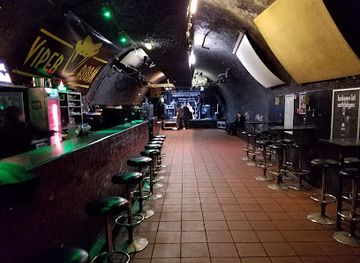
Disco club
Viper Room
Experience the vibrant nightlife of Vienna at Viper Room, where eclectic beats and live music create an unforgettable atmosphere.
17 min drive · 5.7 km from neighbourhood centre
-
Night club
Camera Club
Dive into the pulsating nightlife of Vienna at Camera Club, where music, dancing, and vibrant themes create an unforgettable experience.
14 min drive · 4.8 km from neighbourhood centre



Best shops in Favoriten
Shopping in Favoriten is centred on practical local retail, food markets and multicultural high streets rather than luxury boutiques. Viktor-Adler-Markt is the district’s most characteristic commercial destination, combining fresh produce, meat and delicatessen counters with snacks and everyday shopping. Along Favoritenstraße and Quellenstraße, independent grocers, bakeries, cafés, clothing shops, mobile-phone stores and specialist food businesses reflect the district’s diverse customer base. The retail atmosphere is street-based and functional, with new shops appearing alongside long-established family businesses. Hauptbahnhof adds a modern transport-centre retail environment, while the commercial surroundings of Sonnwendviertel continue to develop with new residents. Visitors interested in Austrian market culture should browse rather than expect a curated souvenir market; the strongest impression comes from the mixture of ordinary shopping, regional produce and international ingredients that serves the neighbourhood’s residents.
-
Shopping mall
BahnhofCity Wien Hauptbahnhof
Discover BahnhofCity Wien Hauptbahnhof, Vienna's bustling shopping mall with diverse stores, delicious dining options, and easy access to city attractions.
10 min drive · 3.5 km from neighbourhood centre
-
Shopping mall
1100 Columbus Shops & Offices
Experience a vibrant shopping and dining destination at 1100 Columbus Shops & Offices in Vienna's Favoriten district, where modern amenities meet local charm.
9 min drive · 3.1 km from neighbourhood centre
-
Gift shop
Depot
Explore Depot in Vienna for a unique selection of gifts, home decor, and stylish furniture, reflecting the city's charm and modern design.
11 min drive · 3.5 km from neighbourhood centre
-
Used clothing store
Tauschboutique Cambio
Explore Tauschboutique Cambio in Vienna for unique vintage finds and a sustainable shopping experience that celebrates individuality and style.
8 min drive · 2.6 km from neighbourhood centre


Favoriten essentials
Getting There
Getting Around
Safety
Emergency Situations
Do's and Don'ts
Local Tips

From Eve
Local phrases worth knowing
You don't need to get them perfect. A few words go a long way, and locals appreciate the effort.
Basics
| English | Local | Say it |
|---|---|---|
| Hello | Servus | [Zer-vus] |
| Goodbye | Auf Wiedersehen | [Owf Vee-der-zay-en] |
| Yes | Ja | [Yah] |
| No | Nein | [Nine] |
| Please/You're welcome | Bitte | [Bit-te] |
| Thank you | Danke | [Dank-eh] |
| Excuse me/Sorry | Entschuldigung | [Ent-shool-dee-gung] |
| How are you? | Wie geht's? | [Vee geyts] |
| Fine. And you? | Gut. Und dir? | [Goot. Oond deer] |
| Do you speak English? | Sprechen Sie Englisch? | [Shprek-en Zee Eng-lish] |
| I don't understand | Ich verstehe nicht | [Ick fer-shtay-eh nikt] |
Eating & Drinking
| English | Local | Say it |
|---|---|---|
| I'd like to see the menu, please | Ich möchte bitte die Speisekarte sehen | [Ick merk-te bit-te dee Shpy-ze-kar-te zay-en] |
| I don't eat meat | Ich esse kein Fleisch | [Ick ess-eh kine Fly-sh] |
| Cheers! | Prost! | [Prost] |
| I would like to pay, please | Ich möchte bitte zahlen | [Ick merk-te bit-te tsah-len] |
Emergencies
| English | Local | Say it |
|---|---|---|
| Help! | Hilfe! | [Hil-fuh] |
| Go away! | Geh weg! | [Gay vekh] |
| Call the Police! | Rufen Sie die Polizei! | [Roo-fen Zee dee Po-lee-tsi] |
| Call a doctor! | Rufen Sie einen Arzt! | [Roo-fen Zee I-nen Arts] |
| I'm lost | Ich habe mich verirrt | [Ick hah-bee meh fer-eert] |
| I'm ill | Mir ist schlecht | [Meer ist shlekht] |
Shopping
| English | Local | Say it |
|---|---|---|
| I'd like to buy... | Ich möchte kaufen... | [Ick merk-te cow-fen] |
| I'm just looking | Ich schaue nur | [Ick shou-eh noor] |
| How much is it? | Wie viel kostet das? | [Vee feel kost-et das] |
| That's too expensive | Das ist zu teuer | [Das ist tso toy-er] |
| Can you lower the price? | Können Sie den Preis senken? | [Kern-en Zee den Price senk-en] |
Time & Numbers
| English | Local | Say it |
|---|---|---|
| What time is it? | Wie spät ist es? | [Vee shpayt ist es] |
| It's one o'clock | Es ist ein Uhr | [Es ist iyn oor] |
| Half past (10) | Halb elf | [Halb elf] |
| Morning | Morgen | [Morgen] |
| Afternoon | Nachmittag | [Nah-mit-tahk] |
| Evening | Abend | [Ah-bent] |
| Yesterday | Gestern | [Ges-tern] |
| Today | Heute | [Hoy-teh] |
| Tomorrow | Morgen | [Morgen] |
| 1 | Eins | [Iyns] |
| 2 | Zwei | [Tzvey] |
| 3 | Drei | [Dry] |
| 4 | Vier | [Feer] |
| 5 | Fünf | [Foonf] |
| 6 | Sechs | [Zex] |
| 7 | Sieben | [Zee-ben] |
| 8 | Acht | [Akh-t] |
| 9 | Neun | [Noy-n] |
| 10 | Zehn | [Tzayn] |
Transport & Directions
| English | Local | Say it |
|---|---|---|
| Where's a/the...? | Wo ist ein/der...? | [Vo ist iyn/der] |
| What's the address? | Was ist die Adresse? | [Vas ist dee Ah-dres-seh] |
| Can you show me (on the map)? | Können Sie mir zeigen (auf der Karte)? | [Kern-en Zee meer tsay-gen (ouf der kar-te)] |
| When's the next (bus)? | Wann kommt der nächste (Bus)? | [Vann kommt der nekh-steh (Boos)] |
| A ticket (to ....) | Eine Fahrkarte (nach ....) | [I-nuh Far-kart-eh (nak)] |
History of Favoriten
From Favouriten Settlement to District
The name Favoriten derives from the former Favorita imperial summer residence, associated with the area now known as the Theresianum, and was later applied to a settlement outside Vienna’s older fortifications. As Vienna expanded during the nineteenth century, the southern suburb developed beyond the historic core and became increasingly urban. Favoriten was established as Vienna’s tenth district in 1874, bringing together built-up streets and developing peripheral land. Its growth reflected the capital’s industrial expansion and the demand for affordable housing close to employment, transport routes and the railway approaches.
Brickworks, Railways and Workers
During the late nineteenth and early twentieth centuries, Favoriten acquired a strongly working-class identity. The clay-rich slopes around Wienerberg supported brick production, while railway construction and related industries transformed the district’s southern edge. Factories, workshops and transport infrastructure attracted workers and encouraged dense housing development along routes such as Favoritenstraße and Quellenstraße. The district’s social history was also shaped by migration from across the Habsburg lands and by the growth of municipal services, schools, markets and public baths. The remaining industrial buildings and worker-oriented urban fabric recall this period of rapid expansion.
Municipal Vienna and Everyday Institutions
In the interwar period, Favoriten benefited from the city’s programme of social and municipal housing, public health provision and neighbourhood facilities. Amalienbad, opened in 1926, expressed the ambition to make modern bathing, exercise and communal amenities available to ordinary Viennese residents. Markets, schools and housing estates helped consolidate local life beyond the historic centre. The district was affected by the political conflicts and economic hardships that marked Vienna between the wars, while the Second World War and its aftermath brought further disruption. Post-war rebuilding generally strengthened Favoriten’s role as a large residential and working district.
Regeneration and New Connections
Since the late twentieth century, parts of Favoriten have undergone substantial change. Former industrial premises, including the Ankerbrotfabrik, have found new cultural and creative uses, while the redevelopment around the former Südbahnhof created Wien Hauptbahnhof and the Sonnwendviertel residential quarter. The new central station opened in stages during the 2010s and gave the district a major national and international transport role. At the same time, Oberlaa retained its village-like identity, vineyards and thermal traditions, demonstrating how redevelopment in northern Favoriten coexists with older suburban landscapes and long-established communities.
Favoriten in Photos
Browse through our photo collection highlighting the charm and character of the destination.
Neighbourhoods near Favoriten
The closest neighbourhoods to Favoriten, if you have time for more than one stop.
-

-

-

-

-


Swipe for more neighbourhoods
Explore more

Explore more of Vienna
Vienna blends imperial palaces, classical music, grand coffeehouses and contemporary culture in Austria’s elegant capital, rich in history, art and architecture.
Explore Vienna