Background

Gravensteen: Ghent's Imposing Medieval Fortress

Explore Ghent's iconic Gravensteen, a formidable medieval castle with a turbulent history, offering panoramic views, intriguing exhibits, and a glimpse into a bygone era of counts, courts, and cotton mills.

4.6

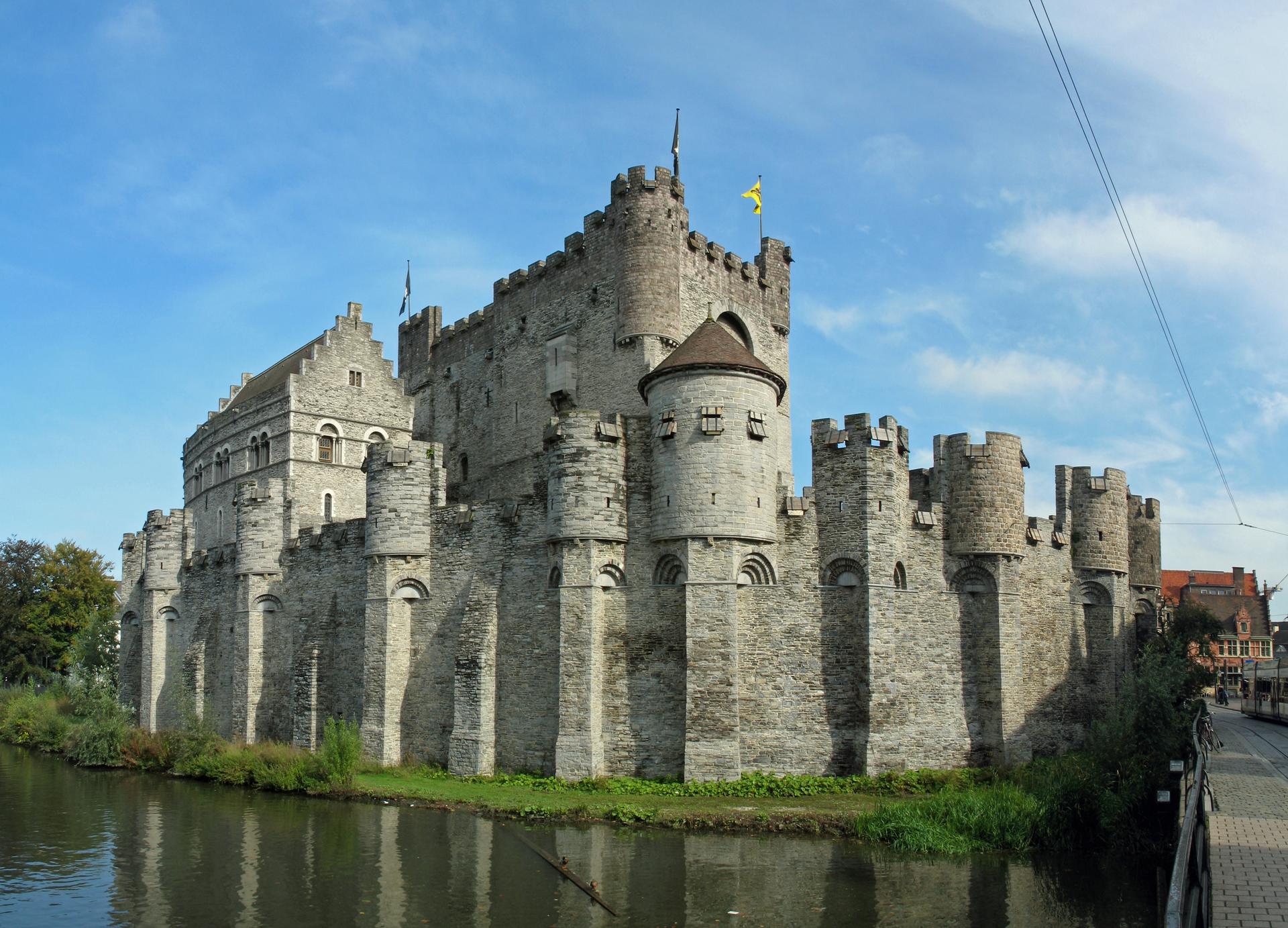
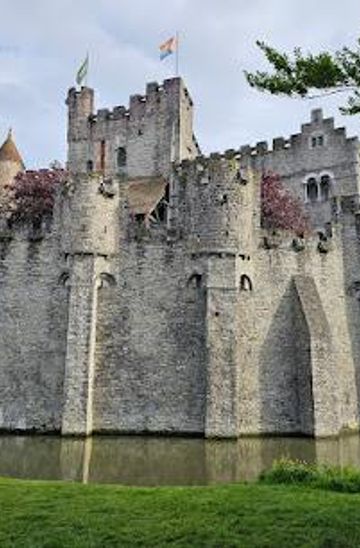
Dominating Ghent's skyline, the Gravensteen, or 'Castle of the Counts,' is a formidable medieval fortress with a rich and turbulent past. Built in 1180 by Count Philip of Alsace, it served as a residence, courthouse, prison, and even a cotton factory before being meticulously restored. Today, visitors can explore its imposing ramparts, crenellated towers, and intriguing interior, including a torture museum, armory, and the Count's residence. The castle offers panoramic views of Ghent and a fascinating glimpse into medieval life, justice, and architecture. Its central location makes it easily accessible and a must-see attraction for anyone visiting the city. Be sure to allocate at least 1.5 to 2 hours to fully experience this iconic landmark and its engaging exhibits.

A brief summary to Gravensteen

  • Monday 10 am-6 pm
  • Tuesday 10 am-6 pm
  • Wednesday 10 am-6 pm
  • Thursday 10 am-6 pm
  • Friday 10 am-6 pm
  • Saturday 10 am-6 pm
  • Sunday 10 am-6 pm

Local tips

  • Take the audio tour! Narrated by a Flemish comedian, it's both informative and hilarious, providing a unique perspective on the castle's history.
  • Wear comfortable shoes. The castle has many stairs, uneven surfaces, and cobblestone paths, so comfortable footwear is essential.
  • Book your tickets online in advance, especially during peak season, to avoid long queues and ensure entry.
  • Allocate at least 1.5 to 2 hours for your visit to fully explore the castle and its exhibits.
  • Be mindful of limited accessibility. The castle is not wheelchair accessible and may be challenging for those with mobility issues due to numerous stairs and uneven surfaces.
widget icon

Getting There

  • Walking

    Gravensteen is centrally located in Ghent and easily accessible on foot from most central locations. From Korenmarkt, walk north along the Graslei and cross the Sint-Michielshelling bridge. Continue straight onto Jan Breydelstraat, then turn left onto Sint-Veerleplein. The castle will be directly in front of you. The walk is approximately 5-10 minutes and offers picturesque views of the city center.

  • Public Transport

    If arriving by train at Gent-Sint-Pieters station, take tram line 2 towards 'Zwijnaarde' and disembark at the 'Gravensteen/Sint-Veerleplein' stop. The castle is a short walk from the tram stop. Tram tickets cost approximately €3 per single journey and can be purchased at the station or via the De Lijn app.

  • Taxi/Ride-Share

    Taxis and ride-sharing services are readily available in Ghent. A taxi ride from Gent-Sint-Pieters station to Gravensteen typically costs between €10-€15, depending on traffic. Be sure to confirm the fare with the driver before starting your journey.

  • Driving

    Driving directly to Gravensteen is not recommended due to the city's pedestrian zone and limited parking. The nearest car park is P1 Vrijdagmarkt (paid parking). Consider using a Park and Ride (P+R) facility on the outskirts of the city and taking public transport to the center. Parking fees at P1 Vrijdagmarkt are approximately €3 per hour or €20 per day. Be aware of Ghent's Low Emission Zone (LEZ); check if your vehicle meets the emission standards to avoid a fine.

Unlock the Best of Gravensteen

Buy tickets

    No tickets available

Book tours with entry

    No tours available

Book tours without entry

    No tours available

Discover more about Gravensteen

Gravensteen, also known as the Castle of the Counts, stands as a powerful symbol of Ghent's rich and often tumultuous history. Rising from the heart of the city, this imposing medieval fortress offers visitors a captivating journey back in time, revealing layers of power, justice, and even industrial transformation. Originally built in 1180 by Count Philip of Alsace, Gravensteen was designed to assert the Count's authority over the often rebellious citizens of Ghent. Inspired by Crusader castles, its formidable structure features thick stone walls, crenellated towers, and a central keep, all intended to project an image of strength and dominance. For nearly two centuries, it served as the residence of the Counts of Flanders, a center of political power and noble life. However, Gravensteen's story extends far beyond its role as a noble residence. In the 14th century, the Counts moved to a more comfortable location, and the castle transitioned into a center for law and order. It became the seat of the Council of Flanders, the Supreme Court, and various other judicial bodies. This era saw the construction of new buildings for officials, as well as the establishment of dungeons and torture chambers in the castle's depths, reflecting the harsh realities of medieval justice. For over 400 years, Gravensteen served as a courthouse, prison, and execution site. Captives endured gruesome torments within its walls, and the castle became synonymous with the brutal application of medieval law. This dark chapter in Gravensteen's history is now explored in its Torture Museum, which displays a collection of medieval weapons and instruments of punishment, offering a chilling glimpse into the past. The castle's transformation didn't end there. As Ghent emerged as a major textile manufacturing hub during the Industrial Revolution, Gravensteen was repurposed as a cotton mill in the 19th century. Machinery was installed within its ancient walls, and the castle briefly became a site of industrial production. This period marked a significant departure from its medieval origins, but it also contributed to the castle's complex and multifaceted history. By the late 19th century, Gravensteen had fallen into disrepair and was even slated for demolition. However, the City of Ghent recognized the castle's historical significance and began a major restoration project in the late 1800s. The restoration aimed to return Gravensteen to its former glory, drawing inspiration from romanticized Gothic ideals. While some criticize the accuracy of the restoration, it nonetheless preserved the castle for future generations. Today, Gravensteen stands as one of Europe's best-preserved medieval fortresses, attracting visitors from around the world. The castle offers a variety of activities and exhibits, including: * **The Keep:** Explore the central tower, which served as a last line of defense and housed the Count's private quarters. Climb to the top for panoramic views of Ghent. * **The Torture Museum:** Discover a collection of medieval torture devices and learn about the history of justice and punishment. * **The Armoury:** Examine a collection of medieval weapons and armor. * **The Count's Residence:** Imagine life in the castle during its time as a noble residence. * **The Ramparts:** Walk along the outer walls and enjoy stunning views of the city. Visitors can explore the castle at their own pace or take advantage of the audio guide, which is narrated by Flemish comedian Wouter Deprez and provides a humorous and informative tour of the castle's history. The audio guide is available in multiple languages and is included in the ticket price. While exploring the castle, be aware that accessibility is limited due to its medieval structure. There are many stairs and uneven surfaces, and the castle is not wheelchair accessible. Comfortable shoes are recommended. Gravensteen is more than just a historical monument; it's a living testament to Ghent's resilience and its ability to adapt and transform over time. Whether you're interested in medieval history, architecture, or simply want to experience a unique and imposing landmark, Gravensteen is sure to leave a lasting impression.

Popular Experiences near Gravensteen

Popular Hotels near Gravensteen

Select Currency