

Chepelare Travel Guide - Free Web & App
Your ultimate guide to Chepelare. Discover top landmarks, proposed trips, and local tips. Free on the web or via the Evendo companion app.


Chepelare, Bulgaria combines Rhodope mountain scenery, skiing at Mechi Chal, karst landscapes, local museums and access to distinctive villages and trails.
Mountain Setting
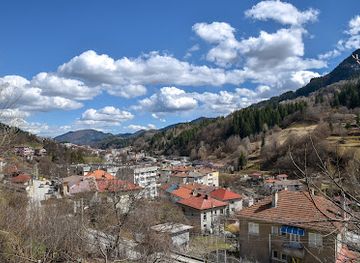
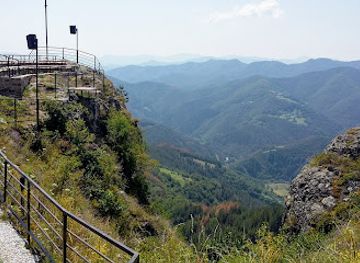
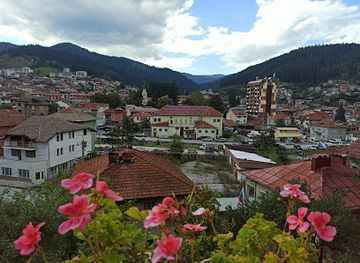
Chepelare is a small mountain town in southern Bulgaria, set in the central Rhodopes along the Chepelare River and the main road between Asenovgrad and Smolyan. At an elevation of roughly 1,230 metres, it has a distinctly alpine character: forested slopes rise around compact streets, timber-roofed houses and open mountain pastures, while the higher ground leads towards the ski area of Mechi Chal and the nearby resort of Pamporovo. The surrounding landscape is shaped by spruce and pine forests, rounded ridges, limestone formations and deep valleys rather than by the sharp peaks associated with Bulgaria's highest ranges.Read more about Chepelare
Outdoor Life and Local Heritage
Villages, Caves and Rhodope Character
When is the best time to visit Chepelare?
Best: June–August · 21–23°C| Month | High (°C) | Rainfall (mm) |
|---|---|---|
| January | 1 | 37 |
| February | 2 | 34 |
| March | 7 | 32 |
| April | 12 | 28 |
| May | 17 | 23 |
| June (best) | 21 | 20 |
| July (best) | 23 | 16 |
| August (best) | 22 | 17 |
| September | 17 | 22 |
| October | 11 | 32 |
| November | 6 | 36 |
| December | 3 | 40 |
Getting to and around Chepelare
How to get there
Transportation
Best attractions in Chepelare
Chepelare's principal attractions combine mountain recreation with geological and sporting heritage. The Museum of Speleology and Bulgarian Karst introduces the cave systems, rocks and subterranean landscapes of the Rhodopes, while the Museum of Skiing and Ski Sport traces the town's importance in Bulgarian winter sports. Above the settlement, the Mechi Chal ski area provides marked winter slopes and a mountain setting that can also be appreciated during the warmer months. In the wider municipality, the village of Zabardo is the approach point for the Wonderful Bridges, a group of dramatic natural marble arches formed by erosion. The nearby Pamporovo resort adds further access to forested ridges and mountain activities, while the road towards Smolyan opens the wider central Rhodope landscape. Visitors interested in astronomy can also combine Chepelare with the National Astronomical Observatory at Rozhen, which lies outside the town and requires a separate journey.
-
Tourist attraction
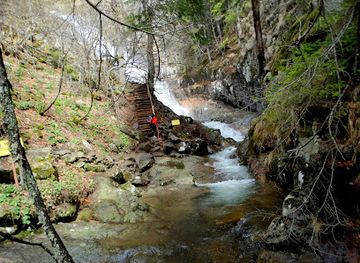
The Waterfalls Canyon
Experience the breathtaking beauty of The Waterfalls Canyon, a stunning natural preserve in Bulgaria perfect for hiking and nature lovers.
-
Tourist attraction
Orfeevi Rocks Pamporovo
Discover the breathtaking beauty of Orfeevi Rocks in Pamporovo, where stunning rock formations meet the serene landscapes of the Rhodope Mountains.
-
Tourist attraction
Smolyan Waterfall
Experience the enchanting beauty of Smolyan Waterfall, a serene escape in the heart of Bulgaria's Rhodope Mountains, perfect for nature lovers and adventurers.
-
Tourist attraction
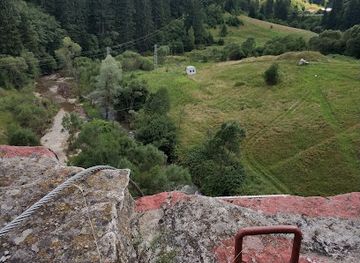
Алпийски тролей -Zipline400
Experience the thrill of flying over the Rhodope Mountains at Zipline400 in Chepelare. Adventure awaits!
Best landmarks in Chepelare
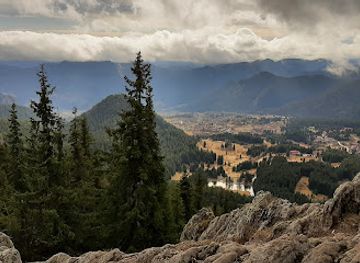
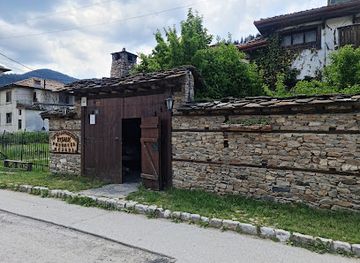
The most recognisable natural landmark in the wider Chepelare area is the Wonderful Bridges, where erosion has left immense marble arches and passages in a forested mountain setting near Zabardo. Mechi Chal is the town's defining highland feature, associated with skiing, mountain recreation and broad Rhodope scenery. The Chepelare River and the wooded valleys around it explain the town's linear form and its relationship with the surrounding slopes. Geological landmarks are especially significant here because karst, caves and soluble rock have shaped both the landscape and the subject of the town's speleology museum. Chepelare's local churches, traditional mountain buildings and museums provide a human dimension to these natural features, while the wider Rhodope villages preserve architectural and cultural connections with pastoral mountain life.
-
Restaurant
Pepelanovskiya konak
Experience authentic Rhodope Mountain cuisine in a cozy, traditional setting at Pepelanovskiya Konak in Chepelare, Bulgaria.
-
Fortress
Momchils's fortress
Uncover the enchanting history and breathtaking views at Momchil's Fortress, a captivating jewel nestled in Bulgaria's Rhodope Mountains.
-
Resort hotel
Chepelare Resort PLC
Discover the stunning beauty and adventure of Chepelare Resort, a gem in the Rhodope Mountains offering year-round outdoor activities and relaxation.
-
Museum
Museum of the Rhodope Karst
Explore the Museum of the Rhodope Karst for an unforgettable journey through Bulgaria's natural beauty and rich cultural heritage.
Explore Chepelare on the map
Plan your trip on one map. See where the top attractions, landmarks, restaurants and hotels are, and book hotels and experiences in a few clicks.
Best hotels in Chepelare
Best restaurants in Chepelare
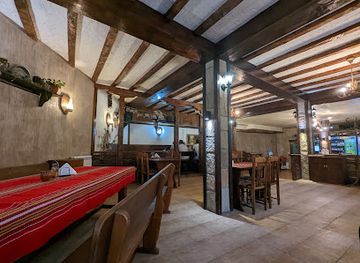
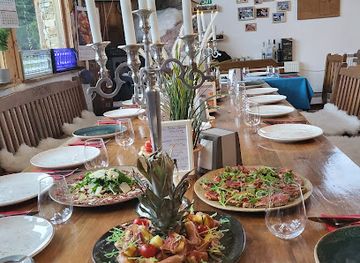
Dining in Chepelare is centred on small hotels, family-run restaurants, cafés and traditional mountain-style establishments rather than a large independent restaurant scene. Rhodope cooking is substantial and practical, drawing on potatoes, beans, dairy products, herbs and locally available meats; dishes associated with the wider region include patatnik, a potato speciality, and other baked or slow-cooked foods served in rustic portions. Menus may also include grilled meats, soups, salads and Bulgarian yoghurt, with regional wines and rakia appearing alongside soft drinks and coffee. Chepelare itself is the most convenient place to eat within the destination, while Pamporovo and Smolyan provide a broader choice of restaurants nearby. In villages such as Zabardo, dining opportunities are more limited and may be concentrated in guesthouses or small local establishments, so visitors travelling into the mountains should plan meals and supplies accordingly.
-
Restaurant
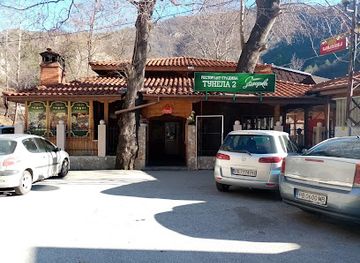
Restaurant Tunnel 2
Experience authentic Bulgarian cuisine at Restaurant Tunnel 2 in Batschkowo – a culinary haven with stunning views and local flavors.
-
Restaurant
The Salt Spring
Experience authentic Bulgarian Rhodope cuisine at The Salt Spring, where tradition meets flavor in a warm and inviting setting.
-
Restaurant
Rodopski Dom
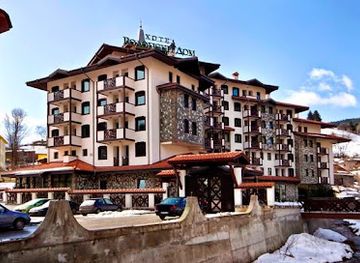
Discover Rodopski Dom: A perfect blend of exquisite dining and rejuvenating spa experiences nestled in Bulgaria's stunning Rhodope Mountains.
-
Restaurant
Bohemi Bar&grill
Discover the exquisite flavors of Bulgaria at Bohemi Bar&grill in Pamporovo – where tradition meets modern dining.
Best bars in Chepelare
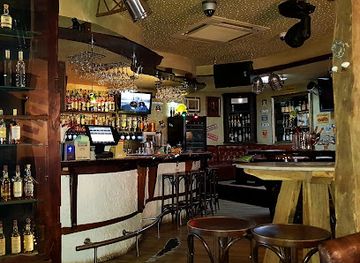
Chepelare has a quiet evening atmosphere shaped by its small-town scale and seasonal mountain tourism. Evening options are generally found in hotel lounges, cafés, restaurants and traditional pubs, where visitors may spend time over Bulgarian drinks and local food rather than seek a dedicated nightlife district. The larger resort of Pamporovo, nearby but distinct from Chepelare, offers more hospitality venues and may provide occasional entertainment during the ski season, although availability varies. In Chepelare and the surrounding villages, evenings are better suited to relaxed meals, conversation and mountain views than to late-night clubbing. Visitors should not expect the range of bars, live-music venues or nightclubs found in Sofia, Plovdiv or Bulgaria's coastal resorts.
-
Restaurant
Bohemi Bar&grill
Discover the culinary delights and stunning mountain views at Bohemi Bar&grill, a must-visit restaurant in Pamporovo, Bulgaria.
-
Restaurant
Pepelanovskiya konak
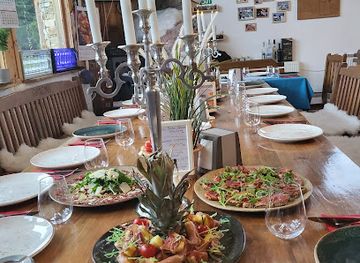
Experience authentic Bulgarian cuisine at Pepelanovskiya Konak in Chepelare, where tradition meets flavor in a cozy ambiance.
-
Restaurant
Mehana Pri Drenchev // Механа При Дренчев
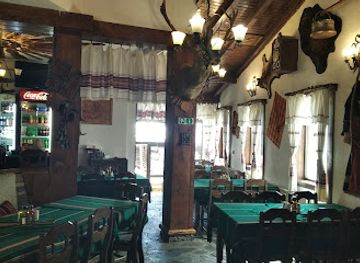
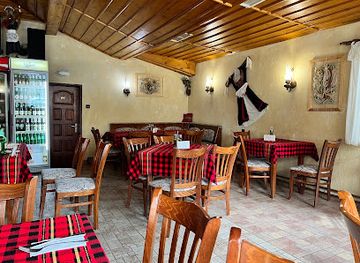
Discover the rich flavors of Bulgaria at Mehana Pri Drenchev, a charming restaurant in Chepelare offering traditional cuisine in a cozy setting.
-
Piano bar
Venus Bar
Experience the charm of Venus Bar, Smolyan's elegant piano and cocktail bar, where live music and crafted cocktails create unforgettable evenings.
Best nightclubs in Chepelare
Chepelare has a quiet evening atmosphere shaped by its small-town scale and seasonal mountain tourism. Evening options are generally found in hotel lounges, cafés, restaurants and traditional pubs, where visitors may spend time over Bulgarian drinks and local food rather than seek a dedicated nightlife district. The larger resort of Pamporovo, nearby but distinct from Chepelare, offers more hospitality venues and may provide occasional entertainment during the ski season, although availability varies. In Chepelare and the surrounding villages, evenings are better suited to relaxed meals, conversation and mountain views than to late-night clubbing. Visitors should not expect the range of bars, live-music venues or nightclubs found in Sofia, Plovdiv or Bulgaria's coastal resorts.
-
Night club
NightClubTopStars
Discover the pulse of Smolyan's nightlife at NightClubTopStars, a vibrant club offering an unforgettable dance experience with diverse music and lively atmosphere.
-
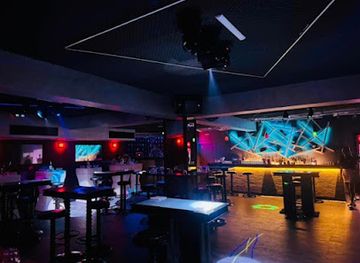
Night club
NIGHT CLUB UNDERGROUND PAMPOROVO
Discover the vibrant nightlife at Night Club Underground Pamporovo, where electrifying beats and an unforgettable atmosphere await every night.
-
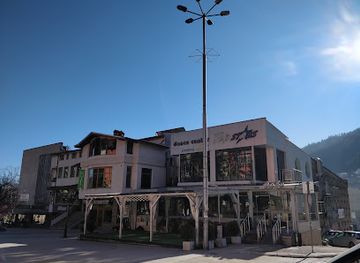
Disco club
PRIMA PREMIUM CLUB
Dive into the electrifying nightlife at PRIMA PREMIUM CLUB in Devin, where top DJs and vibrant ambiance create unforgettable moments.

Best shops in Chepelare
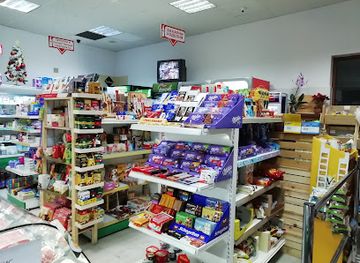
Shopping in Chepelare is modest and useful rather than extensive. The town's shops and small food outlets can provide everyday provisions, winter necessities and locally produced foods, while guesthouses and regional businesses may offer mountain honey, dairy products, herbs, preserves or other Bulgarian specialities when available. Visitors looking for broader retail choice can travel to Smolyan or the larger resort area around Pamporovo, although these are separate settlements rather than shopping districts within Chepelare. Traditional crafts and Rhodope cultural products are more likely to be found through local producers, village businesses or occasional markets than in permanent specialist shops. Outdoor equipment and ski-related purchases are concentrated around the established resort areas, so important technical items are best obtained before travelling into the more remote mountain landscape.
-
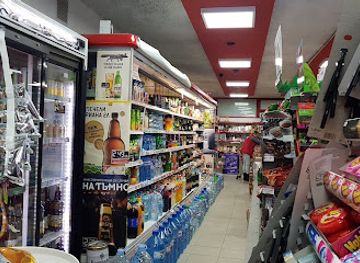
Supermarket
АРЕНА супермаркет
Discover local flavors and essentials at АРЕНА Супермаркет, a charming supermarket in the heart of Chepelare, Bulgaria.
-
Sporting goods store
Pamporovo-Ski
Explore Pamporovo-Ski, a captivating ski resort in the Rhodope Mountains, offering an unforgettable winter adventure with pristine slopes and stunning scenery.
-
Grocery store
Магазин Наслада (Grosery Naslada)
Explore the authentic flavors of Bulgaria at Магазин Наслада, a treasure trove of local products in Chepelare.
-
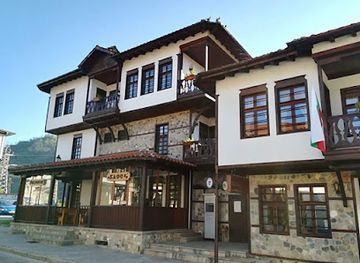
Store
Mama Sashas
Discover authentic Bulgarian products at Mama Sashas in Chepelare, a charming store filled with local delights and unique souvenirs.
Get your free copy of our complete guide to Chepelare, delivered straight to you.
Everything on this page, from attractions and restaurants to essentials and local phrases, in one PDF you can read offline, print or share.
Already have an account? Sign in
Your Chepelare guide is ready.
We'll send it to · Not you? Sign out

Getting your guide ready…
We are putting together a fresh copy of the Chepelare guide. This can take up to a minute.
This can take a few moments. If your browser asks, choose Allow so the download can start. You'll find the guide in your Downloads folder.
Nothing happened? Download it again
Sorry, the guide is taking longer than usual. Please try again in a minute, or get it by email instead.
Chepelare essentials
Currency and Payment
Safety
Emergency Situations
Do's and Don'ts
Local Tips
From Eve
Local phrases worth knowing
You don't need to get them perfect. A few words go a long way, and locals appreciate the effort.
Basics
| English | Local | Say it |
|---|---|---|
| Hello | Здравей | [Zdravey] |
| Goodbye | Довиждане | [Dovizhdane] |
| Yes | Да | [Da] |
| No | Не | [Ne] |
| Please/You're welcome | Моля | [Molya] |
| Thank you | Благодаря | [Blagodarya] |
| Excuse me/Sorry | Извинявайте | [Izvinyavayte] |
| How are you? | Как си? | [Kak si?] |
| Fine. And you? | Добре. А ти? | [Dobre. A ti?] |
| Do you speak English? | Говориш ли английски? | [Govorish li angliyski?] |
| I don't understand | Не разбирам | [Ne razbiram] |
Eating & Drinking
| English | Local | Say it |
|---|---|---|
| I'd like to see the menu, please | Бих искал да видя менюто, моля | [Bih iskal da vida menuto, molya] |
| I don't eat meat | Не ям месо | [Ne yam meso] |
| Cheers! | На здраве! | [Na zdrave!] |
| I would like to pay, please | Бих искал да платя, моля | [Bih iskal da platya, molya] |
Emergencies
| English | Local | Say it |
|---|---|---|
| Help! | Помощ! | [Pomosht!] |
| Go away! | Иди си! | [Idi si!] |
| Call the Police! | Обадете се на полицията! | [Obedete se na politsiyata!] |
| Call a doctor! | Обадете се на лекар! | [Obedete se na lekar!] |
| I'm lost | Загубих се | [Zagubih se] |
| I'm ill | Болен съм | [Bolen sum] |
Shopping
| English | Local | Say it |
|---|---|---|
| I'd like to buy... | Бих искал да купя... | [Bih iskal da kupya...] |
| I'm just looking | Просто гледам | [Prosto gledam] |
| How much is it? | Колко струва? | [Kolko struva?] |
| That's too expensive | Това е твърде скъпо | [Tova e tvurde skapo] |
| Can you lower the price? | Можете ли да понижите цената? | [Mozhete li da ponizhite tsenata?] |
Time & Numbers
| English | Local | Say it |
|---|---|---|
| What time is it? | Колко е часът? | [Kolko e chasat?] |
| It's one o'clock | Един час е | [Edin chas e] |
| Half past (10) | Половин на (10) | [Polovin na (10)] |
| Morning | Сутрин | [Sutrin] |
| Afternoon | Следобед | [Sledobed] |
| Evening | Вечер | [Vecher] |
| Yesterday | Вчера | [Vchera] |
| Today | Днес | [Dnes] |
| Tomorrow | Утре | [Utre] |
| 1 | Един | [Edin] |
| 2 | Два | [Dva] |
| 3 | Три | [Tri] |
| 4 | Четири | [Chetiri] |
| 5 | Пет | [Pet] |
| 6 | Шест | [Shest] |
| 7 | Седем | [Sedem] |
| 8 | Осем | [Osem] |
| 9 | Девет | [Devet] |
| 10 | Десет | [Deset] |
Transport & Directions
| English | Local | Say it |
|---|---|---|
| Where's a/the...? | Къде е... | [Kade e...] |
| What's the address? | Какъв е адресът? | [Kakav e adresat?] |
| Can you show me (on the map)? | Можете ли да ми покажете (на картата)? | [Mozhete li da mi pokazhete (na kartata)?] |
| When's the next (bus)? | Кога е следващият (автобус)? | [Koga e sledvashtiyat (avtobus)?] |
| A ticket (to ....) | Билет (до ....) | [Bilet (do ....)] |
History of Chepelare
A Rhodope Landscape of Karst and Forest
Chepelare's physical setting is the product of the long geological development of the Rhodope Mountains, whose uplifted rocks, erosion and local limestone have created wooded valleys, rounded highlands, caves and striking formations such as the Wonderful Bridges. Karst processes are particularly important to the area's identity: water has acted on soluble rock to form underground passages, cavities and distinctive surface features. This geological background explains why Chepelare has developed a specialist museum devoted to speleology and Bulgarian karst, and why the surrounding landscape attracts both scientists and visitors interested in caves and mountain geology.
Settlement in the Central Rhodopes
Human settlement in the Rhodopes developed around mountain agriculture, livestock keeping, forestry and movement between upland communities. Chepelare grew as a local centre in a landscape where villages and scattered farmsteads depended on forests, pasture and the seasonal use of higher ground. The town's position on the route linking the Plovdiv area with Smolyan helped maintain its role as a service and trading centre. Rhodope cultural traditions, including characteristic wooden architecture, pastoral foodways and local musical heritage, remain important to the identity of the wider region.
Forestry, Roads and Mountain Economy
The forests around Chepelare have long been central to the local economy, providing timber and shaping employment, transport and settlement patterns. Improved roads connected the town more reliably with Asenovgrad, Smolyan and neighbouring villages, gradually strengthening its role as a gateway to the central Rhodopes. Mountain agriculture remained visible in the surrounding landscape, although modern economic life became increasingly connected with tourism, public services and winter sports. The relationship between managed woodland, open pasture and settlement continues to define the appearance of the area.
The Rise of Bulgarian Skiing
Chepelare became closely associated with the development of Bulgarian skiing during the twentieth century. The Mechi Chal area above the town provided a natural setting for training and competition, and Chepelare produced notable Bulgarian winter-sport athletes, including Ekaterina Dafovska, Bulgaria's first Winter Olympic champion. The local Museum of Skiing and Ski Sport preserves this sporting history. The later development of nearby Pamporovo and the ski facilities around Mechi Chal introduced a stronger tourism economy while retaining Chepelare's character as a working Rhodope town.
Conservation, Tourism and the Modern Town
In recent decades, tourism in and around Chepelare has combined winter skiing with summer walking, mountain recreation, geological interest and visits to nearby villages and natural formations. The Wonderful Bridges and the karst landscapes of the wider municipality have become important visitor attractions, while the forests and upland habitats require careful management. Chepelare's museums give the town a cultural dimension beyond outdoor recreation, linking local sporting achievements with the geological and environmental character of the Rhodopes.
Chepelare in Photos
Browse through our photo collection highlighting the charm and character of the destination.
Neighbouring destination travel guides
The closest destinations to Chepelare, if you have time for more than one.
-

-

-

-

-


Swipe for more destinations
Explore more

Explore more of Rhodopes
Discover the enchanting Rhodopes in Bulgaria, where lush landscapes, rich history, and warm hospitality await. Perfect for nature lovers and culture enthusiasts alike.
Explore Rhodopes
Explore more of Bulgaria
Explore Bulgaria: From Sofia's bustling streets to the serene mountains and stunning Black Sea beaches, discover the rich history, culture, and natural beauty of Bulgaria.
Explore Bulgaria