

Free San Fernando Valley Travel Guide & Mobile App
Explore San Fernando Valley with free travel guides. Discover regional history, expert tips, proposed trips, and audio guides on web or mobile app.


Explore the San Fernando Valley for film history, diverse neighbourhoods, mountain-edge trails, gardens, museums and distinctive Los Angeles dining.
Read more about San Fernando Valley
When is the best time to visit San Fernando Valley?
Best: May–June, October · 25–29°C| Month | High (°C) | Rainfall (mm) |
|---|---|---|
| January | 16 | 67 |
| February | 18 | 76 |
| March | 19 | 62 |
| April | 22 | 27 |
| May (best) | 25 | 12 |
| June (best) | 29 | 5 |
| July | 34 | 3 |
| August | 34 | 4 |
| September | 31 | 8 |
| October (best) | 26 | 15 |
| November | 19 | 40 |
| December | 16 | 61 |
Getting to and around San Fernando Valley
How to get there
Transportation
Best attractions in San Fernando Valley
The San Fernando Valley’s attractions are spread across a large urban basin rather than concentrated in one historic centre. Mission San Fernando Rey de España combines a church, museum collections, gardens and a cemetery with an important account of the mission period. In the south, Universal Studios Hollywood and the surrounding Universal City complex provide major entertainment attractions, while the NoHo Arts District offers theatre and performance venues. The Sepulveda Basin Recreation Area is a foundation for outdoor time, with sports facilities, open land, the Japanese Garden and access to sections of the Los Angeles River environment. Parks and foothill preserves around Chatsworth, Porter Ranch, Sylmar and West Hills provide hiking, birdwatching and landscape views, though conditions are hot and exposed in summer. California State University, Northridge contributes cultural programming, galleries and the University Library’s special collections, while the Valley Relics Museum records the area’s roadside, commercial and suburban past. Studio and television-related attractions are significant, but access is controlled and tours should be arranged through official channels. Together these sites reveal a region shaped as much by everyday urban life, immigration, education and entertainment as by conventional sightseeing.
-
Museum
The Museum of the San Fernando Valley
Explore the vibrant history and culture of the San Fernando Valley through captivating exhibits and community programs at this local museum.
-
Historical landmark
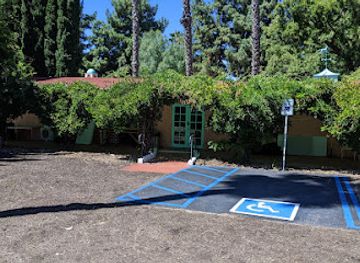
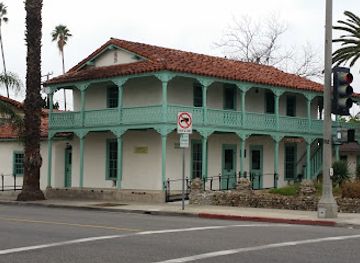
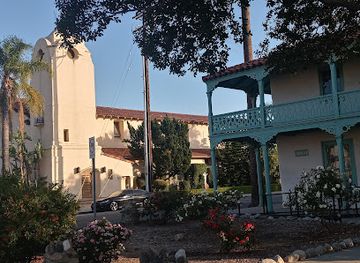
Lopez Adobe
Explore the Lopez Adobe in San Fernando: A historic landmark blending Mission and Victorian architecture, offering a glimpse into early California life.
Best landmarks in San Fernando Valley
Mission San Fernando Rey de España is the valley’s most important surviving historic landmark, with its church, long arcaded structures, gardens and cemetery preserving the physical presence of the late Spanish mission period. The Sepulveda Dam is a major piece of twentieth-century infrastructure and helps define the basin’s relationship with flood control, recreation and the Los Angeles River. In the south, the distinctive Universal City hillside and studio complex represent the region’s long association with film and television, while the adjacent Cahuenga Pass marks the historic route between the valley and the Los Angeles basin; the pass itself extends beyond the valley’s boundaries, so it is best understood as a gateway landscape. The Los Angeles River channel, though engineered rather than natural in appearance, is another defining regional feature. Mission Hills, San Fernando and portions of Sylmar retain older civic and religious buildings, while the broad views from the Santa Susana foothills and Chatsworth’s rocky landscapes provide natural landmarks at the urban edge. These places express the valley’s central themes: Indigenous and colonial history, water engineering, entertainment, movement and the meeting of city with open land.
-
State park
Los Encinos State Historic Park
Discover California's rancho past at Los Encinos State Historic Park in Encino, where history and nature intertwine to offer a tranquil escape and a glimpse into the region's rich heritage.
-
Historical society
San Fernando Valley Historical Society
Discover the captivating history of the San Fernando Valley at the Historical Society, where engaging exhibits and community events bring the region's vibrant past to life, preserving its unique heritage.
-
Historical landmark
Lopez Adobe
Discover the rich history of the San Fernando Valley at the Lopez Adobe, a beautifully preserved 19th-century residence showcasing a unique blend of Mission and Victorian architectural styles.
-
Historical landmark
Busch Gardens historic site
Explore the historic beauty of Busch Gardens in Van Nuys, a serene landmark showcasing the rich heritage of the San Fernando Valley, once a vibrant amusement park and brewery tour.
Explore San Fernando Valley on the map
Plan your trip on one map. See where the top cities, national parks and sights are, and book hotels and experiences in a few clicks.
Best hotels in San Fernando Valley
Best restaurants in San Fernando Valley
Dining in the San Fernando Valley reflects the population of Los Angeles more broadly while developing particularly strong local concentrations. Armenian restaurants and bakeries are prominent around eastern and central valley commercial corridors, with grilled meats, breads, pastries and mezze among the familiar choices. Mexican and Central American cooking ranges from casual taquerías and pupuserías to regional restaurants, while Persian, Korean, Thai, Indian and Chinese establishments add further breadth. In Encino, Sherman Oaks, Studio City and Woodland Hills, restaurants and cafés cover Californian, Mediterranean and contemporary menus, with patios and brunch especially common. The valley also retains the informal food culture of Los Angeles: farmers’ markets, specialist bakeries, independent coffee shops and family-run counters can be more revealing than formal dining rooms. Tipping is customary for table service, and local produce is often incorporated into Californian cooking, though the region is better understood as a diverse dining landscape than as the home of one defining dish.
-
Steak
Odyssey Restaurant & Events
Experience fine dining at Odyssey Restaurant & Events in Granada Hills, where exceptional steaks meet elegant ambiance.
-
Californian
The Front Yard
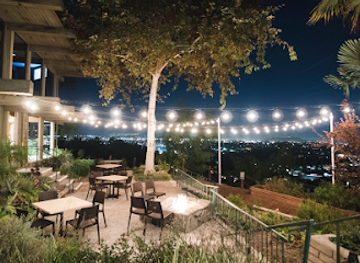
Experience the essence of Californian cuisine at The Front Yard in North Hollywood – where flavor meets style.
-
Seafood
The Drunken Crab North Hollywood
Discover The Drunken Crab: A Seafood Haven in North Hollywood Offering Creative Dishes and Vibrant Atmosphere.
-
American
Firefly
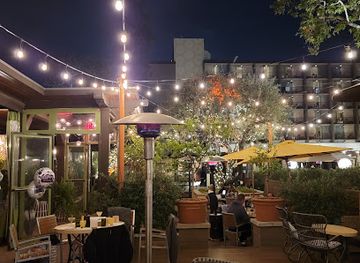
Experience exceptional American cuisine and cocktails at Firefly, a stylish restaurant and bar in Studio City offering a unique dining atmosphere.


Best bars in San Fernando Valley
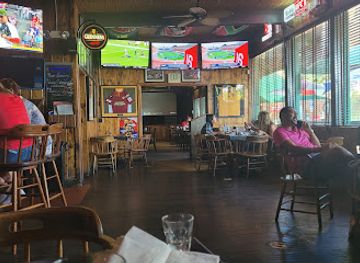
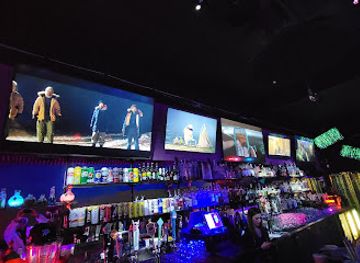
Evening life is concentrated in the southern and central valley, particularly around Studio City, Sherman Oaks, Encino and North Hollywood. North Hollywood’s Arts District has theatres, small performance spaces, bars and restaurants serving audiences before and after shows, while Ventura Boulevard has a broad mix of casual bars, cocktail rooms, sports bars and late dining. Burbank, on the eastern edge of the valley, adds established entertainment-industry nightlife and restaurant clusters. Elsewhere, evening activity is more neighbourhood-based, centred on breweries, cafés, family restaurants, hookah lounges, live music and traditional bars rather than large clubs. The region does not have one dominant nightlife quarter, and venues can change more quickly than the valley’s established cultural institutions. Checking current arrangements, age requirements, transport options and parking is sensible, particularly when travelling between districts at night.
-
 American
Firefly
Discover the unique flavors of American cuisine at Firefly, a stylish restaurant and cocktail bar in Studio City, perfect for any occasion.
-
Bar
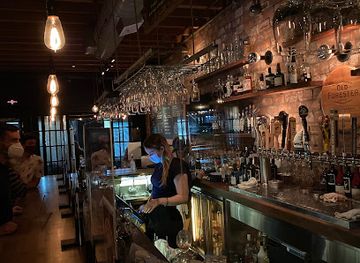
Idle Hour
Explore Idle Hour in North Hollywood—a lively bar known for its creative cocktails, unique decor, and vibrant atmosphere, perfect for a night out.
-
South African
Springbok Bar & Grill
Experience authentic South African cuisine and vibrant flavors at Springbok Bar & Grill in Van Nuys, where every meal is a culinary adventure.
-
Gastropub
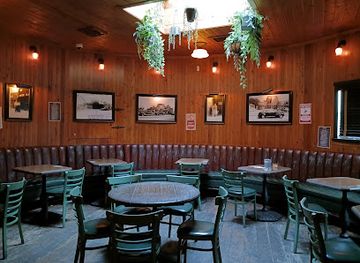
Laurel Tavern
Discover the vibrant atmosphere and delicious fare at Laurel Tavern, a must-visit gastropub in Studio City, California.
Best nightclubs in San Fernando Valley
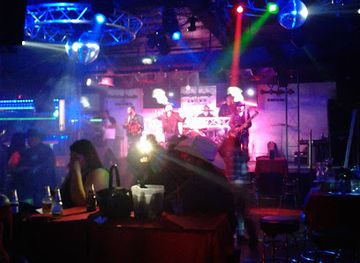
Evening life is concentrated in the southern and central valley, particularly around Studio City, Sherman Oaks, Encino and North Hollywood. North Hollywood’s Arts District has theatres, small performance spaces, bars and restaurants serving audiences before and after shows, while Ventura Boulevard has a broad mix of casual bars, cocktail rooms, sports bars and late dining. Burbank, on the eastern edge of the valley, adds established entertainment-industry nightlife and restaurant clusters. Elsewhere, evening activity is more neighbourhood-based, centred on breweries, cafés, family restaurants, hookah lounges, live music and traditional bars rather than large clubs. The region does not have one dominant nightlife quarter, and venues can change more quickly than the valley’s established cultural institutions. Checking current arrangements, age requirements, transport options and parking is sensible, particularly when travelling between districts at night.
-
Bar
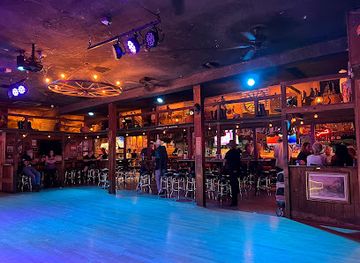
The Cowboy Palace Saloon
Experience the lively atmosphere of The Cowboy Palace Saloon in Chatsworth, CA, where great cocktails, live music, and dancing await every visitor.
-
Bar
The Rabbit Hole
Discover the whimsical charm of The Rabbit Hole, a unique bar in West Hills offering themed drinks, live entertainment, and an enchanting nightlife experience.
-
Night club
La Sierra Nightclub
Discover the lively La Sierra Nightclub in Panorama City, where vibrant music, delicious dining, and unforgettable nights await.
-
Night club
Vive Night Club
Experience the electric atmosphere of Vive Night Club in Canoga Park, where dancing, music, and vibrant nightlife come together.

Best shops in San Fernando Valley
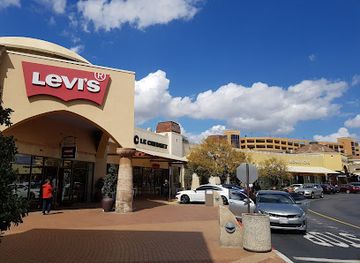
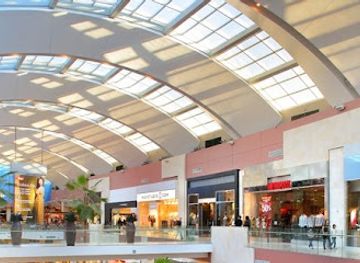
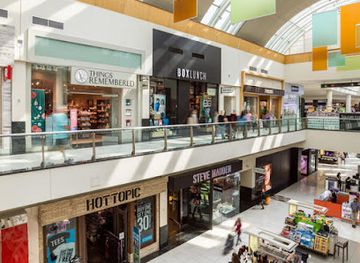
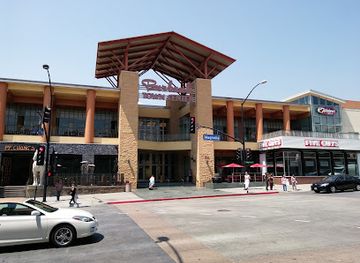
Shopping in the San Fernando Valley is organised around dispersed neighbourhood centres, suburban commercial strips and practical retail districts rather than one historic market quarter. Ventura Boulevard links Studio City, Sherman Oaks and Encino with independent boutiques, bookshops, salons, cafés, homeware stores and restaurants, although the character changes from block to block. In North Hollywood, creative businesses and arts-related shops complement the theatre scene, while larger retail complexes in Woodland Hills and Burbank provide department stores, fashion and everyday services. Local farmers’ markets are useful for Californian fruit, vegetables, baked goods and prepared food, with schedules varying by neighbourhood and season. Armenian, Mexican and Persian groceries are especially valuable for regional ingredients, sweets, breads, spices and packaged foods that make distinctive souvenirs. Specialist stores connected with music, vintage clothing, antiques and film culture appear across the valley, but independent retail is mixed with conventional chain shopping. Visitors should check current market days and transport or parking arrangements before making a dedicated shopping trip.
-
Outlet mall
Citadel Outlets
Discover unbeatable deals and a vibrant shopping experience at Citadel Outlets in Commerce, California, just minutes from downtown LA.
-
Gift shop
Westfield Topanga
Discover the ultimate shopping experience at Westfield Topanga, where fashion meets dining and entertainment in Canoga Park, California.
-
Shopping mall
Northridge Fashion Center
Explore the Northridge Fashion Center: A Shopping Paradise with Diverse Retail, Dining, and Entertainment Options for the Whole Family!
-
Shopping mall
Burbank Town Center
Explore Burbank Town Center: Your ultimate shopping destination featuring diverse stores, delightful dining, and entertainment in the heart of California.
Get your free copy of our complete guide to San Fernando Valley, delivered straight to you.
Everything on this page, from attractions and restaurants to essentials and local phrases, in one PDF you can read offline, print or share.
Already have an account? Sign in
Your San Fernando Valley guide is ready.
We'll send it to · Not you? Sign out

Getting your guide ready…
We are putting together a fresh copy of the San Fernando Valley guide. This can take up to a minute.
This can take a few moments. If your browser asks, choose Allow so the download can start. You'll find the guide in your Downloads folder.
Nothing happened? Download it again
Sorry, the guide is taking longer than usual. Please try again in a minute, or get it by email instead.
San Fernando Valley essentials
Currency and Payment
Safety
Emergency Situations
Do's and Don'ts
Local Tips
From Eve
Local phrases worth knowing
You don't need to get them perfect. A few words go a long way, and locals appreciate the effort.
Basics
| English | Local | Say it |
|---|---|---|
| Hello | Hey | [Hey] |
| Goodbye | Later | [Lay-ter] |
| Yes | Totally | [Toe-tally] |
| No | Nah | [Nah] |
| Please/You're welcome | No problem | [No prob-lem] |
| Thank you | Thanks | [Thanks] |
| Excuse me/Sorry | My bad | [My bad] |
| How are you? | What's up? | [Wuts up?] |
| Fine. And you? | Good. You? | [Good. You?] |
| Do you speak English? | You speak English? | [You speak English?] |
| I don't understand | I don't get it | [I don't get it] |
Eating & Drinking
| English | Local | Say it |
|---|---|---|
| I'd like to see the menu, please | Can I see the menu? | [Can I see the menu?] |
| I don't eat meat | I’m a vegetarian | [I'm a vege-tarian] |
| Cheers! | Cheers! | [Cheers!] |
| I would like to pay, please | Can I get the check? | [Can I get the check?] |
Emergencies
| English | Local | Say it |
|---|---|---|
| Help! | Help! | [Help!] |
| Go away! | Back off! | [Back off!] |
| Call the Police! | Call 911! | [Call nine-one-one!] |
| Call a doctor! | Get a doctor! | [Get a doc-tor!] |
| I'm lost | I'm totally lost | [I'm toe-tally lost] |
| I'm ill | I'm not feeling well | [I'm not feel-ing well] |
Shopping
| English | Local | Say it |
|---|---|---|
| I'd like to buy... | I wanna buy... | [I wanna buy...] |
| I'm just looking | Just browsing | [Just brows-ing] |
| How much is it? | What’s the price? | [Wuts the price?] |
| That's too expensive | That’s way too much | [That's way too much] |
| Can you lower the price? | Can you give me a deal? | [Can you give me a deal?] |
Time & Numbers
| English | Local | Say it |
|---|---|---|
| What time is it? | What time is it? | [What time is it?] |
| It's one o'clock | It's one | [It's one] |
| Half past (10) | Ten-thirty | [Ten-thir-ty] |
| Morning | Morning | [Morn-ing] |
| Afternoon | Afternoon | [Af-ter-noon] |
| Evening | Evening | [Eve-ning] |
| Yesterday | Yesterday | [Yes-ter-day] |
| Today | Today | [To-day] |
| Tomorrow | Tomorrow | [To-mor-row] |
| 1 | One | [One] |
| 2 | Two | [Two] |
| 3 | Three | [Three] |
| 4 | Four | [Four] |
| 5 | Five | [Five] |
| 6 | Six | [Six] |
| 7 | Seven | [Seven] |
| 8 | Eight | [Eight] |
| 9 | Nine | [Nine] |
| 10 | Ten | [Ten] |
Transport & Directions
| English | Local | Say it |
|---|---|---|
| Where's a/the...? | Where’s the...? | [Where's the?] |
| What's the address? | What's the address? | [What's the ad-dress?] |
| Can you show me (on the map)? | Can you show me on the map? | [Can you show me on the map?] |
| When's the next (bus)? | When's the next bus? | [When's the next bus?] |
| A ticket (to ....) | A ticket to...? | [A ticket to...?] |
History of San Fernando Valley
Indigenous Homelands Before Spanish Settlement
The valley has long been home to Indigenous communities, including the Fernandeño Tataviam Band of Mission Indians in the northern and north-western area and Tongva communities with strong historical connections to the Los Angeles basin. Villages, travel routes and seasonal use of water and plant resources predated European settlement by centuries. Much of the archaeological record has been obscured by urban development, but Indigenous history remains essential to understanding the region. Modern tribal communities continue cultural, educational and political work connected with their ancestral lands.
Mission San Fernando Rey de España, 1797
Spanish missionaries founded Mission San Fernando Rey de España in 1797, naming it for Saint Ferdinand and establishing one of the later Franciscan missions in California. The mission became a centre of religious conversion, ranching and agricultural production, with Indigenous people subjected to the mission system’s coercive conditions. Its buildings and associated cemetery remain among the valley’s most important historic sites. The mission also gave the surrounding area the name San Fernando, which later passed to the valley’s northern city.
Ranchos and the Mexican Period
After Mexican independence and the secularisation of the missions in the 1830s, former mission lands were redistributed and the valley became associated with large ranchos. Rancho Ex-Mission San Fernando covered an extensive area and supported cattle, grain and other agricultural activity. The ranch era changed land ownership and economic organisation while continuing the displacement of Indigenous communities. Surviving place names, historic adobe structures and the broad scale of later landholdings offer reminders of this period before the valley was absorbed by metropolitan Los Angeles.
Agriculture, Water and Los Angeles Expansion
During the late nineteenth and early twentieth centuries, the San Fernando Valley remained largely rural, producing wheat, citrus, walnuts and other crops. The arrival of railways and the growth of Los Angeles increased access to markets, while the Los Angeles Aqueduct, completed in 1913, transformed the region’s water supply and encouraged suburban and agricultural development. Large tracts were subdivided as the city expanded northwards. The valley’s orchards, dairies and fields gradually gave way to streets, housing and commercial centres, although open space and agricultural remnants survived in the far north.
Annexation and Suburban Urbanisation
Much of the valley was annexed to the City of Los Angeles in stages during the twentieth century, while Burbank, San Fernando and several other municipalities retained separate civic identities. New roads, streetcar connections, post-war housing and industrial employment accelerated population growth after the Second World War. Van Nuys developed as a major administrative and commercial centre, while communities such as Pacoima, Sylmar, Reseda and Canoga Park assumed distinct suburban and working-class identities. The resulting patchwork of city departments, neighbourhoods and local institutions still shapes how the valley functions.
Entertainment, Aerospace and the Modern Valley
Motion-picture production became a major regional influence during the twentieth century, particularly around Studio City, Universal City and Burbank, where studios, sound stages and related businesses helped define the valley’s public image. Aerospace and aircraft manufacturing also provided important employment, especially in the eastern and northern parts of the region. The valley’s economy has since diversified into healthcare, education, retail, technology and services. Immigration from Latin America, Asia and the Middle East has further shaped its languages, restaurants, businesses and cultural institutions.
The 1994 Northridge Earthquake
The Northridge earthquake struck in January 1994 and caused widespread damage across the San Fernando Valley and neighbouring parts of Los Angeles County. Homes, apartment buildings, hospitals, roads and major transport infrastructure were affected, and the disaster exposed vulnerabilities in older structures and elevated roadways. Reconstruction influenced building standards, emergency planning and the appearance of several neighbourhoods. The earthquake’s name refers to the area where the rupture was first identified, while its effects extended well beyond Northridge into much of the metropolitan region.
San Fernando Valley in Photos
Browse through our photo collection highlighting the charm and character of the destination.
Neighbouring regions of San Fernando Valley
The closest regions to San Fernando Valley, if you have time for more than one.
-
-

-

-
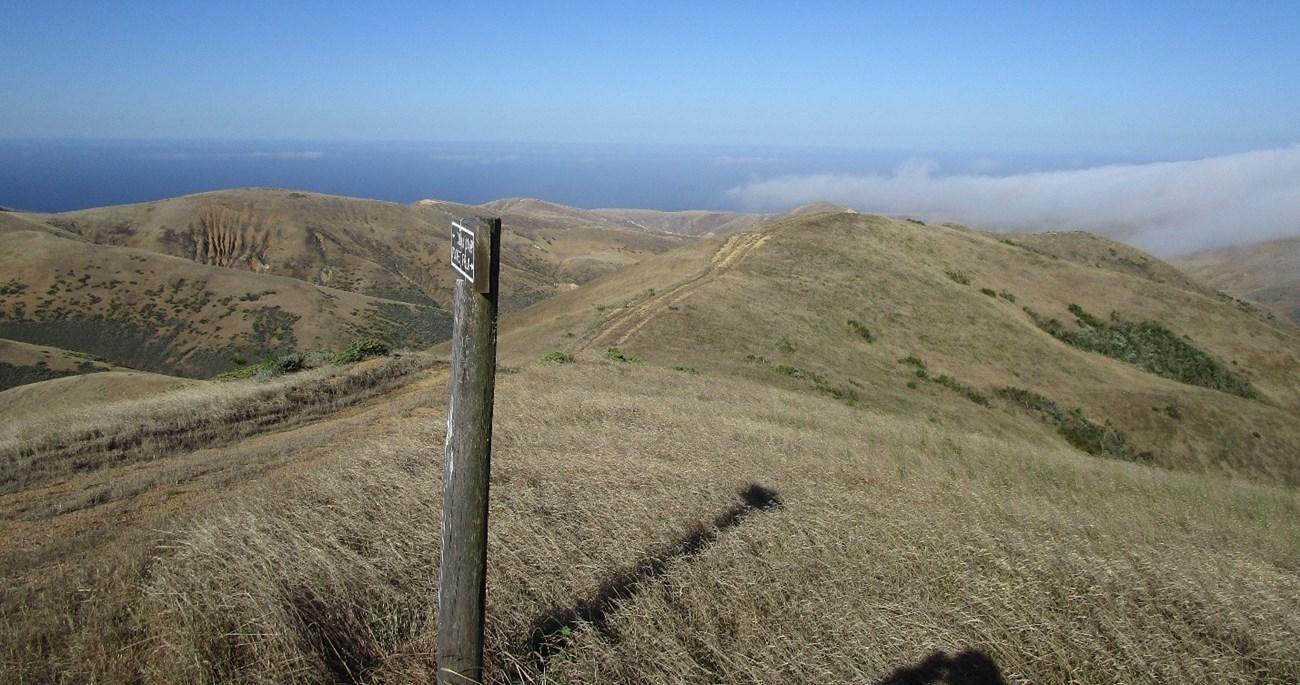 Ventura County
Discover Ventura County, California's hidden treasure, offering stunning coastlines, vibrant arts, and endless outdoor adventures in a serene, historic setting.
Ventura County
Discover Ventura County, California's hidden treasure, offering stunning coastlines, vibrant arts, and endless outdoor adventures in a serene, historic setting.
-


Swipe for more regions
Explore more
Explore more of California
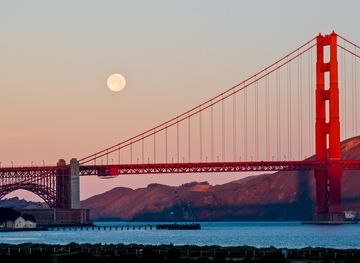
Discover California: A land of diverse landscapes, iconic cities, and endless adventures, from sun-soaked beaches to towering redwoods and vibrant cultural experiences.
Explore California