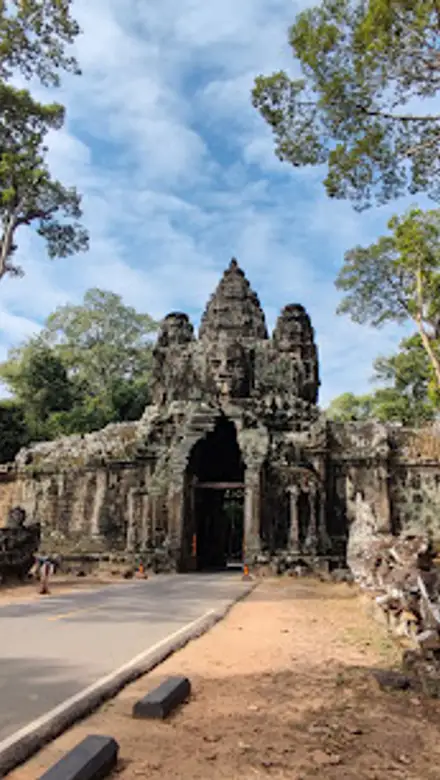
Victory Gate Travel Guide
Free Guide: Step through history at Angkor Thom's Victory Gate, where Khmer kings once paraded after triumphant battles. A must-see landmark in Cambodia.


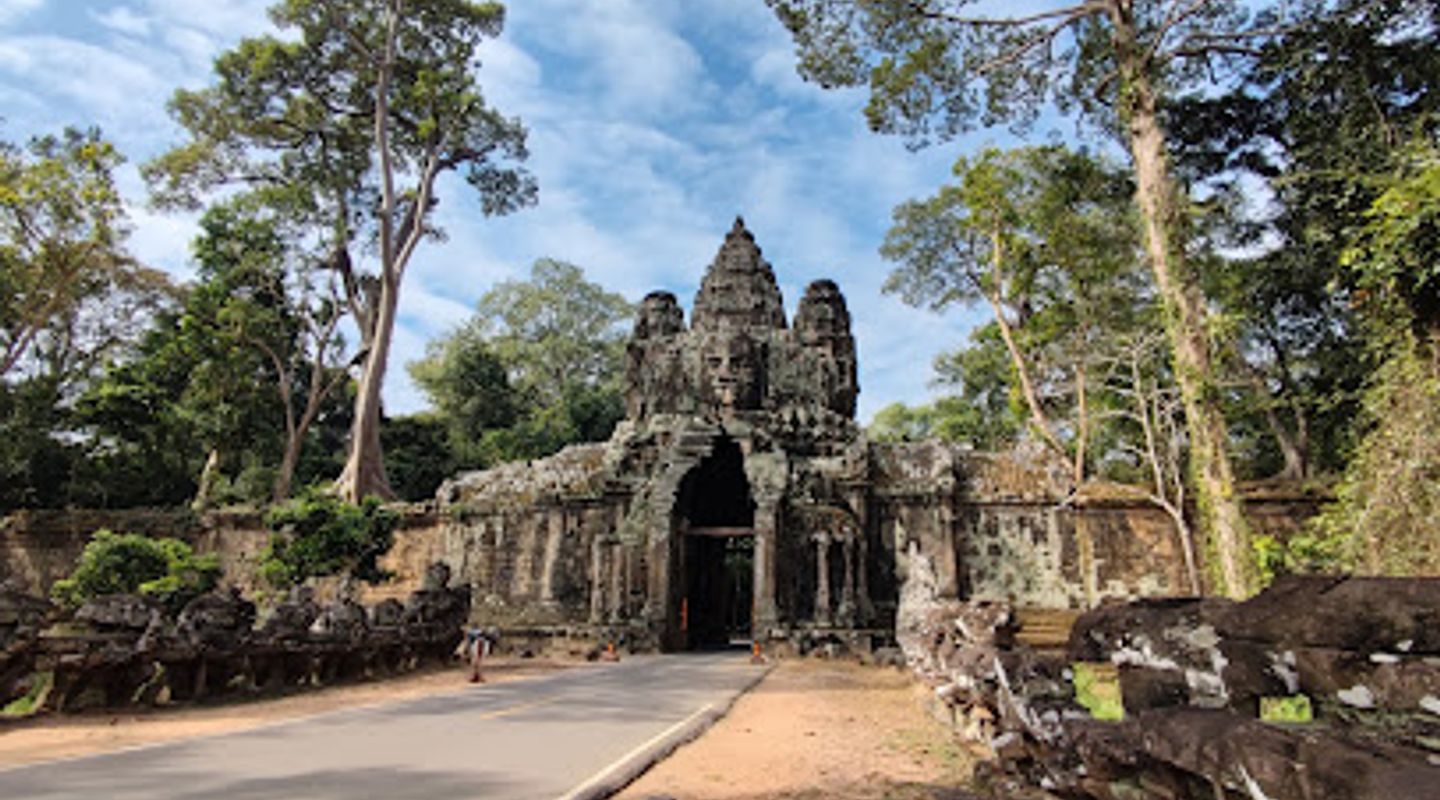
A brief summary of Victory Gate
Step through history at Angkor Thom's Victory Gate, where Khmer kings once paraded after triumphant battles. A must-see landmark in Cambodia.
The Victory Gate, one of five gates guarding the ancient city of Angkor Thom, served as a symbolic entrance for returning Khmer kings and their victorious armies. Adorned with impressive carvings and giant faces, it offers a glimpse into the grandeur of the Khmer empire.
Opening hours
- Every day7 am–5:30 pm
Opening hours as listed on the venue’s Google Business Profile. Hours can change for services and special events, so check with the venue before you go.
- Address
- CVWF+C5H, Angkor
Getting there
Tuk-Tuk
Bicycle
Discover more about Victory Gate
Overview
The Victory Gate, or Thvear Chey, stands as a remarkable entrance to the ancient city of Angkor Thom, Cambodia. Constructed in the late 12th century during the reign of King Jayavarman VII, it is one of five gates providing access to the city. Unlike the other four gates which align with the cardinal points, the Victory Gate sits on a non-secular axis, connecting the Royal Palace and the Elephant Terrace.Historians believe that King Jayavarman VII used this gate to lead his army into battle against Champa, the Khmer empire's rival. Upon their victorious return, the king and his warriors would parade through this gate, signifying their triumph.Approaching the Victory Gate, visitors are greeted by a moat and a stone causeway. The causeway features a naga railing pulled by 54 stone giants, representing the struggle between good and evil from the Hindu myth of the Churning of the Sea of Milk. The gate itself is adorned with massive, beautifully carved faces pointing in each direction. These faces, believed to represent the king, wear diadems, diamond shapes on their foreheads, and ornate crowns, adding to the gate's awe-inspiring atmosphere. Above the faces, three prasats rise, with the central tower being the tallest and adorned with false levels, ornate lintels, and pediments, culminating in a lotus flower crown and spire.Today, the Victory Gate is a popular tourist destination, offering a quieter alternative to the more frequented South Gate. It provides a unique opportunity to witness the magnificence of Khmer architecture and immerse oneself in the rich history of the Angkor empire.
Evendo Review Centre
 Google
Guest reviews
Explore Victory Gate on the map
A handpicked selection of must-see spots near Victory Gate, mapped for you.
Get your free copy of our complete guide to Victory Gate, delivered straight to you.
Everything on this page, from opening hours and how to get there to Eve’s tips and the best time to go, in one PDF you can read offline, print or share.
Already have an account? Sign in
Your Victory Gate guide is ready.
We'll send it to · Not you? Sign out

Getting your guide ready…
We are putting together a fresh copy of the Victory Gate guide. This can take up to a minute.
This can take a few moments. If your browser asks, choose Allow so the download can start. You'll find the guide in your Downloads folder.
Nothing happened? Download it again
Sorry, the guide is taking longer than usual. Please try again in a minute, or get it by email instead.
Unlock the best of Victory Gate
Skip-the-line tickets, guided tours with entry, and walking tours of the area, booked in a few clicks.


Other nearby places you may find interesting
The closest places of the same kind, if this one is not quite what you had in mind.
-
-
-
-
-


Swipe for more places
More to explore near Victory Gate

 Best experiences near Victory Gate
 Best hotels near Victory Gate
 Best landmarks near Victory Gate
 Best attractions near Victory Gate
 Best shops near Victory Gate
 Best restaurants near Victory Gate
 Best bars near Victory Gate
Do you manage this location?
Take control to get all the benefits, like improved information, better appearance, and stronger visibility across AI-powered discovery.
Explore more
Explore more of Oddar Meanchey
Discover the untamed beauty and historical depth of Oddar Meanchey, Cambodia's hidden gem, where history, nature, and culture intertwine seamlessly.
Explore Oddar Meanchey
Explore more of Cambodia
Discover Cambodia: From the ancient wonders of Angkor Wat to the vibrant streets of Phnom Penh, immerse yourself in a land of history, culture, and natural beauty.
Explore Cambodia