Srah Srang, Siem Reap Travel Guide
Free Guide: Discover Srah Srang, the 'Royal Bath' in Angkor, a serene reservoir offering historical insights and stunning sunrise views.


A brief summary of Srah Srang
Discover Srah Srang, the 'Royal Bath' in Angkor, a serene reservoir offering historical insights and stunning sunrise views.
Srah Srang, also known as the "Royal Bath," is an ancient reservoir within the Angkor Archaeological Park. Built in the 10th century and modified in the 12th, it served as a ceremonial bathing place for royalty and a source of water for the community. Today, it offers a tranquil escape and stunning sunrise views.
Opening hours
- Every day7 am–6 pm
Opening hours as listed on the venue’s Google Business Profile. Hours can change for services and special events, so check with the venue before you go.
- Address
- CWJ3+475, Krong Siem Reap
Getting there
Tuk-tuk
Bicycle
Discover more about Srah Srang
Overview
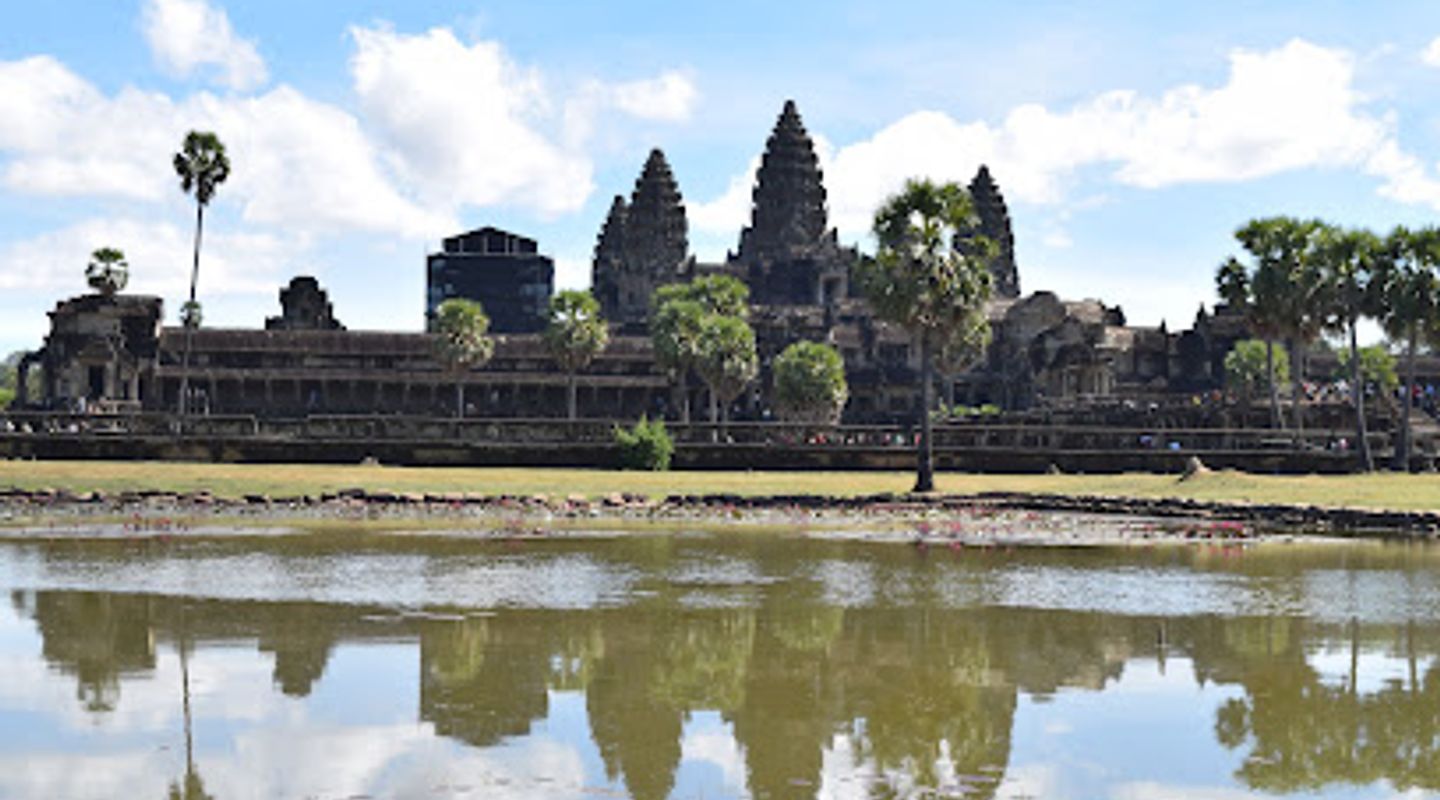
Srah Srang, meaning "Royal Bath" in Khmer, is a serene baray (reservoir) located in the Angkor Archaeological Park, near Siem Reap, Cambodia. Dug in the mid-10th century under the initiative of Kavindrarimathana, a Buddhist minister of King Rajendravarman II, it was later enhanced around 1200 by King Jayavarman VII. Unlike the larger West Baray, Srah Srang was primarily intended for ceremonial use, providing a sacred space for royalty and monks to cleanse and meditate.Measuring 700 by 350 meters, Srah Srang is still partially flooded and offers a peaceful retreat from the more crowded temple sites. The western side features a laterite landing stage added by Jayavarman VII, adorned with serpent balustrades and guardian lions. These intricate carvings and the overall Bayon-style architecture reflect the artistic preferences of the time. Inscriptions suggest the reservoir provided water for the benefit of all creatures, with rules to prevent pollution and damage to the dykes.Today, Srah Srang is a popular spot for viewing the sunrise and sunset, offering picturesque reflections on the water. Its location east of Banteay Kdei temple and proximity to other Angkor sites make it a convenient and worthwhile stop on the grand or small circuit tours. The tranquil atmosphere and historical significance provide a unique and meditative pause in the Angkor experience.
Evendo Review Centre
 Google
Guest reviews
Explore Srah Srang on the map
A handpicked selection of must-see spots near Srah Srang, mapped for you.
Get your free copy of our complete guide to Srah Srang, delivered straight to you.
Everything on this page, from opening hours and how to get there to Eve’s tips and the best time to go, in one PDF you can read offline, print or share.
Already have an account? Sign in
Your Srah Srang guide is ready.
We'll send it to · Not you? Sign out

Getting your guide ready…
We are putting together a fresh copy of the Srah Srang guide. This can take up to a minute.
This can take a few moments. If your browser asks, choose Allow so the download can start. You'll find the guide in your Downloads folder.
Nothing happened? Download it again
Sorry, the guide is taking longer than usual. Please try again in a minute, or get it by email instead.
Unlock the best of Srah Srang
Skip-the-line tickets, guided tours with entry, and walking tours of the area, booked in a few clicks.


Other nearby places you may find interesting
The closest places of the same kind, if this one is not quite what you had in mind.
-

-
-
-
-


Swipe for more places
More to explore near Srah Srang

 Best experiences near Srah Srang
 Best hotels near Srah Srang
 Best landmarks near Srah Srang
 Best attractions near Srah Srang
 Best shops near Srah Srang
 Best restaurants near Srah Srang
 Best bars near Srah Srang
Do you manage this location?
Take control to get all the benefits, like improved information, better appearance, and stronger visibility across AI-powered discovery.
Explore more

Explore more of Siem Reap
Discover Siem Reap, the gateway to Angkor Wat, where ancient temples, vibrant markets, and cultural experiences create an unforgettable adventure in Cambodia.
Explore Siem Reap
Explore more of Cambodia
Discover Cambodia: From the ancient wonders of Angkor Wat to the vibrant streets of Phnom Penh, immerse yourself in a land of history, culture, and natural beauty.
Explore Cambodia