

The Round Tower Travel Guide
Free Guide: Copenhagen’s 17th‑century spiral tower where science, skyline views and cultural life meet above the cobbled streets of the old town.


A brief summary of The Round Tower
Copenhagen’s 17th‑century spiral tower where science, skyline views and cultural life meet above the cobbled streets of the old town.
Rising above the cobbled heart of Copenhagen’s old town, the Round Tower (Rundetaarn) is a 17th‑century observatory and viewpoint built by King Christian IV in 1642. A broad, whitewashed spiral ramp winds gently up through the tower’s hollow core, passing the former university Library Hall, now a lively exhibition and concert space. At the top, an open-air platform offers 360‑degree views over church spires, rooftops and the Øresund on clear days, while the historic observatory dome recalls centuries of stargazing and scientific curiosity.
On-site amenities
 Restrooms
 Drink options
 Drinking water
 Food options
 Seating areas
 Sheltered areas
 Trash bins
 Information boards
 Visitor centre
Opening hours
- Every day10 am–8 pm
Opening hours as listed on the venue’s Google Business Profile. Hours can change for services and special events, so check with the venue before you go.
- Address
- Købmagergade 52A, 1150 København
- Phone
- Website
Getting there
Metro from central city hubs
City buses within central Copenhagen
Cycling through the historic centre
Taxi or rideshare within the city
Discover more about The Round Tower
A royal tower above the old Latin Quarter
Completed in 1642 for King Christian IV, the Round Tower rises quietly from the narrow shopping street of Købmagergade, just where Copenhagen’s old Latin Quarter begins. Conceived as part of the Trinitatis complex, it combined observatory, university library and church in one ambitious design, a physical expression of the era’s fascination with science, faith and scholarship. Today it still anchors the skyline with its robust brick cylinder and copper dome, a familiar landmark among the city’s jumble of spires.From street level the tower looks almost austere, but step closer and details emerge: brickwork laid in warm, earthy tones, arched windows punctuating the façade, and monograms and inscriptions hinting at royal origins. The structure has survived fires, wars and urban renewal around it, remaining largely intact while the city transformed below.
The spiral ramp and hollow heart of the tower
Inside, the tower reveals its most distinctive feature: a broad, cobbled spiral ramp that climbs about 200 metres in a gentle corkscrew. Instead of stairs, this sloping corridor was designed wide enough for horses and even small carriages, so instruments and books could be hauled to the observatory and library above. The whitewashed walls curve smoothly as you ascend, with small alcoves and windows opening to shafts of changing daylight.Near the upper levels, a glass floor spans the hollow core of the tower, allowing you to peer down into the shaft far below. It offers a striking sense of the building’s engineering and is a favourite pause point for those steady enough on their feet. Higher still, the ramp gives way to a wooden staircase and a final tight stone spiral, underscoring how the ascent becomes progressively steeper and more intimate as you approach the summit.
The Library Hall: books, art and culture in the sky
Roughly halfway up sits the Library Hall, a long, bright space that once housed the entire university library. For two centuries this was the intellectual attic of Copenhagen, stacked with thousands of volumes above the city streets. Today the shelves are gone, replaced by temporary exhibitions that range from contemporary art and photography to science and history, as well as concerts, talks and family activities.High windows funnel soft light across wooden floors, giving the hall an almost ecclesiastical calm despite its changing programme. A small shop and café counter add a relaxed pause point in the middle of the climb, with postcards, books and design objects echoing the tower’s themes of astronomy and architecture.
Skyline views and the historic observatory
At the top, an open circular platform wraps around the observatory dome, enclosed by a wrought-iron balustrade. From here the city unfurls in every direction: the green copper spires of nearby churches, the formal gardens and turrets of Rosenborg Castle, the distant sweep of the harbour and, on clear days, the hazy line of Sweden across the Øresund. The view is low and intimate rather than vertiginous, more about reading the city’s layers than sheer height.Within the dome sits one of Europe’s oldest functioning observatories, where astronomers once charted the night sky for the Danish crown and university. On selected evenings outside restoration works, the telescope is used for public stargazing, continuing a tradition of observing planets and star clusters from the very heart of the city.
Experiencing the tower today
Visiting the Round Tower is as much about atmosphere as it is about individual sights. The slow, steady incline encourages an unhurried pace, with the curve of the ramp hiding what comes next until you gently round each bend. Sound carries in soft echoes: children’s footsteps, snippets of conversation in different languages, the muffled rumble of the city fading as you climb.Despite its central location, the interior feels self-contained and almost monastic, a space where centuries of scholarly work, observation and quiet contemplation have left a subtle imprint. Whether you come for a quick city view, an exhibition in the Library Hall or an evening under the observatory dome, the tower offers a compact journey through Copenhagen’s scientific and architectural history in a single graceful ascent.
Evendo Review Centre
 Google
Guest reviews
Best time to go
Quietest: Jan, Feb & Mar · before 9am or from 9pm
Busy times are Evendo estimates for a typical year, to help you plan. Actual crowds vary with events, school holidays and the weather.
Explore The Round Tower on the map
A handpicked selection of must-see spots near The Round Tower, mapped for you.
Get your free copy of our complete guide to The Round Tower, delivered straight to you.
Everything on this page, from opening hours and how to get there to Eve’s tips and the best time to go, in one PDF you can read offline, print or share.
Already have an account? Sign in
Your The Round Tower guide is ready.
We'll send it to · Not you? Sign out

Getting your guide ready…
We are putting together a fresh copy of the The Round Tower guide. This can take up to a minute.
This can take a few moments. If your browser asks, choose Allow so the download can start. You'll find the guide in your Downloads folder.
Nothing happened? Download it again
Sorry, the guide is taking longer than usual. Please try again in a minute, or get it by email instead.
Unlock the best of The Round Tower
Skip-the-line tickets, guided tours with entry, and walking tours of the area, booked in a few clicks.
 Tour with entry
Self-Guided Tour In Copenhagen with 100 Captivating Audio Stories
from $3.17 Tour with entry
Copenhagen Exploration Game and City Tour on your Phone
from $8.48 Tour with entry
Half Day Self-Guided Audio Walking Private Tour in Copenhagen
from $14.10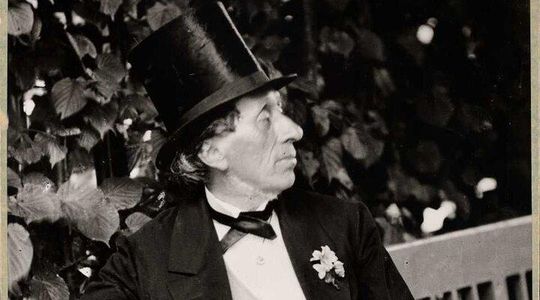 Tour with entry
Life of H.C. Andersen - Half Day Self-Guided Audio Walking Tour
from $14.10
 Tour
TourA Self-Guided Nordic Exploration in Copenhagen's Hidden Hygge
from $1.05 Tour
TourCopenhagen Audio Guided Walking Tour 3h30 and 29 reviews
from $6.41 Tour
TourThe Philosopher's Last Walk: An audio tour on the life of Søren Kierkegaard
from $9.49 Tour
TourTOP Copenhagen : Private Guided Tour with your mobile
from $10.62
Other nearby places you may find interesting
The closest places of the same kind, if this one is not quite what you had in mind.
-
Ærøskøbing Bymuseum • Ærø Museum Island history, seafaring tales and borderland politics unfold inside Ærøskøbing’s 18th‑century sheriff’s house and its tranquil historic garden.
-
Hammerich House • Aero Museum A crooked red cottage of antiques and art where sculptor Gunnar Hammerich’s lovingly preserved rooms bring Ærøskøbing’s early 20th-century home life vividly to life.
-
Badehuse ved Vestre Strandvej Iconic, colour-washed beach huts lining Ærøskøbing’s Vesterstrand, where a century of island bath culture meets shallow emerald water and unforgettable sunsets.
-
Ærø Museum Step into Ærøskøbing’s 1775 bailiff’s house, where maritime tales, island traditions and a tranquil 1920s market garden bring Ærø’s history vividly to life.
-
Marstal Søfartsmuseum A harbour-side maze of ship models, full-scale interiors and sea stories tracing Marstal’s rise from island port to major Danish maritime town.
Swipe for more places
More to explore near The Round Tower

 Best experiences near The Round Tower
 Best hotels near The Round Tower
 Best landmarks near The Round Tower
 Best attractions near The Round Tower
 Best shops near The Round Tower
 Best restaurants near The Round Tower
 Best bars near The Round Tower
Do you manage this location?
Take control to get all the benefits, like improved information, better appearance, and stronger visibility across AI-powered discovery.
Explore more
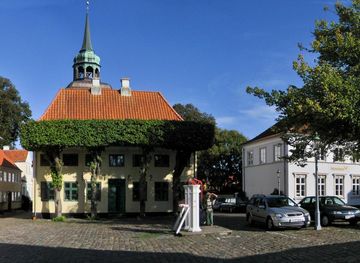
Explore more of Aero
Discover the tranquil beauty of Ærø, Denmark's charming island paradise with historic towns, scenic landscapes, and rich maritime heritage.
Explore Aero
Explore more of Denmark
Discover Denmark: A perfect blend of history, modern design, and the cozy concept of hygge. Explore vibrant cities, serene landscapes, and world-class cuisine.
Explore Denmark
