

Kultorvet Travel Guide
Free Guide: Historic coal market turned buzzing pedestrian square, where colourful façades, cafés and a modern fountain stage capture everyday Copenhagen life.


A brief summary of Kultorvet
Historic coal market turned buzzing pedestrian square, where colourful façades, cafés and a modern fountain stage capture everyday Copenhagen life.
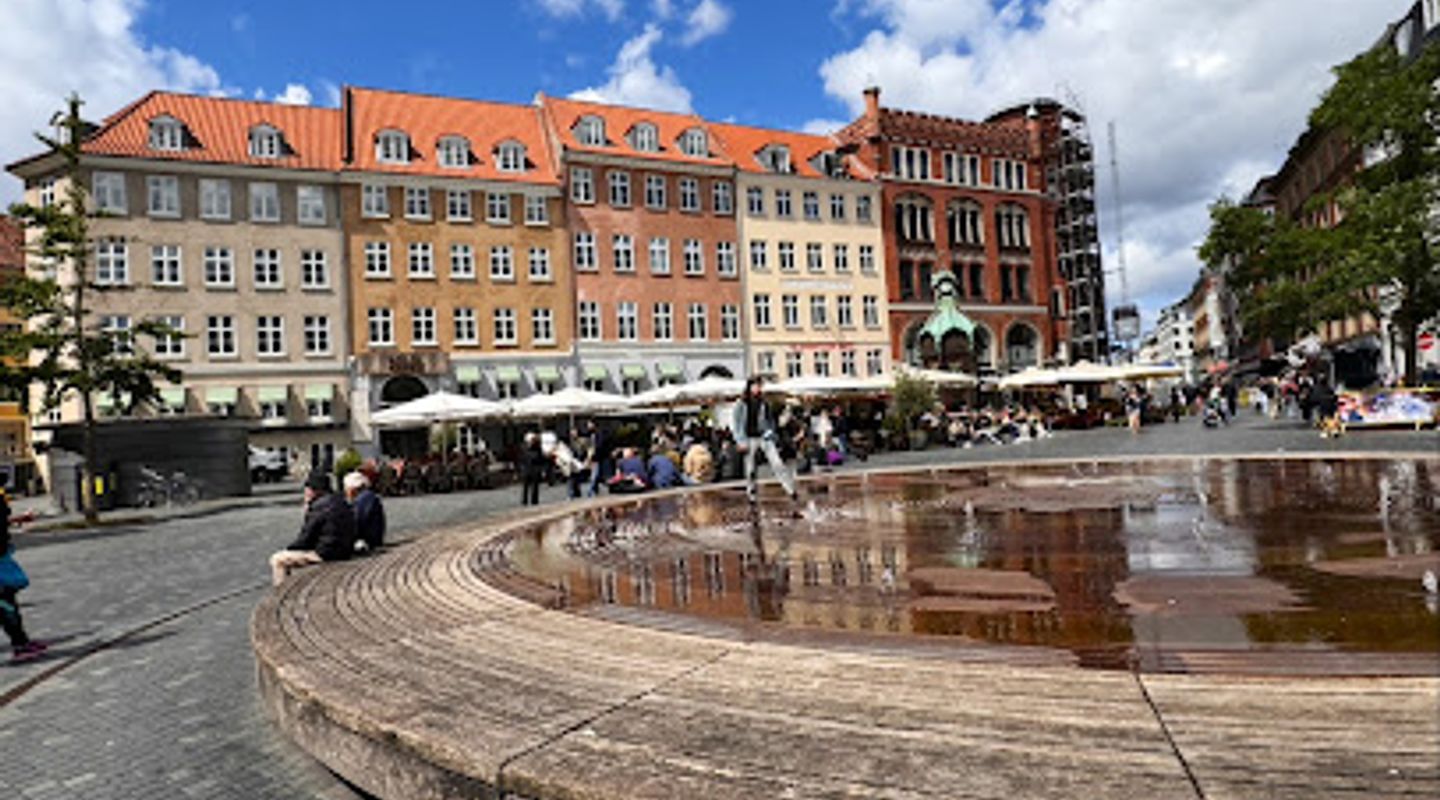
Kultorvet is a historic cobbled square in the heart of Copenhagen’s Old Town, linking Nørreport Station with the pedestrian streets Strøget, Købmagergade and Frederiksborggade. Once a bustling coal market established after the great fire of 1728, it is today a fully pedestrianised urban plaza lined with colourful façades, cafés, shops, flower stalls and a circular fountain that doubles as a stage for summer concerts. It is both a natural thoroughfare and a relaxed spot to pause, people‑watch and soak up classic Copenhagen street life.
On-site amenities
 Restrooms
 Seating areas
 Trash bins
 Information boards
- Address
- Kultorvet, 1175 København
Getting there
Metro and S-train to Nørreport
City bus to Nørreport area
Cycling from central districts
Walking within Indre By
Discover more about Kultorvet
From Coal Market to City Living Room
Kultorvet’s name literally means “the coal market”, a reminder of the days when Copenhageners came here to buy charcoal, firewood and peat for their stoves and ovens. The square was laid out after the devastating Copenhagen Fire of 1728, when much of the medieval city was rebuilt and a new marketplace was needed just inside the former Northern City Gate. Over time, the noisy trade in fuel faded away, but the role of Kultorvet as a place of exchange and encounter remained.Today, the old market has become a kind of urban living room. Office workers cross it on their way between meetings, students cut through from Nørreport, and visitors drift in from Strøget and the Round Tower. Though most people pass through, the open, sunlit space and café terraces invite you to linger, turning what was once a purely practical market into a stage for everyday Copenhagen life.
Architecture Written in Layers of Time
Look up from the paving stones and Kultorvet reads like a timeline of the city. On one corner stands the former Kultorvet Pharmacy, a richly detailed Historicist building from the late 19th century, originally crowned by a tall spire. Nearby façades from the early 1800s sit beside more restrained 20th‑century blocks, reflecting waves of demolition and rebuilding that gradually enlarged the square.The old Copenhagen Central Library once anchored one side of Kultorvet; its building now houses Niels Brock Copenhagen Business College, keeping the academic energy alive. Around the edges, narrow side streets such as Sankt Gertruds Stræde hint at the denser, older townscape that preceded today’s open plaza, offering glimpses of courtyards, gables and the copper roofs that define central Copenhagen.
A Pedestrian Heartbeat Between Station and Strøget
Kultorvet forms part of a continuous pedestrian zone stretching between Nørreport Station and Amagertorv on Strøget. This car‑free ribbon threads together shops, bakeries, bookstores and fashion chains with local cafés and small boutiques, making the square feel both central and surprisingly relaxed. Smooth paving, gentle gradients and generous space make it easy to navigate with a stroller or wheelchair.At peak times the flow of people can be steady, yet the square rarely feels overwhelming. Benches and café seating create pockets of calm, and the open layout means there is always room to pause, adjust your bearings and watch the never‑ending choreography of cyclists, shoppers and street performers weaving past.
Concerts, Fountains and Everyday Hygge
A major refurbishment completed in the early 2010s reshaped Kultorvet into a contemporary urban plaza. The most distinctive new feature is a large circular water basin at the centre, which on ordinary days acts as a playful fountain and informal meeting point, and during special events transforms into a stage for open‑air concerts or performances. On warm evenings, music drifts across the square while people cluster around the fountain’s edge.Cafés spread their tables under awnings and heaters, serving coffee, smørrebrød and pastries almost year‑round. In spring and summer, fruit and flower stalls add bursts of colour and scent, while occasional markets or small festivals bring extra buzz. Amid it all stands one of Copenhagen’s old green telephone kiosks, a nostalgic touch that roots this modern space firmly in the city’s past.
Exploring the Neighbourhood from Kultorvet
Kultorvet is also an excellent starting point for exploring central Copenhagen. A short stroll away you find the Round Tower, with its famous spiral ramp and rooftop views, as well as the dense web of lanes in Indre By filled with design shops, galleries and traditional bars. The proximity of Nørreport Station means the square naturally slots into day trips across the city or beyond.Whether you pause here for a quick espresso, photograph the colourful houses in the low afternoon light, or return in the evening for a casual dinner outdoors, Kultorvet offers an easy snapshot of Copenhagen’s character: historic yet forward‑looking, sociable but unhurried, and always best experienced at street level.
Evendo Review Centre
 Google
Guest reviews
Best time to go
Quietest: Jan, Feb & Mar · before 8am
Busy times are Evendo estimates for a typical year, to help you plan. Actual crowds vary with events, school holidays and the weather.
Explore Kultorvet on the map
A handpicked selection of must-see spots near Kultorvet, mapped for you.
Get your free copy of our complete guide to Kultorvet, delivered straight to you.
Everything on this page, from opening hours and how to get there to Eve’s tips and the best time to go, in one PDF you can read offline, print or share.
Already have an account? Sign in
Your Kultorvet guide is ready.
We'll send it to · Not you? Sign out

Getting your guide ready…
We are putting together a fresh copy of the Kultorvet guide. This can take up to a minute.
This can take a few moments. If your browser asks, choose Allow so the download can start. You'll find the guide in your Downloads folder.
Nothing happened? Download it again
Sorry, the guide is taking longer than usual. Please try again in a minute, or get it by email instead.
Other nearby places you may find interesting
The closest places of the same kind, if this one is not quite what you had in mind.
-
-
-
-
-


Swipe for more places
More to explore near Kultorvet

 Best experiences near Kultorvet
 Best hotels near Kultorvet
 Best landmarks near Kultorvet
 Best attractions near Kultorvet
 Best shops near Kultorvet
 Best restaurants near Kultorvet
 Best bars near Kultorvet
Do you manage this location?
Take control to get all the benefits, like improved information, better appearance, and stronger visibility across AI-powered discovery.
Explore more
Explore more of Zealand
Discover the charm of Zealand, Denmark's largest island, blending vibrant city life in Copenhagen with serene coastal beauty and rich cultural heritage.
Explore Zealand
Explore more of Denmark
Discover Denmark: A perfect blend of history, modern design, and the cozy concept of hygge. Explore vibrant cities, serene landscapes, and world-class cuisine.
Explore Denmark
