KØN - Gender Museum Denmark Travel Guide
Free Guide: One of the world's few museums dedicated to gender history, exploring equality, identity, and social change in a reclaimed Art Nouveau landmark.


A brief summary of KØN - Gender Museum Denmark
One of the world's few museums dedicated to gender history, exploring equality, identity, and social change in a reclaimed Art Nouveau landmark.
KØN is one of the world's few museums dedicated entirely to the cultural history of gender, located in a striking Art Nouveau building in central Aarhus. The museum explores gender roles, equality, sexuality, and the body through permanent exhibitions on women's history—from pioneering feminist Mathilde Fibiger to contemporary movements—alongside rotating thematic displays. A free café serves as a welcoming gathering space, making it an intellectually engaging destination for adults and older teens.
On-site amenities
 Restrooms
 Drink options
 Food options
 Seating areas
 Information boards
 Lockers
Opening hours
- MonClosed
- Tue11 am–4 pm
- Wed11 am–4 pm
- Thu11 am–4 pm
- Fri11 am–4 pm
- Sat11 am–4 pm
- SunClosed
Opening hours as listed on the venue’s Google Business Profile. Hours can change for services and special events, so check with the venue before you go.
- Address
- Domkirkepladsen 5, 8000 Aarhus
- Phone
- Website
Getting there
Public Bus
Train and Walk
Bicycle
Parking and Car
Discover more about KØN - Gender Museum Denmark
A Museum Rooted in Resistance and Reclamation
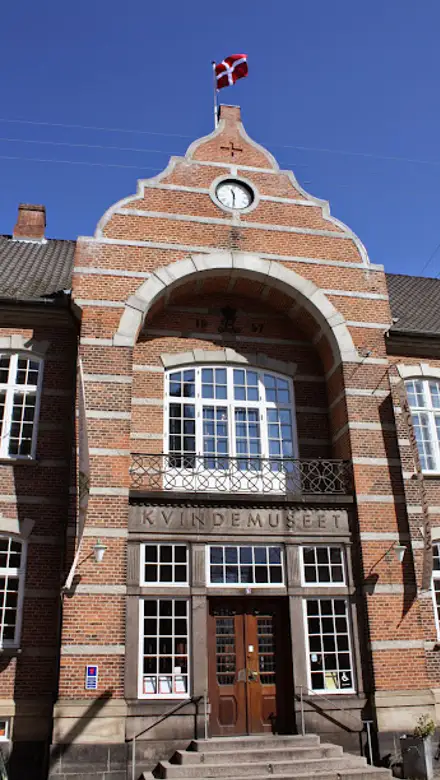
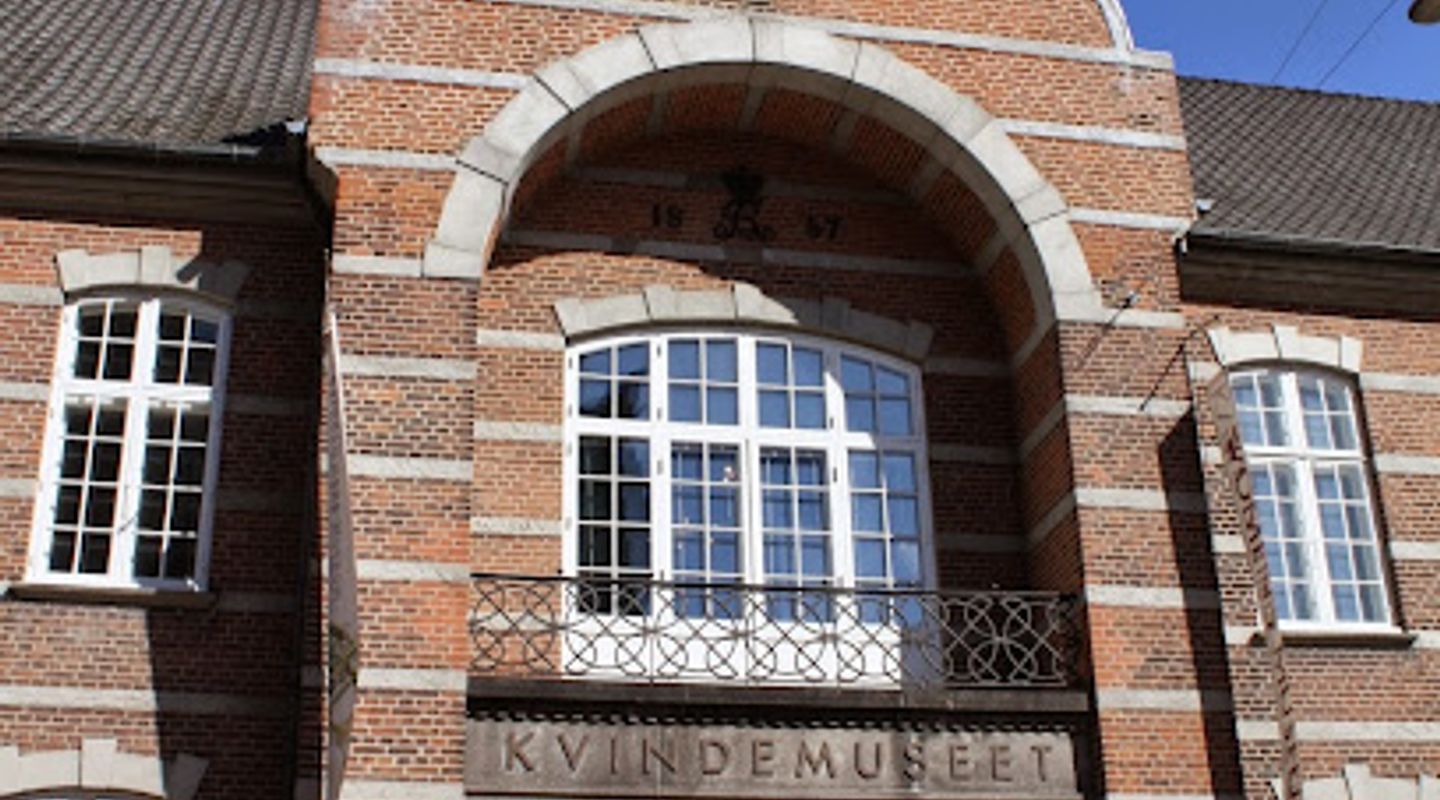
KØN occupies a building with a complex and powerful history. Constructed in 1857 as Aarhus's city hall, courthouse, and jail, the structure was modernized in the early 1900s with distinctive Art Nouveau decoration—intricate tempera paintings of flowers and patterns still adorn the walls and ceilings. During World War II, the German Gestapo commandeered the building as their headquarters, surrounding it with barbed wire and shutters as they suppressed Danish resistance from 1944 to 1945. After the war, the police reclaimed it until 1983. When the grassroots Women's Museum moved in during 1984, it transformed the space into a sanctuary for feminist discourse and historical documentation. In 2021, the museum was renamed KØN to reflect its expanded focus beyond women's history to gender history as a whole, though the original Danish inscription "Kvindemuseet" (Women's Museum) remains above the entrance as a symbol of its enduring spirit.
Exploring Gender Through Time and Culture
The museum's permanent exhibitions guide visitors through the cultural history of gender in Denmark, tracing the evolution of gender roles, sexuality, and equality from the 19th century to the present day. One major exhibition follows the women's movement from Mathilde Fibiger—a pioneering 19th-century Danish feminist—through to contemporary activism including the #metoo movement. The museum examines sex education history, body representation, and the social forces that have shaped gender identity and expression. Rotating thematic exhibitions complement the permanent collections, ensuring fresh perspectives and contemporary relevance. The curatorial approach is deliberately text-rich and layered, inviting visitors to engage deeply with complex social and historical themes rather than offering superficial overviews.
Interactive Spaces and Hands-On Learning
The museum recognizes that gender history is not abstract—it is lived experience. A dedicated childhood section includes interactive elements and period clothing for younger visitors to try on, making the exhibition more tangible and engaging for families. The museum hosts dialogue-based educational programs on gender, equality, sexuality, the body, democracy, and citizenship, positioning itself as a platform for debate and reflection rather than a passive repository of objects. Throughout the year, talks, discussion salons, panel debates, and workshops invite the public to participate in conversations about gender's significance in society.
The Architectural Setting and Aesthetic
The building itself is a visual statement. Its symmetrical facade features curved gables and gray decorative elements that create a striking striped pattern against red brick, making it distinctive even as it sits modestly behind Aarhus Cathedral. Heavy wooden double doors mark the central entrance. Inside, the Art Nouveau details—painted ceilings, ornamental patterns, and period architectural features—create an atmosphere of historical weight and cultural significance. The museum occupies multiple floors connected by a lift, with light-weight folding chairs available on each level for visitor comfort. This architectural grandeur contrasts intentionally with the intimate, personal nature of gender history, creating a space where monumental public buildings are reclaimed for marginalized narratives.
KØN Café: A Free Social Oasis
The museum's café is a beloved gathering space with free entry, allowing visitors to linger without additional cost. Housed within the museum, it serves homemade sourdough buns, coffee, and light meals using vintage antique porcelain, creating a charming and atmospheric retreat. The café functions as both a practical amenity and an extension of the museum's mission—a place where conversations about gender, equality, and social change can continue informally over refreshment.
Location and Accessibility
KØN sits in the heart of Aarhus, directly adjacent to Aarhus Cathedral on Domkirkepladsen. The location is highly accessible: it is a five-minute walk from Busgaden, the city's main bus junction, and numerous parking facilities are nearby, including dedicated disabled parking across from Hotel Royal. The museum provides lockers for large bags, and prams or strollers can be parked safely at the entrance. A lift serves the second and third floors, and staff can provide maps to help visitors navigate the exhibitions.
Evendo Review Centre
 Google
Guest reviews
Best time to go
Quietest: Jan, Feb & Dec · before 9am or from 7pm
Busy times are Evendo estimates for a typical year, to help you plan. Actual crowds vary with events, school holidays and the weather.
Explore KØN - Gender Museum Denmark on the map
A handpicked selection of must-see spots near KØN - Gender Museum Denmark, mapped for you.
Get your free copy of our complete guide to KØN - Gender Museum Denmark, delivered straight to you.
Everything on this page, from opening hours and how to get there to Eve’s tips and the best time to go, in one PDF you can read offline, print or share.
Already have an account? Sign in
Your KØN - Gender Museum Denmark guide is ready.
We'll send it to · Not you? Sign out

Getting your guide ready…
We are putting together a fresh copy of the KØN - Gender Museum Denmark guide. This can take up to a minute.
This can take a few moments. If your browser asks, choose Allow so the download can start. You'll find the guide in your Downloads folder.
Nothing happened? Download it again
Sorry, the guide is taking longer than usual. Please try again in a minute, or get it by email instead.
Unlock the best of KØN - Gender Museum Denmark
Skip-the-line tickets, guided tours with entry, and walking tours of the area, booked in a few clicks.


Other nearby places you may find interesting
The closest places of the same kind, if this one is not quite what you had in mind.
-
-
-
-
-


Swipe for more places
More to explore near KØN - Gender Museum Denmark
-
 Best experiences near KØN - Gender Museum Denmark
-
 Best hotels near KØN - Gender Museum Denmark
-
 Best landmarks near KØN - Gender Museum Denmark
-
 Best attractions near KØN - Gender Museum Denmark
-
 Best shops near KØN - Gender Museum Denmark
-
 Best restaurants near KØN - Gender Museum Denmark
-
 Best bars near KØN - Gender Museum Denmark


Do you manage this location?
Take control to get all the benefits, like improved information, better appearance, and stronger visibility across AI-powered discovery.
Explore more

Explore more of Central Jutland
Explore Central Jutland in Denmark: A perfect blend of natural beauty, cultural heritage, and family-friendly attractions.
Explore Central Jutland
Explore more of Denmark
Discover Denmark: A perfect blend of history, modern design, and the cozy concept of hygge. Explore vibrant cities, serene landscapes, and world-class cuisine.
Explore Denmark