The Danish Parliament, Copenhagen Travel Guide
Where granite walls, royal ceremony and daily debates meet: the Danish Parliament at Christiansborg is Copenhagen’s living monument to centuries of power.
Set on the small islet of Slotsholmen in Copenhagen’s historic core, the Danish Parliament occupies part of Christiansborg Palace, a monumental neo‑Baroque complex that has been Denmark’s center of power for centuries. Within its granite walls, the Folketing (Parliament), Supreme Court and Prime Minister’s Office share space with royal reception rooms, palace chapel and underground ruins that trace the site’s story back to Bishop Absalon’s 12th‑century fortress, making this both a working seat of democracy and a richly layered historical landmark.
A brief summary to The Danish Parliament
- Christiansborg, Indre By, Indre By, 1218, DK
- Click to display
- Click to display
- Duration: 1 to 3 hours
- Mid ranged
-
 Mixed
Mixed
- Mobile reception: 5 out of 5

Know before you go
Hi, I'm Eve. Here are a few practical things to know before exploring The Danish Parliament.
- Check in advance for guided tour times of the Parliament, as access to chambers and committee rooms is typically only possible on organised visits.
- Combine a Parliament-focused visit with the tower viewpoint and underground ruins to understand both the working institution and its deep historical roots.
- Allow extra time for security screening before entering parliamentary areas, and carry a valid photo ID, which is often required for access.
- Dress in layers; the stone interiors and galleries can feel cool even on mild days, especially if you spend time in the ruins beneath the palace.
- Visit early on weekdays to see the building at its liveliest, with staff and politicians moving between offices, meetings and the debating chamber.
Do you manage this location?
Take control to get all the benefits, like improved information, better appearance, and stronger visibility across AI-powered discovery. Learn more about listing your business on Evendo
Activate your presenceOther nearby places you may find interesting
The closest places of the same kind, if this one is not quite what you had in mind.


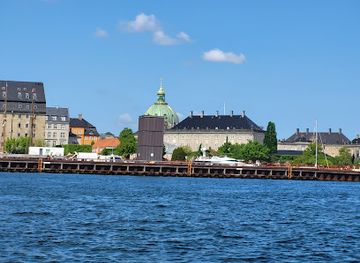
Explore The Danish Parliament on the Map
A handpicked selection of must-see spots near The Danish Parliament, mapped for you.
Unlock the Best of The Danish Parliament
Buy tickets
-
No tickets available
Book tours with entry


Getting There
-
Metro and short walk from central Copenhagen
From key central stations such as Nørreport or København H, take the M3 or M4 metro to Gammel Strand or Kongens Nytorv; trains run every few minutes and a single-zone ticket costs roughly 20–25 DKK. From either station, it is an easy, mostly level 10–15 minute walk through the historic centre to Christiansborg on Slotsholmen. This option is convenient in most weather, though winter winds along the canals can feel sharp.
-
City bus to Slotsholmen area
Several inner-city bus lines run through the Indre By district with stops within a 5–10 minute walk of Christiansborg; typical journey times from other central neighbourhoods range from 10 to 25 minutes depending on traffic. Standard bus tickets cost similar to metro fares, and services operate frequently throughout the day. Buses are low-floor and generally suitable for travellers with limited mobility, though crowding can increase at rush hours.
-
Cycling through the Inner City bike network
Copenhagen’s dense network of segregated bike lanes makes cycling to Christiansborg straightforward from most central districts in 10–25 minutes. You can rent a city bike or conventional bicycle from numerous providers, with typical day rates starting around 100–150 DKK. While the terrain is flat, be prepared for busy commuter flows on weekdays and observe local cycling etiquette at junctions and traffic lights.
-
Walking from Copenhagen City Hall Square
From Rådhuspladsen, many visitors choose to walk through the compact historic core to Christiansborg, a pleasant, mostly pedestrian-friendly route that typically takes 15–25 minutes at a moderate pace. The pavements are generally even but can be slick in rain or winter conditions, so comfortable footwear is recommended. This option is free and allows you to take in central landmarks along the way.
For the on-the-go comforts that matter to you
-
 Restrooms
-
 Drink Options
-
 Drinking Water
-
 Food Options
-
 Seating Areas
-
 Sheltered Areas
-
 Trash Bins
-
 Information Boards
-
 Visitor Center
Discover more about The Danish Parliament
A Working Heart of Danish Democracy
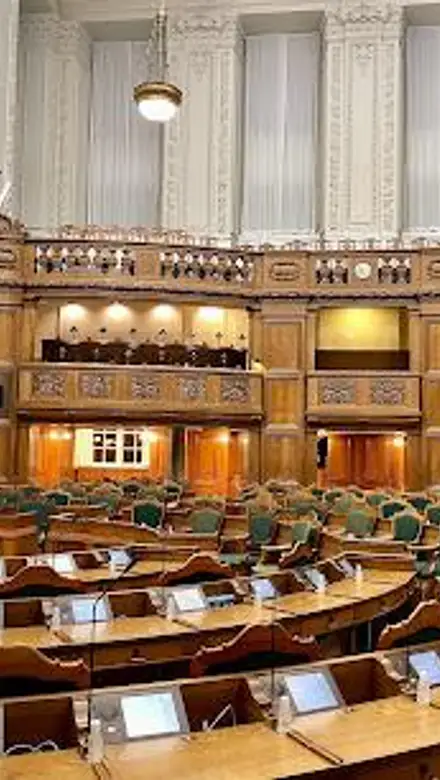
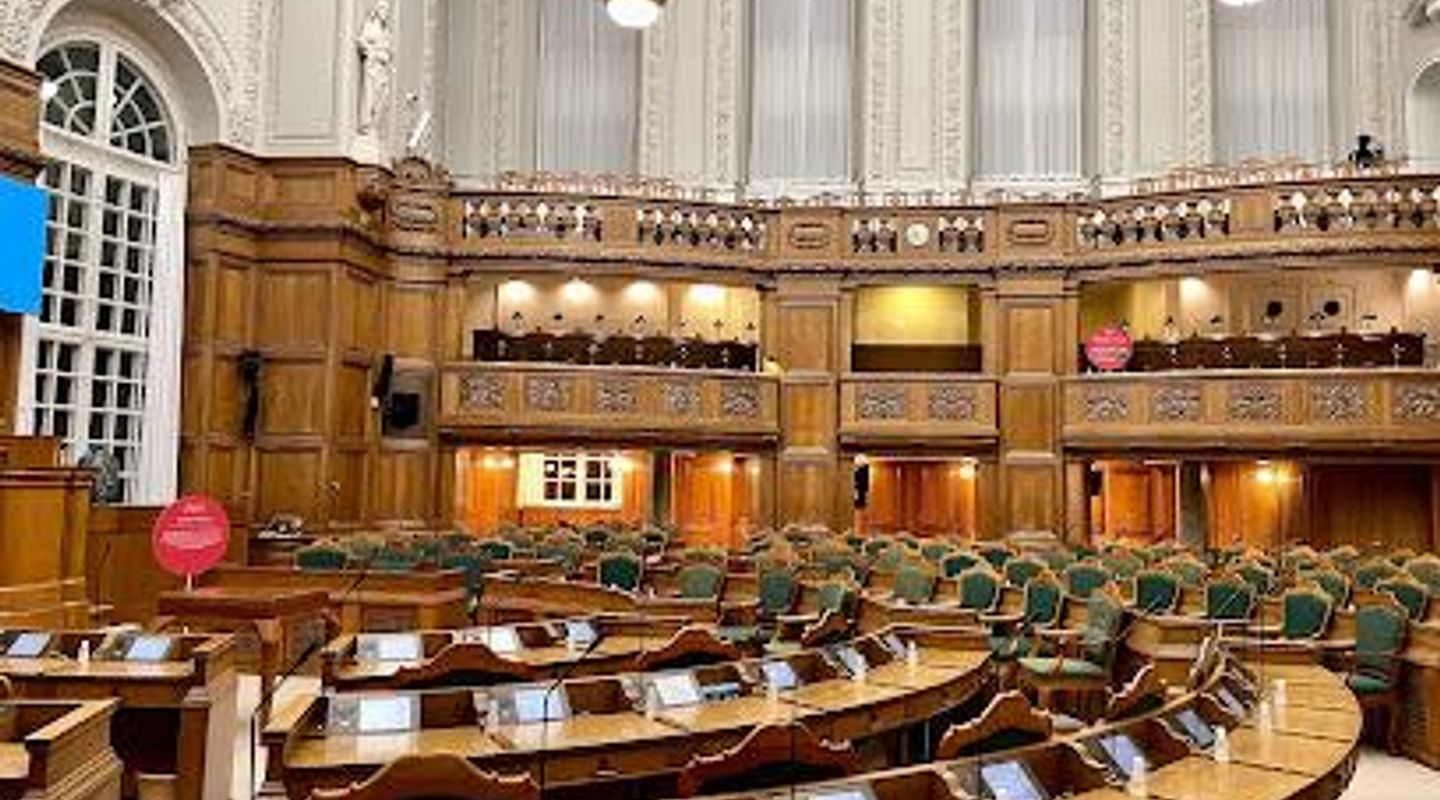
Christiansborg Palace on the islet of Slotsholmen houses the Folketing, Denmark’s Parliament, alongside the Prime Minister’s Office and the Supreme Court, making it the country’s political nerve centre. From the outside, the building’s heavy granite façades, tall tower crowned with three copper crowns and formal courtyards project authority and permanence in the middle of Copenhagen’s Inner City.Inside the parliamentary wing, sessions, debates and committee work unfold in chambers designed for transparency and modern governance. Public galleries overlook the main debating hall, and guided tours on selected days explain how this relatively small Nordic nation runs a constitutional monarchy and parliamentary democracy from within such grand historical surroundings.Layers of Power on Slotsholmen Island
The ground beneath the Danish Parliament has been associated with power for more than eight centuries. Around 1167, Bishop Absalon built a fortified castle here, a stronghold that later gave way to Copenhagen Castle as royal authority strengthened. Over time, the medieval castle was replaced by increasingly ambitious palaces, each intended to symbolise the state’s might and prestige.Two devastating fires, in 1794 and 1884, destroyed earlier Christiansborg palaces, but each catastrophe left traces. The present palace, completed in 1928, incorporates remnants of earlier structures, from walls reused in later building phases to the preserved palace chapel and showgrounds that survived the last fire. Today’s Parliament thus sits literally on top of foundations laid by bishops, kings and ministers across the centuries.Architecture Bridging Monarchy and Parliament
The current Christiansborg Palace was designed in a historicist neo‑Baroque style, with monumental stonework, sculpted façades and a soaring central tower that is the highest point in Copenhagen. This architectural choice intentionally echoes the grandeur of absolute monarchy, even though the building now primarily serves democratic institutions.Within the complex, you can still find elements from different eras: the neoclassical palace chapel with its calm, domed interior, the baroque riding grounds, and interiors where classicist lines meet early 20th‑century detailing. For visitors, this architectural collage makes the Parliamentary complex an instructive place to see how Denmark’s built environment has adapted as power passed from royal court to elected representatives.Royal Ceremonies and State Occasions
Although the monarch no longer resides here, Christiansborg still hosts important royal and state ceremonies. The Royal Reception Rooms, accessed from another wing of the palace, are used for state dinners, audiences and formal events, and the balcony of the Throne Room is where new Danish monarchs are proclaimed. The Great Hall displays modern tapestries depicting a thousand years of national history, binding contemporary visual art to the palace’s ceremonial role.The proximity of royal spaces to the parliamentary wing underlines Denmark’s constitutional arrangement: a monarchy that reigns but does not rule, side by side with an actively working legislature. Walking around the exterior courtyards, you sense how these different strands of authority are physically woven together in one densely layered complex.Visiting the Seat of the Folketing
For travellers, the Danish Parliament at Christiansborg offers more than a quick photo stop. When tours are available, you can step into selected parliamentary areas to see debating chambers, learn about legislative processes and ask questions about Nordic politics. Even without entering, strolling around Slotsholmen reveals sculpted portals, statuary and views across the surrounding canals.Combined with visits to the ruins beneath the palace, the tower’s city panorama or the palace kitchens and stables, time at Christiansborg builds a rounded picture of how power has been organised, displayed and shared here over hundreds of years. It is one of the few places in the world where you can, in a single complex, trace a line from medieval fortification and royal absolutism to a contemporary, consensus‑driven parliament.












Your all‑in‑one travel companion app
Explore expert travel guides, compare and book tours, experiences, hotels, and more—all from the palm of your hand. Download now for seamless trip planning wherever your wanderlust takes you.


Explore More of Copenhagen
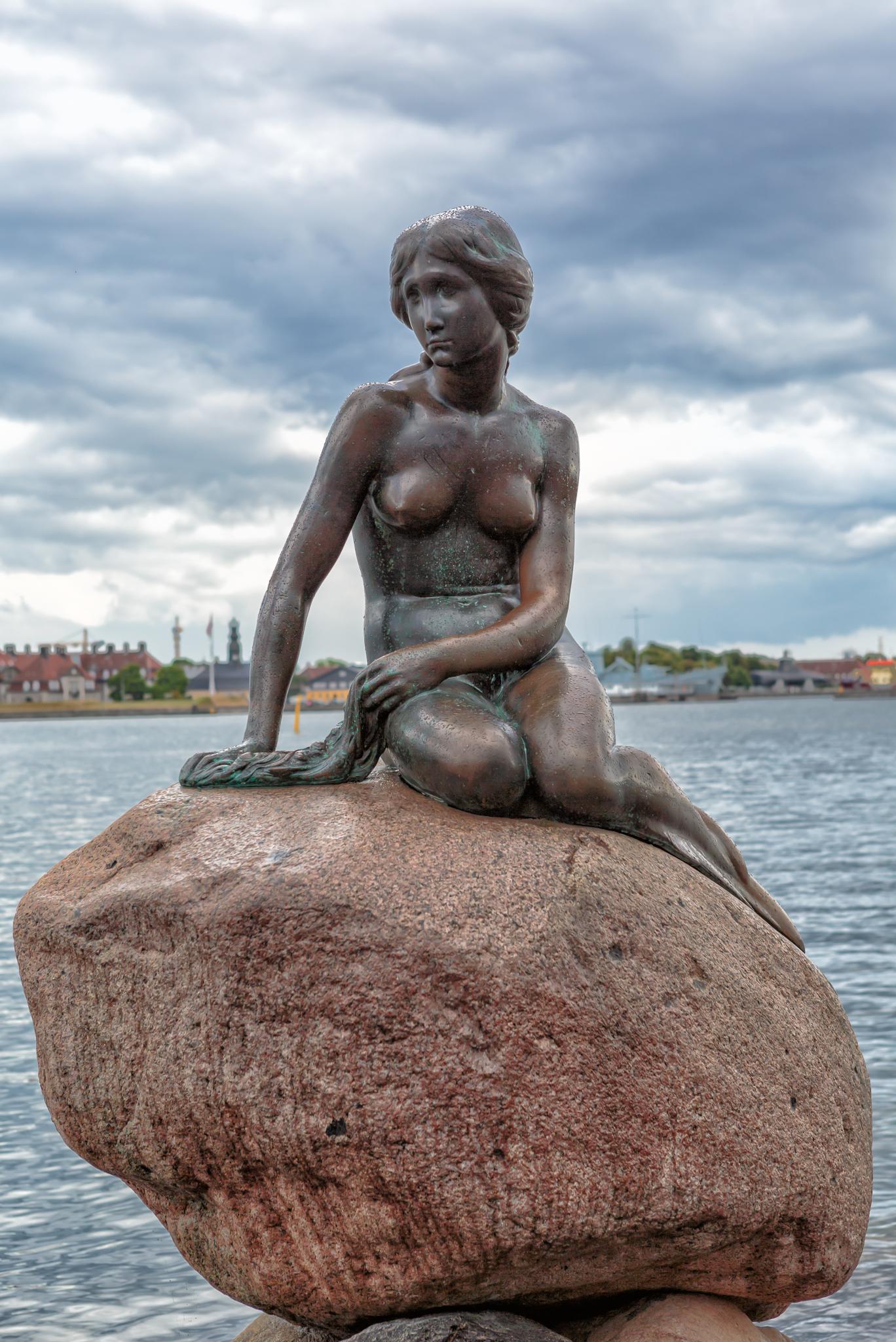
Looking beyond The Danish Parliament? Discover Copenhagen for broader travel guides, local hot-spots, and regional highlights.
Explore Copenhagen
A modest former service house on Frederiksholms Kanal, quietly recalling the working lives behind Copenhagen’s royal stables and the grandeur of nearby Christiansborg.
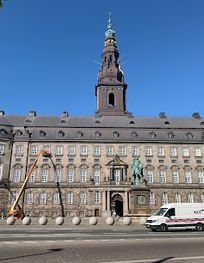
Historic palace in central Copenhagen featuring lavish royal halls, government chambers, ancient ruins, and sweeping tower views in the heart of Indre By.