

The Little Mermaid, Copenhagen Travel Guide
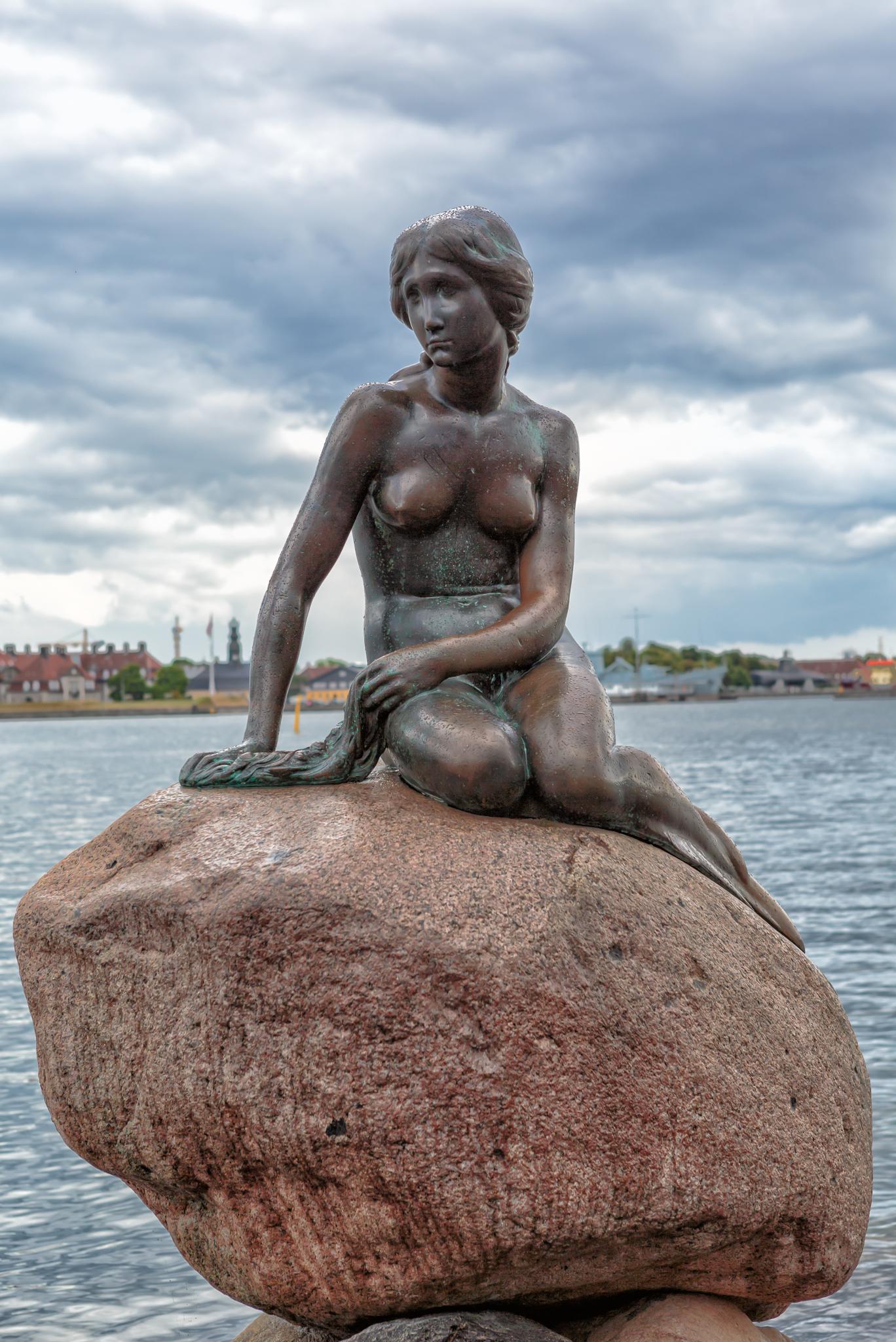
Copenhagen’s most famous bronze figure, a small mermaid with a grand story, gazing from Langelinie’s harbour rocks toward the meeting of fairy tale and sea.
Poised on a granite rock along Copenhagen’s Langelinie promenade, The Little Mermaid is a small bronze statue with a global reputation. Unveiled in 1913 and inspired by Hans Christian Andersen’s 1837 fairy tale, she gazes out over the harbour, half woman, half fish, capturing themes of longing and sacrifice. Despite being just 1.25 metres tall, this wistful figure has become one of Denmark’s defining symbols and a must-see waterfront stop for visitors exploring the city’s maritime edge.
A brief summary to The Little Mermaid
- Langelinie, København Ø, København Ø, 2100, DK
- Duration: 0.5 to 1.5 hours
- Free
-
 Outdoor
- Mobile reception: 5 out of 5

Know before you go
Hi, I'm Eve. Here are a few practical things to know before exploring The Little Mermaid.
- Visit early in the morning or later in the evening to avoid the largest coach and cruise crowds and to enjoy softer light on the harbour for photos.
- Stay on the promenade rather than climbing onto the rocks; they can be slippery, and the statue is best appreciated with a little distance.
- Combine your stop with a walk through Kastellet’s ramparts and along the Langelinie promenade for wider harbour views and green spaces.
- Bring a light jacket outside summer; the waterfront can feel breezy and cooler than the city streets, even on sunny days.
- If you know Andersen’s original story, reread it before or after your visit; the statue’s expression and pose resonate more with the tale’s bittersweet ending.
Do you manage this location?
Take control to get all the benefits, like improved information, better appearance, and stronger visibility across AI-powered discovery. Learn more about listing your business on Evendo
Activate your presenceOther nearby places you may find interesting
The closest places of the same kind, if this one is not quite what you had in mind.

Explore The Little Mermaid on the Map
A handpicked selection of must-see spots near The Little Mermaid, mapped for you.
Unlock the Best of The Little Mermaid
Buy tickets
-
No tickets available
Book tours with entry


Getting There
-
Metro and walk from central Copenhagen
From central Copenhagen, take the M3 Cityringen metro line to Østerport Station; trains run every few minutes and the ride from inner-city stations typically takes 5–10 minutes. A single zone ticket costs roughly 20–30 DKK depending on how you purchase it and any travel card you use. From Østerport it is an easy 15–20 minute walk on level pavements through a mix of parkland and harbourfront, suitable for most visitors and pushchairs, though winter weather can make it chilly.
-
Local S-train and short walk
If you are already near the S-train network, ride an A, B, C or E line to Østerport Station, a major hub on the north side of the inner city. The journey from Copenhagen Central typically takes about 5 minutes and costs in the region of 20–30 DKK for a standard ticket. From Østerport, follow broad, well-maintained footpaths through Kastellet and along the waterfront for 15–20 minutes; gradients are gentle, but some cobbles and park paths may be less comfortable for wheelchairs in wet conditions.
-
Harbour boat or canal tour
Several harbour and canal tours departing from central quays include a pass by The Little Mermaid, offering a waterside view rather than direct access. Typical cruises last 60–90 minutes and cost around 80–120 DKK per adult, with covered and open seating depending on the boat. Commentary usually highlights the statue’s history and nearby landmarks. Boats run more frequently in spring and summer and may be reduced or weather-dependent in colder months or strong winds.
-
Bicycle from the inner city
Copenhagen’s extensive cycle lanes make it practical to reach Langelinie by bike from most central districts in around 10–20 minutes. City bikes and private rentals generally cost about 20–50 DKK per hour, with discounts for longer use. Routes are mostly flat and segregated from car traffic, but you will share space with many local cyclists and need to follow local cycling rules. Bicycle racks are found near the promenade; in icy or very windy weather, less confident riders may prefer public transport.
For the on-the-go comforts that matter to you
-
 Restrooms
-
 Drink Options
-
 Drinking Water
-
 Food Options
-
 Seating Areas
-
 Sheltered Areas
-
 Trash Bins
-
 Information Boards
-
 Visitor Center
Discover more about The Little Mermaid
A fairy-tale figure on the harbour
The Little Mermaid sits on a rough granite boulder at the edge of Copenhagen’s harbour, where the water laps almost at her tail. Cast in bronze, she is just 1.25 metres high, smaller than most first-time visitors expect, yet instantly recognizable. Her body twists slightly toward the shore while her gaze is fixed out over the water, caught between sea and land, mermaid and human.Commissioned in 1909 by brewer and philanthropist Carl Jacobsen after he was moved by a ballet based on Hans Christian Andersen’s story, the statue was created by sculptor Edvard Eriksen and unveiled in 1913. The face was modelled on ballerina Ellen Price, while Eriksen’s wife Eline provided the figure for the body, blending stage glamour with everyday Copenhagen life.The story beneath the bronze
Hans Christian Andersen’s 1837 tale tells of a young mermaid who dreams of leaving the sea to gain a human soul and the love of a prince. She trades her voice for legs, endures pain with every step, and ultimately chooses selfless love over her own happiness. The statue captures the quiet moment of reflection that follows her transformation, a mood of longing and sacrifice rather than simple fairy-tale joy.This emotional undertone gives the sculpture a depth that belies its modest size. Her bare bronze shoulders and folded tail suggest vulnerability, while her expression remains calm and contemplative. Standing beside her, you sense the tension between two worlds: the busy modern city at your back and the open water that symbolizes the life she left behind.A waterfront icon with a turbulent past
Since her installation on Langelinie, The Little Mermaid has become a symbol of Copenhagen itself. Cruise ships glide past, harbour tours slow for photos, and the promenade funnels a steady stream of walkers and cyclists to her rocky perch. Early morning and evening can feel almost intimate, with soft light on the harbour and only the sound of gulls and engines in the distance.Her fame has come at a cost. Over the decades she has been decapitated, had limbs removed, been blown from her rock, and been splashed with paint in everything from art stunts to political protests. Each time she has been carefully restored and returned to the same stone, reinforcing her role as a resilient cultural emblem as much as a delicate artwork.Reading the scene around Langelinie
The statue’s setting is part of the experience. Langelinie is a linear waterfront promenade, with views across the harbour to modern developments and back toward the star-shaped earthen ramparts of Kastellet. On clear days the light can be almost silvery, reflecting off the water and bronze alike. The rock sits just off the shoreline, close enough to study her features but separated by a narrow band of sea that preserves a hint of distance.Around her, cameras click constantly and visitors negotiate turns on the best vantage points along the quayside. Yet step a few metres back and the promenade opens into a relaxed, maritime atmosphere: joggers passing by, families lingering with ice creams, ships sounding their horns. The Little Mermaid feels both part of this everyday rhythm and slightly detached from it, frozen in her own quiet narrative.Planning your moment with Copenhagen’s mermaid
The statue is free to visit at any hour, with no barriers or ticket booths. Many travellers combine a stop here with a broader walk along the harbourfront and into nearby green spaces and royal landmarks. Simple practicalities make a difference: the rocks can be slippery and there is no need to climb onto the boulder itself, as the best views are often from the path.Spending a little longer than a quick snapshot rewards you with changing light, shifting reflections and the chance to notice details such as the subtle texture of the bronze, the way her tail curls around the rock, and the slight tilt of her head. In that pause, this small sculpture lives up to its outsized reputation, connecting Copenhagen’s maritime setting, literary history and modern identity in a single, quietly powerful figure.












Your all‑in‑one travel companion app
Explore expert travel guides, compare and book tours, experiences, hotels, and more—all from the palm of your hand. Download now for seamless trip planning wherever your wanderlust takes you.


Explore More of Copenhagen
Looking beyond The Little Mermaid? Discover Copenhagen for broader travel guides, local hot-spots, and regional highlights.
Explore Copenhagen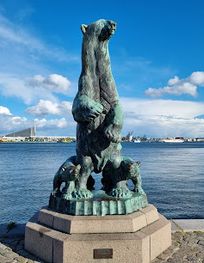
Stroll Copenhagen's scenic Langelinie promenade for harbor views, the Little Mermaid, and a blend of maritime history, gardens, and vibrant city atmosphere.
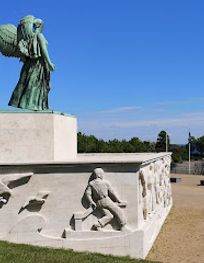
Honoring Denmark’s seafaring legacy, the Maritime Monument in Østerbro is a striking, evocative memorial nestled in the heart of Copenhagen’s leafy cityscape.
