

Anno Dom 1913, East Jutland Travel Guide
A discreet early-20th-century monument on Kirketorvet, Anno Dom 1913 quietly anchors Vejle’s historic heart with dates, details and a sense of urban continuity.
Discreetly set on Kirketorvet in central Vejle, Anno Dom 1913 is a compact urban monument that marks the early 20th-century face of the city. This sculptural fountain-like structure, framed by cobblestones and historic facades, takes its name from the Latin “in the year of our Lord 1913” and recalls a period when Vejle was transforming from market town to modern industrial hub. Today it serves as a small but characterful focal point amid churches, the town hall and busy pedestrian streets.
A brief summary to Anno Dom 1913
- Kirketorvet 1, Vejle, 7100, DK
- Duration: 0.25 to 0.5 hours
- Free
-
 Outdoor
- Mobile reception: 5 out of 5

Know before you go
Hi, I'm Eve. Here are a few practical things to know before exploring Anno Dom 1913.
- Combine a stop at Anno Dom 1913 with visits to the nearby churches and town hall to better understand how the monument fits into Vejle’s historic core.
- Visit in the early morning or late afternoon for softer light that brings out subtle textures in the stone and metalwork without harsh shadows.
- Bring a camera or smartphone if you enjoy architectural details; the monument and surrounding façades make for atmospheric close-up shots.
- Allow a few extra minutes to simply stand back and see how the monument lines up with the square, churches and town hall around it.
Do you manage this location?
Take control to get all the benefits, like improved information, better appearance, and stronger visibility across AI-powered discovery. Learn more about listing your business on Evendo
Activate your presenceOther nearby places you may find interesting
The closest places of the same kind, if this one is not quite what you had in mind.
Explore Anno Dom 1913 on the Map
A handpicked selection of must-see spots near Anno Dom 1913, mapped for you.
Getting There
-
Train and short walk from Vejle Station
Arrive at Vejle Station on regional or intercity trains from cities such as Aarhus, Odense or Copenhagen; typical journey times range from about 35–45 minutes from Aarhus, around 35–40 minutes from Odense and roughly 2–2.5 hours from Copenhagen, with one-way fares usually starting around 80–120 DKK depending on distance and ticket type. From the station, expect an easy 5–10 minute walk on level pavements through the compact city centre to Kirketorvet, suitable for most visitors including those with light luggage or prams.
-
Local bus within Vejle
Several city and regional buses stop close to Vejle Station and along the central streets near Kirketorvet, making it straightforward to include the monument on a wider trip around town. Typical journeys within the urban area take 5–20 minutes, with single tickets generally costing about 20–30 DKK depending on zones. Buses usually run frequently during the day but less often in evenings and on weekends, and you will disembark within a short, step-free walk of the square.
-
Car travel to central Vejle
If you are driving, central Vejle is easily reached via the E45 motorway with signed approaches into the city centre. Travel times are commonly around 30–40 minutes from Billund, 35–45 minutes from Aarhus and 35–45 minutes from Odense under normal conditions. Expect to pay for parking in most central car parks and street spaces, typically around 10–20 DKK per hour. From many parking areas it is a 5–15 minute walk through the pedestrian-friendly core to reach Kirketorvet and Anno Dom 1913.
For the on-the-go comforts that matter to you
-
 Restrooms
-
 Drink Options
-
 Food Options
-
 Seating Areas
-
 Trash Bins
-
 Information Boards
-
 Visitor Center
Discover more about Anno Dom 1913
A modest monument in the heart of Vejle
Anno Dom 1913 stands on Kirketorvet, one of Vejle’s most atmospheric squares, just a short stroll from the main shopping streets and the town’s churches. Rather than a towering statue, it is a low, finely detailed structure that you notice almost by surprise, tucked into the flow of everyday life. Its compact size means you can walk right up to it, study its surfaces and read its inscription without any barriers.The monument takes its name from the Latin phrase “Anno Domini 1913,” literally “in the year of our Lord 1913,” signalling both the year of its creation and its link to the Christian calendar that shaped civic timekeeping in Denmark for centuries. The date anchors the piece in a moment when Vejle was growing rapidly, with new public buildings and urban spaces reshaping the town.Echoes of an early 20th-century city
When this monument was erected, Vejle was transitioning from a provincial town to an industrial centre. New factories, improved infrastructure and an expanding railway network were changing daily rhythms. Anno Dom 1913 reflects that era’s belief in civic pride and public art: small, carefully crafted works were placed in squares and in front of important buildings to signal confidence in the future.The design language is typical of the period, with clear lines, restrained ornament and a preference for durable materials suited to an outdoor northern climate. Subtle decorative elements nod to older European traditions while still feeling relatively modern, mirroring the way Vejle combined long-standing church spires and a medieval street pattern with new brick facades and civic institutions.Reading the details up close
Standing beside Anno Dom 1913, you can trace the lettering of its inscription and pick out flourishes in the stone and metalwork. The proportions are human-scale: you do not look up in awe so much as look closely in curiosity. This intimacy encourages you to linger for a moment, circling the structure and noticing how it aligns with the nearby church, town hall and the slight slope of the square.Weather has softened some edges and darkened certain surfaces, giving the monument a patina that hints at more than a century of winters, rain showers and bright Danish summer evenings. In strong light, details stand out sharply; on overcast days, the forms look quieter and more introspective, blending into the subdued colours of the surrounding buildings.Part of a wider historic ensemble
Although small, Anno Dom 1913 gains significance from its setting among several of Vejle’s key historic landmarks. Kirketorvet is framed by church architecture, the town hall and period townhouses, creating a sequence of façades that document different stages of the city’s growth. The monument acts almost like a punctuation mark in this streetscape, a pause between larger structures.Within a very short walking radius you can move from sacred spaces to civic offices, from traditional shops to contemporary cafes. Anno Dom 1913 sits at this crossroads of functions, embodying the way public art in Danish towns often weaves quietly into everyday routines rather than standing apart.A brief but worthwhile stop
Most visits to Anno Dom 1913 are short, often combined with time at the nearby churches, the town hall or the science-focused Økolariet. Yet even a brief stop can enrich your sense of place. The monument offers a physical date-stone for Vejle’s early modern era, a reminder that the city’s current energy is built on more than a century of urban ambition.For travellers interested in architecture, urban history or simply the character of Danish market towns, this small site repays a few quiet minutes of observation. It is a spot where you can stand still amid the movement of central Vejle and imagine how the square – and the city – might have looked in that formative year of 1913.












Your all‑in‑one travel companion app
Explore expert travel guides, compare and book tours, experiences, hotels, and more—all from the palm of your hand. Download now for seamless trip planning wherever your wanderlust takes you.


Explore More of East Jutland
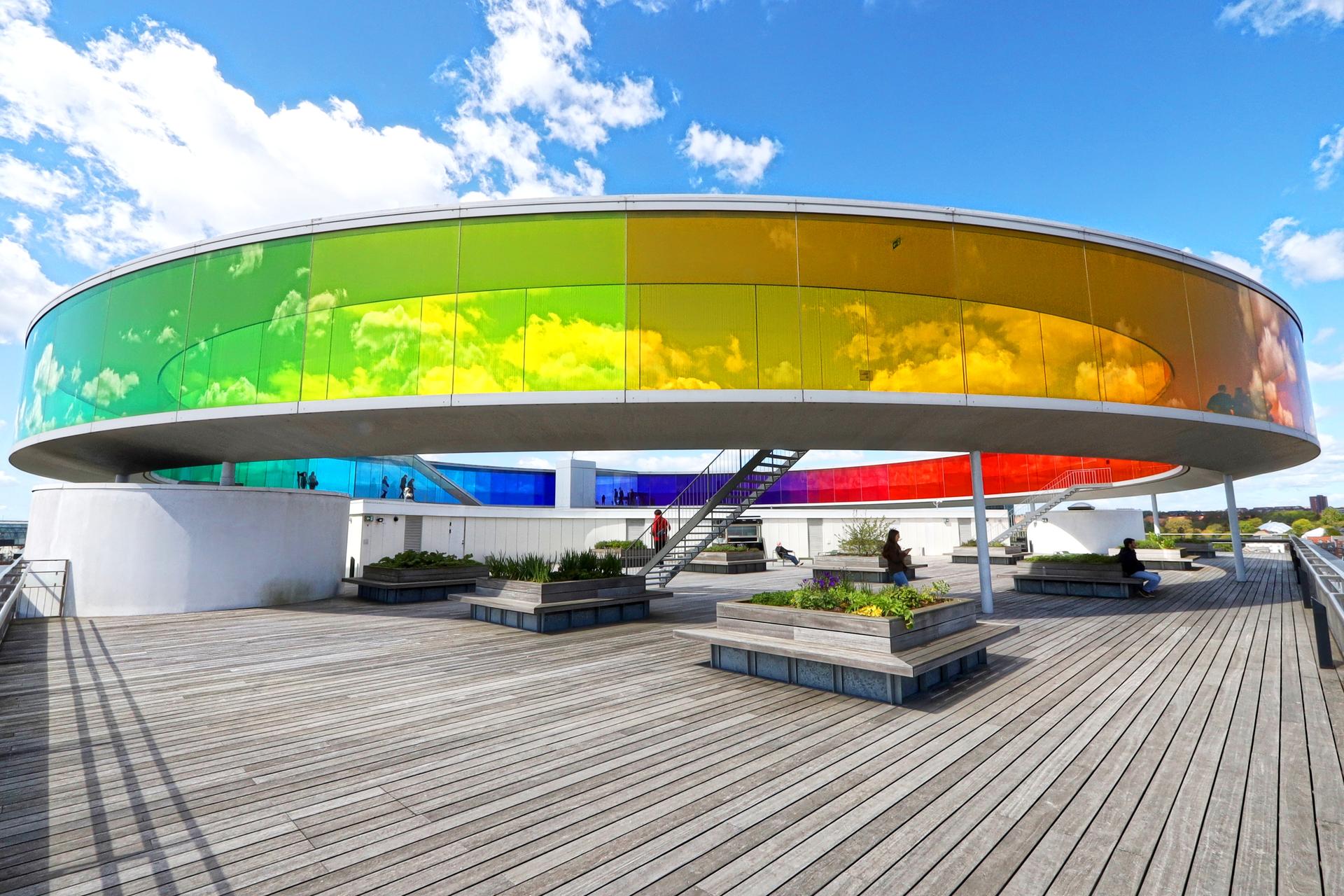
Looking beyond Anno Dom 1913? Discover East Jutland for broader travel guides, local hot-spots, and regional highlights.
Explore East Jutland
Rural Jutland manor turned weekend treasure market, where antiques, retro finds and a cosy café come together in atmospheric farm buildings and seasonal events.
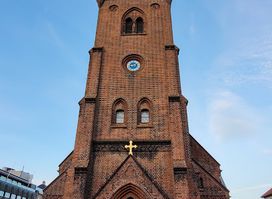
A modest 1913 fountain on Vejle’s church square, quietly tying together local history, everyday life and the character of the city’s compact old centre.
