Bahnhofsbrücke Travel Guide
Free Guide: Historic swing bridge over the Alter Strom, linking Warnemünde’s station to its harbourfront with lively views, maritime history and timeless coastal atmosphere.


A brief summary of Bahnhofsbrücke
Historic swing bridge over the Alter Strom, linking Warnemünde’s station to its harbourfront with lively views, maritime history and timeless coastal atmosphere.
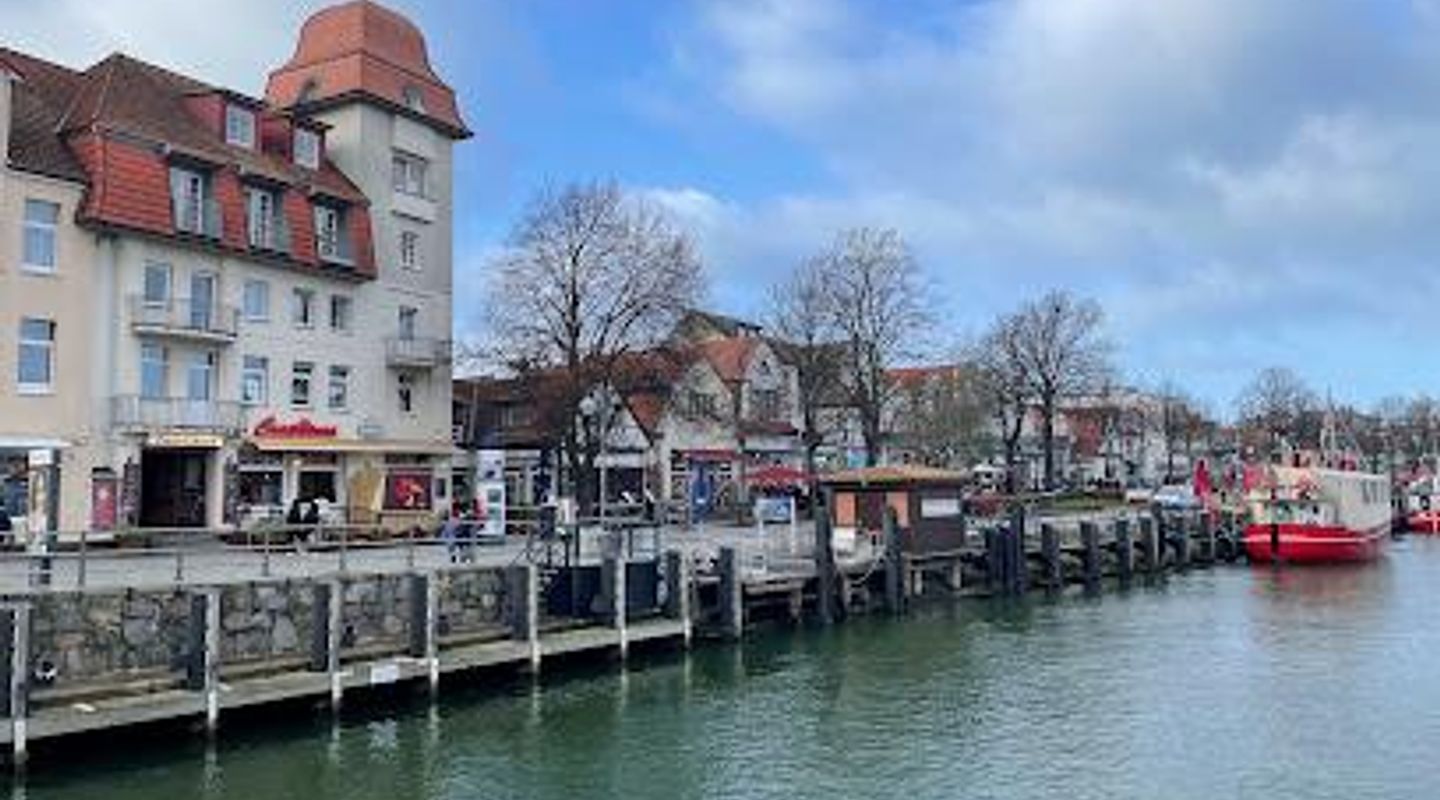
The Bahnhofsbrücke in Warnemünde is a historic steel swing bridge spanning the Alter Strom and linking the seaside resort’s railway station with its old fishing quarter. Opened in 1903 as the key pedestrian connection to the harbour, it is now a listed technical monument and one of Warnemünde’s defining landmarks. Street musicians, love locks and constant foot traffic create a lively maritime scene, with excellent views of boats, masts and the red roofs of Rostock’s northernmost district.
On-site amenities
 Restrooms
 Drink options
 Drinking water
 Food options
 Seating areas
 Trash bins
 Information boards
Opening hours
- Every dayOpen 24 hours
Opening hours as listed on the venue’s Google Business Profile. Hours can change for services and special events, so check with the venue before you go.
- Address
- Am Strom, 18119 Rostock
Getting there
Regional train and S-Bahn
Tram and S-Bahn connection within Rostock
Car or taxi from central Rostock
Discover more about Bahnhofsbrücke
A classic steel bridge over the Alter Strom
The Bahnhofsbrücke stretches across the Alter Strom, the old shipping channel that once formed the main sea link between Rostock and the Baltic. Completed in 1903, the steel construction with its wooden decking was designed as a swing bridge to open for passing vessels, allowing even larger ships to reach the inner harbour. Today, you cross on sturdy oak planks under simple railings, with fishing boats and excursion ships sliding past almost at arm’s length.From the bridge, you look directly along the narrow waterway framed by gabled houses, café terraces and moored boats. The setting feels compact and intimate, yet the constant movement of water and traffic gives it an unmistakably nautical character, a reminder that Warnemünde grew as Rostock’s outer port.
From vital transport link to cherished monument
When it opened, the bridge was a crucial part of a wider redesign of Warnemünde’s waterways. The newly created Neue Strom became the main sea canal, while the Bahnhofsbrücke linked the expanded ferry and railway facilities on the Mittelmole with the resort itself. As a swing bridge, it could pivot on its central pier, clearing a wide passage for shipping traffic using the Alter Strom.The turning mechanism remained in regular use until around 1940, when bearing damage meant the structure could no longer be safely moved. A comprehensive reconstruction in 1991 restored the bridge, including its swing function, and later repair campaigns replaced worn bearings and deck planks. Although ships no longer rely on its opening, the engineering survives, and on special occasions the bridge is still turned as a demonstration of early‑20th‑century ingenuity.
Life and colour on a busy pedestrian crossing
Today the Bahnhofsbrücke operates as a dedicated pedestrian and cycle bridge, carrying thousands of people a day in the summer season. It is one of the main conduits between the station, ferries and S‑Bahn platforms on one side and the waterfront promenade, beach route and restaurant‑lined Am Strom on the other. The modest 42‑metre span and roughly seven‑metre width funnel this movement into a narrow band, creating a constant, gently bustling flow.Along the railings, you will often find buskers, small stalls and clusters of people pausing to watch the harbour traffic. The view is especially atmospheric in the late afternoon, when the low light picks out rigging, facades and the ripples on the water. Couples attach padlocks to the metalwork, adding to its reputation as a romantic meeting point and photogenic backdrop.
Craftsmanship, materials and careful restoration
Structurally, the bridge is a straightforward steel girder construction, but details reveal the care invested in its upkeep. The deck is laid with wooden planks, traditionally oak in the central carriageway and larch at the sides. During major renovations in the early 2010s, these were replaced with timber sourced from the nearby Rostock Heath, a city‑owned forest managed to certified sustainable standards.This choice of local wood, combined with modern corrosion protection for the steelwork, ensures the bridge remains both authentic and robust in the harsh maritime climate. The use of regional materials ties the bridge tangibly to its landscape, turning a simple crossing into a small showcase of local forestry and engineering heritage.
Experiencing the bridge in every season
Standing on the Bahnhofsbrücke, you are at a crossroads of Warnemünde’s daily rhythms. In high summer, ferries sound their horns, excursion boats advertise harbour tours and the quays hum with conversation. On quieter winter days, the channel feels more reflective, with seabirds drifting on the water and the wind carrying the smell of salt and tar from the fishing boats.The bridge’s modest height makes it accessible to most visitors, yet it still offers a slightly elevated vantage point, just enough to appreciate the pattern of roofs, masts and chimneys beyond. Whether you pause briefly en route to the beach or linger to watch the turning demonstration during a local festival, the Bahnhofsbrücke offers a compact but layered experience of Warnemünde’s maritime soul.
A favourite spot for photos and quiet pauses
Because the bridge sits at the junction of water, railway and historic streets, it naturally frames classic Warnemünde scenes. Looking east, you capture the curve of the Alter Strom and the facades of old fishermen’s houses; looking west, the station area and harbour infrastructure tell the story of Rostock’s connection to the Baltic and beyond.There are no grand displays or exhibitions here, only the everyday theatre of boats, tides and people. That simplicity is part of its charm: a working piece of infrastructure that has quietly accumulated over a century of stories, from the heyday of steam ferries to present‑day holidaymakers rolling their suitcases across its weathered planks.
Evendo Review Centre
 Google
Guest reviews
Best time to go
Quietest: Jan, Feb & Mar · before 7am
Busy times are Evendo estimates for a typical year, to help you plan. Actual crowds vary with events, school holidays and the weather.
Explore Bahnhofsbrücke on the map
A handpicked selection of must-see spots near Bahnhofsbrücke, mapped for you.
Get your free copy of our complete guide to Bahnhofsbrücke, delivered straight to you.
Everything on this page, from opening hours and how to get there to Eve’s tips and the best time to go, in one PDF you can read offline, print or share.
Already have an account? Sign in
Your Bahnhofsbrücke guide is ready.
We'll send it to · Not you? Sign out

Getting your guide ready…
We are putting together a fresh copy of the Bahnhofsbrücke guide. This can take up to a minute.
This can take a few moments. If your browser asks, choose Allow so the download can start. You'll find the guide in your Downloads folder.
Nothing happened? Download it again
Sorry, the guide is taking longer than usual. Please try again in a minute, or get it by email instead.
Unlock the best of Bahnhofsbrücke
Skip-the-line tickets, guided tours with entry, and walking tours of the area, booked in a few clicks.

Other nearby places you may find interesting
The closest places of the same kind, if this one is not quite what you had in mind.
-
-
-
-
-


Swipe for more places
More to explore near Bahnhofsbrücke

 Best experiences near Bahnhofsbrücke
 Best hotels near Bahnhofsbrücke
 Best landmarks near Bahnhofsbrücke
 Best attractions near Bahnhofsbrücke
 Best shops near Bahnhofsbrücke
 Best restaurants near Bahnhofsbrücke
 Best bars near Bahnhofsbrücke
Do you manage this location?
Take control to get all the benefits, like improved information, better appearance, and stronger visibility across AI-powered discovery.
Explore more

Explore more of Gedser Odde
Discover Gedser Odde, Denmark's southernmost point, offering stunning Baltic Sea views, rich birdlife, and a peaceful retreat in untouched nature.
Explore Gedser Odde
Explore more of Denmark
Discover Denmark: A perfect blend of history, modern design, and the cozy concept of hygge. Explore vibrant cities, serene landscapes, and world-class cuisine.
Explore Denmark