
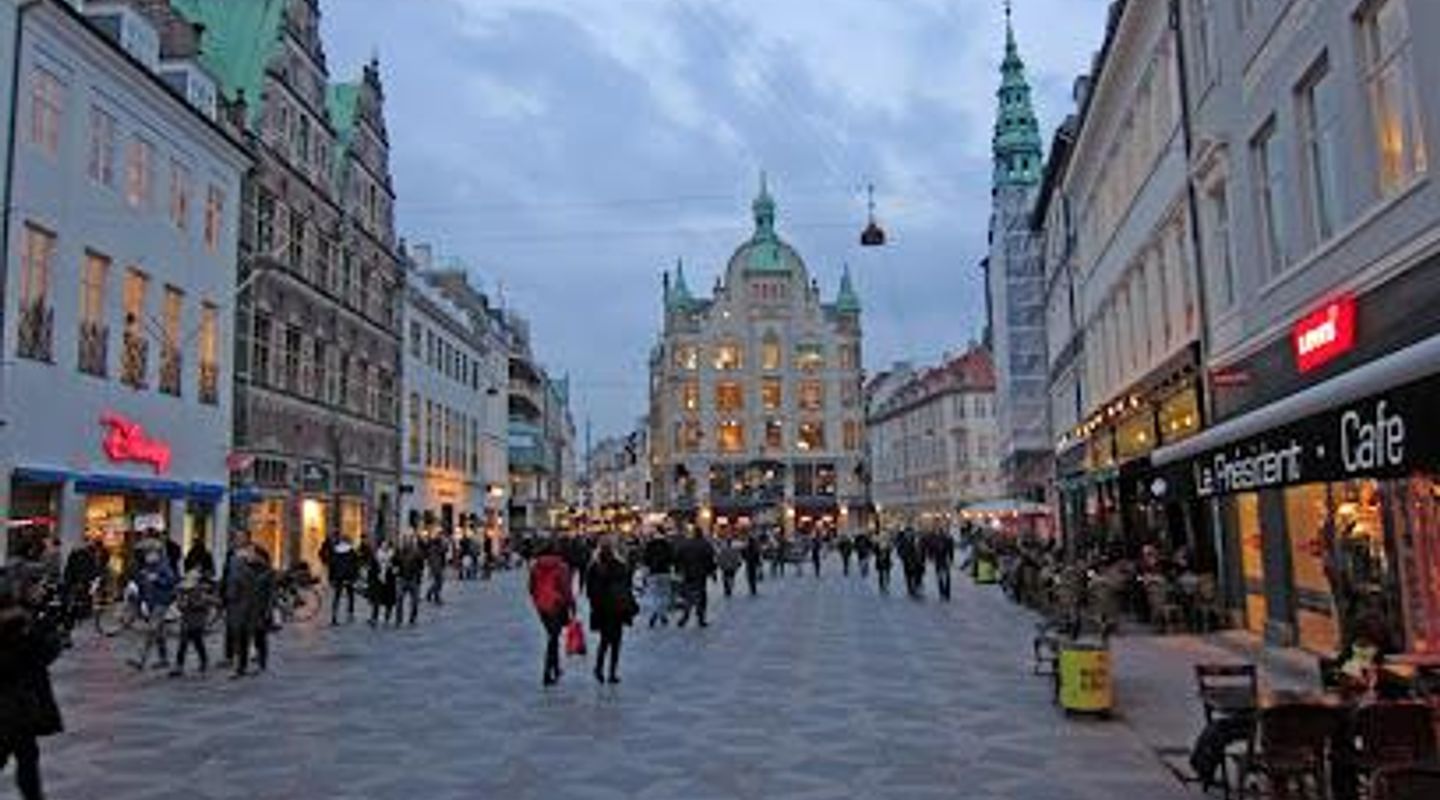
Amagertorv, North Zealand Travel Guide
Medieval marketplace turned modern pedestrian heart, where Copenhagen's past and present converge around an iconic fountain.
Amagertorv is Copenhagen's most central public square and the vibrant heart of the Strøget pedestrian zone. Named after medieval Amager farmers who sold produce here, this historic triangular square has anchored Copenhagen's commercial and social life for nearly 1,000 years. Today it's dominated by the iconic Stork Fountain and surrounded by prestigious shops, historic Renaissance buildings, and constant street entertainment, making it an essential stop on any Copenhagen visit.
A brief summary to Amagertorv
- Copenhagen, Indre By, DK
- Duration: 0.5 to 2 hours
- Free
-
 Outdoor
- Mobile reception: 5 out of 5

Know before you go
Hi, I'm Eve. Here are a few practical things to know before exploring Amagertorv.
- Visit early morning (before 10 AM) or late afternoon (after 5 PM) to experience Amagertorv with fewer crowds and better light for photography, especially around the Stork Fountain.
- Explore the historic buildings surrounding the square: the 1616 Mathias Hansen House with its Dutch Renaissance architecture and dragon-headed copper drainpipes is particularly photogenic from the square's center.
- Street performers regularly perform at Amagertorv; allow time to watch acrobats, magicians, or musicians, and consider supporting them with a small donation.
- Use Amagertorv as a navigation hub: Strøget extends northwest to Kongens Nytorv (luxury shopping) and southeast to City Hall Square (budget chains); Højbro Bridge leads to Christiansborg Palace and Christianshavn.
- Visit the Royal Copenhagen flagship store (No. 6) to see the historic building's interior and browse Danish porcelain, or explore Illums Bolighus for Scandinavian design and home furnishings.
Do you manage this location?
Take control to get all the benefits, like improved information, better appearance, and stronger visibility across AI-powered discovery. Learn more about listing your business on Evendo
Activate your presenceOther nearby places you may find interesting
The closest places of the same kind, if this one is not quite what you had in mind.
Explore Amagertorv on the Map
A handpicked selection of must-see spots near Amagertorv, mapped for you.
Unlock the Best of Amagertorv
Buy tickets
-
No tickets available
Book tours with entry


Book tours without entry

Getting There
-
Metro
Copenhagen Metro Line M1 or M2 to Nørreport Station, approximately 8 minutes travel time from the airport. From Nørreport, walk northwest along Købmagergade for 5 minutes to reach Amagertorv. Tickets cost approximately 36 DKK for a single journey within central Copenhagen.
-
Train
S-train or regional train to Nørreport Station (the busiest railway station in Denmark), located directly north of Amagertorv. Journey time from Copenhagen Airport is approximately 13 minutes. From the station, follow Købmagergade south for 5 minutes to the square. Single ticket approximately 36 DKK.
-
Bicycle
Copenhagen's extensive cycle network connects directly to Amagertorv via multiple routes. Bike rental is available throughout the city (approximately 80–100 DKK per day). The square is car-free and fully accessible by bicycle; secure parking is available on surrounding streets.
-
Walking
From Copenhagen Central Station (Hovedbanegården), walk northeast through the city center via Strøget's western section for approximately 10–12 minutes. The route is flat, well-signposted, and passes through the pedestrian shopping zone. From Kongens Nytorv, walk southwest along Strøget for approximately 8 minutes.
For the on-the-go comforts that matter to you
-
 Restrooms
-
 Drink Options
-
 Food Options
-
 Seating Areas
-
 Information Boards
Discover more about Amagertorv
A Marketplace Through the Ages
Amagertorv emerged in the Middle Ages as Copenhagen's primary commercial crossroads, taking its name from the farmers of nearby Amager who sailed into the city daily to sell their produce. By 1449, it was formally recognized as the Fishmonger's Market, and by 1472, the name Amagertorv was officially established. The square's triangular layout, visible in maps dating to 1377, remains unchanged to this day—a testament to its enduring urban design. In 1684, Copenhagen's authorities decreed that all fresh produce trading must occur within Amagertorv, cementing its status as the city's premier marketplace. The square bustled with vendors selling meat, cheese, eggs, and vegetables, transforming it into one of Northern Europe's most vital commercial hubs.Festivals, Tournaments, and Royal Celebrations
Beyond commerce, Amagertorv served as a stage for civic pageantry. During the 16th and 17th centuries, the square hosted elaborate festivals and chivalrous tournaments, including jousting competitions and mock battles that drew crowds and nobility alike. These events reinforced Amagertorv's role as Copenhagen's social center, a place where the city's identity was performed and celebrated. The square's significance extended to hospitality: from 1656, the city's leading inn operated here, welcoming travelers and merchants from across Scandinavia and beyond.Resilience Through Fire and Transformation
The Copenhagen Fire of 1795 devastated much of the square, destroying most of its buildings and forcing a complete redesign. From this catastrophe emerged a modernized Amagertorv, with the adjoining Højbro Plads established to improve circulation and safety. The fire's aftermath also introduced architectural innovations—the square's curved corners were deliberately designed to allow fire trucks to navigate more efficiently, blending practical necessity with urban planning. By 1868, as the city expanded, market activities relocated to Christianshavn, yet Amagertorv retained its commercial vitality through shops and department stores.The Stork Fountain and Architectural Heritage
In 1894, the Stork Fountain was unveiled as a gift celebrating Crown Prince Frederik's (later Frederik VIII) silver wedding anniversary with Crown Princess Louise. This bronze masterpiece, with its graceful storks appearing poised for flight, became the square's defining symbol and an enduring gathering point for locals and visitors. The fountain's poetic design captures movement and continuity, embodying Copenhagen's blend of tradition and modernity. Surrounding the fountain stand architectural treasures spanning centuries: the 1616 Mathias Hansen House at No. 6, a Dutch Renaissance gem with decorative dragon-headed copper drainpipes, now houses the Royal Copenhagen flagship store; the 17th-century Højbrohus exemplifies Renaissance elegance; and the 1907–1908 Løveapoteket building, designed by Victor Nyebøllle and Chr. Brandstrup, marks the site of Copenhagen's first pharmacy, which operated from 1620 to 1969.The Modern Pedestrian Heart
In 1962, Amagertorv was closed to vehicular traffic with the establishment of the Strøget pedestrian zone, transforming it into a car-free haven. Today, the square forms the vital junction where Strøget's main shopping streets diverge, connecting City Hall Square to Kongens Nytorv across 1.1 kilometers of Europe's longest pedestrian street. The Illum department store has anchored the corner of Strøget and Købmagergade since the 1890s, while the Illum Furniture Store showcases Danish and Scandinavian design. Street performers—acrobats, magicians, and musicians—create a constant atmosphere of entertainment and spontaneity, making Amagertorv a living theater of urban culture.A Living Crossroads of Commerce and Culture
Amagertorv remains Copenhagen's most central square, a place where history is literally underfoot on its ancient cobblestones. The square's triangular geometry, unchanged for 650 years, creates natural gathering spaces where thousands of shoppers, tourists, and locals converge daily. From this vantage point, visitors can see across the canal to Christiansborg Palace, seat of the Danish Parliament, anchoring Amagertorv within Copenhagen's political and cultural geography. The square pulses with the energy of contemporary retail—from luxury flagships like Louis Vuitton and Hermès to accessible high-street chains—while its historic buildings whisper stories of medieval markets, royal celebrations, and urban resilience.












Your all‑in‑one travel companion app
Explore expert travel guides, compare and book tours, experiences, hotels, and more—all from the palm of your hand. Download now for seamless trip planning wherever your wanderlust takes you.


Explore More of North Zealand
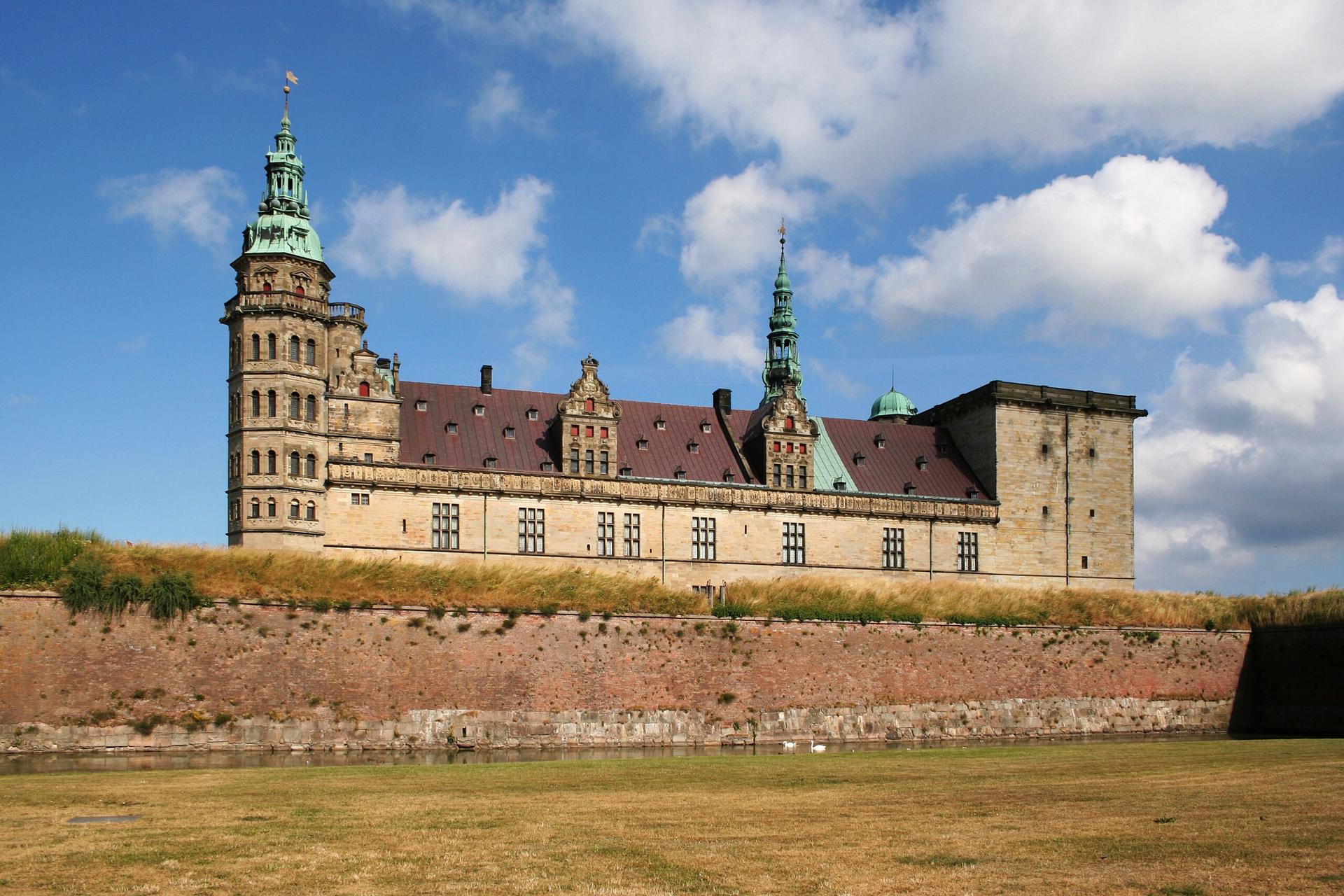
Looking beyond Amagertorv? Discover North Zealand for broader travel guides, local hot-spots, and regional highlights.
Explore North Zealand