Mindesmærke for Ove Rode, Kalundborg Travel Guide
Free Guide: A life‑size bronze bust of statesman Ove Rode crowns Kalundborg’s Møllebakketrappen, blending political memory, pocket‑park calm and sweeping views over town and harbour.


A brief summary of Mindesmærke for Ove Rode
A life‑size bronze bust of statesman Ove Rode crowns Kalundborg’s Møllebakketrappen, blending political memory, pocket‑park calm and sweeping views over town and harbour.
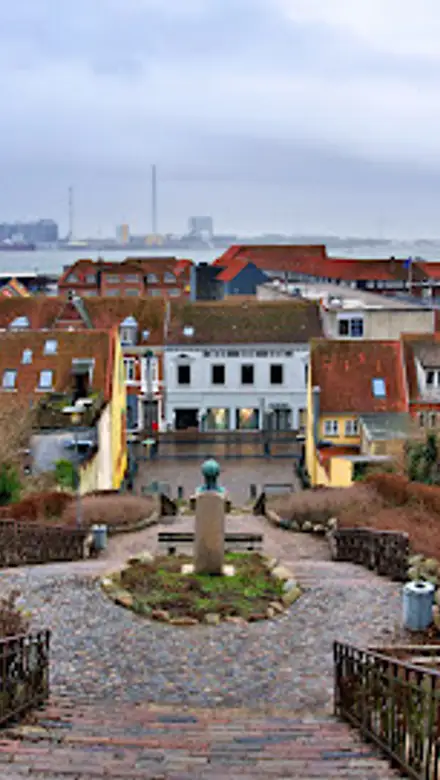
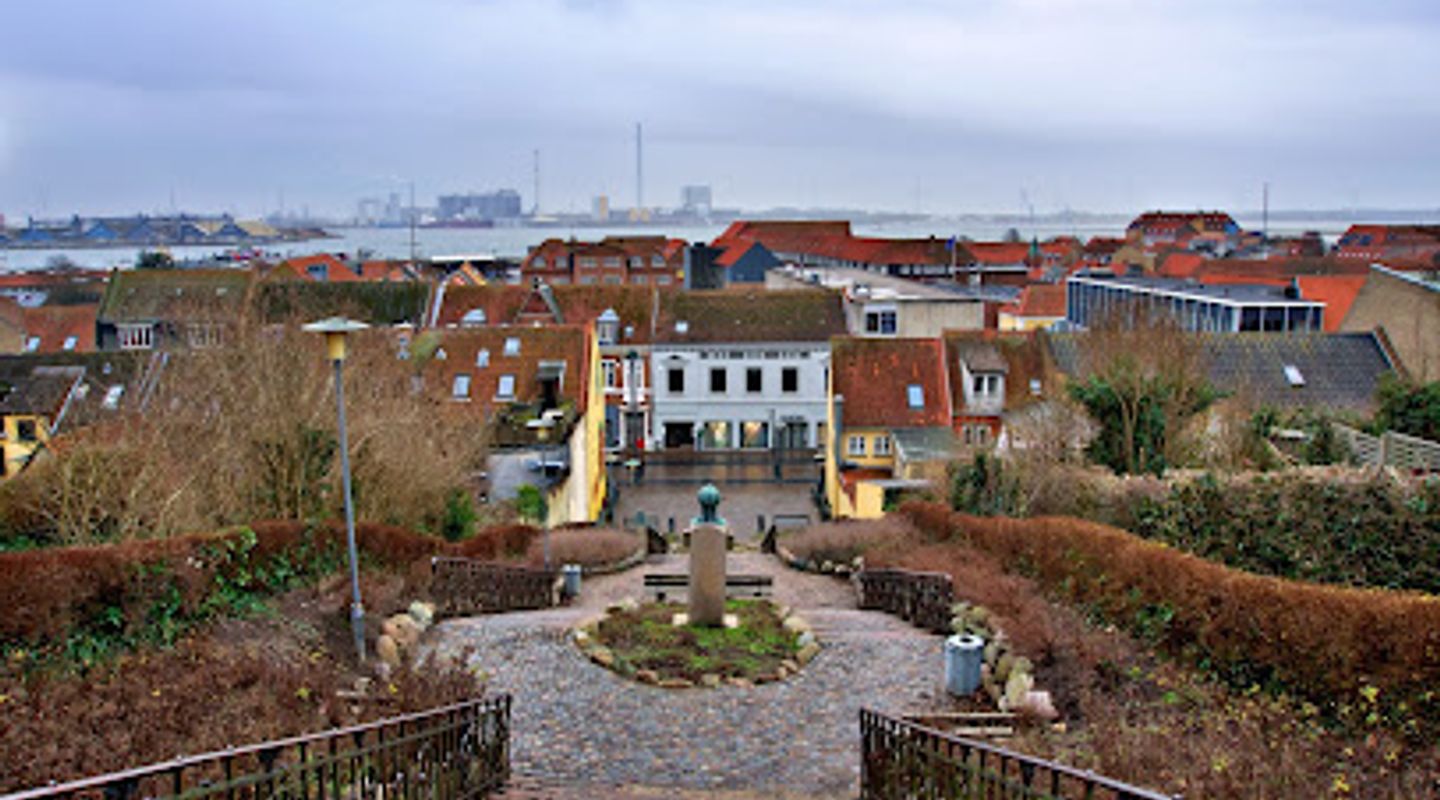
Set on the terraced slope of Møllebakketrappen above Kalundborg’s main shopping street, the Mindesmærke for Ove Rode is a bronze bust of the influential Danish politician Ove Rode. Framed by a small, manicured park, old trees and flowerbeds, the monument crowns the dramatic stairway that climbs Moellebakken, combining local political history with one of the town’s best urban viewpoints over rooftops, harbour and the five‑towered Church of Our Lady.
On-site amenities
 Seating areas
 Trash bins
 Information boards
Opening hours
- Every dayOpen 24 hours
Opening hours as listed on the venue’s Google Business Profile. Hours can change for services and special events, so check with the venue before you go.
- Address
- Møllebakketrappen, 4400 Kalundborg
Getting there
Train and walk from Kalundborg Station
Local bus within Kalundborg
Car from elsewhere in West Zealand
Discover more about Mindesmærke for Ove Rode
A statesman remembered on Kalundborg’s hillside
The Mindesmærke for Ove Rode honours a prominent early‑20th‑century Danish politician, journalist and editor who had close ties to this part of West Zealand. The bust, cast in bronze and mounted on a simple plinth, stands partway up the Møllebakketrappen hillside, marking his role as a leading parliamentarian and long‑time representative for the constituency around Kalundborg. The monument gives a civic face to the town’s political past in a setting that is deliberately open and accessible, rather than formal and remote.Ove Rode’s memorial was originally unveiled closer to the medieval core of Kalundborg before being relocated in the mid‑1900s to Moellebakken, where it could be experienced as part of the everyday townscape rather than a closed ceremonial space. Here, his likeness is encountered by people on errands, children on the stairs and walkers heading for the viewpoints, embodying the idea that democratic history lives in the middle of daily life.
The character of the memorial and its small park
The sculpture itself is larger than life, with Rode’s head and shoulders rendered in a naturalistic style typical of Danish portrait art between the wars. The patinated bronze contrasts with the light stone of the pedestal and the surrounding paving. Around it, a modest triangular garden is planted with low flowerbeds and neatly trimmed hedges, softening the hard lines of the stairway. Seasonal blooms add colour in spring and summer, while the bust’s dark surface takes on a richer tone in rain.Benches and a broad landing around the memorial create a small urban pause on the climb up the hill. This is less a grand square than a pocket park, with enough space to sit quietly, read the inscription and look out over Kalundborg’s rooftops. The atmosphere is contemplative rather than solemn, shaped as much by the rustle of leaves and distant harbour sounds as by the statue itself.
Møllebakketrappen and the views over old Kalundborg
The memorial is inseparable from Møllebakketrappen, the long stairway connecting the pedestrian street below with the higher ground of Moellebakken. Climbing from the shops of Kordilgade, you pass landings, railings and plantings before reaching the landing where Ove Rode’s bust “presides” over the steps. Above, paths continue into a small park and onward toward the hilltop water tower.From here there are wide views across Kalundborg: over the red‑tiled roofs of the lower town, the harbour area and, in the distance, the waters of Kalundborg Fjord. Looking laterally, you gain a fine angle on the distinctive silhouette of the five‑towered Church of Our Lady and the preserved medieval quarter. The memorial thus becomes both a historical marker and a scenic viewing point in the town’s everyday geography.
Layers of history on Moellebakken
Moellebakken itself is a reminder that Kalundborg is built on a series of hills and ridges shaped by the Ice Age and later crowned with mills, towers and fortifications. Close by are traces of the old castle and the historic high town, while modern housing climbs the slopes behind. The Ove Rode memorial sits between these layers, visually linking the medieval skyline with the more contemporary parts of Kalundborg spread out below.Information boards nearby explain elements of the town’s history and the role of key figures, helping to place the monument within a wider story of civic development, parliamentary democracy and urban growth. For visitors with an interest in Danish political life, the site offers a tangible anchor in the landscape rather than an abstract name in a history book.
A short, rewarding stop on a Kalundborg walk
In practical terms, the Mindesmærke for Ove Rode is usually visited as part of a short walk combining the shopping street, the stairway, the small park at the top and perhaps the medieval church area. The climb can be moderately steep but is brief, and there is ample scope to pause on landings, including the one at the memorial itself. Simple amenities such as seating and nearby litter bins make it a comfortable pause point.Because it sits right above the town centre, the memorial is easy to combine with museums, cafés and other attractions. It works well as an early stop on a day exploring Kalundborg: a place to get your bearings, enjoy a first panorama of the harbour and reflect for a moment on the people who helped shape modern Denmark from this corner of Zealand.
Evendo Review Centre
 Google
Guest reviews
Best time to go
Quietest: Jan, Feb & Mar · before 7am or from 8pm
Busy times are Evendo estimates for a typical year, to help you plan. Actual crowds vary with events, school holidays and the weather.
Explore Mindesmærke for Ove Rode on the map
A handpicked selection of must-see spots near Mindesmærke for Ove Rode, mapped for you.
Get your free copy of our complete guide to Mindesmærke for Ove Rode, delivered straight to you.
Everything on this page, from opening hours and how to get there to Eve’s tips and the best time to go, in one PDF you can read offline, print or share.
Already have an account? Sign in
Your Mindesmærke for Ove Rode guide is ready.
We'll send it to · Not you? Sign out

Getting your guide ready…
We are putting together a fresh copy of the Mindesmærke for Ove Rode guide. This can take up to a minute.
This can take a few moments. If your browser asks, choose Allow so the download can start. You'll find the guide in your Downloads folder.
Nothing happened? Download it again
Sorry, the guide is taking longer than usual. Please try again in a minute, or get it by email instead.
Other nearby places you may find interesting
The closest places of the same kind, if this one is not quite what you had in mind.
-
-
-
-
-


Swipe for more places
More to explore near Mindesmærke for Ove Rode
-
 Best experiences near Mindesmærke for Ove Rode
-
 Best hotels near Mindesmærke for Ove Rode
-
 Best landmarks near Mindesmærke for Ove Rode
-
 Best attractions near Mindesmærke for Ove Rode
-
 Best shops near Mindesmærke for Ove Rode
-
 Best restaurants near Mindesmærke for Ove Rode
-
 Best bars near Mindesmærke for Ove Rode


Do you manage this location?
Take control to get all the benefits, like improved information, better appearance, and stronger visibility across AI-powered discovery.
Explore more

Explore more of Kalundborg
Discover Kalundborg, a picturesque Danish town with rich history, stunning landscapes, and a vibrant cultural scene. Perfect for nature lovers and history enthusiasts alike.
Explore Kalundborg
Explore more of Denmark
Discover Denmark: A perfect blend of history, modern design, and the cozy concept of hygge. Explore vibrant cities, serene landscapes, and world-class cuisine.
Explore Denmark